Slow Feeders for a Gulping Standard Poodle
It's a familiar sight for many Poodle owners, especially those with Standard Poodles: you put down a carefully measured meal, and before you can even turn around, it's gone. Your magnificent Standard Poodle, who normally exhibits such grace and composure, inhales their food as if it's their last meal on earth. This frantic gulping isn't just a quirky habit; it’s a genuine concern that can lead to digestive upset, discomfort, and even serious health risks. This guide will walk you through why your Standard Poodle might be eating so fast and, more importantly, how slow feeders and other strategies can help bring calm and health back to mealtime.
The Alarming Truth About Gulping: Why Your Standard Poodle Eats So Fast
That lightning-fast gulping, while sometimes comical, often comes from deep-seated instincts and can have significant implications for your Poodle's well-being. It's not just about them being overly enthusiastic; there are real reasons and real risks involved.
The Instinctual Drive to Devour
Think about the ancestors of our beloved Poodles – wild canids. In a pack environment, food was a competitive resource. The dogs that ate fastest got the most, ensuring their survival. This instinct, this innate drive to consume food quickly before a rival could steal it, is hardwired into many dogs, even our pampered house pets. For a large, energetic breed like the Standard Poodle, who can have a robust appetite, this instinct might be particularly strong. They might not be competing with other dogs in your household, or perhaps they are! Even if they're the only dog, the underlying primal urge remains.
Sometimes, the speed also comes from sheer excitement. Your Poodle loves their food! They anticipate it with gusto, and that high level of arousal can translate into a lack of self-control around the food bowl. It's not necessarily a sign of hunger in the literal sense, but rather an expression of their enthusiasm and that deep, ancestral programming. They're just so happy to see dinner that they can't help but scarf it down.
Health Risks Beyond Indigestion
While a quick meal might seem harmless, it carries several significant health risks for a Standard Poodle. The most concerning, by far, is Gastric Dilatation-Volvulus (GDV), more commonly known as bloat. Standard Poodles, with their deep chests, are unfortunately predisposed to this life-threatening condition. When a dog eats too quickly, they often swallow a lot of air along with their food. This air, combined with food and liquid, can cause the stomach to expand rapidly (dilatation). In some severe cases, the distended stomach can then twist (volvulus), cutting off blood supply and trapping gas. This is a veterinary emergency that requires immediate surgical intervention and can be fatal if not treated quickly. You really need to be aware of the Gastric Torsion Risk in a Standard Poodle if your dog gulps.
Beyond the terrifying prospect of bloat, rapid eating can lead to a host of other digestive issues. Imagine trying to digest a large mass of poorly chewed food and swallowed air. It's a recipe for an upset stomach, gas, regurgitation, and vomiting. Your Poodle might experience discomfort, lethargy, or develop chronic digestive problems. Rapid eating also means food isn't properly chewed, and saliva doesn't have enough time to mix with the food, both of which are crucial steps in the digestive process. This can lead to less efficient nutrient absorption, meaning your Poodle isn't getting the full benefit from their expensive, high-quality food. You can learn more about recognizing the severity by reading about Emergency Signs of Poodle Bloat. Furthermore, if your Poodle is inhaling their food, they might also be prone to overeating because their brain doesn't register fullness until it's too late. This can quickly contribute to Poodle Obesity and Its Consequences, which brings its own set of health problems.
The Slow Feeder Solution: How These Clever Bowls Work
If you've watched your Poodle scarf down their meal in seconds and worried about the implications, you're not alone. Thankfully, there are tools specifically designed to combat this issue, with slow feeder bowls leading the charge.
A Maze, Not a Mouthful: Understanding the Design
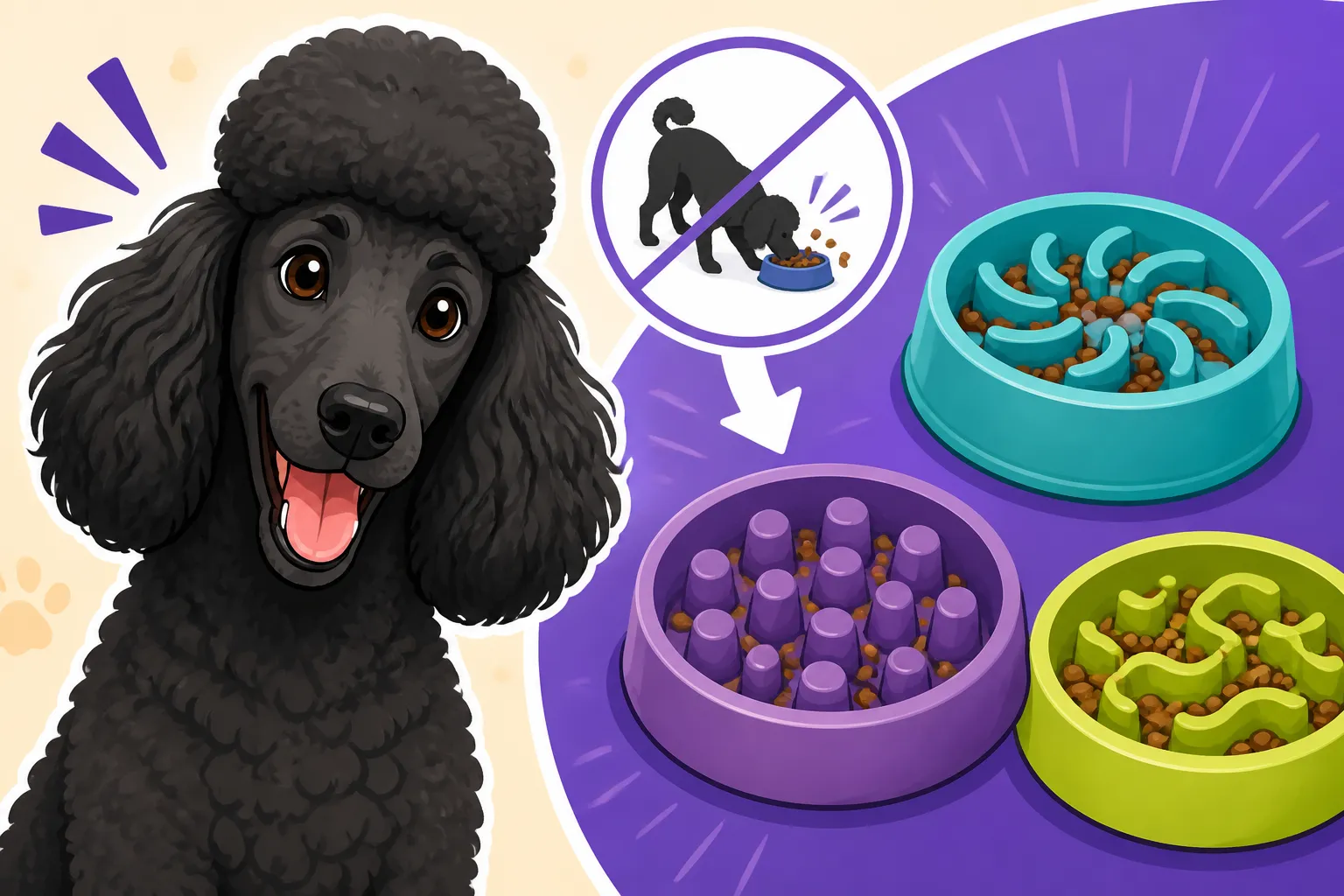
Slow feeder bowls are ingenious devices designed with various obstacles right inside the bowl itself. Instead of a smooth, open surface where your Poodle can simply scoop up large mouthfuls, these bowls feature ridges, pillars, spirals, or intricate maze-like patterns. The concept is simple yet effective: these physical barriers force your Poodle to work around them to get to their food. This means they can only take smaller bites at a time, preventing them from gulping down huge portions. It slows them down considerably, extending mealtime from mere seconds to several minutes.
These bowls come in a variety of materials, including durable plastics, heavy ceramics, and sturdy stainless steel. Each has its own benefits; plastic tends to be lightweight and affordable, ceramic offers stability and is easy to clean, and stainless steel is known for its durability and hygiene. The key is that the design physically prevents that deep plunge of the muzzle into a mountain of kibble. Your Poodle has to use their tongue and nose to navigate the nooks and crannies, making them literally slow down their pace.
More Than Just Slowing Down: The Mental Benefits
Beyond the primary goal of preventing rapid ingestion, slow feeders offer an often-overlooked benefit: mental enrichment. For a highly intelligent breed like the Poodle, mental stimulation is just as important as physical exercise. Instead of mealtime being a two-second blur, a slow feeder transforms it into a mini-puzzle. Your Poodle has to engage their brain to figure out how to extract the kibble from the various obstacles. This problem-solving activity can be surprisingly tiring and satisfying for them.
This mental workout can help reduce boredom, which for a smart dog like a Poodle, can otherwise manifest as destructive behaviors or excessive barking. When your Poodle is mentally engaged during mealtime, they're not just eating; they're thinking, planning, and focusing. This can contribute to a calmer, more content dog overall. It’s a fantastic way to incorporate Mental Work That Tires a Poodle into their daily routine without requiring extra time from you. It makes mealtime an event, not just a pit stop.
Choosing the Best Slow Feeder for Your Standard Poodle
With so many slow feeders on the market, picking the right one for your Standard Poodle can feel a bit overwhelming. It’s not a one-size-fits-all situation, and what works for a tiny Toy Poodle won't necessarily be right for a majestic Standard.
Material Matters: Durability and Hygiene
When it comes to selecting a slow feeder, the material is a crucial consideration, especially for a large and sometimes boisterous Standard Poodle.
- Plastic: Many slow feeders are made from food-grade plastic. They are generally lightweight, affordable, and come in a vast array of designs and colors. However, plastic can scratch over time, creating tiny crevices where bacteria can harbor, potentially leading to hygiene issues if not cleaned meticulously. Some dogs also chew on plastic, which can damage the bowl or be ingested. For a powerful Standard Poodle, a lighter plastic bowl might get pushed around the kitchen, leading to spills or frustration.
- Ceramic: Ceramic bowls are heavier, making them more stable and less likely to slide around during an enthusiastic meal. They are also non-porous and generally very easy to clean, making them a hygienic choice. The downside is that ceramic can chip or break if dropped, which could be a hazard. They also tend to be more expensive.
- Stainless Steel: Stainless steel is often considered the gold standard for pet bowls due to its extreme durability, rust resistance, and excellent hygiene properties. It's non-porous, doesn't harbor bacteria, and is dishwasher safe. A heavy-gauge stainless steel slow feeder would be very stable for a Standard Poodle. The main drawbacks are that they can be a bit more expensive than plastic and can sometimes be noisy if your Poodle is pushing it around.
Ultimately, prioritize something that can withstand your Poodle's size and enthusiasm, is easy to clean, and is free from any components that could be chewed off.
Design and Difficulty: Matching the Challenge to Your Poodle
The internal design of the slow feeder is perhaps the most critical factor. They range from simple raised ridges to intricate mazes.
- Simple Designs: These usually have gentle bumps or wide, shallow ridges. They are a great starting point for Poodles new to slow feeders, offering a mild challenge without causing too much frustration. They'll still slow down consumption significantly compared to a flat bowl.
- Moderate Designs: These feature more pronounced ridges, spirals, or slightly deeper compartments. They offer a good balance of challenge and accessibility, suitable for most Standard Poodles who are moderate gulpers.
- Complex Designs: These boast deep, intricate mazes or numerous small compartments. These are ideal for very fast eaters who need a significant challenge to slow down. However, they can be frustrating for some dogs or difficult to clean thoroughly.
Consider your Poodle's personality. If they are easily frustrated, start with a simpler design and gradually move up. The goal is to slow them down, not to make mealtime a source of stress. For a Standard Poodle, ensure the design allows enough space for their muzzle to comfortably reach the food without being too shallow or having edges that might irritate their nose or whiskers. You can find a huge selection of different designs from simple to complex on sites like Chewy or Amazon, offering many options to compare. Take your time browsing the different patterns and materials.
Bowl Height and Your Poodle's Comfort
For a large breed like a Standard Poodle, the height of their food bowl has long been a topic of discussion, particularly in relation to bloat. While research on the direct link between elevated bowls and bloat is mixed and sometimes contradictory, an elevated feeder can certainly improve your Poodle's posture and comfort, especially as they get older or if they have joint issues.
Many slow feeders are designed to sit directly on the floor. If you prefer an elevated setup, you can often find slow feeder inserts that fit into existing elevated feeders, or look for slow feeder bowls that come with their own built-in stands. The important thing is to choose a height that allows your Standard Poodle to eat without excessive bending or straining their neck and back. An uncomfortable eating position won't help with slowing down and might even contribute to swallowing more air. When thinking about Bowl Height and Standard Poodle Bloat Risk, consider the overall eating environment, not just the bowl itself.
| Slow Feeder Type | Pros | Cons | Best For |
|---|---|---|---|
| Raised Ridge Bowls | Simple design, easy to clean, good for beginners. | Less challenging for very fast gulpers. | Standard Poodles new to slow feeders or moderate gulpers. |
| Maze/Puzzle Bowls | Highly engaging, slows eating significantly, provides mental stimulation. | Can be harder to clean, might frustrate easily discouraged Poodles. | Very fast gulpers, Poodles who enjoy a mental challenge. |
| Lick Mats | Excellent for wet/raw food, spreads out meals, calming, promotes licking. | Not suitable for dry kibble, requires supervision to prevent chewing. | Adding a calming element, extending wet food or purees. |
| Interactive Dispensing Toys | Turns mealtime into a game, high mental stimulation. | Can be noisy, may not hold full meal, requires active participation. | Supplementing meals, mental enrichment, individual kibble pieces. |
Beyond the Bowl: Holistic Approaches to Slow Eating
While a slow feeder bowl is a fantastic tool, it's just one part of a comprehensive strategy. Addressing the root causes and integrating other habits can significantly enhance your Standard Poodle's mealtime experience and health.
Feeding Strategies: Smaller Meals, More Often
One of the simplest yet most effective ways to slow down a fast eater is to change how you feed them. Instead of one or two large meals a day, consider breaking their daily food ration into three or even four smaller meals. This reduces the sheer volume of food your Poodle has access to at any given time, making it harder for them to gorge themselves. Smaller meals are also easier for the digestive system to process and can reduce the risk of bloat.
This approach requires a bit more planning but can make a huge difference. You'll still give them the same total amount of food for the day, just spread out. For example, if your Poodle typically gets two cups twice a day, you could offer one cup four times a day. This keeps them from getting overly hungry between meals, which can sometimes fuel that frantic gulping behavior. It's also a great way to manage their total daily intake, which is important when considering Feeding a Standard Poodle for a Month.
Interactive Toys and Spreading Food Out
Slow feeders aren't the only way to make your Poodle work for their food. Incorporating interactive puzzle toys or spreading their meals out can add another layer of mental and physical engagement.
- Kibble Dispensing Toys: These toys require your Poodle to manipulate them – rolling, nudging, or pawing – to get kibble to fall out. Brands like Kong or other puzzle feeders are excellent for this. They turn mealtime into a fun hunting game, engaging your Poodle's natural foraging instincts. You can even use a portion of their regular meal in these toys, making them work for part of their breakfast or dinner.
- Snuffle Mats: A snuffle mat is a fabric mat with various flaps and pockets where you can hide kibble. Your Poodle has to sniff and root around to find each piece, using their powerful sense of smell and nose-work skills. This is a wonderfully calming activity that naturally slows down eating.
- Spreading Food Out: For wet food, raw diets, or even moistened kibble, simply spreading the food thinly across a large baking sheet or a lick mat can make a huge difference. Lick mats have textured surfaces that encourage prolonged licking, which is naturally calming and stretches out the meal significantly. Even fresh food services like Ollie can be portioned out and spread to encourage slower eating. This helps combat Feeding Habits That Raise Poodle Bloat Risk by making rapid consumption virtually impossible.
These methods not only slow eating but also provide valuable mental stimulation, which is vital for a bright breed like the Poodle.
Consistency and Patience: The Long Game
Changing a long-standing habit like rapid eating takes time, consistency, and a good dose of patience. Your Standard Poodle won't instantly switch from a gulping champion to a slow-eating connoisseur overnight. It's a process of relearning and adapting.
Introduce new feeders or feeding methods gradually. If your Poodle seems frustrated with a complex slow feeder, simplify it or go back to a more basic version. Praise them enthusiastically when they are eating more slowly, even if it's just for a few extra seconds initially. Positive reinforcement helps them associate the new eating style with good things. Ensure that their portions are still correctly measured; Weighing a Poodle's Meals is always a good practice to prevent over or underfeeding, especially when trying new methods. Stick with the chosen method every single meal, every single day. The more consistent you are, the faster your Poodle will adapt to their new, healthier eating habits. This journey is about nurturing their health and teaching them a valuable life skill, one slow, deliberate bite at a time.
Disclaimer
This article is for general informational purposes only and does not constitute professional advice. Laws, prices and regulations vary by location and change over time. Consult a qualified professional for guidance on your specific situation.