Why a Groomed Poodle Looks Thinner
It's a scene almost every Poodle parent knows well: you drop off your beloved fluffy cloud at the groomer, envisioning a pristine, perfectly shaped return. But when you pick them up, instead of the majestic lion or bouncy teddy bear you pictured, you're greeted by a sleek, almost slender-looking dog. Suddenly, you're second-guessing if your Poodle is getting enough to eat! This guide is here to unravel the mystery behind that post-grooming surprise, explaining why your Poodle looks significantly thinner after a haircut and what it truly means for their health and body condition.
The Poodle's Unique Coat Structure
Poodles are famous for their curly, dense coats, which are a defining characteristic of the breed. But what many new Poodle owners don't realize is just how much this luxurious coat contributes to their dog's perceived size and shape. It's not just hair; it's an architectural marvel that can dramatically alter their appearance.
Hair Versus Fur: Understanding the Poodle's Single Coat
Unlike many breeds that have a double coat consisting of a soft undercoat and coarser guard hairs, Poodles possess a single layer of continuously growing hair. This isn't "fur" in the traditional sense; it's more akin to human hair. This unique structure is what gives Poodles their famously low-shedding quality – instead of shedding out, their hair traps loose strands within the curls, which then need to be brushed out to prevent matting.
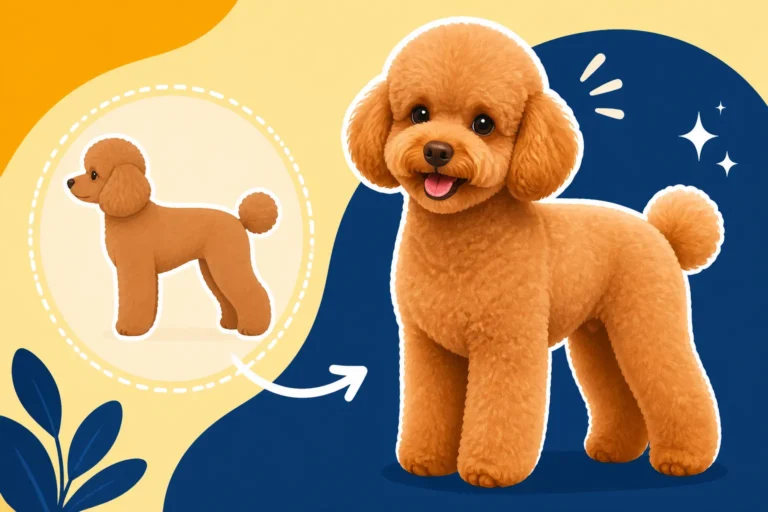
This constant growth and tight curl create an incredible amount of volume. Imagine a dense wool sweater versus a thin silk blouse; the Poodle's coat is definitely the wool sweater. It stands away from the body, creating an insulating layer that also adds considerable bulk. This natural volume is often expertly styled by groomers, but even in a simple pet clip, it gives the impression of a much more substantial dog than what lies beneath. Owners often forget that what they're seeing is mostly a magnificent hair-do, not the dog's actual physical mass.
The Volume Deception: Fluff and Foundation
The illusion of bulk is further amplified by how Poodle coats are prepared for clipping. Before any trimming begins, a Poodle's coat is thoroughly bathed, conditioned, and then meticulously blow-dried straight. This process, often called "fluff drying," stretches out each individual curl, maximizing the hair's length and stand-off from the body. It’s like teasing hair to make it look bigger; for a Poodle, this is standard procedure to ensure an even, smooth cut.
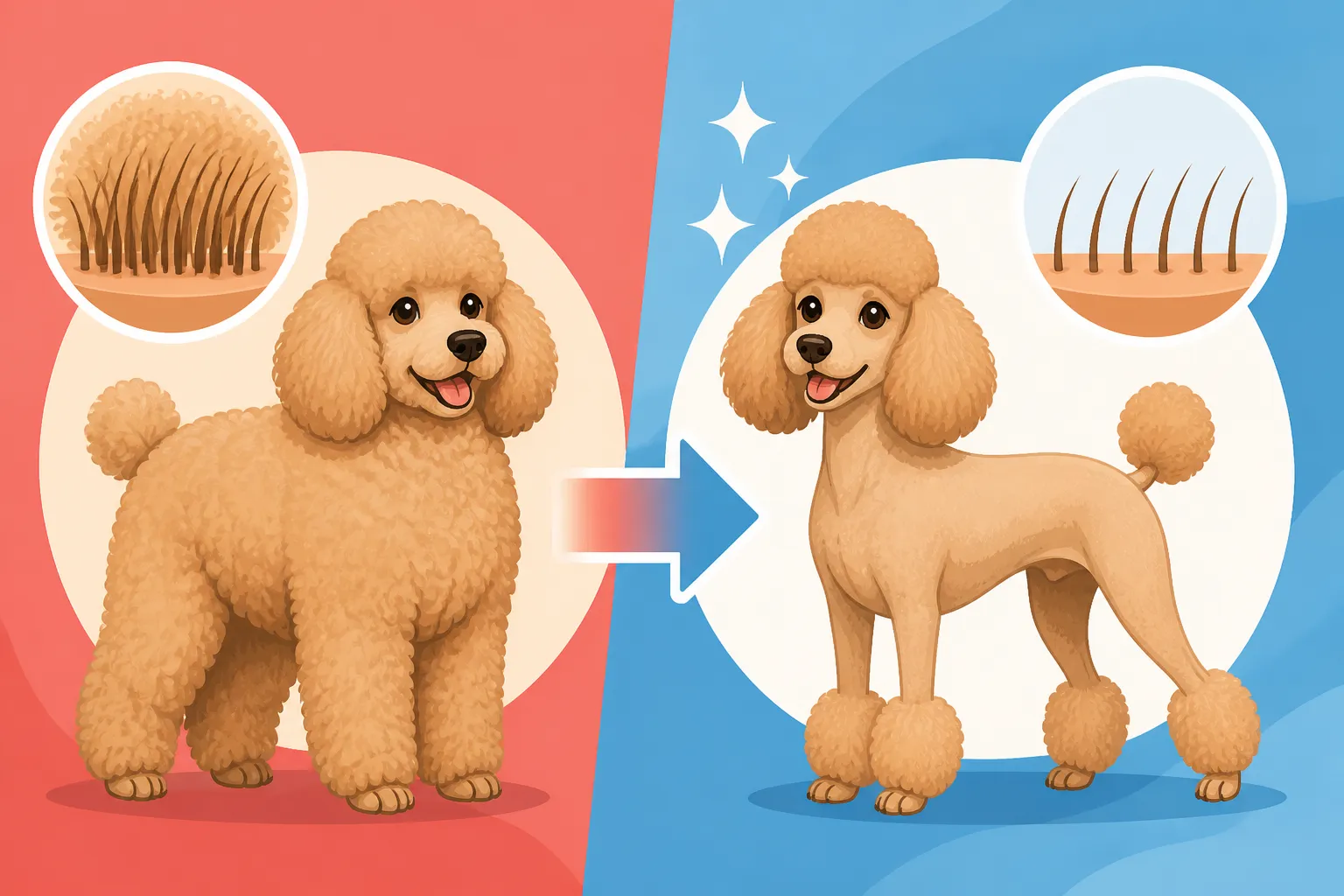
Think about how much bigger your own hair looks when it's just been blow-dried versus when it's wet or matted down. For a Poodle, this difference is extreme. A properly fluff-dried Poodle is a magnificent spectacle of volume and buoyancy. This "poof" factor can add several inches to their perceived width and depth, making them look solid and robust. When all that meticulously prepared volume is then clipped short, the stark contrast can be quite startling, revealing the lean, athletic frame that was hidden underneath. It's a testament to the coat's ability to truly deceive the eye.
Grooming's Transformative Effect
The act of grooming a Poodle is a profound transformation. What goes in as a soft, voluminous mass often emerges as a svelte, refined canine. This isn't magic; it's simply the removal of the great illusion that their magnificent coat creates.
The Shave Down: Removing the Illusion
When a Poodle goes to the groomer, especially for a shorter pet clip or a full shave-down (which is sometimes necessary if the coat is severely matted), a significant amount of hair is removed. Professional clippers glide through the dense, curly coat, often taking off several inches of hair from head to tail. This process isn't just a trim; it's a complete reshaping that strips away the accumulated volume.
Consider the amount of hair that fills your groomer's tub after a bath, or the pile that accumulates on the floor during the clipping process. That hair, when it was on your Poodle, was occupying a considerable amount of space, making them appear larger and rounder. Once it's gone, that visual bulk disappears entirely, revealing the true contours of your dog's body. For many Poodles, especially those kept in longer, fluffier clips between professional sessions, the first few minutes after the groomer finishes can be a real "aha!" moment for their owners. It's quite literally like shedding a heavy, bulky cloak.
From Fluffy Cloud to Athletic Frame
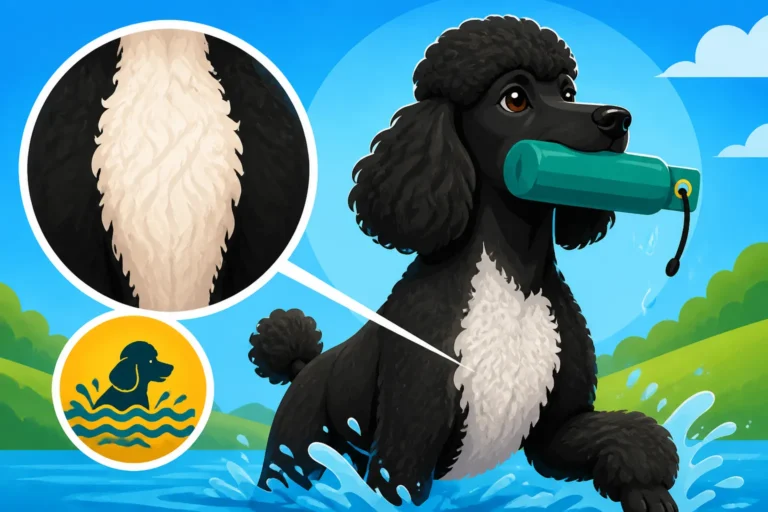
Beneath that impressive head of hair, Poodles are actually quite lean and athletic dogs. They were originally bred as water retrievers, which means they have a surprisingly muscular, streamlined build designed for swimming and agile movement. Their bone structure is often quite fine, and their bodies are compact and well-proportioned.
So, when the coat is clipped short, you're not seeing an underweight dog; you're seeing their natural, sleek physique. The sudden appearance of defined ribs, a tucked waist, and prominent hip bones, which were previously camouflaged by thick hair, can be alarming to an owner who is used to their dog looking like a fluffy ball. It's a similar effect to a person who works out regularly but always wears baggy clothes – when they finally put on something fitted, their athletic build is suddenly evident. This is perfectly normal and a sign that you have a healthy Poodle, not one wasting away. This transformation often reminds owners of the working heritage behind the breed.
Health and Weight Assessment Under the Coat
One of the most crucial aspects of Poodle ownership that often gets overlooked is how to accurately assess their body condition. The coat can be such a brilliant disguise that even an overweight Poodle can look "just right" until they're groomed.
Feeling Ribs Through a Poodle's Coat: The Hands-On Check
Relying solely on visual cues to determine your Poodle's weight is a common pitfall. With such a voluminous coat, it’s virtually impossible to accurately gauge their body condition without a hands-on approach. The most reliable way to check if your Poodle is at a healthy weight is by palpation – feeling their body with your hands. You should be able to easily feel their ribs without having to press hard, much like feeling the knuckles on the back of your hand. If you have to dig your fingers in, they might be carrying too much weight. Conversely, if their ribs are visibly prominent or feel sharp without any pressure, they might be too thin.
This hands-on check extends to their spine and hip bones as well. You should be able to feel these bony prominences under a thin layer of fat and muscle, but they shouldn't protrude sharply. This method allows you to truly bypass the "coat deception" and get an honest assessment of their physique, helping you maintain Keeping a Poodle at the Right Weight. It’s a vital skill for every Poodle owner to develop, as it’s far more informative than simply looking at their fluffy silhouette.
Why a Groomed Poodle Looks Thinner Doesn't Mean Underweight
It’s completely natural to worry when your Poodle suddenly looks much slimmer after a groom. However, it’s important to remember that this drastic change in appearance is almost always due to the removal of the coat's bulk, not an actual loss of body mass. Your Poodle hasn't lost weight; they've simply lost the illusion of it. This revelation often prompts owners to question if their dog is truly at a healthy weight.
A Poodle with a healthy body condition will look lean and athletic once the coat is short. This means a visible waist tucking up from their ribcage and well-defined musculature. If your Poodle was at a healthy weight before the groom, they will appear appropriately slender afterward. The concern only arises if they were already underweight before the trim, or if other signs of illness accompany the leaner look, such as lethargy, reduced appetite, or digestive issues. For more detailed information on preventing the opposite problem, refer to Poodle Obesity and Its Consequences. Most of the time, the "thin" look is just your Poodle's natural shape shining through.
Maintaining a Healthy Poodle Physique
Beyond the initial shock of a post-grooming reveal, understanding your Poodle's true body shape is key to their long-term health and well-being. Regular care and attention to their diet and exercise will ensure they stay in prime condition, whether they're sporting a full show coat or a sleek, sporty clip.
Regular Grooming for Accurate Health Monitoring
Consistent grooming is so much more than just keeping your Poodle looking fabulous; it's a critical component of their overall health management. Regular professional grooming sessions, or diligent at-home clipping, provide frequent opportunities to assess your dog's true body condition without the camouflage of their coat. When your Poodle is on the grooming table, with their hair wet or clipped short, it’s the perfect time to perform that hands-on rib and spine check. This allows you to catch any subtle changes in their weight or body condition early on, before they become more significant health concerns.
A shorter clip, like a kennel or sporting cut, can be incredibly practical for this very reason. It makes it far easier to regularly feel their ribs and monitor for any weight fluctuations between groomer visits. It also reduces the chances of matting, which can itself hide skin issues or pressure sores. Between professional appointments, you can use high-quality brushes and combs, perhaps sourced from Amazon or Chewy, to keep the coat tidy and less prone to matting, allowing for more frequent self-checks. This proactive approach ensures you're always aware of your Poodle's physical state, making it simpler to address any issues promptly. This insight is valuable for Feeling Ribs Under a Thick Poodle Coat.
Nutrition and Exercise for Optimal Body Condition
Regardless of how much hair your Poodle has, their fundamental health hinges on a balanced diet and consistent exercise. A high-quality diet, appropriate for their age, size, and activity level, provides the necessary nutrients to support lean muscle mass, healthy skin, and that glorious coat. Just like humans, a Poodle’s dietary needs change throughout their life, from active puppyhood to a more sedate senior stage. It's important to monitor portion sizes diligently, as Poodles can be quite adept at convincing you they're still hungry!
For example, if you're exploring fresh food options, a brand like Ollie offers customized meal plans that can help ensure your Poodle is getting precisely what they need without overfeeding. Couple this with regular, appropriate exercise – whether it’s daily walks, playtime in the yard, or more structured activities like agility – and you have the recipe for a truly healthy, well-conditioned Poodle. An active Poodle will naturally maintain a leaner, more muscular physique that looks fantastic whether their coat is long or short. A healthy weight is paramount for their comfort and mobility, especially as they age, and contributes significantly to their overall Poodle Lifespan Across the Three Sizes. Don't forget that Daily Exercise for a Standard Poodle will look different than for a Toy Poodle, so tailor the activity to your dog's size.
Poodle Appearance Comparison: Before vs. After Grooming
| Feature | Before Grooming (Long/Fluffy Coat) | After Grooming (Short Clip) | Health Insight |
|---|---|---|---|
| Perceived Size | Appears larger, more substantial, rounder. | Appears smaller, leaner, more athletic. | Normal: Reflects actual body size without coat bulk. |
| Ribs & Spine | Difficult to feel; hidden by coat. | Easily palpable; potentially visible. | Normal: Allows accurate assessment of body condition. |
| Waistline | Often obscured; appears less defined. | Clearly defined, tucked up. | Healthy: Indicates appropriate fat cover over abdominal organs. |
| Legs | May look thicker or 'pillowy'. | Appear more slender and defined. | Normal: Reveals underlying muscle and bone structure. |
| Overall Shape | "Cloud-like," "Teddy Bear," "Fluffy." | "Sleek," "Elegant," "Athletic." | Healthy: Reveals the Poodle's natural, active build. |
| Weight Concern | Can hide excess weight, leading to false security. | Can make a healthy Poodle look "too thin." | Key Takeaway: Hands-on check is crucial for true weight assessment, regardless of coat length. |
Disclaimer
This article is for general informational purposes only and does not constitute professional advice. Laws, prices and regulations vary by location and change over time. Consult a qualified professional for guidance on your specific situation.