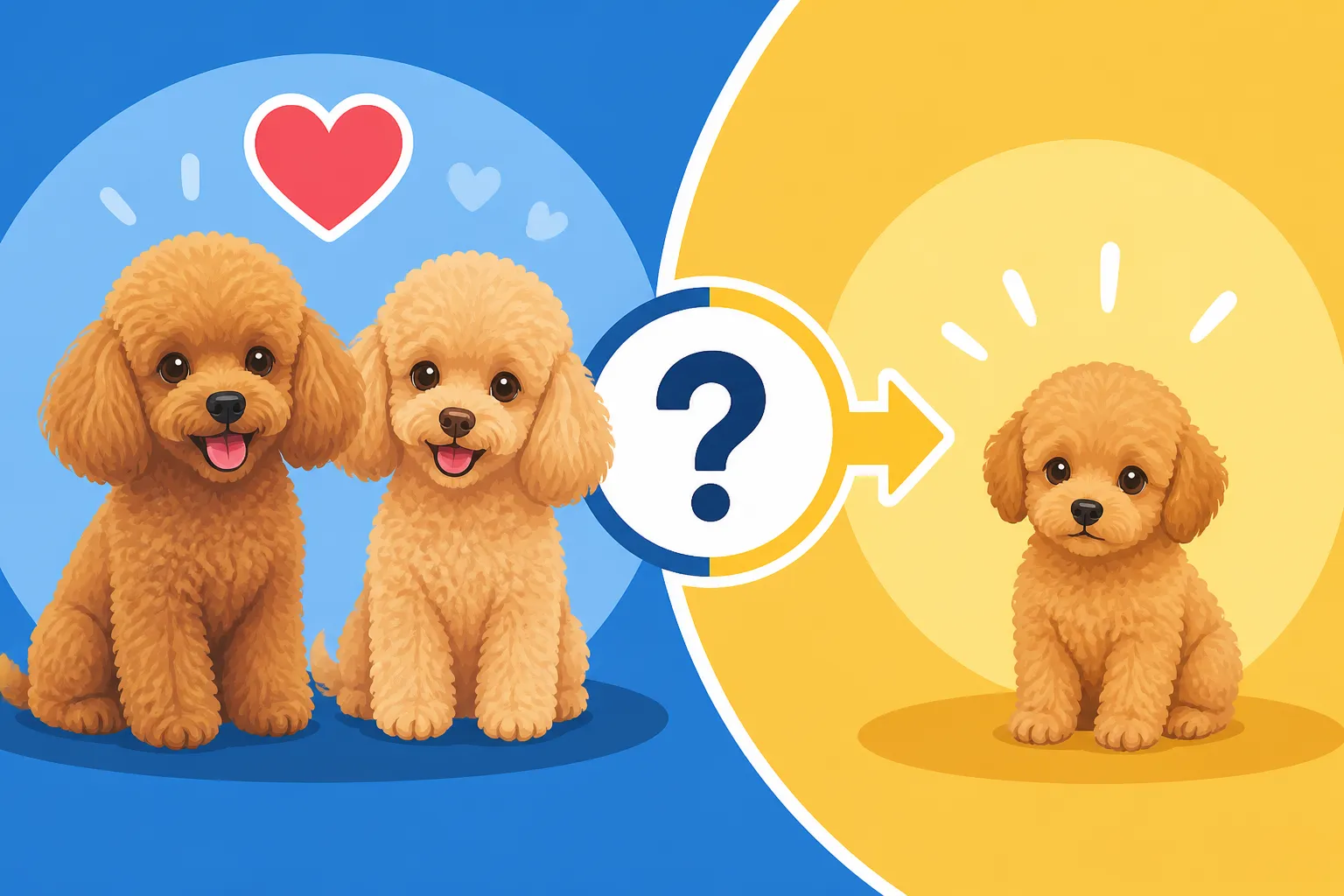
Whether Two Toy Poodles Produce a Miniature
It’s a thought that crosses many Poodle lovers' minds: if you breed two sweet, diminutive Toy Poodles, could you ever end up with a slightly larger, perhaps Miniature-sized Poodle puppy in the litter? This question comes from a natural curiosity about how genetics work and the visible variations even within a single litter. While size can indeed vary, the answer to whether two Toy Poodles reliably produce a Miniature is more intricate than a simple yes or no, deeply rooted in Poodle breed standards and genetic principles. This guide will unravel the fascinating world of Poodle sizing and inheritance, explaining why two Toys almost always give you more Toys, and what that means for both breeders and hopeful owners.
Deconstructing Poodle Size Classifications
Understanding Poodle sizes is the first step to answering this common breeding question. The Poodle breed is unique in having distinct size varieties, each with its own specific standards.
The Defined Poodle Varieties: Toy, Miniature, and Standard
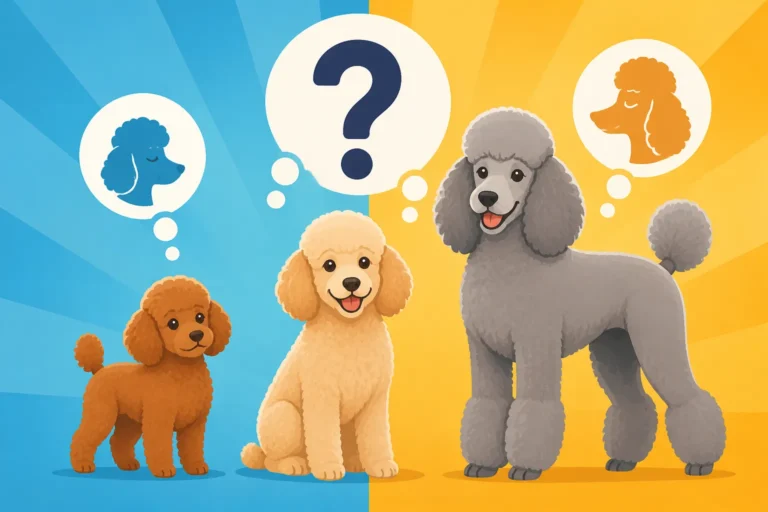
Most major kennel clubs around the world recognize three primary Poodle size varieties: Toy, Miniature, and Standard. These aren't just arbitrary labels; they come with strict height requirements measured at the shoulder (withers) of an adult dog.
- Toy Poodle: These are the smallest, typically standing no more than 10 inches (25 cm) tall at the shoulder. They are delicate and spirited, perfectly suited for apartment living and companionship. When a Toy Poodle puppy is born, breeders are aiming for them to mature within this specific height range. You’ll often find their smaller size influences everything from their food bowl choices on Chewy to the type of harness they wear.
- Miniature Poodle: Falling in the middle, Miniature Poodles typically range from over 10 inches (25 cm) up to 15 inches (38 cm) at the shoulder. They possess the same elegant conformation and intelligence as their larger and smaller cousins but in a more compact package than a Standard. They're robust enough for active families but still small enough to be portable.
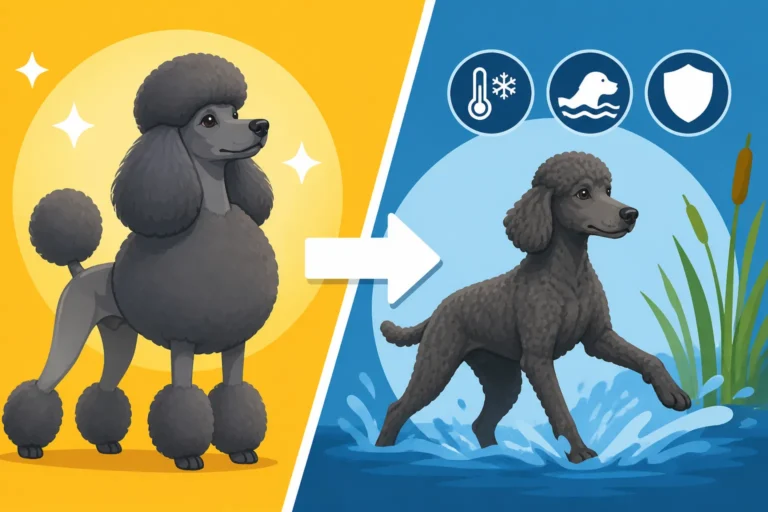
- Standard Poodle: These are the largest, standing over 15 inches (38 cm) at the shoulder, with many reaching 22-26 inches (56-66 cm) or more. They were originally bred as water retrievers, and their size reflects their working heritage. Standard, Miniature and Toy Poodles each have their dedicated fan bases, and it’s these clear Height Limits That Divide the Three Poodles that breeders strive to maintain.
These classifications are fundamental to how breeders approach pairing dogs. A reputable breeder specifically breeds Toy Poodles to other Toy Poodles, Miniatures to Miniatures, and Standards to Standards, always with the aim of producing offspring that fit within the designated size range of that variety.
The Concept of "In-Between" Sizes and the Moyen Poodle
When people ask about Toy Poodles producing Miniatures, they often touch on the idea of an "in-between" size. In North America and many other regions, there isn't an official classification for a Poodle that falls, for instance, between a large Toy and a small Miniature. However, this isn't universally true.
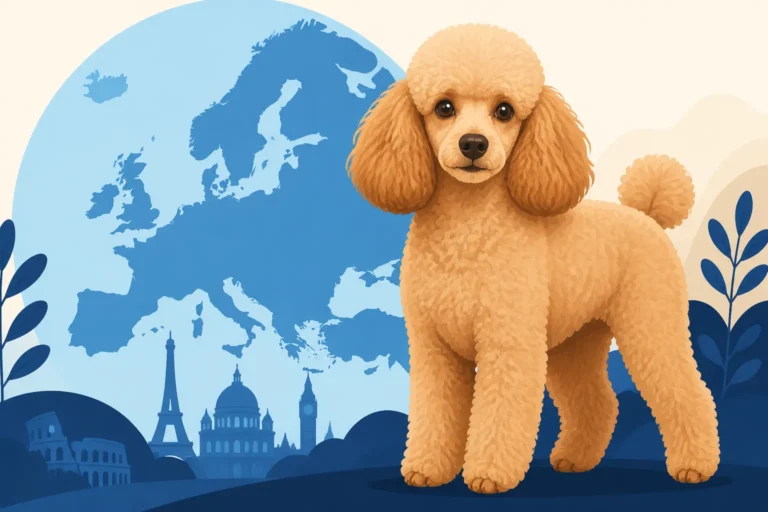
In some European countries, notably France and Germany, a fourth Poodle size is officially recognized: the Moyen Poodle, also known as the Klein Poodle. "Moyen" means medium in French, and "Klein" means small in German. This variety typically stands between 15 and 20 inches (38 to 51 cm) at the shoulder, effectively bridging the gap between the Miniature and the Standard Poodle.
It's crucial to understand that the Moyen Poodle isn't the result of accidentally breeding a Miniature from two Toys. It's a distinct, established variety in its own right in those specific countries, with its own breeding programs. When people discuss "oversized" Toy Poodles or "undersized" Miniature Poodles, they are usually referring to Poodles that fall outside their variety's ideal height range but are still considered members of that original variety, genetically speaking. A large Toy Poodle is still a Toy Poodle; it's simply an oversized one according to the standard. The Moyen or Klein Poodle in Europe illustrates that while intermediate sizes exist, they are specifically bred, not typically a "surprise" from two parents of a smaller, established variety.
The Genetic Principles Behind Poodle Size Inheritance
Poodle breeding, like all animal breeding, is a dance with genetics. It’s not just about two dogs getting together; it's about generations of carefully selected traits, including size.
Breeding True to Type and Size
Reputable Poodle breeders dedicate immense effort to understanding canine genetics to ensure they are "breeding true" to the Poodle's standard—not just in temperament and health, but also in size. This means that if you breed two healthy, well-conformed Toy Poodles from lines known for consistently producing Toy-sized offspring, the overwhelming expectation is that their puppies will also be Toy Poodles.
Size, like many physical traits in dogs, is a complex polygenic trait. This means it's influenced by multiple genes acting together, rather than just one single gene. While simpler traits might be a straightforward dominant/recessive scenario, something as intricate as size involves a combination of factors. This genetic complexity is why breeders rely heavily on understanding the pedigrees of their breeding stock, looking at the size of grandparents, great-grandparents, and full siblings to predict the size of future litters. They are trying to ensure consistency. Genetic Panels for the Three Poodle Sizes can sometimes shed light on specific health issues, but predicting adult size reliably still heavily leans on the lineage.
Why a "Throwback" Isn't a New Variety
Sometimes, in a litter of otherwise appropriately sized puppies, one might grow to be significantly larger or smaller than its littermates or even slightly outside the expected range for its variety. This is often what people refer to as a "throwback." For example, a Toy Poodle litter might have one puppy that, as an adult, measures 11-12 inches at the shoulder, technically exceeding the 10-inch Toy Poodle limit and venturing into Miniature Poodle territory.
However, this "oversized Toy" is not a Miniature Poodle from a breeding classification standpoint. It’s still genetically a Toy Poodle that happened to inherit a combination of genes pushing it to the larger end of the spectrum, or even slightly beyond the official cut-off. It’s not a consistent outcome, nor does it mean its offspring would automatically be Miniatures if bred back to another Toy. Similarly, a very small Miniature Poodle might technically fit into the upper end of the Toy standard, but its genetic makeup is still that of a Miniature. This kind of individual variation, while interesting, doesn't negate the general rule of breeding within varieties. For owners, it means that while you can Predicting an Adult Poodle's Height with reasonable accuracy by looking at the parents, there's always a slight chance of an individual puppy being an outlier.
The Reality of Breeding Two Toy Poodles
So, can two Toy Poodles produce a Miniature? The direct answer, in the context of responsible breeding and breed standards, is overwhelmingly no.
Expected Outcomes from Toy Poodle Pairings
When a reputable breeder pairs two Toy Poodles, their goal and the expected outcome is a litter of Toy Poodles. These puppies will, upon reaching adulthood, fall within the recognized height range for Toy Poodles (up to 10 inches at the shoulder). There will, of course, be natural variation within that range. Some puppies might be on the smaller side, perhaps 6-7 inches, while others might mature closer to the 9-10 inch mark. This is normal biological variation, just like children within the same family can have different heights, but they all remain human.
An occasional "oversized" Toy Poodle might occur in a litter—a puppy that grows to be, say, 10.5 or 11 inches tall. While this particular dog might technically exceed the Toy Poodle standard, it is still genetically a Toy Poodle. It's not considered a Miniature Poodle in terms of its inherited traits or its suitability for breeding as a Miniature. Such a dog would not typically be used in a breeding program aiming to produce Miniatures, as its genetic background is firmly rooted in the Toy variety.
The Breeder's Role in Maintaining Size Standards
Responsible Poodle breeders play a crucial role in maintaining the distinct size varieties. They don't just randomly pair dogs; they meticulously study pedigrees, conduct health screenings (like those required for What a Poodle Breeder Must Test For), and select breeding stock that consistently produces puppies conforming to the desired size and characteristics of their specific variety.
A breeder focused on Toy Poodles will select parents whose lineage shows a strong history of producing dogs within the Toy size range. They would actively avoid breeding an oversized Toy to another oversized Toy with the hopes of creating Miniatures, as this would muddy the genetic waters and undermine the integrity of both varieties. Their ethical commitment is to produce healthy, well-tempered Poodles that exemplify the traits of their variety, including their expected adult size. For anyone purchasing a puppy, understanding this commitment helps ensure you're getting a Poodle that will grow to be the size you expect.
| Poodle Variety | Height Range (at shoulder) | Weight Range (typical) | Primary Purpose/History |
|---|---|---|---|
| Toy Poodle | Up to 10 inches | 4-6 pounds | Companion, Lap Dog |
| Miniature Poodle | 10 to 15 inches | 10-15 pounds | Companion, Performance |
| Standard Poodle | Over 15 inches | 40-70 pounds | Water Retriever, Companion |
What This Means for Poodle Owners
For prospective Poodle owners, understanding the nuances of size inheritance is incredibly helpful when choosing a puppy. It clarifies expectations and helps in making an informed decision.
Choosing a Poodle Puppy Based on Expected Adult Size
If you have a clear preference for a specific Poodle size—be it a tiny Toy, a versatile Miniature, or a majestic Standard—the most reliable way to achieve that is to get a puppy from parents of that same size variety. For example, if you want a Miniature Poodle, you should seek out a breeder who specializes in Miniature Poodles and whose breeding stock are all registered Miniatures. Don't expect a Miniature to magically appear in a litter from two Toy Poodles.
When speaking with breeders, don't hesitate to ask about the size of the puppy's parents, grandparents, and even great-grandparents. Reputable breeders will be transparent about their dogs' pedigrees and how they ensure size consistency. You can also look at the typical size of Poodle food and supplies on a site like Chewy, which often categorizes items by dog size, giving you a tangible idea of what to expect. This helps ensure that the Poodle you bring home will likely grow into the size you’ve prepared for, whether that means a tiny carrier or a spacious dog bed. Looking at The Poodle as a Breed in general terms also reinforces how consistently these sizes have been maintained over generations.
Understanding Variances in a Litter
While a litter of Toy Poodles will produce Toy Poodles, it's important to know that there will still be individual differences. Not every puppy will be the exact same size, even if they're from the same litter. Some will be born a little larger, some a little smaller, and they will grow at slightly different rates. This means that while they all adhere to the "Toy Poodle" genetic blueprint, one might mature to be 7 inches tall while another reaches 9.5 inches. Both are still Toy Poodles.
These variances are part of nature and are distinct from accidentally producing a completely different size variety. As an owner, if you're particularly concerned about a specific height, discuss it with your breeder. They often have a good sense of how each individual puppy is tracking and can give you a more accurate estimate of its likely adult size based on its growth curve and the history of the lines. For example, you might be interested in Whether Toy Poodles Outlive Standards, and while size is a factor in lifespan, individual genetics and care play a huge role. For general health and development, it's also worth noting that just like a Why a Standard Poodle Puppy Should Grow Slowly, a Toy Poodle puppy's growth should be steady and healthy, not rushed.
Ultimately, while the idea of two tiny Poodles producing a medium-sized surprise is a romantic one, the reality of Poodle genetics and dedicated breeding practices ensures that each variety largely stays true to its type. When you select a Poodle, you are investing in centuries of careful breeding that has established these distinct and beloved sizes.
Disclaimer
This article is for general informational purposes only and does not constitute professional advice. Laws, prices and regulations vary by location and change over time. Consult a qualified professional for guidance on your specific situation.