Why Coren Put the Poodle Second
For many Poodle owners, the brilliance of their curly-coated companions is undeniable. These dogs seem to read minds, learn tricks at lightning speed, and engage with us in ways that feel almost human. So, when people hear about Dr. Stanley Coren's widely cited ranking of canine intelligence, a curious question often arises: if Poodles are so incredibly smart, why aren't they number one? This guide will pull back the curtain on Coren's methodology, explain the remarkable reasons the Poodle holds its prestigious second place, and what this high intelligence truly means for daily life with your magnificent Poodle.
Deconstructing Canine Intelligence According to Dr. Stanley Coren
When we talk about "dog intelligence," it's easy to picture a dog doing complex math or writing poetry. But in the world of canine psychology, and particularly in Dr. Stanley Coren's groundbreaking work, the definition is much more specific. Understanding his framework is key to appreciating where the Poodle sits in the hierarchy.
What Coren's "Intelligence" Really Means
Coren's research, primarily detailed in his 1994 book The Intelligence of Dogs, didn't just measure a single, all-encompassing "smartness." Instead, he looked at three main types of intelligence that collectively contribute to what we perceive as a dog's mental capacity:
- Adaptive Intelligence: This refers to a dog's ability to learn from its environment and solve problems independently. It's about how quickly a dog figures things out on its own, without direct human instruction, like finding a hidden treat or navigating a new obstacle. Think of a dog using trial and error to open a gate or figuring out which toy you want them to bring based on context. This is the kind of intelligence that often surprises us with a dog's ingenuity.
- Working and Obedience Intelligence: This is the big one for Coren's ranking. It measures how quickly a dog learns new commands and, crucially, how reliably they obey those known commands. This is what most people typically think of when they imagine a "smart" dog – one that's easy to train and follows instructions. It’s about responsiveness and trainability within a human-directed context.
- Instinctive Intelligence: This category encompasses what a dog was originally bred to do. For a Border Collie, it's herding; for a Labrador, it's retrieving; and for our Poodles, it was complex water retrieval. This isn't necessarily about learning new things, but rather the innate skills and drives encoded in their DNA that allow them to perform specific tasks with proficiency.
The Research Behind the Ranking
Coren's ranking wasn't based on laboratory tests or brain scans. His unique methodology involved surveying a vast panel of experts who had extensive, real-world experience observing dog behavior and learning: professional obedience trial judges.
- The Methodology: Dr. Coren collected data from over 200 obedience judges across North America. He asked them to rank dog breeds based on two specific criteria:
- How many repetitions it took for a breed to understand a new command.
- How reliably a breed would obey a known command on the first try.
These two points heavily lean into the "Working and Obedience Intelligence" aspect. The judges, having seen thousands of dogs of various breeds perform under pressure, were uniquely positioned to offer insights into trainability and compliance.
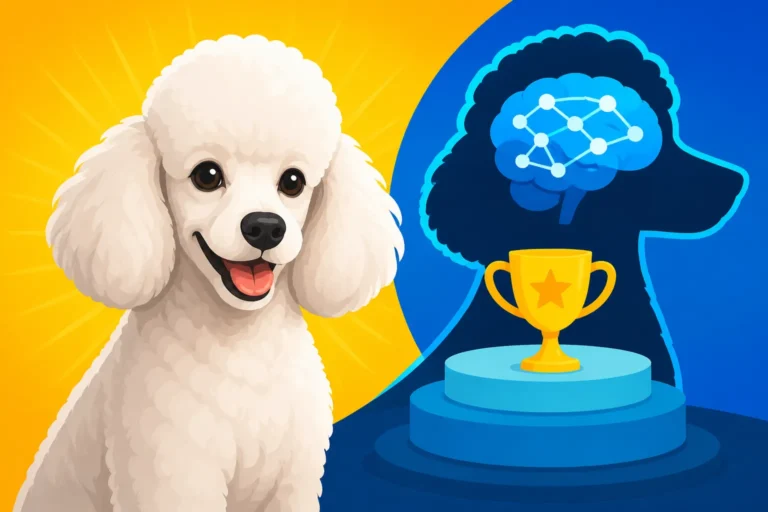
- The Obedience Bias: It's absolutely crucial to understand this inherent bias in Coren's work. His ranking primarily reflects a dog's trainability and responsiveness to human commands in an obedience setting, rather than a holistic measure of all cognitive abilities. While Poodles certainly possess high adaptive and instinctive intelligence, their stellar second-place ranking is a direct testament to their extraordinary capacity for working and obedience. This doesn't mean other forms of intelligence are irrelevant, but they weren't the primary focus of this particular ranking. It highlights how well Poodles integrate into human society by readily understanding and responding to our directions. What Coren Measured to Rank the Poodle
Why the Poodle Earned Its Sterling Second Place
The Poodle's number two spot isn't a fluke; it's a well-deserved recognition of their truly exceptional mental capabilities, particularly in the realm of working and obedience. Their history, temperament, and sheer brainpower combine to create a canine companion that is not just smart, but profoundly intelligent in practical ways.
Exceptional Working and Obedience Intelligence
Poodles are celebrated for their sharp minds and their eagerness to engage with their human partners, making them incredibly quick studies.
- Lightning-Fast Learners: Poodles are legendary for their ability to pick up new cues with astonishing speed. While many breeds might require dozens of repetitions to truly grasp a new command, a Poodle often gets it in five tries or even fewer. Imagine trying to teach your dog a novel trick, like "weave through your legs" or "fetch your leash." With a Poodle, you might find them anticipating your next move before you've even fully demonstrated the action. This rapid acquisition of commands is a defining characteristic of their high working intelligence, making them a joy to train for both basic manners and advanced tasks. You can literally see the gears turning in their heads as they make connections between your words and actions. Why Poodles Learn a Cue in Five Repetitions
- Reliable Compliance: Once a Poodle has learned a command, their consistency in obeying it is remarkable. They typically respond to a known command on the first try with a success rate of 95% or more, even when distractions are present or without the immediate promise of a treat. This isn't just about being compliant; it speaks to their deep understanding of the command itself and their desire to cooperate. This makes them incredibly responsive partners in everything from competitive obedience to simply being a well-mannered family member who comes when called, regardless of the squirrel that just dashed across the yard. Their consistency is a huge relief for owners, especially when off-leash safety is a concern.
The Poodle's Adaptive Intelligence and Problem-Solving Prowess
Beyond simply following commands, Poodles possess a robust capacity for independent thought and problem-solving, a true indicator of their adaptive intelligence.
- Independent Thinking: Poodles aren't just robotic followers; they have a strong ability to think for themselves. If they encounter a novel situation, like a new gate to open or a treat hidden under a cup, they will actively experiment and strategize to find a solution. My own Poodle, Willow, once figured out how to open the child-proof lock on the kitchen cabinet by systematically trying different angles and pressures until it clicked open. She didn't learn this from me; she adapted and solved the problem herself. This kind of ingenuity comes from their original working role, where dogs needed to make decisions without constant human direction.
- Clever Solutions (Sometimes Too Clever!): Their problem-solving skills can sometimes manifest in mischievous ways. Poodles are notorious for finding ingenious methods to achieve their desires, whether it's getting onto a forbidden sofa, extracting a treat from a seemingly impenetrable container, or even figuring out the schedule of the mail carrier to get maximum bark time. They can be incredibly manipulative in the most charming way, often using their intelligence to "train" their humans! For instance, a Poodle might learn that nudging your hand with their nose when you're working will get them attention, and they'll repeat that behavior reliably. This showcases their adaptive intelligence – they learn what works and apply it. How a Poodle Solves a Problem
The Poodle's Instinctive Roots
The Poodle's ancient heritage as a working dog laid a powerful foundation for its exceptional intelligence.
- Water Retriever Heritage: The name "Poodle" itself comes from the German word "Pudel," meaning "to splash." These dogs were originally bred as formidable water retrievers, tasked with a highly complex job. They weren't just fetching ducks; they were navigating reeds, remembering where fallen birds landed, enduring cold water, and often working independently far from the hunter. This required immense problem-solving skills, memory, and a keen sense of their environment. This strong instinct for retrieving and intelligent work in dynamic, often challenging, environments genetically predisposed them to high general intelligence. The Water Dog Behind the Poodle
- Versatility in Modern Roles: This deep-seated, functional intelligence means Poodles excel in a vast array of modern dog sports and working roles. You'll find them performing brilliantly in agility, competitive obedience, rally, therapy work, assistance dog roles, and even scent detection. Their inherent drive to work and learn, combined with their sharp minds and athletic bodies, makes them incredibly adaptable to almost any mental and physical challenge you present them with. Whether it's weaving through poles in an agility course or carefully searching for a scent article, their intelligence allows them to thrive.
The Nuance of Number Two: Why Not First?
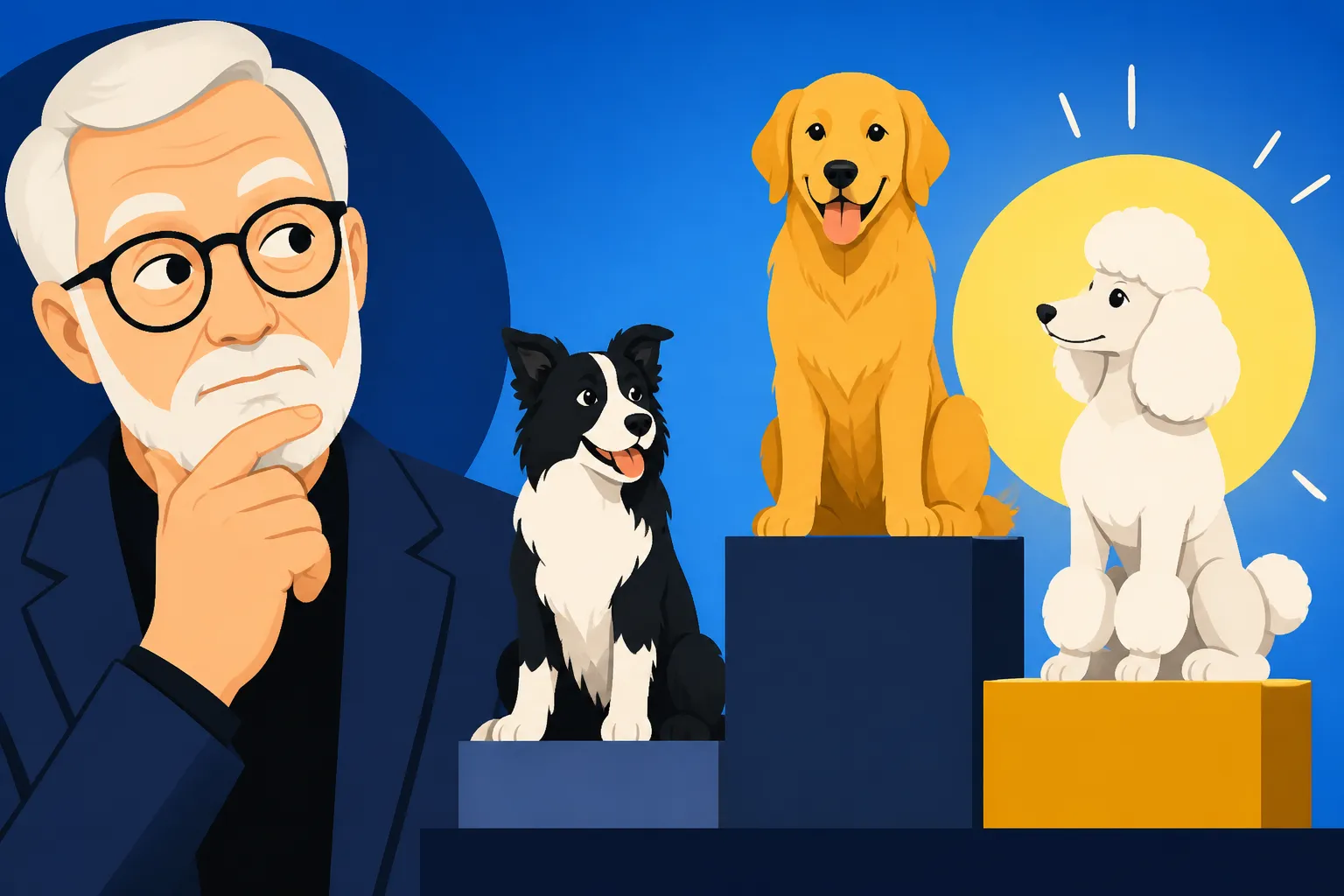
So, if Poodles are so brilliant, why did Dr. Coren place them second and not first? The answer lies in the subtle but significant differences in their primary drives and the specific criteria used in the ranking. It's not a flaw in the Poodle; it's a testament to the unparalleled specialization of the Border Collie.
The Border Collie's Unmatched Herding Drive
The breed that secured the top spot, the Border Collie, represents an apex of specialized working intelligence.
- Hyper-Focused Instinct: The Border Collie's brain is singularly wired for herding. Their instinctive intelligence for controlling movement is almost obsessive, often manifesting as an intense stare, a low crouch, and an unwavering focus on perceived "flocks" – whether sheep, children, or even moving vacuum cleaners. This laser-like focus on one task allows them to process and react to complex herding commands with a speed and precision that is truly astonishing. They can work at great distances, responding to subtle whistles, hand signals, and verbal cues with instant compliance. This deep, intrinsic drive to herd gives them an edge in the specific obedience criteria Coren measured.
- Specialized Working Intelligence: While Poodles are incredibly versatile, the Border Collie's highly specialized working intelligence for herding sets it apart. Their capacity to learn complex sequences of commands related to moving and managing livestock is phenomenal. It's less about generalized problem-solving in a wide variety of scenarios and more about supreme mastery of a very specific, demanding job. This specialization means they often excel beyond other breeds when measured against criteria directly related to processing and executing commands with extreme precision and focus, which was central to Coren's survey. Which Breed Beats the Poodle for Intelligence
Differing Motivations and Focus
The underlying motivations that drive Poodles and Border Collies, while both leading to high trainability, have distinct characteristics that influence their expression of intelligence.
- Poodle's Desire to Engage: Poodles are often described as deeply people-focused. They thrive on interaction, partnership, and working with their owners for approval and companionship. Their intelligence is frequently expressed through this cooperative spirit and their strong desire to please, making them incredible family members and versatile sport dogs. They excel because they want to participate in your world.
- Border Collie's Drive to Control: A Border Collie's intelligence is often driven by an intrinsic need to do their job, to control and manage. While they are exceptionally trainable and form strong bonds with their handlers, their primary motivation often stems from the task itself and their inherent desire to fulfill their herding instincts. This gives them a single-minded focus and an almost unparalleled intensity in execution, which contributed to their top ranking in an obedience-focused assessment. It’s a subtle but important difference in their core drive.
Coren's Criteria and the Definition of "Smart"
It's vital to interpret Coren's findings within their specific context.
- Acknowledge the Limitations: Coren's ranking is largely based on trainability for obedience tasks as observed by obedience judges. It doesn't necessarily quantify other forms of intelligence, such as emotional intelligence, creativity, or independent problem-solving in novel, non-command-driven scenarios. Poodles often display incredible emotional sensitivity, a deep understanding of human emotions, and a knack for adapting to new situations in ways that aren't easily measured in an obedience ring. They can be incredibly empathetic and seem to "know" when you're sad or stressed, offering comfort without being told. The Poodle Character
- No "Best" Breed, Just Different Strengths: Ultimately, being ranked second is not a flaw; it's an extraordinary achievement that places the Poodle among the elite of the canine world. It simply highlights that the Border Collie possesses a slightly different, highly specialized form of intelligence and an intensity of focus that fit Coren's specific assessment criteria for obedience a tiny bit better. For the vast majority of pet owners, the Poodle's intelligence is more than enough to handle complex training, participate in a huge variety of activities, and provide deeply engaging companionship. Both breeds are remarkable; they simply have different genius zones. Poodle Intelligence and Coren's Ranking
Living with a Number Two Genius: Practical Implications for Poodle Owners
Having a dog with such a high level of intelligence is a double-edged sword: it offers immense rewards but also comes with unique responsibilities. A smart Poodle needs an engaged owner to truly thrive.
The Need for Mental Stimulation
A Poodle's brain is a powerful engine, and it needs fuel. An under-stimulated Poodle is often a Poodle in trouble.
- Boredom Leads to Mischief: A Poodle with an idle mind will almost certainly invent its own entertainment, and that usually spells trouble for your shoes, furniture, or peace and quiet. This can manifest as excessive barking at perceived threats (or just leaves blowing by), destructive chewing, digging, or even attempts to "rearrange" your home. They don't do it to be "bad"; they do it because their intelligent minds crave activity. What a Poodle Does When Its Brain Is Idle
- Enrichment is Non-Negotiable: To keep your Poodle happy, mentally healthy, and well-behaved, daily mental exercise is just as crucial as physical activity. This means incorporating puzzle toys, snuffle mats for scent work, interactive feeders, regular training sessions, and engaging play into their routine. Websites like Chewy offer an enormous selection of brain-stimulating toys and slow feeders that can turn mealtime into a challenging game, helping to channel that high intelligence constructively. Don't underestimate the power of simply teaching them a new trick every week; it truly tires their brain out. Keeping a Poodle Mind Occupied
Training and Challenge
Harnessing a Poodle's innate brainpower is one of the most rewarding aspects of ownership. They are truly partners in learning.
- Beyond Basic Obedience: Poodles don't just learn new things; they genuinely thrive on the challenge of it. Don't stop at the basic "sit" and "stay." Explore advanced obedience, trick training, dog sports like agility or rally, or even scent work. They not only enjoy the mental engagement but also cherish the bonding experience it creates with you. Consider enrolling in classes or watching online tutorials for new challenges. You'll be amazed at what they can achieve, often performing with such grace and precision that they steal the show. Training the Second Smartest Dog Breed
- Consistency is Key: While Poodles learn quickly, their intelligence also means they can pick up your inconsistencies just as fast. If a command or a household rule is sometimes enforced and sometimes not, they will quickly figure out the loopholes. For example, if "off the sofa" only applies when guests are over, your Poodle will learn that distinction and happily hop up when you're alone. Consistency in training, boundaries, and expectations is vital to ensure they understand what you want and don't try to outsmart you. They are always testing the boundaries, and a smart dog will exploit any weakness in your routine.
Socialization and Sensitivity
A sharp mind often comes with heightened awareness and sensitivity, which needs careful nurturing.
- Early and Ongoing Socialization: Poodles are highly observant and can be quite sensitive to their environment. Proper and early socialization, ideally during their critical puppyhood, is absolutely vital. Expose them to a wide variety of sights, sounds, people, places, and well-behaved dogs in a positive and controlled manner. This helps them grow into confident, well-adjusted adults rather than becoming overly wary, reactive, or anxious. A well-socialized Poodle is a joy; an undersocialized one can be a challenge. Socializing a Poodle Before It Turns Wary
- Reading Your Poodle's Signals: Their intelligence allows them to read your emotions, tone of voice, and body language with uncanny accuracy. This means you need to be mindful of how you communicate with them. Harsh handling, yelling, or overly physical corrections can be very detrimental to a Poodle's sensitive nature, causing them to shut down, become anxious, or even fearful. Positive reinforcement methods, based on rewards and encouragement, are by far the most effective and build a stronger, more trusting bond. They crave understanding and positive feedback. Reading Pain in a Sensitive Poodle
The Joy of a Brilliant Companion
Despite the responsibilities, living with a Poodle is an incredibly enriching and rewarding experience.
- A Truly Engaging Partner: With a Poodle, you don't just have a pet; you have a truly engaging partner who interacts with you on a deeper intellectual and emotional level. They are often described as having an almost human-like understanding, and their ability to learn, adapt, and even anticipate your needs is remarkable. They will follow you from room to room, keenly observe your actions, and seem to know what you're thinking before you even say it.
- Problem-Solving Together: Whether it's navigating a new hiking trail, working through a complex training sequence, or simply trying to figure out which toy you're asking for, a Poodle loves to be a collaborative partner. Their intelligence means they appreciate being involved and given tasks, turning everyday life into an intellectual adventure for both of you. Imagine teaching your Poodle to retrieve specific items by name (their "ball," their "rope," your "keys") – it’s a testament to their extraordinary abilities and the endless possibilities of their intellect. You can even find interactive feeders from Chewy that dispense treats as they solve puzzles, making every meal an exciting challenge for their brilliant minds.
| Aspect of Intelligence | Poodle Traits | Border Collie Traits |
|---|---|---|
| Working/Obedience | Learns new commands in 5-10 repetitions. Obeys first command 95% of the time or more. Highly responsive and eager to please. | Learns new commands in 1-5 repetitions. Obeys first command 95% of the time or more, often with minimal, distant cues. Exceptional precision and focus. |
| Adaptive | Strong independent problem-solving. Figures out environmental puzzles. Clever in daily interactions (sometimes mischievously). | Excellent at solving novel problems related to their work (e.g., finding the best route to herd). Can adapt quickly to changing working conditions. |
| Instinctive | Bred for complex water retrieval. Strong natural retrieving drive. Excels in scent work and agility due to general athleticism and intelligence. | Highly specialized herding instinct. Strong drive to control movement. Naturally understands flock dynamics and pressures. |
| Motivation | People-focused; eager to please owner. Thrives on partnership and interaction. | Task-focused; driven by the job itself. Intense focus on control and execution, often with an internal reward. |
| Versatility | Highly versatile across many dog sports and roles (agility, obedience, therapy, service, tricks, hunting tests). | Primarily excels in herding and related tasks (agility, obedience often stem from herding-like precision). Can be adapted, but often shines brightest when focused. |
Disclaimer
This article is for general informational purposes only and does not constitute professional advice. Laws, prices and regulations vary by location and change over time. Consult a qualified professional for guidance on your specific situation.