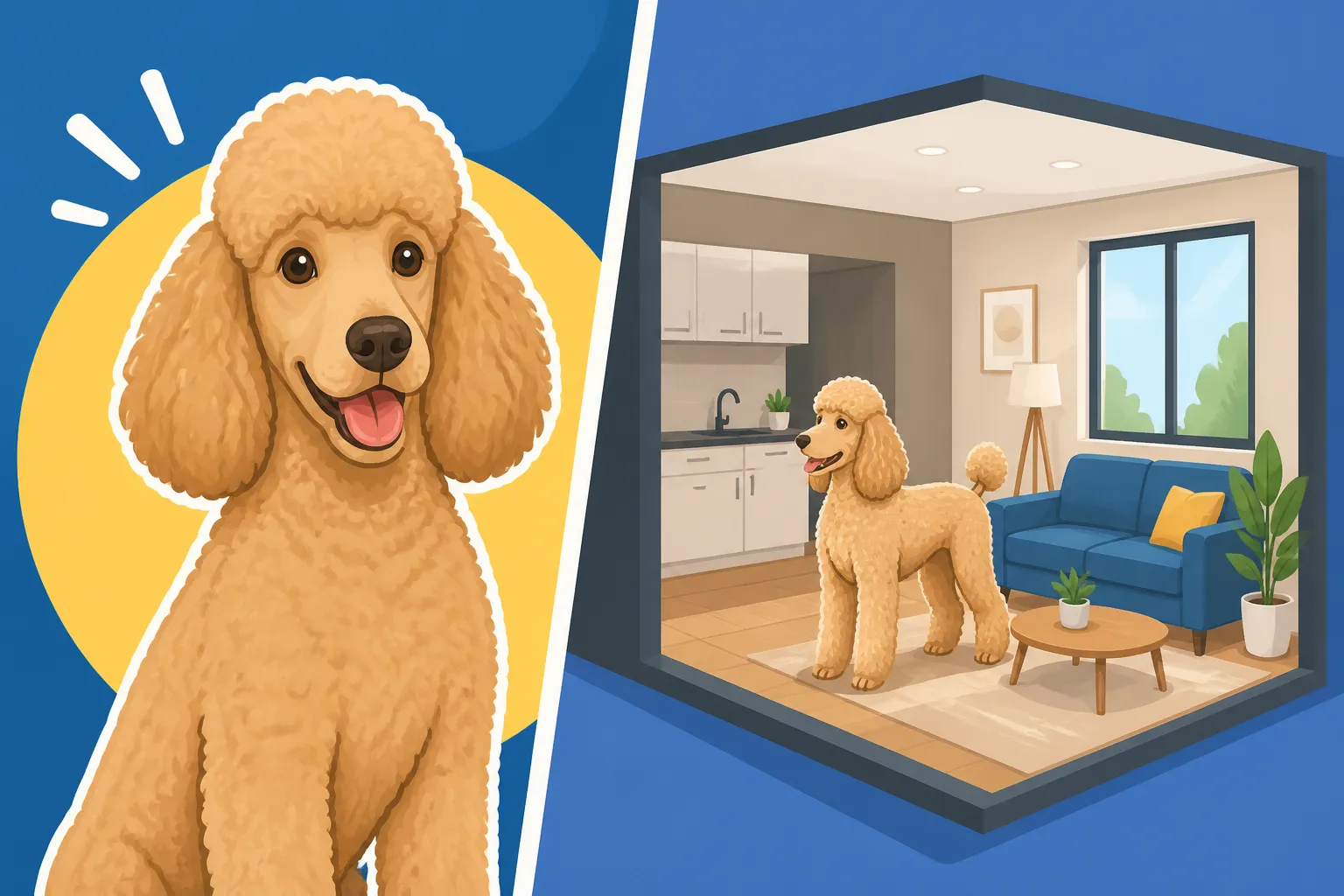
Whether a Standard Poodle Fits a Flat
It’s a truly common scenario, isn't it? You've fallen in love with the majestic Standard Poodle, dreaming of their intelligent gaze and elegant presence, but then a wave of anxiety hits: you live in a flat, and the conventional wisdom screams that big dogs need big yards. This misconception often stops prospective owners in their tracks, feeling they can't possibly provide a good home. This guide is here to tell you that with the right preparation and understanding, a Standard Poodle can absolutely thrive in an apartment setting, and we'll walk you through exactly how.
Debunking the 'Big Dog, Big Yard' Myth for Poodles
Let's cut right to the chase: the idea that a large dog must have a sprawling backyard to be happy is largely outdated and, frankly, often untrue. While a yard can be convenient, it's rarely the be-all and end-all of a dog's well-being. Many dogs with large yards are left to their own devices, becoming bored and destructive, while apartment dogs with dedicated owners receive far more engagement and exercise. Poodles, with their inherent intelligence and desire for companionship, are a prime example of a breed where owner interaction trumps square footage.
Why a Yard Isn't the Only Answer
Think about it: how many times have you seen a large dog with a vast yard who still sits by the back door, barking for someone to come out and play? Or perhaps they just lie on the porch, waiting for their next walk. A yard, in itself, doesn't provide exercise or mental stimulation. It's just space. What truly matters is how that space, or lack thereof, is managed by the human. A Standard Poodle’s needs are far more about their 'people' than their 'place'. They want to be where you are, doing what you're doing, and that makes them surprisingly adaptable to smaller living quarters, provided their core needs are met outside.
In fact, some of the most well-adjusted and well-behaved Standard Poodles I know live in urban flats. Their owners are disciplined about daily walks, trips to the park, and mental enrichment. They understand that quality interaction and structured activity are far more valuable than simply having access to a patch of grass. A Poodle left alone in a large yard for hours might still develop destructive habits or excessive barking out of sheer boredom, whereas a Poodle in a flat who gets two good walks and some puzzle toys will be much happier.
The Poodle's Temperament and Adaptability
Poodles, across all three sizes, are known for their intelligence, eagerness to please, and sensitive nature. They form strong bonds with their families and generally prefer to be with their people rather than isolated outdoors. This "velcro dog" tendency, while sometimes leading to Separation Anxiety in a Velcro Poodle if not properly managed, is also what makes them great apartment companions. They are often happy to snooze at your feet while you work or relax, as long as their physical and mental energy has been adequately drained earlier in the day.
Their intelligence is a double-edged sword: it means they learn quickly, which is fantastic for training for apartment life, but it also means they get bored easily. A bored Poodle, whether in a mansion or a studio, can become destructive. This isn't a space issue; it's a mental stimulation issue. Therefore, apartment living with a Standard Poodle forces owners to be more proactive about meeting these needs, often resulting in a better-adjusted dog than one who is simply let out into a yard without further engagement.
Understanding a Standard Poodle's True Needs Beyond Square Footage
So, if a yard isn't the primary factor, what does a Standard Poodle truly need to thrive, especially when living in a flat? It boils down to a combination of physical exercise, mental engagement, consistent grooming, and ample companionship. These are universal Poodle needs, regardless of the size of your home.
Daily Exercise Requirements
A Standard Poodle is an active, athletic dog originally bred as a water retriever. They need regular, vigorous exercise to stay healthy and happy. This isn't about being able to run laps in your living room; it's about getting out into the world. You should aim for at least 60-90 minutes of dedicated exercise daily, broken into two or three sessions.
This might look like a brisk 30-minute walk in the morning, a trip to a dog park or open field for some off-leash running and fetching in the afternoon, and a final shorter walk or play session in the evening. Daily Exercise for a Standard Poodle is non-negotiable for their physical and mental well-being. Remember, a tired Poodle is a good Poodle! If you live in a city, this could mean exploring different parks, using long lines for safe 'off-leash' experiences, or even finding a doggy daycare for a few days a week to ensure they get their zoomies out.
Mental Stimulation and Enrichment
This is arguably more important for a Standard Poodle than endless physical exercise, especially in a smaller living space. Their brilliant minds need to be challenged. Without mental work, they'll invent their own, which often translates to chewing furniture, incessant barking, or other undesirable behaviours. This is a common frustration for owners who don't understand that a Poodle's brain needs a workout just as much as its body.
Think puzzle toys, scent work games (hiding treats around the flat for them to find), regular training sessions (Poodles excel at learning new tricks!), or even enrolling in dog sports like obedience or agility. Even 10-15 minutes of focused training can be as tiring for a Poodle as a long walk. You can find a fantastic array of brain-teasing toys on sites like Chewy that can keep them occupied and thinking. If you're wondering What a Poodle Does When Its Brain Is Idle, trust me, it's rarely good for your sofa.
Consistent Grooming
This isn't directly related to flat living, but it's a major, often underestimated, requirement for all Poodles. Their unique non-shedding, constantly growing coat requires regular attention. Neglecting it, whether you live in a palace or a flat, leads to painful matting, skin issues, and costly trips to the groomer. Expect to brush your Standard Poodle almost daily, line-brushing right down to the skin, and schedule professional grooming every 4-6 weeks.
Living in a flat might mean finding a dedicated corner for grooming or investing in a portable grooming table to keep the loose hair contained. Regardless of your home size, understanding how to properly Brushing a Poodle to the Skin is vital to prevent severe matting. Grooming is a bonding activity, and getting your Poodle used to it from a young age will make apartment life, and regular visits to the groomer, much smoother.
Companionship and Training
Poodles are intensely social creatures. They thrive on being part of the family, not relegated to a separate space. In a flat, this means they're right there with you, which is exactly what they want. However, this also means they need to be well-trained to be good housemates. Solid obedience, good Leash Manners for a Standard Poodle, and respect for house rules are essential.
Basic commands like "sit," "stay," "down," and a reliable "come" are paramount. Also, teaching them a "place" command, where they go to a designated bed or mat and stay there, can be invaluable in a smaller space, especially when you have visitors or need them out of the way for a moment. Poodles are one of Training the Second Smartest Dog Breed, so they pick up on these things quickly with consistent positive reinforcement. This level of companionship and training ensures they're a joy to live with, no matter the square footage.
Making Apartment Life Work for Your Standard Poodle
Successfully living with a Standard Poodle in a flat isn't just possible; it can be incredibly rewarding. It simply requires a thoughtful, proactive approach to their care and routine. It's about designing your life around their needs, which, frankly, is true for any dog, regardless of breed or home size.
Establishing a Solid Daily Routine
Consistency is key for dogs, and especially so for Poodles in an apartment. A predictable routine helps them feel secure and understand what's expected of them. This means regular feeding times, scheduled exercise outings, consistent potty breaks, and designated times for play and training.
For example, your day might look like this:
| Time | Activity | Purpose |
|---|---|---|
| 6:30 AM | Potty break | First relief of the day |
| 6:45 AM | Morning walk (30-45 mins, brisk pace) | Physical exercise, mental stimulation from smells/sights |
| 7:30 AM | Breakfast & water | Fueling up for the day |
| 8:00 AM | Quick potty break | Post-meal relief |
| 8:15 AM | Interactive puzzle toy or short training session | Mental enrichment while you get ready |
| 9:00 AM | Departure (if working away) | Ensure a durable chew or puzzle toy from Chewy is available to ease separation |
| 12:00 PM | Midday potty break (if possible, dog walker/home visit) | Crucial for bladder health |
| 4:30 PM | Afternoon exercise (45-60 mins, park, run, dog sport) | Major energy release, socialization, skill practice |
| 5:30 PM | Dinner & water | Evening meal |
| 6:00 PM | Quick potty break | Post-meal relief |
| 7:00 PM | Relaxation, gentle play, training refresh | Bonding, calm mental engagement |
| 9:00 PM | Final potty break before bed | Last chance to relieve themselves |
This structured approach ensures all their needs are met, preventing boredom and frustration that can lead to apartment-unfriendly behaviours.
Optimizing Your Apartment Space
While a Standard Poodle is a large dog, they don't necessarily need a huge amount of active indoor space. They need a comfortable, designated area for themselves.
- Crate Training: A crate is invaluable for apartment living. It provides a safe den for your Poodle, aids in house training, and can prevent destructive chewing when you're not able to supervise directly. Ensure you get the right size so they can stand, turn around, and lie down comfortably. Crate Training a Poodle That Wants Company is a skill worth investing in early.
- Comfortable Bedding: Invest in a high-quality, supportive dog bed. They might enjoy a raised bed that allows air circulation or an orthopedic bed for joint support as they age. Place it in a quiet, yet central, part of the flat where they can still feel part of the family without being underfoot.
- Designated Grooming Spot: As mentioned, pick a spot that's easy to clean, perhaps near a window for good light, where you can do daily brush-outs.
- Smart Storage: For toys, grooming tools, and food, smart storage solutions keep your flat tidy and your Poodle's supplies organized. You might keep their kibble in a sealed container and order larger bags from Chewy for convenience, delivered right to your door.
Handling Noise and Socialization
Urban environments are inherently noisier than rural ones, which can be a challenge for some dogs. Poodles can be alert barkers, so addressing Poodle Barking and Alertness early is crucial.
- Desensitization: Expose your Poodle puppy to a variety of sounds, sights, and people from a young age. Gradually introduce them to street noises, sirens, children playing, and busy environments. This helps them learn that these sounds are normal and not threats.
- White Noise: Using a white noise machine or leaving a radio on softly can help mask outside noises that might trigger barking while you're away.
- Positive Socialization: Regularly take your Poodle to dog-friendly places, meet friendly strangers, and arrange playdates with well-behaved dogs. Socializing a Poodle Before It Turns Wary is vital for them to be comfortable and confident in a busy apartment complex or city park. The goal is a calm, well-adjusted dog who takes new experiences in stride rather than reacting fearfully or aggressively.
Overcoming Common Apartment Challenges with a Standard Poodle
Living in a flat with a Standard Poodle isn't without its unique hurdles, but with foresight and consistent effort, each can be effectively managed. It's about being proactive rather than reactive.
Managing Potty Training and Breaks
This is perhaps the biggest logistical challenge for a flat-dweller with any dog, especially a puppy or a senior. You don't have a back door to a yard; every potty break requires a trip outside.
- Frequent Outings: For puppies, this means very frequent trips – sometimes every 30-60 minutes, and after every meal, nap, and play session. It’s a commitment, but essential for success. As they get older, they can hold it longer, but 3-4 walks a day is still generally ideal for an adult Standard Poodle.
- Designated Spot: Find a convenient, safe, and clean outdoor area near your flat that you can use consistently for potty breaks. Consistency helps your Poodle understand this is the spot. Always clean up after your dog, especially in shared urban spaces.
- Emergency Plan: For unexpected situations or extreme weather, having an indoor potty solution like pee pads or an indoor grass patch can be a temporary backup, but should not replace regular outdoor breaks.
Addressing Boredom and Destructive Chewing
As mentioned earlier, a bored Poodle is a destructive Poodle. This can be exacerbated in a smaller space where they might feel more confined.
- Enrichment Schedule: Integrate mental stimulation throughout their day. This isn't just about walks; it's about making their environment engaging. Use puzzle feeders for meals, provide a variety of safe chew toys, and rotate them regularly to keep things fresh. Products from Chewy offer a wide selection of durable chew toys that can stand up to a Standard Poodle's jaws.
- Chew Training: Teach your Poodle what they are allowed to chew. Provide appropriate chew items (like Kongs, Nylabones, or bully sticks) and redirect them gently if they try to chew something inappropriate. If they go for the furniture, give them an approved chew toy and praise them for taking it.
- Structured Downtime: After exercise and mental stimulation, Poodles are generally quite happy to relax. Teach them to settle calmly in their bed or crate. This prevents them from feeling the need to constantly entertain themselves, often destructively.
Navigating Shared Spaces and Neighbours
Living in close proximity to others requires mindful dog ownership. Your Poodle's behaviour directly impacts your neighbours.
- Leash Etiquette: Always keep your Standard Poodle on a leash in common areas of your building and public spaces. Not everyone is a dog lover, and a large, bounding Poodle can intimidate some people. Good Leash Manners for a Standard Poodle are fundamental to harmonious city living.
- Cleanliness: Be diligent about cleaning up after your Poodle, both indoors and out. No one appreciates stepping in dog waste in the hallway or on the sidewalk.
- Noise Control: Work on quiet commands and address excessive barking proactively. If your Poodle barks when you leave, try soundproofing, white noise, and training to reduce Separation Anxiety in a Velcro Poodle. A considerate owner makes for happy neighbours, which is essential for long-term apartment living with a dog.
- Introduce Your Dog: If your neighbours are open to it, a calm, supervised introduction can go a long way in fostering good relationships. A friendly Poodle who has met the neighbours is often better tolerated than an unknown dog who only barks from behind a door.
Ultimately, a Standard Poodle can thrive in a flat, not just survive. Their happiness and well-being stem from the care, attention, and consistent effort you put into meeting their unique needs. It’s a testament to the idea that love and engagement are always more important than square footage.
Disclaimer
This article is for general informational purposes only and does not constitute professional advice. Laws, prices and regulations vary by location and change over time. Consult a qualified professional for guidance on your specific situation.