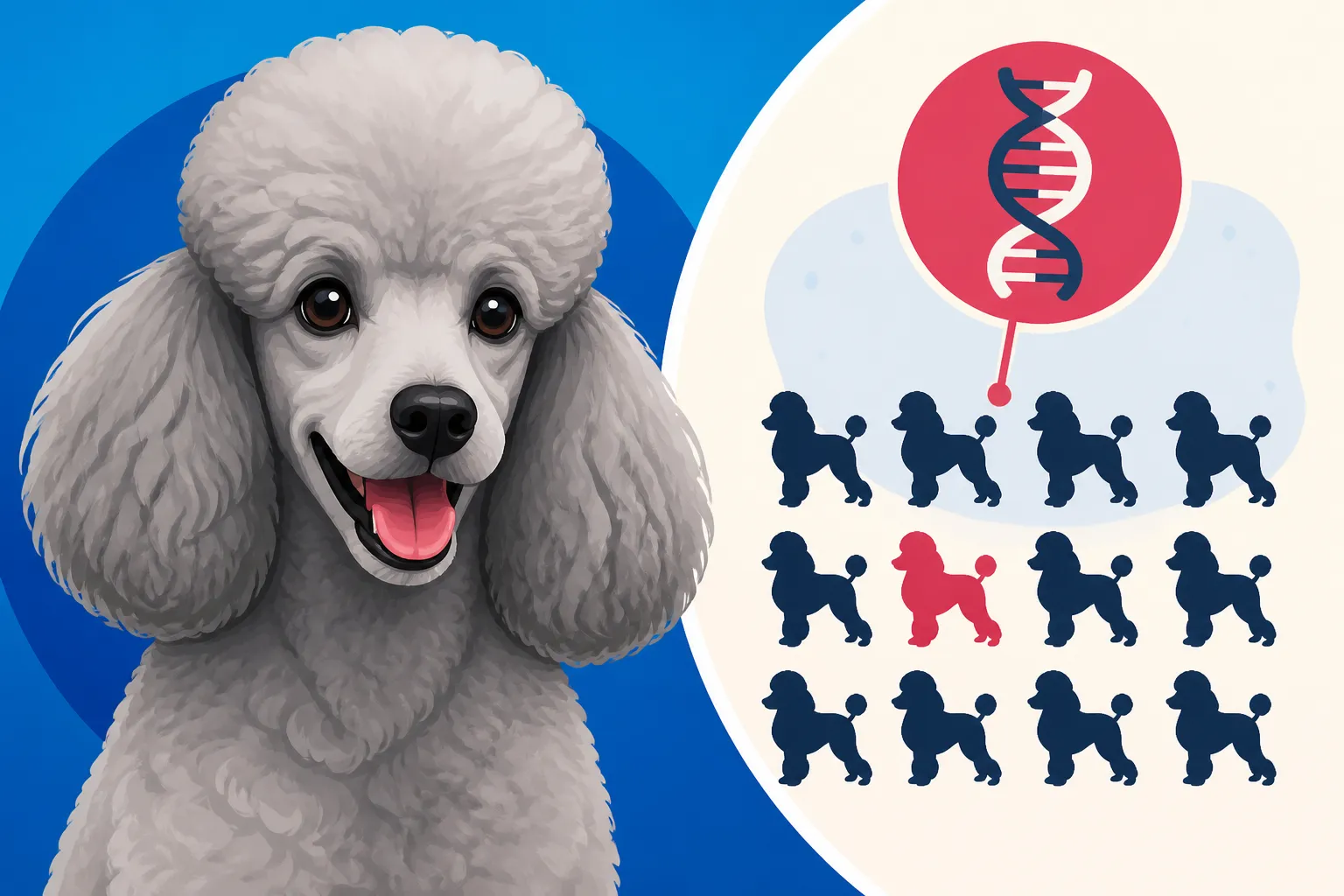
How Many Poodles Carry the PRA Mutation
It's utterly heartbreaking to imagine your beloved Poodle losing their eyesight, slowly and irreversibly. The fear of inherited conditions like Progressive Retinal Atrophy (PRA) hangs heavy over many Poodle owners and prospective puppy buyers, leaving us anxious about what the future holds for our furry family members. This guide aims to shed light on how many Poodles carry the PRA mutation, delving into the genetics, prevalence, and crucial importance of testing to help you navigate this complex health concern with knowledge and confidence.
Understanding Progressive Retinal Atrophy in Poodles
When you envision your Poodle, you probably picture their bright, intelligent eyes following your every move, full of curiosity and affection. The thought of those eyes dimming, of their world fading into darkness, is a heavy burden no owner wants to bear. Yet, Progressive Retinal Atrophy (PRA) is a reality for some Poodles, a group of genetic eye diseases that slowly but inevitably lead to blindness.
What is PRA and How Does It Affect Vision?
Progressive Retinal Atrophy isn't just one disease; it's a blanket term for several different inherited conditions that cause the gradual degeneration of the retina, the light-sensitive tissue at the back of your Poodle's eye. Think of the retina as the film in a camera; it captures images and sends them to the brain. In Poodles with PRA, the cells in this "film" slowly start to die off, losing their ability to process light.
Typically, the rod cells are affected first. These are the cells responsible for vision in dim light and detecting motion. This means the first noticeable sign for many owners is their Poodle developing "night blindness." They might become hesitant to go out after dark, bump into furniture in dimly lit rooms, or seem disoriented in familiar surroundings once the sun goes down. As the disease progresses, the cone cells, which handle bright light and color vision, also begin to fail. Eventually, this leads to complete blindness, even in daylight. It's a cruel, irreversible march towards darkness, and as a Poodle owner, it's a condition you truly hope your dog never faces.
Recognizing the Early Signs of PRA
Spotting PRA in its early stages can be tricky because Poodles, like many dogs, are incredibly adept at adapting to vision loss. They rely heavily on their other senses – their powerful nose and keen hearing – to navigate their world. This adaptability can, unfortunately, mask the initial signs of vision impairment, making it harder for owners to notice something is wrong until the disease has progressed significantly.
The very first hint of trouble is almost always that struggle with low light. Your Poodle, once confident trotting through the house at dusk, might start clinging to your side, refusing to enter a dark hallway, or appearing startled by objects they should easily see. You might notice their pupils seem more dilated than usual, even in moderately lit conditions, as their eyes try desperately to let in more light. Sometimes, when light catches their eyes, you might see an exaggerated "eye shine" or tapetal reflection, indicating the retina is thinning. If you suspect any changes in your Poodle's vision, especially if they are bumping into things or showing anxiety in new or dark environments, it's crucial to schedule an appointment with your veterinarian. They may recommend a referral to a veterinary ophthalmologist who can perform specialized tests to determine the health of your Poodle's retina. Early detection, while not curing the disease, can help you begin adapting your home and lifestyle to support your Poodle as their vision changes. You can learn more about specific timelines and manifestations by reading When Poodle Retinal Atrophy Starts.
The Genetics Behind PRA in Poodles
The very idea of a genetic disease can feel overwhelming, like a hidden threat lurking in your dog's DNA. But understanding the basic genetics of PRA is empowering because it explains why testing is so incredibly important and how we, as responsible Poodle enthusiasts, can work towards eradicating these conditions from our beloved breed.
Autosomal Recessive Inheritance: A Closer Look
Most forms of PRA in Poodles, including the most common type, prcd-PRA (Progressive Rod-Cone Degeneration), are inherited in an autosomal recessive pattern. This might sound like a mouthful, but it's a pretty straightforward concept once you break it down. "Autosomal" simply means the gene responsible is not on a sex chromosome, so it affects males and females equally. "Recessive" is the key part: it means a Poodle needs two copies of the faulty gene to actually develop the disease.
Every dog inherits two copies of each gene, one from its mother and one from its father. Let's use a simple analogy: think of the gene as a light switch. A "good" gene (G) is an 'on' switch, and a "faulty" gene (g) is an 'off' switch.
- If a Poodle inherits two "good" genes (GG), they are "Clear" – they won't develop PRA and can't pass the faulty gene on.
- If a Poodle inherits one "good" gene and one "faulty" gene (Gg), they are a "Carrier." Crucially, they won't show any symptoms of PRA themselves because that single "good" gene is enough to keep the "light switch" on. However, they do carry the faulty gene and can pass it to their offspring.
- If a Poodle inherits two "faulty" genes (gg), they are "Affected." In this case, both light switches are off, and they will develop PRA.
This recessive nature is precisely what makes these diseases so insidious. Carriers appear perfectly healthy, leading many unsuspecting breeders to inadvertently pass the faulty gene down through generations. This silent transmission is why Inherited Blindness in Poodles can persist in a breed even when breeders are trying their best.
Why Carriers Are So Important
The role of a carrier Poodle is central to understanding and managing PRA. Because carriers don't show symptoms, they can unknowingly contribute to the spread of the disease within the breed if they are bred without genetic testing. Imagine a perfectly healthy, beautiful Poodle with an excellent temperament and conformation – a dog you'd naturally want to breed. If that Poodle is a carrier for PRA, and they are bred to another Poodle who is also a carrier, then roughly 25% of their puppies could be affected (gg), 50% would be carriers (Gg), and 25% would be clear (GG). This is a game of chance no responsible breeder wants to play.
This is why reputable breeders place such a high emphasis on genetic screening. They aren't just trying to avoid producing affected puppies; they're working to reduce the overall frequency of the faulty gene in the Poodle gene pool. While a carrier Poodle might still have many wonderful qualities, ethical breeding dictates that they should only be bred to a Poodle confirmed to be "Clear" of the same mutation. This pairing ensures that no puppies will be affected by PRA, though some will likely still be carriers. Over time, through careful breeding choices guided by genetic testing, the goal is to gradually reduce the number of carriers in the population. It's a long-term commitment that requires diligence and transparency from all Poodle breeders.
Prevalence and Testing for PRA Mutations in Poodles
The question on every Poodle owner's mind is, "How common is this, really?" While specific, up-to-the-minute global statistics for PRA mutations in Poodles can be challenging to pinpoint due to varying testing practices and population sizes, we have a good understanding of the historical prevalence and the current status thanks to decades of research and widespread genetic testing.
Specific PRA Forms in Poodles and Their Known Carrier Rates
For Poodles, two main forms of PRA are typically discussed: prcd-PRA and rcd4-PRA. Both are autosomal recessive.
prcd-PRA (Progressive Rod-Cone Degeneration): This is by far the most widespread form of PRA found across all three Poodle sizes: Standard, Miniature, and Toy. Historically, before widespread DNA testing became common, the carrier rate for prcd-PRA was quite significant. In some breed populations and geographic regions, it was estimated that 10-20% of Poodles might be carriers, with some reports even suggesting higher percentages in certain Miniature and Toy Poodle lines. This meant that if you randomly selected a Poodle from a relatively untested population, there was a fair chance it carried one copy of the prcd-PRA gene. Thanks to dedicated breeders utilizing DNA tests for many years, the frequency of carriers and affected dogs in well-bred lines has seen a considerable reduction. However, the mutation still exists in the gene pool, and vigilance remains crucial.
rcd4-PRA (Rod-Cone Dysplasia 4): This form of PRA is also found in Poodles, particularly within some Standard Poodle lines, but it is generally considered less prevalent than prcd-PRA. Historical carrier rates for rcd4-PRA are typically lower, often estimated in the low single digits (e.g., 2-5%) within the broader Poodle population, though again, this can vary by specific lineage. It’s a good example of how Why Size Changes Which Diseases a Poodle Gets, as certain PRA mutations might be more prevalent in one size than another, although prcd-PRA is a universal concern. It’s a stark reminder that even with careful breeding, these recessive genes can hide for generations.
It's vital to remember that these percentages are historical or general estimates from large populations. A reputable breeder today will be actively testing and making breeding decisions to reduce these numbers within their specific lines. The Poodle Club of America and various breed-specific health foundations continuously work to monitor these trends and educate breeders on responsible practices.
The Importance of Genetic Screening
Given the presence of these carrier mutations, genetic screening has become an indispensable tool for responsible Poodle breeding and ownership. DNA tests can accurately identify whether a Poodle is "Clear," a "Carrier," or "Affected" for specific PRA mutations, even before any symptoms appear. This proactive approach is a game-changer because it allows breeders to make informed decisions about pairings, thereby preventing the birth of affected puppies.
Many breeders today utilize comprehensive Genetic Panels for the Three Poodle Sizes, which screen for a range of inherited conditions, including various forms of PRA, with a single cheek swab. This shift from relying on ophthalmic exams (which only identify affected dogs, often too late) to genetic testing means breeders can prevent the disease from occurring in the first place. You can learn more about this process in depth by checking out DNA Testing a Poodle for PRA. Knowing What a Poodle Breeder Must Test For is essential for any prospective owner looking for a healthy puppy. Furthermore, if you are planning to get pet insurance, it’s worth noting that providers like Healthy Paws often cover unexpected illnesses and accidents. While they typically don't cover pre-existing conditions (which genetic disorders might be considered if diagnosed before enrollment), having comprehensive coverage before any health issues arise can be a lifesaver for conditions that might not be fully tested for, or for those rare occurrences where an issue appears unexpectedly.
Interpreting DNA Test Results
Understanding your Poodle's DNA test results is straightforward once you grasp the basics of recessive inheritance. The results will typically fall into one of three categories:
| Result | Interpretation for Your Poodle | Breeding Implications |
|---|---|---|
| Clear | Your Poodle has two normal copies of the gene. They will not develop this specific form of PRA, nor will they pass the mutation on to any offspring. This is the ideal result for breeding stock, as it means they carry no genetic risk for this particular mutation. Your Poodle's vision for this type of PRA should remain unaffected. | Can be safely bred with any tested dog (Clear, Carrier, or Affected for other genetic conditions if applicable, but for PRA, ideally a Clear partner). Breeding a Clear to a Carrier will produce only Clear or Carrier puppies, never affected. |
| Carrier | Your Poodle has one normal copy and one mutated copy of the gene. They will not develop this specific form of PRA themselves because the single normal gene is sufficient to prevent the disease. They are perfectly healthy and their vision will not be impacted by this particular mutation. However, they do carry the mutated gene and can pass it on to approximately 50% of their offspring. This is where the term "silent perpetuation" comes from, as carriers appear healthy. | Should only be bred to a partner that is "Clear" for the same PRA mutation. Breeding a Carrier to a Clear ensures that no puppies will be affected, though roughly half of the litter might still be carriers. This allows valuable genetic diversity to be maintained while responsibly managing the mutation. |
| Affected | Your Poodle has two mutated copies of the gene. They will most likely develop this specific form of PRA, with symptoms typically appearing at a certain age, depending on the specific mutation (e.g., prcd-PRA usually manifests later in life, while some rcd forms can be earlier). The timing of symptom onset can vary, but the disease progression will lead to blindness. Regular veterinary ophthalmology check-ups are recommended to monitor their eye health and help manage their condition. | Should not be bred. Breeding an affected dog would mean all offspring would inherit at least one copy of the faulty gene, and if bred to another carrier or affected dog, would produce affected puppies. Breeding affected dogs would actively increase the prevalence of the disease. The focus for an affected Poodle should be on their quality of life and adapting their environment to support their vision loss. |
It's important to remember that a "Carrier" Poodle is not a sick Poodle. They will live a full, happy life with normal vision. Their carrier status only becomes relevant in a breeding context. Ethical breeders use this information to make informed decisions, ensuring they never breed two carriers together. This practice, often supported by the insights from Which Poodle Tests Actually Change Outcomes, allows breeders to maintain genetic diversity within their lines while systematically reducing the frequency of disease-causing mutations.
Living with a Poodle Affected by PRA
Even with diligent testing and responsible breeding, sometimes the unexpected happens, or you might adopt a Poodle whose history isn't fully known. Or perhaps you're caring for an older Poodle whose vision has begun to decline due to late-onset PRA. Watching your cherished companion lose their sight can be incredibly difficult, evoking a profound sense of sadness and helplessness. However, Poodles are remarkably resilient and can adapt beautifully to blindness with the right support and a loving environment.
Adjusting Your Home for a Vision-Impaired Poodle
The moment you realize your Poodle's vision is failing, your home might suddenly feel like a maze of hazards. But don't despair! With a few thoughtful adjustments, you can create a safe and comfortable haven for your vision-impaired friend. The golden rule is consistency. Try your absolute best not to rearrange furniture, food bowls, or their bed once they've begun to lose their sight. Their internal map of your home becomes their most valuable tool.
Consider adding tactile cues, like different textured rugs or runners, to mark pathways or signal approaching obstacles like stairs. Scent markers, subtle essential oils (dog-safe, of course) or even unique air fresheners near key areas can help them navigate. Baby gates become your best friend, especially around staircases or any areas that could pose a falling risk. Keep floors clear of clutter, and always announce your presence when approaching them, so you don't startle them. Remember that their world has shrunk, and you become their guide, their eyes, and their unwavering beacon of safety. This compassionate approach is further detailed in resources like Guiding a Poodle Blinded by Retinal Atrophy.
Caring for a Poodle with Progressive Vision Loss
Caring for a Poodle with progressive vision loss involves more than just physical adaptations; it's about nurturing their emotional well-being and ensuring their quality of life remains high. Regular veterinary check-ups are still important, not necessarily for a cure, but to monitor their overall health and address any secondary issues that might arise. While some forms of PRA might not be painful, other eye conditions, like glaucoma or cataracts, can develop concurrently and require veterinary intervention. Therefore, it's wise to ensure Whether a Poodle's Eyes Need Yearly Checks is part of your routine.
Mental stimulation becomes even more critical for a blind Poodle. Engage their other senses with scent games, puzzle toys filled with delicious treats, and familiar walks where they can sniff and explore. Continue to talk to them, offering reassurance and guidance. Many blind Poodles thrive on routine and gentle touch, finding comfort in the predictable rhythm of their day and the familiar feel of your hands. The emotional toll on owners can be significant, so don't hesitate to seek support from online communities or your veterinarian. Pet insurance, such as a policy from Healthy Paws, can be incredibly helpful in managing the ongoing costs associated with specialized veterinary care, ophthalmologist visits, or any secondary conditions that might impact your Poodle's comfort and health as they age. This financial peace of mind allows you to focus purely on providing the best possible care. Ultimately, Poodles are incredibly resilient, and with your love and commitment, a Poodle with PRA can still lead a wonderfully rich and fulfilling life, bringing immense joy to their family, a testament to their enduring spirit, as often seen in Caring for an Aging Poodle.
Disclaimer
This article is intended for informational purposes only and does not constitute veterinary advice. Always consult with a qualified veterinarian or a board-certified veterinary ophthalmologist for any health concerns or before making any decisions about your Poodle's care or breeding. Genetic testing should be conducted by reputable laboratories.