Leash Manners for a Standard Poodle
There's nothing quite like the dream of a peaceful walk with your magnificent Standard Poodle, but the reality for many of us is a constant struggle against a strong, determined leash-puller. It can turn what should be a joyful bonding experience into a frustrating tug-of-war, leaving your arm aching and your patience tested. This comprehensive guide is here to transform those walks, offering practical strategies and a deep understanding of why your Standard Poodle pulls, so you can both enjoy serene, comfortable strolls together, no matter how exciting the world outside becomes.
Understanding the Standard Poodle's Drive to Pull
Standard Poodles are intelligent, athletic, and full of life, bred historically as retrieve water fowl for hunters. This means they have an innate drive to move, to explore, and to utilize their powerful bodies. When you put a leash on them, they often see it not as a constraint, but as a connection to a human who will (eventually) follow their lead to the next interesting scent or sight. It's not malicious; it's just pure, unadulterated Poodle enthusiasm.
Why a Standard Poodle Pulls
The primary reason a Standard Poodle pulls is often pure excitement and an unfulfilled need for mental and physical exertion. They are simply eager to get where they're going, to investigate that intriguing bush, or to greet the squirrel chattering up a tree. Their natural gait is often a powerful, ground-covering trot, and a slow human pace can feel incredibly restrictive to them. They're built for speed and endurance, and a leisurely stroll might not satisfy their instinctual need to cover ground.
Compounding this is the fact that pulling often gets them what they want – whether it's reaching that sniff-spot faster or eventually moving away from a perceived threat. Every time they pull and you continue to move forward, even grudgingly, you are inadvertently rewarding the pulling behavior. Their strength, combined with their eager nature, can make them formidable pulling partners, especially for those not accustomed to managing a larger, athletic breed. This is also why understanding What a Poodle Does When Its Brain Is Idle is so important, as boredom can certainly fuel pulling.
The Instinctual Drive for Movement
Remembering their history as working dogs, Standard Poodles were developed to work alongside hunters, often forging through dense brush and water. They needed stamina and focus. This historical context illuminates their inherent drive for movement and purpose. They aren't just pretty faces; they are capable athletes with a keen intellect that needs an outlet. If that outlet isn't provided through structured exercise or mental engagement, they will often create their own, and pulling on the leash is a common manifestation of that pent-up energy and desire to explore.
This instinct means that simply telling them "no" or yanking on the leash isn't going to be effective long-term. You're fighting against centuries of selective breeding. Instead, we need to channel that drive and teach them how to use their energy constructively on the leash. It's about working with their nature, not against it, to achieve those serene walks. Providing adequate Daily Exercise for a Standard Poodle is fundamental to reducing the urge to pull.
Essential Tools for Leash Training
Choosing the right equipment is absolutely crucial when teaching a Standard Poodle leash manners. The wrong collar or leash can not only be ineffective but can also cause discomfort or even injury to your dog. It's not about finding a tool to "force" them to stop pulling, but rather one that helps you communicate effectively and safely.
Collars and Harnesses for Standard Poodles
When it comes to Standard Poodles, you have several options, each with its own benefits and drawbacks. A standard flat buckle collar is great for carrying tags but offers little control for a strong puller. Martingale collars, also known as "no-slip" collars, are often recommended because they tighten gently when your dog pulls, preventing them from backing out, but without putting constant pressure on the trachea like a choke chain might. However, they still apply pressure to the neck.
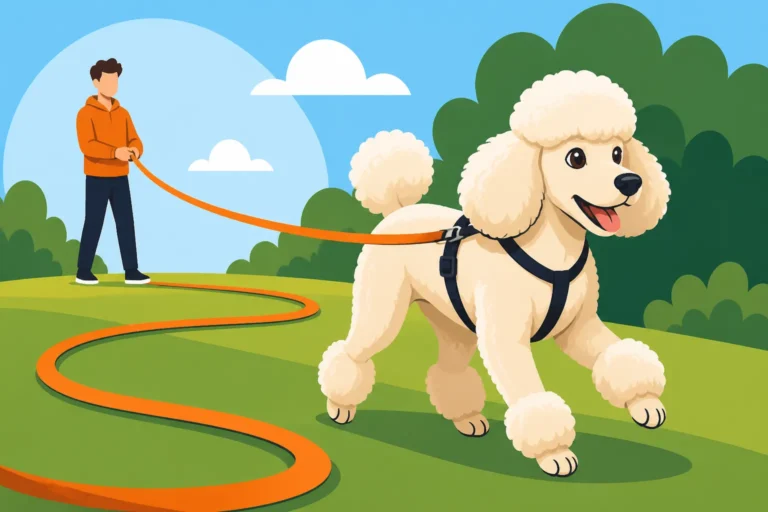
Front-clip harnesses are a game-changer for many Poodle owners. These harnesses have the leash attachment ring on the dog's chest, rather than their back. When your Poodle pulls, the leash redirects their forward momentum, gently turning them to the side. This makes it much harder for them to pull effectively and naturally discourages the behavior. Head halters (like a Halti or Gentle Leader) offer even more control by guiding the dog's head, but some dogs find them initially uncomfortable and require careful introduction. You'll find a wide variety of these tools available on platforms like Amazon, making it easy to compare features and read reviews.
| Tool Type | Description | Pros | Cons |
|---|---|---|---|
| Flat Buckle Collar | Standard collar around the neck. | Good for ID tags, easy on/off. | Little control for pullers, can cause neck strain if dog pulls hard. |
| Martingale Collar | Loop collar that tightens gently under tension. | Prevents dogs from backing out, safer than choke chains, good for escape artists. | Still applies neck pressure, less effective for strong, determined pullers. |
| Front-Clip Harness | Harness with leash attachment on the chest. | Redirects dog's momentum when they pull, reduces pulling power, generally comfortable. | Can sometimes restrict shoulder movement if poorly fitted, dog can still pull if determined. |
| Head Halter | Straps around muzzle and behind ears, guides head. | Excellent control, very effective for strong pullers, prevents jumping/mouthing. | Many dogs dislike it initially, requires careful introduction, can be mistaken for a muzzle. |
Leash Selection and Management
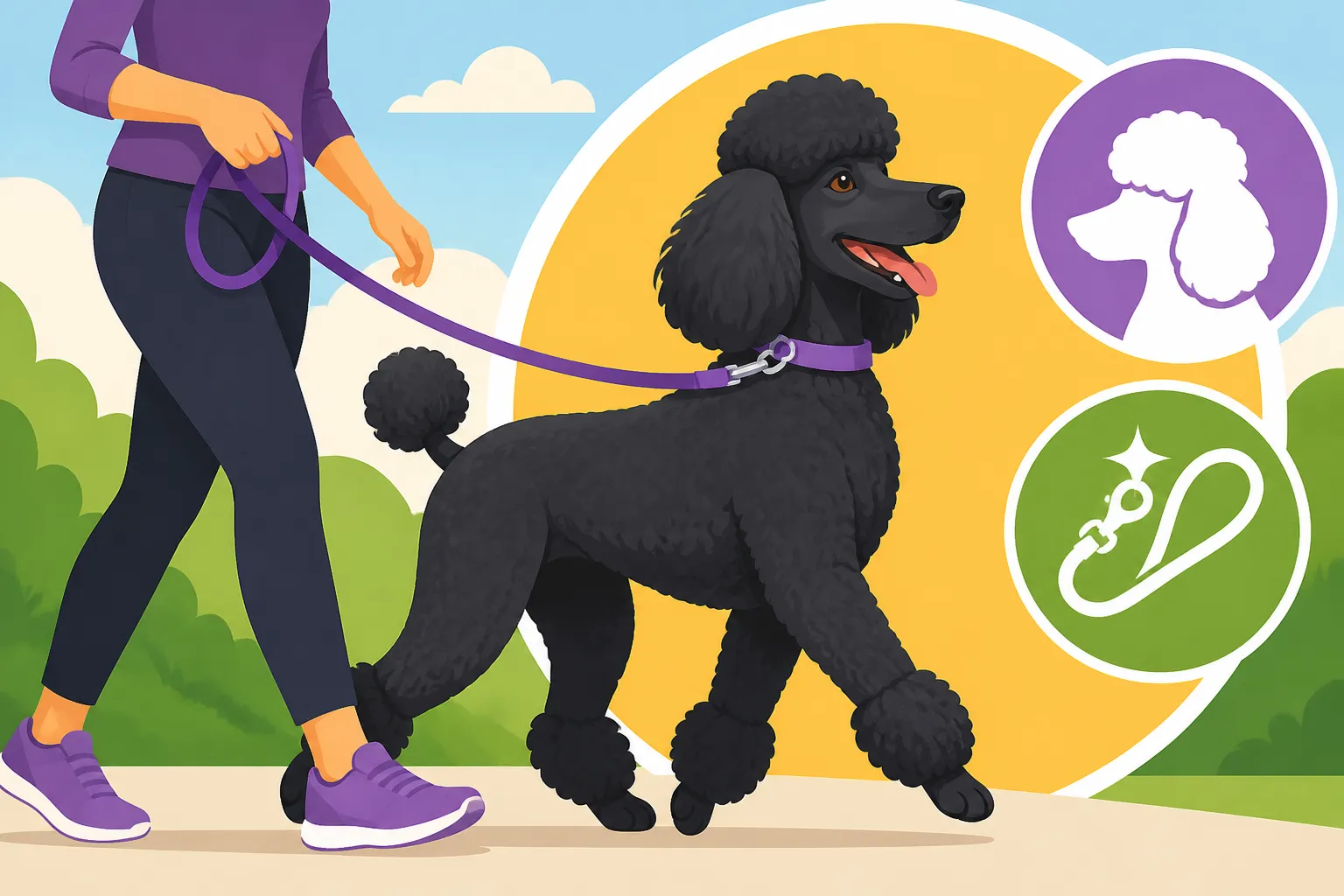
Just as important as the collar or harness is the leash itself. For a Standard Poodle, a good quality, standard-length (4-6 foot) leash made of sturdy nylon or leather is ideal. Avoid retractable leashes, especially during training. Retractables teach your dog that pulling is necessary to gain distance, offer no consistent feedback, and can lead to dangerous situations if the mechanism fails or you lose control. They also make it difficult to teach a consistent loose-leash feel.
Proper leash management means holding the leash firmly but not rigidly, allowing for a slight slack. Your grip should be secure, but you shouldn't be white-knuckling it. Learn to use the leash not as a constant tugging device, but as a communication tool. A gentle, quick "pop and release" can be used as a momentary correction, but the goal is to keep it loose. Keeping an eye on the leash and maintaining that slight curve is a sign of good communication and a well-understood expectation.
Foundational Training Techniques
Building good leash manners starts with a strong foundation of communication and positive reinforcement. You're teaching your Standard Poodle a new way to interact with the leash and with you during a walk, which requires patience and consistency. Remember, Poodles are incredibly smart and eager to please, but they need clear guidance. Why Poodles Learn a Cue in Five Repetitions often means they pick up on what you want quickly, but also on what you tolerate.
Starting with Loose Leash Walking Basics
Begin in a very low-distraction environment, like your living room or a quiet backyard. The goal is to teach your Poodle that walking nicely by your side, with a loose leash, earns rewards. Hold a treat in your hand by your side, at your Poodle's nose level. Take a step. If your Poodle takes a step with you and the leash remains loose, mark the behavior (with a clicker or a verbal "yes!") and reward them immediately. Continue taking one or two steps, rewarding consistently for a loose leash. If they pull, simply stop moving. Wait for the leash to slacken, even for a second, then mark and reward, and resume walking.
This "stop-and-go" method is highly effective because it immediately communicates that pulling makes forward motion stop, while a loose leash makes it continue. Your Poodle will quickly connect their action to the consequence. Keep these initial sessions short and positive, ending before your Poodle gets bored or frustrated. Aim for several short sessions a day rather than one long one.
The Power of Positive Reinforcement
Standard Poodles thrive on positive reinforcement. They want to work with you and please you, and generous rewards make training fun and efficient. Use high-value treats that your Poodle absolutely loves – tiny pieces of cheese, cooked chicken, or specialized training treats work wonders. The reward should be delivered quickly, within 1-2 seconds of the desired behavior, so your Poodle clearly understands what they're being rewarded for. Verbal praise and gentle petting can also be used as secondary rewards, but food is often the most motivating, especially in the early stages.
Don't just reward for perfect heeling; reward for any moment of a loose leash, for checking in with you, or for ignoring a minor distraction. The more you reward the behaviors you want to see, the more frequently your Poodle will offer them. This builds a strong positive association with walking on a leash nicely. Consistency from everyone who walks the dog is vital here; if one person allows pulling, it undermines the training.
Practicing in Low-Distraction Environments
Once your Poodle understands the basic concept in a quiet setting, gradually introduce mild distractions. Move from your living room to your backyard, then to a quiet street with minimal activity. The key is to set your Poodle up for success. If you immediately go to a bustling park, they will likely be overwhelmed by the sights, sounds, and smells, and all your foundational training might go out the window. Slowly increasing the difficulty level allows your Poodle to generalize the behavior to different environments.
If you notice your Poodle struggling, reduce the level of distraction. It's better to succeed in an easier environment than to fail in a challenging one. Keep your training sessions short and frequent, and always end on a positive note. Remember, Training a Poodle That Outthinks You often means breaking down tasks into smaller, more manageable steps that prevent them from finding "shortcuts" to rewards.
Addressing Common Leash Reactivity Issues
Sometimes, pulling isn't just about excitement; it's about a strong reaction to external stimuli, whether it's another dog, a person, a bicycle, or even a sudden noise. Standard Poodles, with their intelligence and often sensitive nature, can be prone to leash reactivity, where they become overstimulated and react strongly. Understanding Reading a Poodle's Body Language is key here to identify stress signals early.
Managing Excitement and Over-Stimulation
Before you can train through reactivity, you need to manage it. This often means creating distance from the trigger. If your Poodle lunges and barks at other dogs, find a route where you can maintain a comfortable distance (their "threshold") where they notice the other dog but don't react explosively. At this distance, you can work on positive associations. The goal is to keep your Poodle below their reactivity threshold so they can actually learn.
Carrying high-value treats is essential. When you see a trigger approaching, before your Poodle reacts, start feeding them treats. The moment the trigger passes or your Poodle disengages, stop the treats. This teaches them that the appearance of the trigger means good things happen, not that it's a reason to react. This is a form of counter-conditioning, changing their emotional response. For some Poodles, their intense focus and drive means they simply can't help themselves when overwhelmed.
Counter-Conditioning and Desensitization
Counter-conditioning and desensitization are powerful tools for addressing reactivity. Desensitization involves gradually exposing your Poodle to the trigger at a distance or intensity level where they remain calm. Counter-conditioning involves changing their emotional response to that trigger, from negative (or over-excited) to positive. For example, if your Poodle barks at other dogs, at a safe distance where they are calm, every time another dog appears, you give your Poodle a treat. The other dog equals treats, not stress or excitement.
This process takes time and consistency. It's not about punishing the reaction, which can often worsen the underlying fear or frustration; it's about proactively changing the association. Sometimes, enrolling in a specialized class or working with a certified professional dog trainer can provide invaluable guidance for these complex behaviors. For those who prefer a structured, online curriculum to guide them, programs like BAXTER & Bella offer comprehensive modules on loose leash walking and managing distractions, providing step-by-step video tutorials and support tailored to a positive reinforcement approach.
Advanced Leash Manners and Troubleshooting
Once your Standard Poodle has a solid grasp of loose leash walking in various environments, you can start refining their skills and tackling any lingering challenges. This is where you move beyond simply "not pulling" to actively walking in a desired position, like a formal heel.
Moving to Heel and Controlled Walking
"Heel" is a more formal command where your Poodle walks precisely by your side, usually with their shoulder aligned with your leg, paying attention to you. This is different from loose leash walking, where they might sniff around a bit as long as the leash remains slack. To teach heel, start by luring your Poodle into the heel position with a treat at your side. As they move into position, say "heel" and reward. Take a few steps, keep them in position with the lure if needed, and reward. Gradually fade the lure, relying on the verbal cue and hand signal.
Practice short bursts of heeling, especially when you need your Poodle to be focused, such as crossing a street or navigating a crowded area. Interspersed with these formal heel moments, allow them to have "free time" on a loose leash to sniff and explore. This teaches them that there are times for focused walking and times for more relaxed exploration, all while maintaining good leash manners. You can deepen this learning with specific exercises from articles like Heelwork With a Poodle That Wants to Lead.
Dealing with Stubborn or Distracted Poodles
Even the smartest Poodles can have moments of stubbornness or profound distraction. Their intelligence means they can test boundaries, and their keen senses mean they can be easily drawn away by an interesting scent or distant sound. When your Poodle seems to ignore you completely, it's often a sign that the environment is too stimulating, or the reward isn't high enough. Don't engage in a battle of wills; you'll likely lose.
Instead, go back to basics. If they're completely blowing you off, reduce distractions. Increase the value of your treats. Practice "emergency u-turns" where you abruptly change direction the moment they get distracted, forcing them to re-engage with you. Make yourself more interesting than the environment. Use enthusiastic praise and keep your energy positive. Sometimes, a Poodle might go quiet before showing outward signs of being overwhelmed or confused, so paying attention to subtle cues can help you prevent issues before they escalate. Remember, consistency is your best friend. Every walk is a training opportunity, and with a Standard Poodle, every walk can be an adventure you both enjoy, without the arm-stretching tug-of-war. Stopping a Standard Poodle Pulling on Leash requires patience, but the rewards are truly priceless.
Disclaimer
This article is for general informational purposes only and does not constitute professional advice. Laws, prices and regulations vary by location and change over time. Consult a qualified professional for guidance on your specific situation.