Teaching a Poodle to Retrieve
One of the most common frustrations Poodle owners face is harnessing their dog's incredible natural retrieving instinct into a reliable, consistent behavior. You might have a Poodle who loves to pick things up but never brings them back, or one who drops them just out of reach, turning what should be a fun game into a frustrating chase. This comprehensive guide will walk you through the steps to effectively teach your Poodle to retrieve, transforming that inherent drive into a joyful and useful skill for both of you.
Understanding the Poodle's Natural Instinct
Before we dive into the nitty-gritty of training, it's crucial to appreciate why Poodles are so adept at retrieving. They weren't always the elegant show dogs we see today; their history is rooted in hard work, particularly in water. Understanding this heritage can help you tap into their inherent drives more effectively and build a stronger bond through training.
Historical Context of Poodle Retrieving
The word "Poodle" itself comes from the German word "Pudel" or "Pudelin," meaning "to splash in the water." This isn't just a cute coincidence; it's a direct nod to their original purpose: retrieving waterfowl for hunters. Imagine a chilly European lake, a duck shot down, and a brave, intelligent dog plunging into the icy water to bring it back. That was the Poodle's job. Their dense, curly coat, which we now primp and style, was originally functional, providing insulation and buoyancy. The traditional Poodle clips, with their shaved areas and "pompoms," were designed to protect vital organs and joints from the cold while allowing for maximum movement in the water.
This history means that retrieving isn't just a learned trick for a Poodle; it's deeply ingrained in their DNA. They were bred for intelligence, trainability, and a strong desire to fetch. While many Poodles today live pampered lives far from a duck blind, that instinct remains a powerful part of their genetic makeup. When you start training retrieving, you're not forcing an unnatural behavior; you're simply channeling a primal drive. Think of it as inviting them to perform a task they were literally born to do. You can learn more about The Water Dog Behind the Poodle by delving into their origins.
Why Poodles Love to Carry Things
Beyond their historical role, Poodles often exhibit a strong desire to carry things around the house. This might manifest as them picking up toys, socks, or even your keys and proudly presenting them to you, sometimes without the expectation of a game. This "carrying instinct" is directly related to their retrieving heritage. It's a soft-mouth retrieve, meaning they're capable of carrying items gently without damaging them, a vital trait for a waterfowl retriever who needed to bring back birds unharmed.
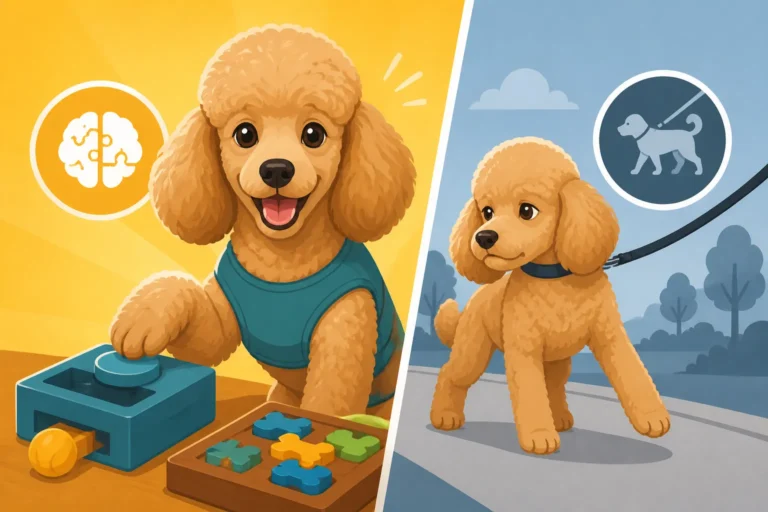
This desire to carry is a goldmine for training. Instead of viewing it as a nuisance when your Poodle parades around with your slipper, see it as an opportunity. This behavior shows they enjoy having an object in their mouth and bringing it into your vicinity. Our goal in training is to refine this natural inclination into a reliable "fetch" sequence: go get, bring back, and release. This isn't just about playing; it's also a fantastic way to engage their bright minds and provide mental enrichment. The Poodle's Retrieving Instinct is a fascinating topic to explore further if you're curious about this inherent drive.
Tapping into Their Prey Drive Safely
"Prey drive" might sound intense, but in the context of retrieving, it simply refers to your Poodle's natural inclination to pursue, catch, and "kill" (in a playful sense, of course) an object. For a Poodle, a thrown tennis ball or a crinkly toy can trigger this instinct. The key is to channel this drive into a safe, positive, and controlled activity. We're not encouraging actual hunting behavior; we're using the joy of the chase as motivation.
When you throw an object, your Poodle's instinct kicks in. They see the movement, their eyes lock onto it, and they sprint after it. The satisfaction of catching it is immense. Our job is to connect that satisfaction with the next step: bringing it back to you. We achieve this through positive reinforcement, making the act of returning the item and releasing it even more rewarding than just catching it. This careful management ensures that the game stays fun, reinforces your bond, and prevents your Poodle from becoming possessive or destructive with their "prey."
Building the Foundation: The Basics of Fetch
Starting with the fundamentals is key to building a strong, reliable retrieve. Don't rush this stage; every successful step here lays the groundwork for more advanced skills. It’s all about making the process clear, fun, and highly rewarding for your Poodle.
Choosing the Right Retrieval Toys
The type of toy you use can make a huge difference, especially in the early stages. The ideal retrieval toy is:
- Appealing: It should be something your Poodle genuinely enjoys holding and carrying. For some, this might be a soft plush toy; for others, a bouncy ball.
- Easy to pick up: Avoid objects that are too large, too small, or awkwardly shaped, particularly for younger puppies or Toy Poodles. A tennis ball (appropriately sized for your Poodle's mouth to prevent choking hazards) or a soft rubber toy is often a good starting point.
- Durable (to a point): While not every toy needs to be indestructible, it should withstand a good amount of slobber and gentle carrying. You don't want it falling apart mid-retrieve. For Poodles who tend to be tough on toys, you might find durable options on platforms like Amazon, but always supervise play. For Poodles who are master chewers, you might want to look into Toys a Bored Poodle Cannot Destroy to ensure your training tools last.
- Non-food item: While some dogs are motivated by edible retrieves, for actual fetch, stick to toys. Food should be the reward after they successfully retrieve and release.
Start with one or two favorite toys and keep them specifically for retrieval training. This helps your Poodle associate those particular items with the fun game of fetch.
Introducing the "Take It" and "Bring It" Cues
This is where the magic begins. We'll break the retrieve into smaller, manageable steps.
-
"Take It":
- Start indoors in a quiet, distraction-free area.
- Hold the chosen toy out to your Poodle. As they lean in to take it, say "Take it!"
- As soon as they take it gently into their mouth, praise enthusiastically ("Good take it!") and offer a small, high-value treat right next to their nose. They'll likely drop the toy to eat the treat, and that's perfectly fine for now.
- Repeat this several times in short sessions. The goal is for them to associate the verbal cue "Take it" with putting the toy in their mouth.
-
"Bring It" (or "Come"):
- Once "Take it" is solid, we add "Bring it."
- With your Poodle holding the toy, take a step or two backward and crouch down, making yourself exciting and inviting. Say "Bring it!" or "Come!"
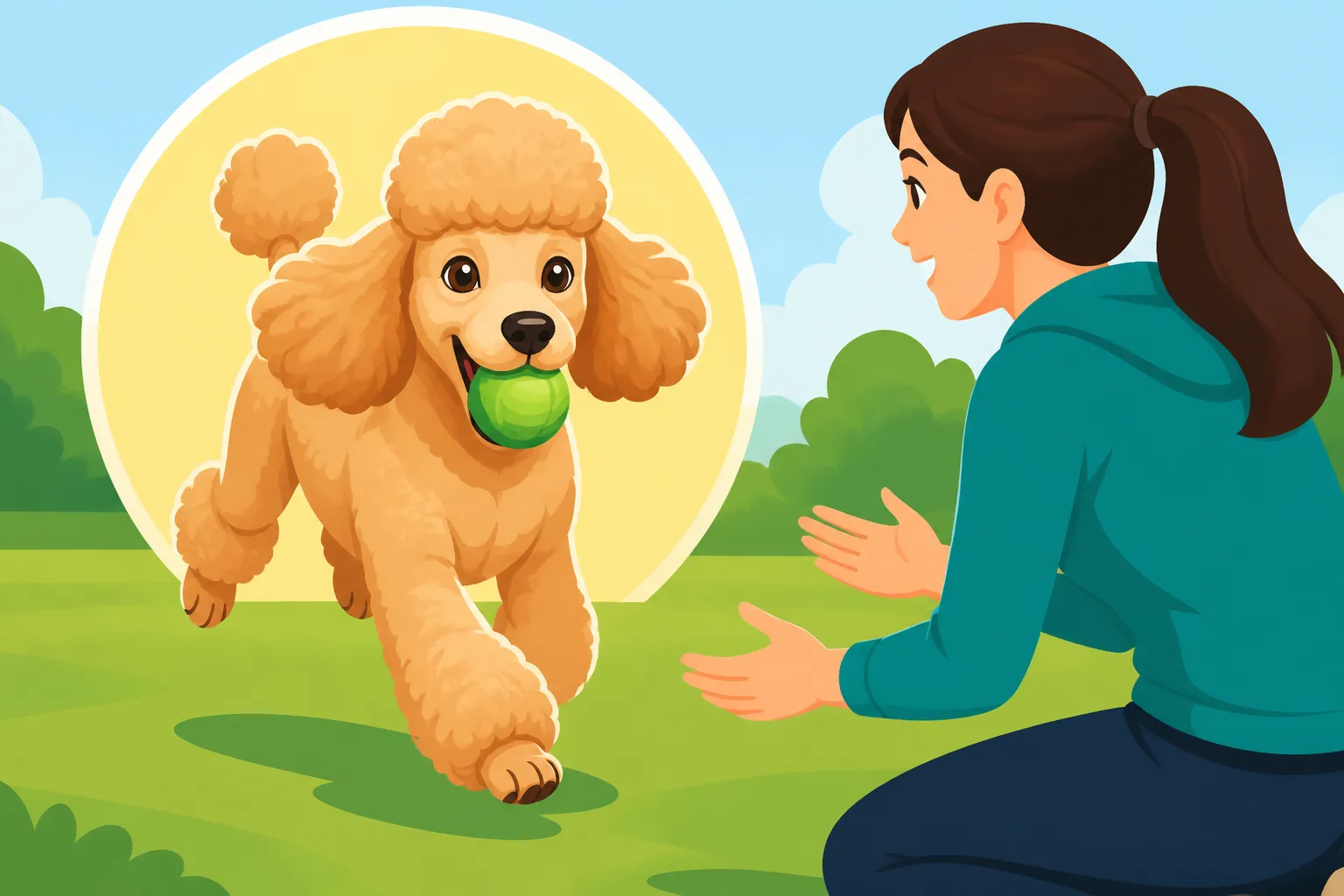
- When they take a step towards you, praise lavishly. If they come all the way to you with the toy, jackpot them with praise and several treats.
- If they drop the toy before reaching you, don't scold. Just pick it up, make yourself exciting again, and try a shorter distance.
- Use a happy, encouraging tone. Remember, Poodles are sensitive, and harsh tones can make them shut down. Reading a Poodle's Body Language can help you gauge their comfort.
Making the First Steps Rewarding
Consistency and positive reinforcement are your best friends here. Every tiny step in the right direction deserves a reward.
- Use High-Value Rewards: Poodles are smart, and they appreciate good motivation. Small pieces of cheese, cooked chicken, or a favorite soft training treat work wonders. For a Toy Poodle, make sure the Treats Small Enough for a Toy Poodle.
- Keep Sessions Short and Fun: Poodles are bright, but they can get bored if sessions are too long or repetitive. Aim for 5-10 minute sessions, 2-3 times a day. End on a high note, even if it means finishing after just one perfect "take it."
- Avoid Pressure: Never force the toy into their mouth or pull it away from them. This can create a negative association with the game. If they're not interested, put the toy away and try again later. Sometimes, a bit of novelty helps; rotating toys or trying a different location can reignite interest.
- Celebrate Successes: When your Poodle brings the toy back to you, make a big deal out of it! Clap, praise, give treats. The more positive emotions associated with returning the toy, the more likely they are to repeat the behavior. Building on these early successes helps them understand Why Poodles Retrieve So Naturally.
Making the Retrieve Reliable: Adding Control
Once your Poodle understands the basic concept of picking up an object and moving towards you, it’s time to add crucial control elements and make the retrieve truly reliable. This stage focuses on teaching them to release the item on command and generalize the skill to different environments.
The "Give" or "Drop It" Command
Teaching a clear release command is absolutely vital. Without it, you’ll end up playing tug-of-war, or your Poodle will keep the prized possession just out of your reach, a classic Poodle move!
- Starting with a Trade:
- When your Poodle brings the toy back and is holding it, don't immediately try to grab it. Instead, hold a high-value treat right under their nose.
- The moment they open their mouth to take the treat, say "Drop it!" or "Give!" as the toy falls from their mouth.
- Praise them lavishly ("Yes! Good drop it!") and give them the treat.
- Immediately pick up the toy and restart the game. This teaches them that dropping the toy doesn't mean the fun ends; it means the fun continues. If you put the toy away right after they drop it, they'll learn to hold onto it.
- Fading the Treat Lure:
- As they become consistent, you can start saying "Drop it!" before presenting the treat.
- Say the cue, wait a second for them to release, then present the treat and praise.
- Eventually, they should drop the toy on cue even without seeing the treat first. The reward then becomes the treat, enthusiastic praise, and the immediate re-initiation of the game.
- This is a crucial step in teaching your Poodle to Teach a Poodle to Fetch and Deliver rather than just fetch.
Practicing in Different Environments
A skill isn't truly learned until it can be performed reliably in various settings. Your living room might be perfect, but what about the backyard, the park, or a friend's house?
- Gradual Increase in Distractions:
- Start with slightly more distracting environments. Maybe a different room in your house, then the quiet backyard.
- Once they're successful there, move to a park during a quiet time of day, then gradually increase the presence of other people or dogs.
- Always go back to a less distracting environment if they struggle. This isn't about setting them up for failure; it's about building confidence.
- Varying Surfaces and Scents:
- Practice retrieving on grass, pavement, sand, or even shallow water if your Poodle enjoys it (many do!). This helps generalize the behavior.
- Introduce different types of toys that have various textures or even slightly different scents. This prevents them from becoming fixated on one specific item.
- Always ensure the environment is safe and free from hazards. When you are in public, having a reliable recall is paramount. Consider working on Building Reliable Recall in a Standard Poodle as a parallel skill.
Adding Distance and Distractions
Once your Poodle can reliably take, bring, and drop the toy in a moderately distracting environment, you can start increasing the challenge.
- Increasing Throw Distance:
- Start with short throws, then gradually increase the distance. Don't go from 5 feet to 50 feet overnight. Add a few feet at a time.
- If they bring it back reliably from a longer distance, that's fantastic! If they run off with it, reduce the distance and try again, rewarding heavily when they succeed.
- Introducing Mild Distractions:
- Have a friend calmly walk by at a distance while you're playing.
- Have some calm background noise playing.
- The goal isn't to overwhelm them, but to teach them to focus on you and the game, even when other things are happening.
- You might notice your clever Poodle starting to anticipate your cues or inventing their own shortcuts. This is where you might need to adjust your training to Teach a Poodle to Wait Rather Than Guess rather than letting them take liberties.
- The "Pre-Throw Wait":
- An advanced control exercise is to teach your Poodle to wait patiently before you throw the toy. Have them sit or lie down, then throw the toy, and then give your release cue ("Fetch!" or "Go get it!"). This builds impulse control and prevents them from charging off prematurely.
Taking It Further: Advanced Retrieving Skills
Once your Poodle has mastered the basics of retrieve, you can really start to have some fun and challenge their incredible intelligence. Poodles excel at learning complex tasks, and advanced retrieving is a perfect outlet for their clever minds.
Retrieving Specific Objects (Name Recognition)
This is a fantastic way to engage your Poodle's intelligence and make retrieving truly useful. Imagine asking your Poodle to bring you their "rope toy" from a pile of toys!
- One Toy at a Time:
- Start with two distinct toys that your Poodle knows. Give each a clear, unique name (e.g., "Ball" and "Rope").
- Show your Poodle the "Ball," say "Ball," and immediately throw it for a retrieve. Repeat several times.
- Do the same with the "Rope."
- Now, place both toys a short distance away. Ask your Poodle to "Go get the Ball!" Reward heavily when they bring the correct one.
- Increasing Complexity:
- As they get better, gradually increase the number of named toys.
- Place the toys in different locations or even out of sight, asking them to retrieve a specific one.
- This is not just for toys! You can teach them to retrieve your slippers, the TV remote, or even specific items from a shopping bag. The Poodle's Retrieving Instinct is so strong that they often love this kind of "work."
- Positive Reinforcement is Key: If they bring the wrong item, simply say "Oops, try again!" and guide them to the correct one, or put the wrong one away and try again with a clearer cue. Never punish for mistakes; focus on rewarding correct choices.
Working on Multiple Retrieves
This skill is perfect for Poodles with boundless energy and a strong drive. Instead of just one item, they learn to gather several.
- Two Toys, One Command:
- Throw one toy and ask your Poodle to retrieve it. As they are returning, throw a second toy.
- The goal here is to teach them to bring the first, then the second, or even to gather both if they're particularly talented.
- Start with a single command like "Get another!" after they bring the first back.
- Building a Pile:
- Throw several toys one by one, asking your Poodle to bring each one back to a designated "pile" or basket. This teaches them to return to a specific spot.
- This can be a fantastic way to help you pick up toys around the house!
- Introducing "Find It":
- While your Poodle watches, "hide" several toys around the room. Give the command "Find it!" and encourage them to search and retrieve each one. This combines their scenting abilities with their retrieving drive, providing fantastic mental stimulation, a great way of Keeping a Poodle Mind Occupied.
Introducing Water Retrieving
For many Poodles, water retrieving is not just a skill; it's pure joy. It taps directly into their heritage as waterfowl retrievers.
- Safe Introduction:
- Always choose calm, clean water that is safe for swimming (no strong currents, deep drop-offs, or hazardous debris). A shallow pond or a dog-friendly beach is ideal.
- Start in very shallow water, encouraging them to wade in after a floating toy.
- Never force a Poodle into the water. Let them explore at their own pace.
- Floating Toys are Essential:
- Use toys specifically designed to float. Many brands offer durable, brightly colored floating bumpers or balls that are easy for dogs to see and retrieve.
- Throw the toy a short distance, just enough for them to confidently wade or take a few strokes.
- Gradual Deepening and Distance:
- As they gain confidence, gradually increase the depth and distance of the throw.
- Always have a leash or long line handy for safety, especially in new environments.
- Ensure you rinse their coat thoroughly with fresh water after swimming, especially if in chlorinated pools or saltwater, to prevent skin irritation and matting. Water Work and the Poodle is a dedicated pursuit for many Poodle enthusiasts.
Common Challenges and Troubleshooting
Even with the most intelligent and biddable Poodles, training isn't always a straight line. You'll likely encounter a few bumps along the way. Understanding common pitfalls and how to address them is key to maintaining progress and a positive training relationship.
The Poodle Who Runs Off With the Item
This is a classic scenario: you throw the toy, your Poodle gleefully fetches it, then runs past you, perhaps in a playful circle or even settles down to chew it. This isn't defiance; it's often a combination of prey drive (the thrill of the chase and capture) mixed with an underdeveloped "bring it" command, or a lack of understanding that you are the source of continued fun.
- Shorten the Distance: Go back to very short throws, almost like a toss to their mouth. As soon as they have the toy, clap your hands, use an excited voice, and back away, encouraging them to follow you with the toy. The goal is to make you more exciting than running off.
- Use a Long Line: For outdoor training, attach a lightweight long line (15-30 feet) to your Poodle's harness. When they pick up the toy and start to run past you, gently take up the slack on the line while giving your "Bring it!" command. The line acts as a gentle reminder to re-engage with you. Never yank; just use steady pressure.
- Tug-of-War as a Bridge: If your Poodle loves tug, you can use it to your advantage. When they bring the toy close, engage in a quick, enthusiastic game of tug. After a few seconds, say "Drop it!" and offer a treat, then immediately throw the toy again. This teaches them that coming to you leads to a fun interaction and that releasing the toy means the game continues.
- The "Two-Toy" Method: Hold one toy in your hand. Throw the second toy. When your Poodle retrieves it and comes near, wiggle the toy in your hand excitedly. Most Poodles will drop the retrieved toy to get the new, exciting one. As they drop it, say "Drop it!" and then reward with praise and the second toy. This method reinforces dropping one toy to get another.
The Poodle Who Won't Release the Item
Some Poodles, once they have the prized possession, become very reluctant to give it up. This can stem from possessiveness, a lack of understanding of the "Drop it" cue, or previous experiences where the item was taken away without a clear exchange.
- Master the "Trade": As discussed in the "Drop It" section, consistently trading the toy for a higher-value treat is essential. Make the treat so appealing that they want to open their mouth to get it.
- Avoid Force: Never try to pry the toy out of your Poodle's mouth. This can lead to resource guarding and can damage your trust. If they're holding on tight, try offering an irresistible treat right under their nose. If that doesn't work, stay calm, walk away for a moment (breaking the tension), and then re-engage with a trade.
- Practice Away from High-Value Items: Start practicing "Drop it" with less exciting toys. Once they're proficient with those, gradually introduce more favored items.
- The "No-Struggle" Drop: Some trainers teach a "no struggle" drop by simply holding a treat in an open palm. When the dog drops the toy to eat the treat, you mark and reward. The toy isn't immediately picked up by you, so there's no perceived "taking" of the item.
The Poodle Who Loses Interest
Poodles are smart, and if a game becomes boring or too difficult, they'll simply disengage. This is their way of saying, "Hey, let's try something else!"
- Keep It Fun and Varied:
- Short Sessions: As mentioned, keep training sessions brief (5-10 minutes) and always end on a high note.
- Rotate Toys: Don't use the same toy every single time. Introduce new textures, shapes, and sizes to keep it novel. Maybe a crinkly toy one day, a soft frisbee the next.
- Vary Locations: Change up where you play. Different rooms, the backyard, a quiet park – novelty keeps their minds engaged.
- Increase Motivation:
- Higher-Value Treats: Are you using treats that are truly exciting for your Poodle? Sometimes, we get complacent with basic kibble when a bit of cheese or chicken could work wonders.
- Enthusiastic Praise: Poodles thrive on attention. Make your praise genuine, high-pitched, and joyful.
- Interactive Play: If your Poodle loves tug, incorporate short tug sessions as a reward after a successful retrieve and drop.
- Check for Over-Correction: Are you inadvertently making the game less fun by being too strict or correcting too often? Remember, positive reinforcement builds enthusiasm. Why Harsh Handling Breaks a Poodle is something every Poodle owner should understand. A great online resource like BAXTER & Bella offers detailed, positive reinforcement-based training guides that can help keep things fun and engaging for both you and your Poodle.
- Rule Out Health Issues: If a previously enthusiastic Poodle suddenly loses interest, a quick vet check might be in order. Sometimes, subtle pain or discomfort can manifest as a reluctance to play or move.
- Let Them Have a "Win": If they're struggling, simplify the task so they can easily succeed. A very short retrieve, an easy drop – let them feel successful and earn that reward.
| Challenge | Common Cause | Quick Fix | Long-Term Solution |
|---|---|---|---|
| Runs off with item | Undeveloped "bring it," self-rewarding | Use a long line, shorten distance, make yourself exciting | Consistent positive reinforcement for returning, two-toy method, incorporate tug as a reward |
| Won't release item | Lack of "drop it" cue, possessiveness | "Trade" with high-value treats | Build strong "drop it" cue with consistent positive trades, never force release, practice with varied items |
| Loses interest | Boredom, difficulty, low motivation, distraction | Short sessions, high-value rewards, vary toys/locations | Engage mental stimulation through varied games, rule out health issues, maintain enthusiastic play |
| Doesn't pick up item | Lack of "take it" cue, discomfort with item | Lure with treat to touch item, positive association with item | Gentle introduction of "take it," find a more appealing toy, ensure no discomfort in mouth or body |
| Chews/destroys item | Frustration, inappropriate toy, stress | Use durable toys, redirect to appropriate chew toy | Ensure appropriate challenge level, provide adequate mental/physical exercise, teach "leave it" for retrieve items |
Keeping It Fun and Engaging
Remember, retrieving should always be a joyful experience for your Poodle. It's not just about obedience; it's about channeling their natural abilities into a game that strengthens your bond and provides valuable mental and physical exercise.
Varying Toys and Locations
The quickest way to bore a Poodle is predictability. Their intelligent minds crave novelty and challenge.
- Rotate Toy Types: Don't just stick to balls. Introduce plush toys, rubber chew toys, rope toys, soft frisbees, or even empty plastic bottles (supervised, of course!). Different textures and weights offer varied sensory experiences. For quality and selection, check out options on Amazon to keep your Poodle excited.
- Explore New Terrain: While consistency in training is important, the environment can be a variable. Play fetch in the living room, then the backyard, a local park, or even a friend's fenced yard. The change of scenery, smells, and sounds keeps them engaged and helps generalize the skill. A Poodle's love for variety means they will likely enjoy Why a Poodle Invents Its Own Shortcuts as they try to outsmart you.
- Hidden Treasures: Instead of just throwing, sometimes hide the toy for them to "find" and retrieve. This adds a scent work element, engaging another one of their powerful senses.
Incorporating Retrieval into Daily Life
Retrieving doesn't have to be a dedicated training session; it can be integrated into your everyday routine, making it more practical and fun.
- "Go Get the Leash!": Teach your Poodle to retrieve their leash when it's time for a walk.
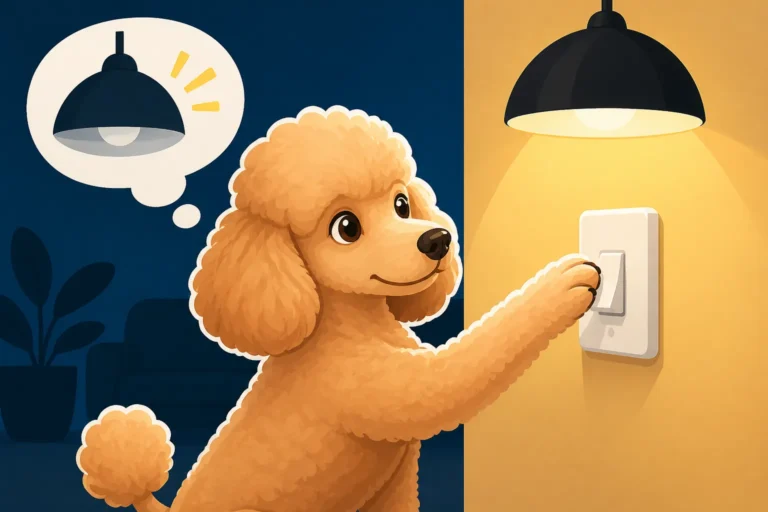
- "Bring Me My Socks/Slippers": With careful training, your Poodle can learn to fetch specific household items. This is not only helpful but also provides immense mental stimulation.
- "Clean Up Your Toys": Teach them to pick up their toys and put them in a designated basket. This is a brilliant way to end a play session.
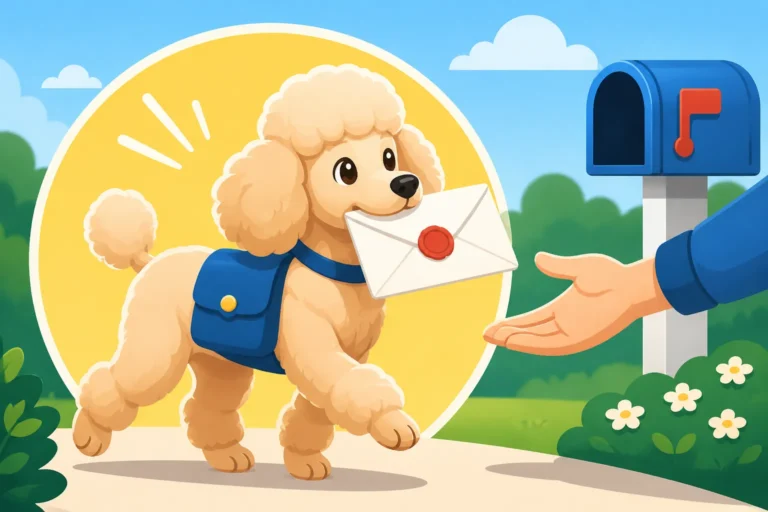
- "Retrieve the Mail": For some Poodles, retrieving soft mail from a mailbox can be a delightful task. Just ensure the items are safe and non-damaging.
- These small tasks give your Poodle a "job," which is incredibly fulfilling for a breed as intelligent as they are. It feeds into their innate desire to work alongside you.
Maintaining the Joy of the Game
Above all, keep it fun! A Poodle thrives on positive interaction and a sense of accomplishment.
- Always End on a High Note: Finish your retrieving sessions when your Poodle is still eager and successful, not when they're bored or making mistakes. This leaves them wanting more.
- Be Enthusiastic: Your energy is contagious. If you're excited about the game, your Poodle will be too. Use a happy, encouraging tone of voice and lots of praise.
- No Pressure: Avoid turning retrieving into a chore. If your Poodle isn't in the mood, respect that. There's always another time. Poodles are sensitive, and pressure can make them shut down. This is why many trainers, like those at BAXTER & Bella, advocate for force-free methods.
- Puzzle Solvers: For a breed celebrated for its intellect, like Poodles who rank high on Poodle Intelligence and Coren's Ranking, the challenge itself is part of the reward. Introducing new retrieving scenarios keeps them mentally sharp. Whether it's finding an object in a new place or retrieving multiple specific items, these "jobs" provide immense satisfaction for your clever companion. The more you make retrieving a positive, engaging, and varied experience, the more your Poodle will love it, deepening your bond and giving them a wonderful outlet for their incredible talents.
Disclaimer
This article is for general informational purposes only and does not constitute professional advice. Laws, prices and regulations vary by location and change over time. Consult a qualified professional for guidance on your specific situation.