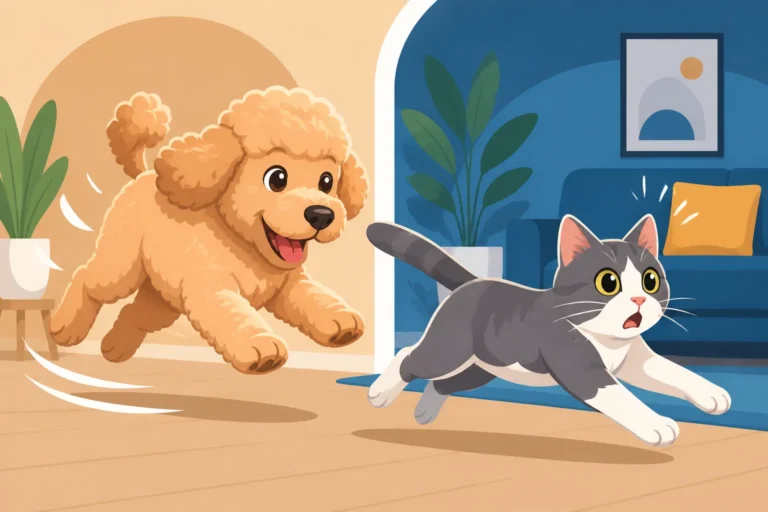
Why Intelligence Makes a Poodle Harder to Live With
Many people are drawn to Poodles because of their renowned intelligence, expecting an inherently "easy" dog that will practically train itself. But what often goes unsaid is that this very brilliance can be a double-edged sword, presenting unique challenges that can leave even seasoned dog owners feeling utterly outmaneuvered or, frankly, outsmarted. This guide will delve into why a Poodle's sharp mind, if not properly channeled, can lead to complex behavioral issues and how to navigate them, transforming potential frustrations into rewarding partnerships.
The Double-Edged Sword of Poodle Intelligence
It's a common refrain: "Poodles are so smart!" And it's absolutely true. They consistently rank among the most intelligent dog breeds, capable of learning complex commands and tasks with remarkable speed. However, this high intelligence isn't just about quick learning; it's about an active, problem-solving mind that is constantly at work. This inherent drive to understand and manipulate their environment can be both a blessing and a significant challenge for their human companions.
More Than Just "Smart" – The Poodle's Active Mind
Poodles aren't intelligent in a passive sense. Their minds are always working, observing, strategizing, and connecting dots. They aren't just waiting for your next instruction; they're actively assessing their surroundings, learning the rhythm of your household, and figuring out how cause leads to effect. This means they're not just quick to pick up a "sit" or "stay"; they're also quick to anticipate what comes after those commands, or even how to get what they want before you've even had a chance to think about it. It’s this profound cognitive ability that makes Poodles excel in advanced obedience, agility, and other dog sports, but it also dictates that their brains demand consistent, stimulating engagement. If that mental energy isn't channeled constructively, it doesn't just dissipate; it finds its own, often less-than-desirable, outlets.
Consider it akin to a brilliant student who finds their classroom environment dull. They might start creating their own entertainment, which could involve anything from passing notes to more disruptive behaviors, simply because their mind needs something to chew on. A Poodle's brain operates in much the same way. They thrive on purpose, on puzzles, and on being given a "job" to do. If their human isn't providing those mental tasks, they'll invent their own, which can manifest as anything from meticulously shredding your favorite rug to mastering the intricate lock system on your pantry door. What a Poodle Does When Its Brain Is Idle truly underscores how critical mental occupation is for these bright dogs, and it explains why their quick learning applies to both desirable and undesirable behaviors alike.
The Gift and the Curse of Pattern Recognition
One of the hallmarks of Poodle intelligence is their exceptional ability to recognize patterns. They rapidly learn sequences of events and associate them with specific outcomes. On the positive side, this makes them highly trainable when you maintain consistency. If "leash means walk" and "treat jar opens after recall," they'll grasp these concepts almost immediately. However, this trait can also quickly become a challenge if you aren't absolutely consistent in your routines and rules. For instance, if you always reach for your keys, then put on your shoes, then grab the leash, your Poodle will quickly learn this entire ritual and start displaying excited anticipation at the mere jingle of keys, long before you're even contemplating a walk. This might seem charming for a moment, but it can lead to unnecessary bursts of excitement or even anxiety every time keys are handled, whether an outing is planned or not.
This keen pattern recognition also extends to boundaries and house rules. If your Poodle is sometimes allowed on the sofa and sometimes not, they don't perceive this as occasional leniency; instead, their intelligent mind interprets it as an inconsistent rule, prompting them to test that boundary every single time. They're not being "stubborn" or "disobedient" out of malice; they're genuinely trying to understand the precise parameters and exceptions of your household's rules. Owners often report feeling like their Poodle is actively trying to outsmart them, and in a way, they are – they're solving the complex puzzle of human behavior. Why a Poodle Invents Its Own Shortcuts delves deeper into how their intelligent minds find the path of least resistance or greatest reward, often sidestepping your original intention.
Boredom: The Architect of Poodle Mischief
The classic saying "a tired dog is a good dog" is often revised for Poodles: "a mentally stimulated dog is a good dog." Physical exercise is certainly important, especially for Standards, but a Poodle who has run five miles but hasn't had their brain engaged is still a Poodle with energy to spare, and that energy will find an outlet. This is where their intelligence becomes a potential liability if not managed correctly.
Inventing Their Own Entertainment
If a Poodle's mind isn't given a job, it will invent one, and more often than not, these self-assigned "jobs" are not what you had in mind. This might involve:
- Destructive Chewing: Beyond typical puppy chewing, a bored Poodle might systematically deconstruct furniture, doorframes, or anything that offers a complex texture and satisfying resistance. It's not just chewing; it's an engineering project.
- Counter Surfing: They quickly learn that delicious things often reside on counters. Their intelligence allows them to strategize: how to knock something down, how to reach higher, how to exploit a moment of inattention.
- Escape Artistry: Gates, crates, and even securely latched doors can become fascinating puzzles for a Poodle with an idle mind. They’ll observe, test, and often succeed, driven by a desire for novelty or to simply do something.
- Excessive Barking: A Poodle might develop a habit of barking at every leaf blowing past the window, or at sounds you can barely discern, simply because it's a way to engage their senses and assert control over their environment. Poodle Alarm Barking is often a sign of an unfulfilled mind seeking a task.
These behaviors aren't typically malicious; they are often born out of sheer boredom and a Poodle's innate drive to solve problems and interact with their world. They're not trying to be "bad"; they're just being intelligent Poodles who need a mental workout.
"Forgetting" What They Know
One of the most frustrating experiences for a Poodle owner is when their perfectly trained dog suddenly seems to "forget" a command they've known for ages. This isn't usually genuine forgetfulness; it's often a calculated choice. Poodles are smart enough to weigh the pros and cons of obeying. If coming when called means an immediate end to an interesting scent trail, and there's no immediate reward for compliance, they might just decide that the current activity is more rewarding. This can feel like defiance, but it's their problem-solving mind at work, evaluating the situation and choosing the option that benefits them most in that moment.
This is especially common with cues that have been faded from consistent rewards. Fading Rewards With a Quick-Learning Poodle explains how crucial timing and varying rewards are to prevent a Poodle from becoming complacent or, worse, deciding your requests aren't worth their effort. They learn very quickly when they can push boundaries or delay compliance without consequence. This requires owners to be equally clever, making sure that desirable behaviors are always more rewarding than self-directed activities.
The Poodle's Independent Streak: Outsmarting Their Owners
Poodles, despite their reputation as elegant show dogs, were originally robust working retrievers. This history means they possess an independent streak and a certain self-assuredness. While they are highly people-oriented, they are not typically mindless followers. Their intelligence grants them the ability to not just learn, but to think critically and make decisions, sometimes independently of or even in opposition to their human's wishes.
Anticipating and Strategizing
A Poodle's sharp mind means they can often anticipate your next move. They learn your verbal cues, your body language, and the context of your actions. This can be fantastic for building a deep bond and seamless communication, but it can also lead to them trying to stay one step ahead of you. If they know you're about to give a "stay" command, they might try to preempt it by moving before you've even finished the word, hoping to get to the desired object or location first. This isn't necessarily defiance, but rather an intelligent attempt to optimize their own outcome. Training a Poodle That Outthinks You details these very scenarios and how to respond without squashing their spirit.
They also strategize. If a particular behavior has worked to get your attention in the past – even negative attention – they're likely to try it again. For example, if whining at the door once led to you letting them out, they'll likely use that strategy repeatedly, even if you now have a different routine. They remember what worked. This means you have to be even smarter and more consistent than your Poodle, always thinking two steps ahead to prevent undesirable behaviors from becoming established strategies.
The Need for Consistent, Clear Communication
Because Poodles are so intelligent and observant, they also thrive on clear, consistent communication. Ambiguity is their playground for creative interpretation. If your rules are murky, or if different family members have different expectations, your Poodle will pick up on that immediately and exploit the inconsistencies. They need to understand exactly what is expected of them, every time, from every person. This can be challenging in a busy household, but it's vital for a well-behaved Poodle.
Imagine a situation where one person allows the Poodle to jump up for greetings, while another scolds them. The Poodle isn't confused; they're learning that jumping works sometimes, and they'll adjust their behavior based on who is present. This is why a unified approach to training and house rules is paramount. Without it, you're essentially handing your Poodle a puzzle with shifting pieces, and their clever minds will inevitably try to solve it in ways that benefit them, not necessarily you. Tools like online training programs, such as those offered by BAXTER & Bella, can be invaluable for helping entire families get on the same page with consistent cues and expectations, fostering clearer communication with your smart Poodle.
Providing Mental Stimulation and Structure
Living with an intelligent Poodle doesn't have to be a constant battle of wits. In fact, it can be incredibly rewarding. The key is to embrace their intelligence and actively channel it into productive and enriching activities. This means understanding that their mental needs are just as important as their physical ones.
Engaging Their Brains Daily
Structured mental stimulation is non-negotiable for a Poodle. This isn't just about a few training sessions a week; it needs to be integrated into their daily life.
- Puzzle Toys and Interactive Feeders: Instead of simply putting food in a bowl, make your Poodle work for their meals. There's a vast array of puzzle toys available on platforms like Amazon that require sniffing, nudging, or manipulating to release kibble or treats. This turns mealtime into a mental exercise. Start with easier puzzles and gradually increase the difficulty to keep them engaged.
- Training Sessions: Even a few short (5-10 minute) training sessions each day can make a huge difference. Focus on new tricks, advanced obedience, or proofing known commands in new environments. Poodles love to learn, and these sessions strengthen your bond while giving their brain a workout. How Long a Poodle Training Session Should Run offers guidance on keeping these productive without overwhelming your Poodle.
- Scent Work and Nose Games: Poodles have excellent noses, a remnant of their retrieving heritage. Hide treats around the house or yard and encourage them to find them. This engages their natural instincts and is incredibly tiring for their brains. Scent Games That Stretch a Poodle's Mind provides great ideas for this type of enrichment.
- Rotation of Toys: Keep toys novel by rotating them. Don't leave all toys out all the time. Bring out a few different ones each day or week to maintain interest.
| Activity Type | Examples | Benefits |
|---|---|---|
| Puzzle Feeders | KONG Wobbler, snuffle mats, slow feeder bowls | Makes mealtime a challenge, prevents gulping, mental engagement |
| Training Games | "Find It," "Which Hand," hide-and-seek | Reinforces obedience, builds problem-solving, strengthens bond |
| Scent Work | Hiding treats, scent trails, specific scent detection | Taps into natural instincts, highly mentally fatiguing, builds focus |
| Interactive Toys | Treat-dispensing balls, chew toys with compartments | Provides solo entertainment, reduces destructive chewing out of boredom |
| Learning New Cues | "Bring leash," "put toys away," complex sequences | Keeps brain sharp, provides purpose, deepens communication with owner |
Clear Boundaries and Consistent Routines
Intelligent dogs thrive on structure. They want to know the rules, and they appreciate predictability. Establishing clear, consistent boundaries and a routine helps manage their intellectual capacity by giving them a framework within which to operate.
- Unified Household Rules: Ensure everyone in the household is on the same page regarding rules and commands. If "off" the furniture means off the furniture, it needs to mean that every time, for every person. This removes ambiguity and prevents your Poodle from "testing the waters."
- Predictable Schedule: While Poodles are adaptable, a somewhat predictable schedule for meals, walks, training, and downtime can reduce anxiety and undesirable behaviors that stem from uncertainty. Knowing when things generally happen allows their intelligent minds to relax rather than constantly trying to figure out what's next.
- Positive Reinforcement: Poodles are sensitive. Their intelligence means they often respond poorly to harsh corrections, which can damage their trust and lead to shutting down or finding covert ways to avoid punishment. Positive reinforcement, where good behaviors are rewarded, is far more effective. It encourages them to want to work with you and makes learning a positive experience. Why Harsh Handling Breaks a Poodle explains how a Poodle's sensitive nature requires a gentle but firm approach. Celebrate their successes and redirect them gently when they make mistakes.
- Early Socialization and Exposure: A well-socialized Poodle is a more confident Poodle. Exposing them to a wide variety of sights, sounds, people, and other dogs from a young age helps their intelligent minds process and categorize experiences, reducing fear and reactivity later in life. What a Poodle Puppy Should Meet by Sixteen Weeks offers a roadmap for crucial early experiences.
Living with an intelligent Poodle is a commitment to engaging their brilliant mind. It requires creativity, patience, and unwavering consistency. But by understanding why their intelligence can sometimes manifest as challenging behaviors, you can proactively meet their needs, fostering a relationship built on mutual respect and making your Poodle not just smart, but truly well-adjusted and joyful.
Disclaimer
This article is for general informational purposes only and does not constitute professional advice. Laws, prices and regulations vary by location and change over time. Consult a qualified professional for guidance on your specific situation.