Reading a Poodle’s Ears and Tail
It can be incredibly frustrating when you're trying your best to understand your beloved Poodle, but you feel like you're missing something crucial in their communication. They can't exactly tell us what's on their minds with words, so learning to read their non-verbal cues is essential for a harmonious relationship. This guide will walk you through the subtle, yet powerful, language of your Poodle's ears and tail, helping you bridge that communication gap and truly understand what they're feeling.
The Secret Language of Poodle Ears
Poodles, with their distinctive dropped ears, might seem to have less expressive ears than breeds with pricked ears, but don't let that fool you! Their ears are incredibly communicative, offering a wealth of information about their emotional state, level of attention, and even their physical comfort. It takes a keen eye and a bit of practice to pick up on the subtleties, but once you do, a whole new world of understanding will open up between you and your furry companion.
Ears and Arousal: Alertness vs. Anxiety
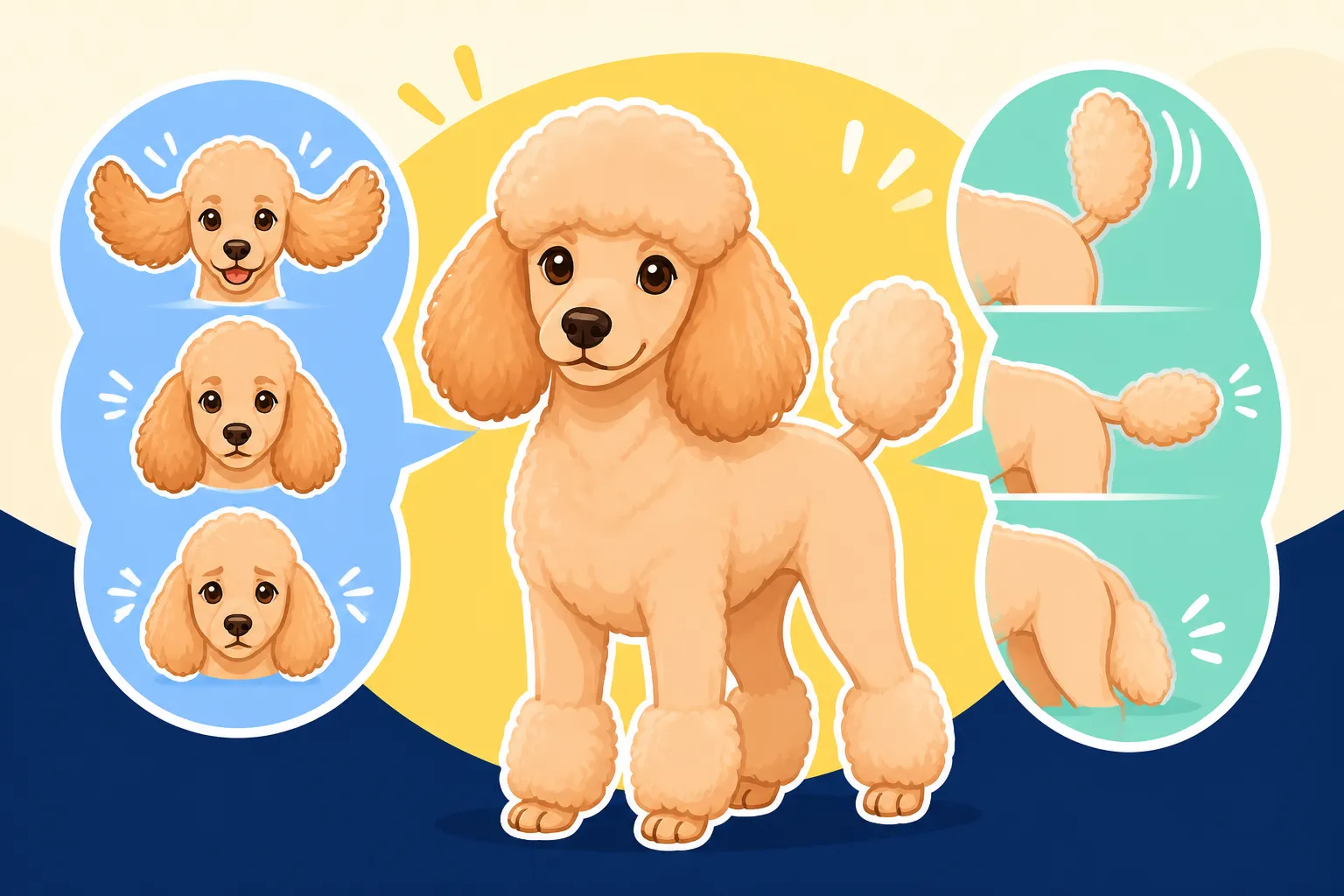
A Poodle's ears are like little antennae, constantly gathering information from their environment. When your Poodle is alert and focused, you'll often see their ears shift forward, perhaps slightly raised at the base, or even appear to "perk" up if they're particularly interested in something. This isn't just about hearing; it's about actively engaging with a stimulus, trying to pinpoint its source and understand its meaning. Think about when you crinkle a treat bag – those ears often swivel right toward the sound, signaling immediate attention.
However, a similar ear position can sometimes indicate something else entirely. If a Poodle is feeling anxious or fearful, their ears might also be held forward, but often with a stiff, tense quality, perhaps pressed tightly against their head or slightly flattened. The key here is to look at the entire picture. Are their eyes wide, are they panting, is their body posture stiff or hunched? If you notice this forward, tense ear position combined with other signs of stress, it's a strong indicator they're not just curious, but genuinely uncomfortable. For instance, if you're out on a walk and your Poodle sees a new, intimidating dog, their ears might go forward in an attempt to gather more information, but their body language will tell you if that information is being processed as a threat. Pay close attention to these subtle differences; a relaxed forward ear usually means curiosity, while a tense forward ear often signals apprehension. Reading Pain in a Sensitive Poodle can offer more insights into detecting discomfort.
The Softness of Relaxed Poodle Ears
A truly relaxed Poodle will have ears that hang naturally, often appearing soft and almost heavy. There's no tension in their set; they simply drape against the sides of their head. This is the Poodle equivalent of a sigh of contentment. You'll see this when your Poodle is curled up for a nap, enjoying a gentle petting session, or just calmly observing their environment without any particular interest or concern. This relaxed ear carriage is a wonderful sign that your Poodle feels safe, secure, and at ease in their surroundings.
When their ears are soft and their body is loose, it's a clear signal that they are in a positive state. If you approach a sleeping Poodle and their ears don't twitch or tense up, it means they feel very secure in their slumber. On the other hand, if you’re trying to comfort a Poodle who is nervous, watching for their ears to soften and relax is a good indicator that your efforts are having a positive effect. This soft ear set is what we always hope to see in our Poodles, as it speaks volumes about their overall well-being and happiness.
Deciphering Poodle Tail Wags and Carriages
The Poodle's tail, whether naturally long or traditionally docked, is another primary tool for communication. Many people mistakenly believe that any wagging tail means a happy dog, but this couldn't be further from the truth. A tail wag is a complex signal, and its meaning depends heavily on its height, speed, amplitude, and the overall context in which it occurs. Understanding these nuances is crucial for truly grasping your Poodle's emotional state.
The Poodle's Tail: More Than Just a Wag
Let's break down the different ways a Poodle might carry or wag its tail. A high tail carriage, especially when held stiffly, often signifies arousal, confidence, or even aggression. If your Poodle encounters a stranger and their tail goes high and stiff, it's not necessarily an invitation to pet; it could be a warning or a sign of intense focus. Conversely, a low tail carriage, tucked between the legs, is a universal sign of fear, submission, or anxiety. This is a Poodle saying, "I'm scared and trying to make myself small and less threatening." If your Poodle tucks their tail when you approach, it might be a sign you need to Rebuilding Trust With a Frightened Poodle.
Then there's the neutral tail carriage. For a Poodle, this typically means the tail is held at a natural, relaxed curve, not too high and not tucked low. This is the tail position of a calm, content Poodle who isn't particularly aroused by anything around them. It's the "all is well" signal. It's important to remember that the natural set of a Poodle's tail can vary slightly from individual to individual, so observing your Poodle's baseline relaxed position is key. A Poodle's tail can even give you clues about potential health issues; a tail held constantly low or tucked, even in familiar situations, might indicate physical discomfort rather than just emotional distress.
Speed and Amplitude: The Nuances of the Wag
The speed and amplitude (how wide the wag is) of your Poodle's tail wag are just as important as its height. A broad, sweeping wag that encompasses the whole body, often accompanied by a wiggling rear end, is indeed the classic sign of joy and excitement. This is your Poodle saying, "I'm so happy to see you!" You'll typically see this when you come home after a long day or when they're about to get a favorite treat.
However, a rapid, short, stiff wag held at a medium-to-high position can indicate a high level of arousal that might not be positive. This could be excitement mixed with tension, apprehension, or even a precursor to reactivity. Imagine your Poodle seeing a squirrel through the window – their tail might wag furiously, but it's a stiff, focused wag, not a loose, happy one. This is them saying, "I'm intensely focused on this situation, and I'm ready to act!" If the wag is frantic and combined with a tucked tail, it often means extreme fear or appeasement, a desperate attempt to show they mean no harm. Understanding these distinctions helps you respond appropriately, whether by joining their happy dance or intervening to de-escalate a tense situation.
The Whole Picture: Combining Ear and Tail Cues
Just like human communication, Poodle body language is rarely about one single signal. Their ears and tail work in concert with their overall body posture, facial expressions, and even vocalizations to paint a complete picture of their internal state. To truly become fluent in "Poodle," you need to learn to read these cues together, understanding how they modify and enhance each other's meanings.
Reading the Poodle's Full Body Language Ensemble
Consider the difference between these scenarios:
- Happy & Engaged: Ears slightly forward and relaxed, tail held at a neutral or slightly high position with a broad, loose wag, soft eyes, and a relaxed body. This is a Poodle ready for play or happy greetings.
- Anxious & Apprehensive: Ears pinned back or stiffly forward, tail tucked low with a rapid, small wag or held stiffly, wide "whale eyes" (showing the whites), tense mouth, panting, and a low, hunched body posture. This Poodle is saying, "I'm worried, please give me space." Understanding Whether Poodles Sulk often involves looking for these cumulative signs of displeasure.
- Alert & Curious: Ears perked forward, tail at a neutral-to-high position with a gentle, inquisitive wag, focused eyes, and a slightly forward-leaning body. This Poodle is investigating something new and interesting.
Every piece of the puzzle contributes to the overall message. For instance, a tail held high and stiff might suggest confidence, but if accompanied by pinned-back ears and a tense, rigid body, it tells a very different story – one of apprehension or even a warning. It's a bit like learning a new language where individual words change meaning based on the sentence they're in. Always take a moment to scan your Poodle from nose to tail to get the full context.
Context is King: Situational Cues
Beyond combining body parts, the context of the situation dramatically alters the meaning of any given signal. A Poodle's ears going back when you're praising them lovingly is a sign of affection and deference. Those same ears going back when a loud truck passes by means fear or discomfort. The environment, the presence of other dogs or people, and recent events all play a crucial role in interpreting your Poodle's body language.
Think about a common Poodle behavior: the "zoomies." Their ears might be back, tail tucked, but their body is a whirlwind of joyful energy. In this context, the tucked tail isn't fear; it's often an instinctive action to streamline their body for maximum speed. Another example: if your Poodle has just had a bath, their tail might be held lower and they might appear subdued. This isn't necessarily sadness or fear; it's likely just discomfort from being wet and cold, or perhaps annoyance at the grooming process. Training a Poodle to Enjoy Grooming can help alleviate some of that discomfort. Always ask yourself: "What just happened? What is happening now? What usually happens in this situation?" before drawing conclusions.
What to Do When Your Poodle's Body Language is Confusing
Even with all this knowledge, there will be times when your Poodle's signals seem contradictory or just plain baffling. It happens to the best of us! The key is to remain patient, observe closely, and be prepared to adjust your approach based on what you're seeing. Sometimes, confusion arises because a Poodle might be feeling conflicting emotions, like wanting to approach something new but also being a bit scared.
When Signals Get Crossed: Addressing Ambiguity
When your Poodle's body language sends mixed signals—say, a tail wagging high but ears pinned back, or a relaxed body with a tucked tail—it usually means they're experiencing internal conflict. They might be unsure, hesitant, or trying to navigate a situation where they feel both curiosity and apprehension. In these moments, your role is to help them feel safe and understood.
Avoid forcing interaction if their body language suggests discomfort. Instead, create distance from the perceived threat or stressful situation. Offer a calm, reassuring presence without overwhelming them. Sometimes, simply giving them space and observing from a distance allows them to process the situation and decide on their own how to react. If you notice a pattern of mixed signals in specific scenarios, like meeting new people or dogs, it might be beneficial to work with a professional dog trainer or behaviorist who can help you interpret these complex cues and develop strategies for your Poodle. Finding a Trainer a Poodle Will Not Shut Down For is a crucial step in this process. These professionals can provide personalized guidance and help build your Poodle's confidence in ambiguous situations.
Here's a quick reference table for common ear and tail combinations:
| Ear Position | Tail Position | Likely Meaning | Example Scenario |
|---|---|---|---|
| Relaxed / Forward | Broad, Loose Wag | Happy, Excited, Friendly | Greeting you at the door after work |
| Perked Forward | High, Gentle Wag | Alert, Curious, Interested | Investigating a new sound or smell outside |
| Pinned Back | Tucked Low | Fearful, Anxious, Submissive | Being approached by an intimidating stranger |
| Stiff Forward | High, Stiff Wag | Highly Aroused, Confident, Potentially Aggressive | Encountering a rival dog on leash |
| Relaxed | Neutral / Relaxed | Calm, Content, At Ease | Resting peacefully on their dog bed |
| Pinned Back | Neutral / Relaxed | Affectionate, Pleased, Deferential | Being gently petted by a trusted human |
Building Your Poodle Language Dictionary
Consistent observation is your most powerful tool. Spend time simply watching your Poodle when they are relaxed, when they are playing, and when they are interacting with others. Notice the subtle shifts in their ears and tail in various situations. What does their tail do when they hear the doorbell? How do their ears respond to your voice when you praise them versus when you call them for a nail trim?
Many Poodle owners find it helpful to keep a mental (or even written) log of these observations. Think of it as building your own personal "Poodle-to-Human" dictionary. You can also explore resources like books on canine body language, often available on platforms like Amazon, or online courses that teach dog communication skills, such as those offered by BAXTER & Bella. These resources can provide frameworks and examples that help solidify your understanding. The more you observe and connect their body language with specific events and your Poodle's subsequent actions, the more intuitive this communication will become. Over time, you'll find yourself understanding your Poodle's whispers and shouts, strengthening your bond and making you an even better advocate for their well-being. Poodle Temperament and Sensitivity is a great resource for understanding their overall disposition.
Disclaimer
This article is for general informational purposes only and does not constitute professional advice. Laws, prices and regulations vary by location and change over time. Consult a qualified professional for guidance on your specific situation.