Obedience Titles Poodles Take at Trials
Many people look at a Poodle and immediately think of elaborate show rings, delicate bows, and that undeniably fancy "Continental Clip." It's easy to dismiss them as merely ornamental, but beneath that curly, often meticulously groomed exterior lies one of the most intelligent and capable working breeds in the canine world. If your Poodle constantly seems to be looking for a job, solving puzzles, or even getting into clever mischief around the house, it's because their brilliant minds are yearning for a challenge. This guide dives deep into the world of competitive obedience, exploring the various titles your Poodle can proudly earn, and explaining how these trials celebrate the true spirit and intelligence of this amazing breed.
Understanding Poodle Intelligence and Drive for Obedience
It's a common misconception that Poodles are just pretty faces. While they certainly have a striking appearance, their history tells a much different story—one of hard work, quick thinking, and an unwavering desire to partner with humans. Understanding these roots is key to appreciating why they excel in the demanding sport of obedience.
More Than Just a Pretty Face: The Poodle's Working Roots
The name "Poodle" itself, from the German "Pudel" meaning "to splash in the water," gives us a huge clue about their origins. These weren't lapdogs; they were water retrievers, specifically bred to plunge into icy lakes and rivers to fetch downed game for hunters. Imagine the dedication, intelligence, and stamina required for such a task! A hunter couldn't afford a dog that got easily distracted or confused; they needed a canine partner who could understand complex commands, remember where game fell, and navigate challenging terrain. This need for a strong working relationship forged the Poodle's remarkable character.
The iconic Poodle clips, often seen as purely decorative today, actually served a functional purpose in their working past. The shaved areas allowed for free movement in the water, while strategically placed "pom-poms" of hair protected vital joints and organs from the cold. This heritage of function over pure aesthetics is a powerful reminder that Poodles are, at heart, working dogs. Modern Poodles might not be retrieving ducks daily, but that inherent drive to learn, to work, and to please their person remains incredibly strong. It’s this deep-seated desire to partner and perform that makes them such naturals for obedience work.
Why Poodles Excel in Learning
Poodles consistently rank among the most intelligent dog breeds, often placing second only to the Border Collie in many intelligence assessments. Dr. Stanley Coren's rankings, for instance, highlight their exceptional ability to learn new commands with very few repetitions and obey them consistently. If you’ve ever trained a Poodle, you’ve likely experienced this firsthand; they often seem to anticipate your next move and pick up new cues almost immediately. For more on this, check out What Coren Measured to Rank the Poodle.
This high level of intelligence isn't just about learning simple tricks; it translates into an ability to understand complex sequences of commands, adapt to new environments, and maintain focus even amidst distractions. These are all critical skills in competitive obedience. However, a Poodle's brilliant mind can be a double-edged sword. If not adequately challenged and engaged, they can quickly become bored, restless, and even destructive. They're thinkers, and if you don't give them a job, they'll often invent their own, which might not always align with your household rules! Many Poodle owners can attest to their dogs inventing clever ways to open cupboards or outsmarting baby gates. This is why sports like obedience are so vital for a Poodle's overall well-being. It provides that essential mental workout that keeps their minds sharp and their bodies engaged. Keeping a Poodle Mind Occupied goes into more detail about how to challenge them.
Exploring the World of Obedience Trials: What Are They?
For those new to the concept, "obedience trial" might conjure images of stern judges and rigid commands. While precision is certainly a component, it's also a fantastic way to deepen your bond with your Poodle and showcase their remarkable abilities.
The Basics of Competitive Obedience
An obedience trial is essentially a competition where a dog and handler team perform a predefined set of exercises designed to demonstrate the dog's training, willingness to work, and teamwork with their handler. Think of it as a formal examination of canine manners and responsiveness, elevated to an art form. It's far beyond simply getting your dog to "sit" in your living room; in a trial, that "sit" needs to be immediate, precise, and held until released, even with other dogs and strange noises just yards away.
Each exercise has specific criteria for performance, and judges score the team based on accuracy, promptness, and the dog's attitude. A Poodle that performs an exercise flawlessly but looks miserable doing it might score lower than a dog that has a minor imperfection but demonstrates obvious joy and willingness to work with its handler. The sport progresses through various levels, with each level building upon the skills learned in the previous one, introducing more complex commands, longer durations, and increased distractions. It's a journey of continuous learning and refinement for both dog and handler. The ultimate goal isn't just flawless execution, but a harmonious partnership where the dog eagerly responds to every cue.
Why Compete with Your Poodle?
The reasons to engage in competitive obedience with your Poodle are numerous and deeply rewarding. First and foremost, it strengthens the incredible bond you share. The hours spent training, problem-solving together, and celebrating successes forge an unbreakable connection built on trust and mutual understanding. You'll learn to read your Poodle's subtle cues, and they'll learn to anticipate yours. This deep communication is a beautiful thing to experience.
Beyond the bond, obedience trials provide unparalleled mental stimulation for your clever Poodle. As we discussed, a bored Poodle can be a mischievous Poodle. Obedience work channels that high intelligence and energy into productive, engaging tasks. It gives them a "job," satisfying their inherent desire to work alongside their human partner. For a Poodle, this mental workout can be even more tiring and fulfilling than a physical one. It’s an ideal outlet for their energy and intellect, preventing boredom and potential behavioral issues.
Finally, competing offers a wonderful community. You'll meet other dedicated dog owners who share your passion, and you'll find support, advice, and camaraderie. It's incredibly satisfying to see your Poodle excel, proving to others (and yourself!) that their beauty is matched by their brains and heart. Many Poodle owners cherish the opportunity to showcase their dog's mental prowess as much as their elegant gait in the show ring.
Common Obedience Titles Poodles Can Earn
The path to an Obedience Trial Championship is a structured journey, starting with fundamental skills and progressively adding more complex and challenging exercises. Each title represents a significant achievement and a testament to the dedication of both dog and handler.
Novice (CD) and Graduate Novice (GN)
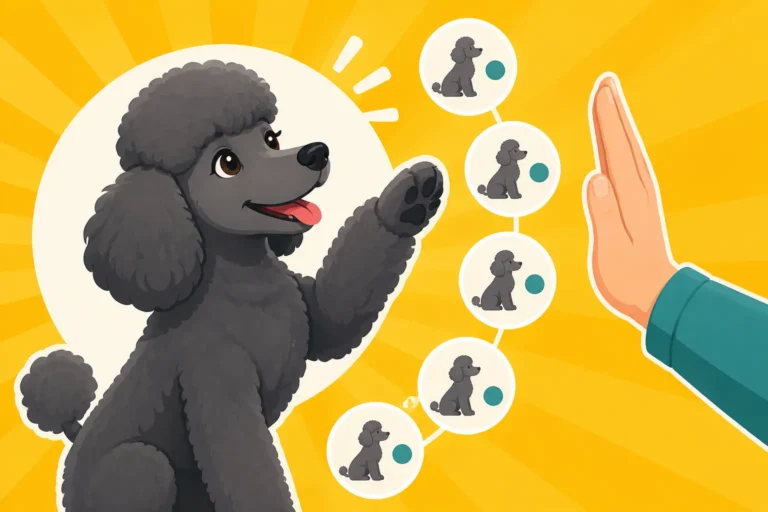
The Companion Dog (CD) title is the gateway to competitive obedience. It's designed to show that your Poodle has mastered basic household manners and is responsive to your commands in a formal setting. To earn this title, your Poodle must receive three qualifying scores (a "leg") under three different judges at three separate licensed trials. The exercises in the Novice class typically include:
- Heel on Leash: The dog walks happily beside the handler, maintaining position whether the handler turns, stops, or changes pace.
- Stand for Examination: The dog stands still and allows a judge to approach and lightly touch its head, back, and hips, demonstrating calm temperament and trust.
- Heel Off Leash: The same heeling exercise, but without the leash, requiring greater focus and control.
- Recall (Come): The dog, left in a sit or down position at one end of the ring, promptly and eagerly returns to the handler when called.
- Group Sit Stay: Dogs are left in a sit position for one minute while handlers stand across the ring.
- Group Down Stay: Dogs are left in a down position for three minutes.
These exercises emphasize willingness, a happy attitude, and a strong partnership. For many Poodle owners, earning that first CD title is a monumental achievement, a culmination of months of dedicated training. It often involves working through distractions, practicing in new environments, and building the confidence to perform under pressure.
The Graduate Novice (GN) title is an optional stepping stone between Novice and Open, offering a bridge to more advanced skills. It introduces slightly more challenging elements, such as a drop on recall (where the dog is called, then commanded to lie down mid-run) and more off-leash heeling patterns, without the full difficulty of the Open class. It’s an excellent way to continue building confidence and refining skills.
Open (CDX) and Graduate Open (GO)
Once your Poodle has earned their CD, the Companion Dog Excellent (CDX) title awaits, marking a significant leap in complexity and demanding higher levels of precision, reliability, and athleticism. Again, three qualifying scores are needed. The Open class introduces exercises that truly showcase the Poodle's natural retrieving instincts and agility:
- Retrieve on Flat: The dog retrieves a dumbbell from across the ring and returns it promptly to the handler.
- Retrieve Over High Jump: The dog clears a jump, retrieves a dumbbell, and then jumps back over with the dumbbell, returning it to the handler. This requires coordination and a trusting relationship.
- Broad Jump: The dog clears a set of low hurdles designed to test their leaping ability and control.
- Directed Retrieve: The dog retrieves one of several thrown articles, as directed by the handler, often requiring the dog to ignore other articles.
- Off-Leash Heeling and Figure 8: More intricate off-leash patterns, testing the dog's focus and precision at various speeds.
- Drop on Recall: As in Graduate Novice, but often with higher expectations for promptness and accuracy.
Training for the Open class often involves breaking down complex behaviors into smaller, manageable steps. The retrieve exercises, in particular, play right into a Poodle's genetic predisposition for fetching. If your Poodle loves to carry things, they might adore these exercises! You can learn more about this natural trait in The Poodle's Retrieving Instinct. Successfully completing these exercises in the ring demonstrates exceptional teamwork and a high level of controlled performance.
The Graduate Open (GO) title, like Graduate Novice, is another transitional title. It further refines skills, often incorporating elements like directed retrieve from a pile of articles or more nuanced jumping exercises, acting as a crucial preparation for the highly demanding Utility class.
Utility (UD) and Utility Excellent (UDX)
The Utility Dog (UD) title is widely considered the pinnacle of traditional obedience. This class is mentally taxing for both dog and handler, requiring supreme focus, problem-solving abilities, and an incredibly deep level of communication. Earning a UD is a badge of honor, showcasing a Poodle's brilliance and a handler's dedication. Exercises in the Utility class include:
- Scent Discrimination: The dog must identify and retrieve a single article (either leather or metal) that has been handled by its owner from a pile of identical articles touched by strangers. This requires an incredible sense of smell and focus.
- Directed Retrieve: The dog is sent to a specific glove (one of three placed in the ring) as directed by the handler.
- Signal Exercise: The dog performs heeling, stand, sit, and down commands using only hand signals from the handler, with no verbal cues allowed. This highlights a non-verbal understanding between team members.
- Directed Jumping: The dog is sent out to a specific point and then directed to jump over either a high jump or a bar jump, often requiring multiple commands and precise execution.
- Moving Stand and Examination: The dog is commanded to stand while moving, and then remains in that position while the handler walks away and the judge performs an examination.
These exercises are a true test of a Poodle's intelligence, attention to detail, and willingness to work under intense pressure. The signal exercise, in particular, is a beautiful display of silent communication, while scent discrimination truly showcases their often-underestimated olfactory capabilities.
The Utility Dog Excellent (UDX) title is an endurance challenge. To achieve this, a Poodle and handler team must earn qualifying scores in both the Open B and Utility B classes at the same trial on 10 separate occasions. This is an incredible feat of consistency, dedication, and sustained high-level performance over an extended period.
Obedience Trial Champion (OTCH) and Grand Obedience Trial Champion (GCH)
These are the ultimate titles in competitive obedience, signifying a dog and handler team that has not only mastered all the individual exercises but has also consistently placed at the very top in advanced classes.
The Obedience Trial Champion (OTCH) title is the highest accolade in obedience. It's not just about qualifying; it's about winning. To earn an OTCH, a dog must accumulate a specific number of points awarded for placements (first, second, third, or fourth) in the Open B and Utility B classes. Crucially, they must also achieve at least one first-place finish in Open B and at least one first-place finish in Utility B. This title represents years of committed training, travel to numerous trials, and exceptional performance under pressure, showcasing a Poodle that is truly a master of obedience.
The Grand Obedience Trial Champion (GCH) is an even more prestigious and rarer title, building upon the OTCH. It requires a further accumulation of points and additional first-place finishes beyond what is needed for the OTCH. This title is a testament to extraordinary consistency, versatility, and continued excellence in the competitive obedience ring. Achieving a GCH places a Poodle in an elite category, recognizing them as one of the very best obedience dogs in the country.
Getting Started: Training and Resources for Your Poodle's Obedience Journey
Embarking on the obedience journey with your Poodle is an incredibly rewarding experience, but like any serious endeavor, it requires a plan, patience, and the right resources.
Foundation Training: Where to Begin
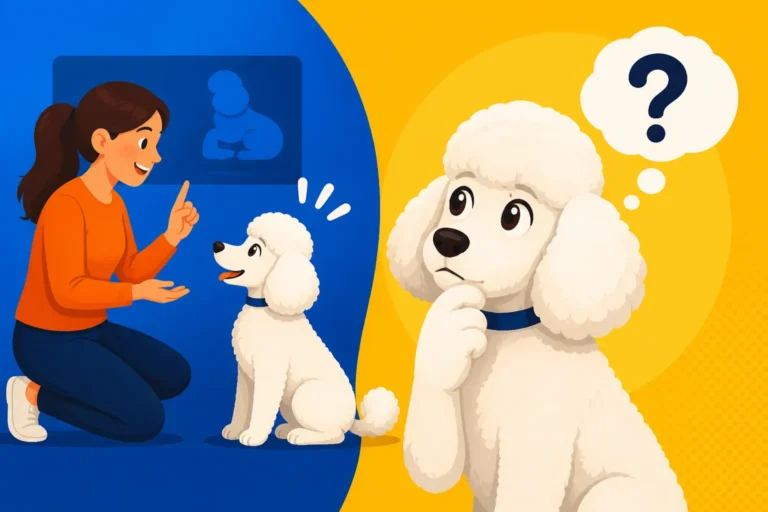
The foundation for all competitive obedience starts with basic puppy classes and beginner obedience. Focus on positive reinforcement from day one. Poodles, with their sensitive and intelligent nature, thrive on reward-based training. Harsh corrections or force can quickly shut down a Poodle's eager spirit and make them reluctant to work. Instead, focus on making training fun, engaging, and always a positive experience. For more on this, consider Finding a Trainer a Poodle Will Not Shut Down For.
Start with short, frequent training sessions – five to ten minutes a few times a day is far more effective than one long, tedious session. Keep it upbeat and always end on a positive note, even if it means doing a super easy command they know well. High-value treats that your Poodle absolutely loves are your best friend here, especially in distracting environments. Many Poodle owners find tiny pieces of cooked chicken, cheese, or even specific small training treats, like those you can find on Amazon, work wonders for motivation.
Building a strong, trusting relationship is the most important part of this entire journey. Your Poodle needs to believe that working with you is the most wonderful thing in the world. They are highly attuned to human emotions, so your calm, consistent, and joyful demeanor will be their guide. If you find yourself struggling with foundational skills or need structured guidance, online platforms like BAXTER & Bella offer comprehensive, step-by-step training programs that can be incredibly helpful for new and experienced owners alike, right from the comfort of your home. They often break down complex behaviors into easily digestible lessons, perfect for smart Poodles and their eager handlers.
Finding the Right Support and Equipment
As you progress, finding the right support system becomes crucial. Look for local dog clubs or obedience clubs that offer classes specifically geared towards competitive obedience. Trainers who have experience with Poodles or other highly intelligent, sensitive breeds are often a great match. They understand the nuances of working with a Poodle's brain and temperament. Don't be afraid to observe a class before joining to see if the training philosophy aligns with yours and your Poodle's personality.
For equipment, you'll want durable, comfortable leashes and collars. Many handlers opt for plain leather or nylon leashes for trials. A training vest with plenty of pockets for treats and toys is also invaluable. And, of course, a clicker! For precise timing and clear communication, a clicker (easily found on Amazon) can be an incredibly powerful tool for a fast-learning Poodle. Clicker Timing With a Fast-Learning Poodle offers insights into how to use it effectively. As you advance, you might invest in specific obedience equipment like a practice dumbbell or a set of jumps, but these are for later stages.
Beyond formal classes, there are abundant learning resources available. Books on competitive obedience, online videos demonstrating exercises, and community forums can all supplement your training. Connecting with other Poodle obedience enthusiasts can also provide invaluable tips, encouragement, and a place to share your successes and challenges. Remember, this is a community where everyone is passionate about their dogs and the sport.
The Journey is the Reward
It’s important to remember that earning an Obedience Trial Championship is a long-term commitment. There will be triumphs and setbacks, perfect runs and frustrating moments. Not every trial will result in a qualifying score, and that's perfectly okay. The true reward isn't just the ribbon or the title itself, but the journey you take with your Poodle.
The hours of training, the problem-solving, the deepening of your bond, and the sheer joy of watching your Poodle's intelligence and willingness shine in the ring—these are the real prizes. You'll gain a deeper understanding of your Poodle, and they'll become a more confident, well-adjusted companion because their brilliant mind is being put to good use. Celebrate every small victory, every improved heel, every precise retrieve. Your Poodle doesn't care about the specific title on paper; they care about working with you and the positive interaction they receive. So, embrace the process, cherish the partnership, and enjoy every moment of your Poodle's obedience journey.
Here's a quick overview of the main obedience titles and what they generally entail:
| Obedience Title | Abbreviation | Primary Focus | Key Exercises Introduced |
|---|---|---|---|
| Companion Dog | CD | Basic control and household manners, on & off leash | Heel on/off Leash, Sit/Down Stay, Stand for Exam, Recall |
| Graduate Novice | GN | Intermediate off-leash control, focus under distraction | Drop on Recall, Off-Leash Figure 8, Longer Stays |
| Companion Dog Excellent | CDX | Advanced control, retrieving, and jumping skills | Retrieve on Flat, Retrieve Over High Jump, Broad Jump, Directed Retrieve |
| Graduate Open | GO | Bridge to Utility, advanced retrieve and directed jumping | Directed Retrieve from pile, Go-Out and Directed Jump |
| Utility Dog | UD | High-level precision, scent work, non-verbal communication | Scent Discrimination, Signal Exercise, Directed Jumping, Moving Stand |
| Utility Dog Excellent | UDX | Consistency at Open B & Utility B classes (10 combined Qs) | Requires 10 qualifying scores in Open B & Utility B at same trial |
| Obedience Trial Champion | OTCH | Top competitive achievement, consistent placements in advanced classes | Accumulation of points from Open B & Utility B placements, plus 1st places |
| Grand Obedience Trial Champion | GCH | Superior achievement beyond OTCH, extensive high-level wins | Further points accumulation beyond OTCH requirements |
Disclaimer
This article is for general informational purposes only and does not constitute professional advice. Laws, prices and regulations vary by location and change over time. Consult a qualified professional for guidance on your specific situation.