Line Brushing a Poodle Explained
If you've ever found yourself staring at your beloved Poodle, brush in hand, feeling utterly overwhelmed by the sheer volume and unique texture of their coat, you're not alone. Poodle hair is a magnificent, non-shedding marvel, but it comes with a high-maintenance caveat: it mats, and it mats quickly and thoroughly, often right down to the skin. This guide is here to demystify the art of line brushing, turning a dreaded chore into an effective routine that keeps your Poodle comfortable, healthy, and beautifully coiffed.
Why Line Brushing Is Essential for Poodles
The Poodle's coat is truly a wonder, but it's also a full-time commitment. Unlike many other breeds with fur that sheds, Poodles have hair that just keeps growing. This means what you don't brush out stays in, tangling and tightening into painful mats if not properly maintained.
The Unique Poodle Coat: Hair Not Fur
Poodles, regardless of their size – be it a majestic Standard, a perky Miniature, or a dainty Toy – share the same unique coat characteristic: they have hair, not fur. This isn't just a semantic difference; it's fundamental to understanding why grooming is so crucial. Fur typically has a growth cycle that includes shedding, allowing dead hairs to fall out and be replaced. Poodle hair, however, grows continuously, much like human hair. When this dead hair doesn't fall out, it gets trapped within the healthy growing hair, forming the foundation of tangles and mats.
Imagine trying to brush your own long, thick hair only on the surface, never getting down to the scalp. What would happen? Knots would form underneath, tightening with every movement and eventually becoming a solid, impenetrable mass. That's exactly what happens with a Poodle's coat if you don't brush correctly. It's not just about looking good; it's about comfort and preventing skin issues. Mats can pull painfully on the skin, restrict movement, and even hide skin infections, parasites, or injuries. Understanding The Poodle Coat and Why It Never Stops Growing is the first step toward appreciating the necessity of consistent grooming.
The Danger of Surface Brushing
Many new Poodle owners, in their eagerness to keep their dog looking tidy, make the common mistake of only surface brushing. They run a brush over the top layer of the coat, making it look smooth and beautiful on the outside. Unfortunately, this does little to address the deeper layers where mats secretly form and tighten. It's a bit like painting over rust; it looks good for a moment, but the problem underneath continues to fester and grow worse.
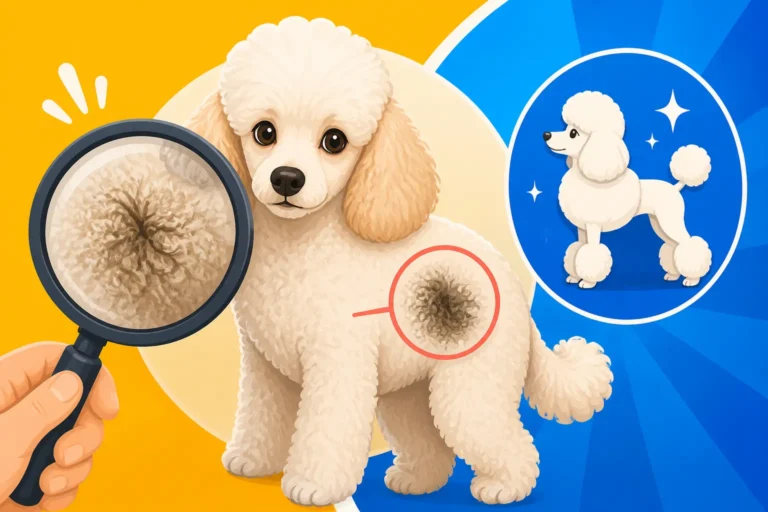
Surface brushing gives a false sense of security. You might think you've brushed your Poodle thoroughly, but days later, you could discover a solid mat welded to their skin, particularly in high-friction areas like behind the ears, in the armpits, or around the collar. These hidden mats are not only painful but also notoriously difficult and time-consuming to remove, often requiring professional intervention or even a complete shave-down. The process of matting is often explained by Why a Poodle Coat Mats Instead of Shedding, illustrating how seemingly minor tangles can quickly escalate into serious issues.
Getting Your Tools Ready for Success
Before you even think about putting a brush to your Poodle's coat, gathering the right tools is paramount. Trying to line brush with inadequate equipment is like trying to bake a cake without an oven – frustrating, ineffective, and ultimately futile. Investing in quality grooming tools will save you time, effort, and prevent unnecessary discomfort for your Poodle.
Choosing the Right Brush and Comb
For effective line brushing, you'll need two primary tools: a good quality slicker brush and a sturdy metal comb, often referred to as a "greyhound comb."
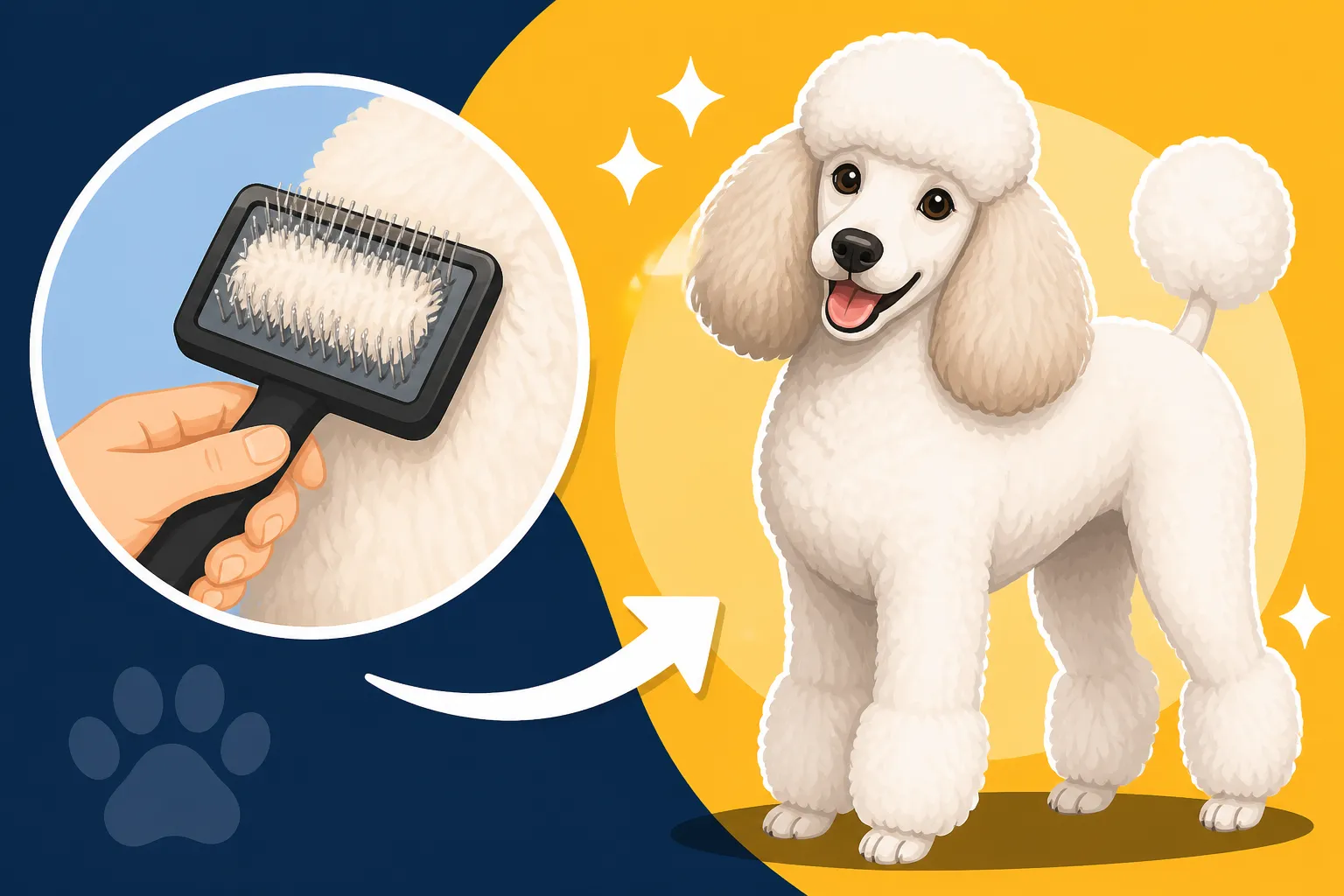
A slicker brush is your workhorse. It features fine, tightly packed wire bristles, usually angled, designed to penetrate the dense Poodle coat and gently separate individual hairs. Look for one with coated tips or flexible pins to minimize scratching your dog's skin. The size of the slicker brush should be appropriate for your Poodle – a larger one for a Standard Poodle, and a smaller, more delicate one for a Toy. I've found some excellent options on Amazon, which offers a wide range of sizes and brands, often with helpful customer reviews. The right slicker brush effectively teases apart tangles without pulling too hard.
A metal greyhound comb is your secret weapon for checking your work and for those finer, more delicate areas. These combs typically have teeth that are wider spaced at one end and narrower at the other, allowing you to tackle different densities of hair. The wider-spaced teeth are good for initially separating larger sections of coat, while the finer teeth are essential for ensuring every last tangle is gone, right down to the skin. If your metal comb cannot glide effortlessly through the hair to the skin, you still have work to do. Choosing Tools That Reach a Poodle's Undercoat is vital, as a cheap plastic comb simply won't cut it against the Poodle's dense hair.
Essential Sprays and Products
Beyond your core brushing tools, a few supplementary products can make your line brushing sessions significantly easier and more comfortable for your Poodle.
First, a good conditioning or detangling spray is indispensable. This isn't just a fancy extra; it's a protective barrier. Spritzing the coat lightly before you begin brushing helps to lubricate the hair, making it smoother and less prone to breakage as you work through it. It also reduces static electricity, which can make brushing a nightmare, especially in dry environments. Think of it as leaving conditioner in your own hair before styling – it just cooperates better. You can find a variety of excellent conditioning sprays at pet supply stores like Chewy, offering different formulations for various coat types and sensitivities.
Additionally, some Poodle owners find a mat splitter or dematting tool useful for tackling any existing minor tangles before they escalate. However, these tools should be used with extreme caution and only on specific, isolated mats, as improper use can cut or damage the coat and even injure the skin. They are not a substitute for regular line brushing. For daily maintenance, a leave-in conditioning spray is usually sufficient to prevent new mats from forming, making the process of How Often a Poodle Must Be Brushed much more pleasant for everyone involved.
The Step-by-Step Guide to Line Brushing
Now that you have your tools, it's time to get down to business. Line brushing isn't just random brushing; it's a methodical process that ensures you cover every single inch of your Poodle's coat, from root to tip. It requires patience and a systematic approach, but once you get the hang of it, it becomes second nature.
Creating Sections and Holding the Hair
The key to successful line brushing lies in working in small, manageable sections. Trying to brush the entire coat at once is overwhelming and ineffective. Imagine trying to brush a giant ball of yarn – impossible! Instead, you want to isolate small portions of hair so you can thoroughly brush them down to the skin.
Start by placing your Poodle on a grooming table or a non-slip surface where they feel secure and you can comfortably reach them. For a Standard Poodle, a dedicated grooming table is almost a necessity, as it saves your back and keeps your dog at a good working height. Begin at the bottom of a leg, perhaps a rear leg, as this is often a good starting point for your Poodle to get accustomed to the process. Using your non-brushing hand, part the hair horizontally, creating a clean line. With your thumb and forefinger, hold the upper section of hair up and out of the way, exposing a narrow "line" of hair along the skin, about an inch or two wide. This is your first working section.
This technique allows you to concentrate all your efforts on a small, isolated area, preventing you from missing spots or simply gliding over the surface. It ensures you're truly brushing from the skin out, rather than just the visible top layer. For an in-depth look at this technique, refer to How to Line Brush a Poodle Properly, which breaks down the method even further.
Brushing from the Skin Out
Once you have your line of hair isolated, pick up your slicker brush. Place the brush firmly but gently against the skin at the very root of the exposed hair, and brush outwards and downwards, in the direction of hair growth. You'll make short, deliberate strokes, ensuring the pins penetrate all the way to the skin. After each stroke, lift the brush slightly away from the hair, rather than dragging it back through. This "brush and flick" motion helps to detangle without pulling or causing discomfort.
Work your way across the entire width of that narrow line of hair, ensuring every strand has been thoroughly brushed. When you're confident that section is completely tangle-free, drop a little more hair from the section you're holding, creating a new, parallel line of hair, and repeat the brushing process. Continue this method, working your way up the leg, then move onto the body, then the other legs, chest, neck, and finally the head and tail. Pay particular attention to areas prone to matting, such as behind the ears, in the armpits, and around the sanitary areas. You might find that Why Surface Brushing Leaves Poodle Mats becomes very clear as you feel the difference in the brush's resistance at different depths of the coat.
Checking Your Work Thoroughly
The final, and arguably most critical, step in line brushing is checking your work with your metal comb. This is where you confirm that you haven't missed any hidden tangles or mats. Once you've slicker-brushed a section of hair, take your metal comb and gently comb through the same section, starting from the skin and pulling all the way to the ends. The comb should glide effortlessly through the hair, without snagging or meeting resistance.
If the comb snags, even slightly, it means there's a tangle you missed. Don't be discouraged; this is precisely why you're using the comb! Go back to that spot with your slicker brush and work through the tangle again, using short, gentle strokes. You might need to re-spritz with your detangling spray. Keep brushing and combing until the metal comb passes smoothly through the hair, from the skin all the way down. This comprehensive checking ensures that no mats are left behind to grow into larger problems. It's especially crucial for areas like the paw pads and armpits, where even small mats can cause significant discomfort. Understanding Finding Poodle Mats Before the Groomer Does will help you identify these trouble spots early on.
It might feel tedious at first, but this meticulous comb-through is what truly sets effective line brushing apart from superficial grooming. It’s your guarantee that your Poodle is truly tangle-free, comfortable, and ready for their next adventure without the worry of hidden mats.
Common Mistakes and How to Avoid Them
Even with the best intentions and the right tools, it's easy to fall into common pitfalls when grooming a Poodle. Recognizing these mistakes and actively working to avoid them will make your grooming sessions more efficient, less stressful for both you and your Poodle, and ultimately more successful in maintaining that gorgeous coat.
Rushing the Process
One of the biggest mistakes Poodle owners make is trying to rush through the grooming process. Poodle coats are dense and complex, and proper line brushing simply takes time. Depending on the size of your Poodle and the length of their coat, a thorough line brushing session can take anywhere from 30 minutes for a Toy Poodle with a short clip to several hours for a Standard Poodle with a longer, show-quality coat. Attempting to speed through it will invariably lead to missed spots, inadequate detangling, and frustration for both you and your dog.
Rushing often results in surface brushing, as mentioned earlier, leaving mats to form deeper in the coat. It can also make the experience unpleasant for your Poodle if you're pulling or tugging impatiently. Instead, approach grooming with a calm, patient mindset. Break up sessions if necessary; you don't have to do the entire dog in one go, especially if your Poodle is new to grooming. Acknowledge that this is a regular, essential part of Poodle ownership. Set aside dedicated time, put on some music, and treat it as a bonding experience. If you're consistently short on time, consider a shorter, more manageable clip for your Poodle. Remember, How Long Brushing a Standard Poodle Takes can be substantial, so plan accordingly.
Ignoring Sensitive Areas
Poodles are prone to matting in specific areas where friction is high or where hair tends to grow thicker and more densely. These spots are often overlooked or rushed because they can be awkward to reach or sensitive for your Poodle. Ignoring them is a recipe for disaster.
Crucial sensitive areas include:
- Armpits: Constant movement and friction from walking can quickly knot the hair here.
- Behind the ears: This is a classic mat trap. The hair is fine and soft, and the Poodle's head movements create friction.
- Groin/Sanitary area: Urine and feces can cause matting, and it's a very sensitive region.
- Paw pads: Hair grows between the paw pads and can mat, causing discomfort and making it hard for your Poodle to walk.
- Under the collar/harness: Friction from accessories can create a tight band of mats.
- The base of the tail: A common area for tangles, especially if your Poodle wags their tail a lot.
Make a point to methodically work through these areas during every brushing session. Use extra caution and gentleness. For the ears, hold the ear leather back with one hand while you brush the hair behind it. For armpits and groin, have your Poodle lie down or gently lift a leg to expose the area. Many groomers face Surcharges Groomers Add for a Matted Poodle because these hidden mats are painful and difficult to remove. Regular, thorough attention to these spots can prevent much larger problems.
Maintaining a Mat-Free Poodle
Achieving a mat-free coat through line brushing is a victory, but maintaining it is an ongoing commitment. It's not a one-and-done kind of job. Regularity, vigilance, and knowing when to seek professional help are all part of responsible Poodle ownership.
Establishing a Routine
Consistency is truly the secret sauce when it comes to Poodle grooming. A regular brushing schedule, even for just a few minutes each day or every other day, is far more effective than sporadic, hours-long dematting sessions. For most Poodles in a pet clip, 2-3 times a week of thorough line brushing is a good baseline, but some Poodles with very long or fine hair might need daily attention. How Often a Poodle Must Be Brushed largely depends on coat length, lifestyle, and individual hair texture.
A routine helps not only the coat but also your Poodle's temperament around grooming. If they learn that brushing is a regular, gentle, and positive experience, they'll be far more cooperative. Keep treats handy and reward them for standing still or tolerating brushing. Make it a calm, low-stress activity. Consider setting up a dedicated "grooming corner" in your home, with all your tools easily accessible, so it becomes a natural part of your week. Check out Setting Up a Poodle Grooming Corner at Home for ideas on making this space functional and inviting.
| Area of Body | Frequency of Brushing | Key Tools | Common Matting Spots |
|---|---|---|---|
| Legs & Paws | Daily-Every other day | Slicker, metal comb | Armpits, between pads |
| Body & Torso | Every 2-3 days | Slicker, metal comb | Under collar/harness, flanks |
| Head & Ears | Every 2-3 days | Smaller slicker, fine comb | Behind ears, under chin |
| Tail | Every 2-3 days | Slicker, metal comb | Base of tail, under carriage |
| Sanitary Areas | Daily (quick check) | Fine comb | Around anus and genitals |
When to Call a Professional Groomer
While at-home line brushing is crucial, there will absolutely be times when a professional groomer is your best friend. Don't view calling a groomer as a failure on your part; view it as part of a comprehensive care plan for your Poodle.
You should definitely schedule a professional grooming appointment if:
- You discover significant matting that you cannot safely or comfortably remove yourself. Trying to hack out large, tight mats at home with scissors is incredibly dangerous and can lead to serious injury for your Poodle. Professional groomers have specialized tools and techniques for dematting.
- Your Poodle's coat is getting too long to manage. Even with regular brushing, Poodle hair grows continuously and needs to be trimmed periodically to prevent it from becoming cumbersome or too prone to matting.
- You're struggling with a specific area. If you just can't seem to keep the armpits clear, or your Poodle absolutely refuses to let you brush their tail, a groomer can offer guidance or take over those tricky spots.
- You notice skin issues under the coat. Mats can hide hot spots, rashes, or parasites. A groomer might be the first to spot these during a routine clip.
A professional groomer can not only provide expert coat care but also offer advice on products and techniques tailored to your Poodle's specific coat type and lifestyle. They can provide a fresh start for a neglected coat or maintain a beautiful clip that you love. Sometimes, getting a professional groom to "reset" the coat makes your home maintenance much easier. Don't forget that When a Poodle Coat Has to Be Shaved Off is a very real, and sometimes necessary, option for severe matting, which a groomer can do safely and humanely.
Ultimately, line brushing is a dedication to your Poodle's well-being. It's more than just keeping them looking pristine; it's about preventing pain, promoting healthy skin, and fostering a trusting relationship between you and your cherished companion. With the right approach and consistent effort, you'll master this essential skill and ensure your Poodle lives a comfortable, mat-free life.
Disclaimer
This article is for general informational purposes only and does not constitute professional advice. Laws, prices and regulations vary by location and change over time. Consult a qualified professional for guidance on your specific situation.