Why a Poodle Ignores You in an Open Field
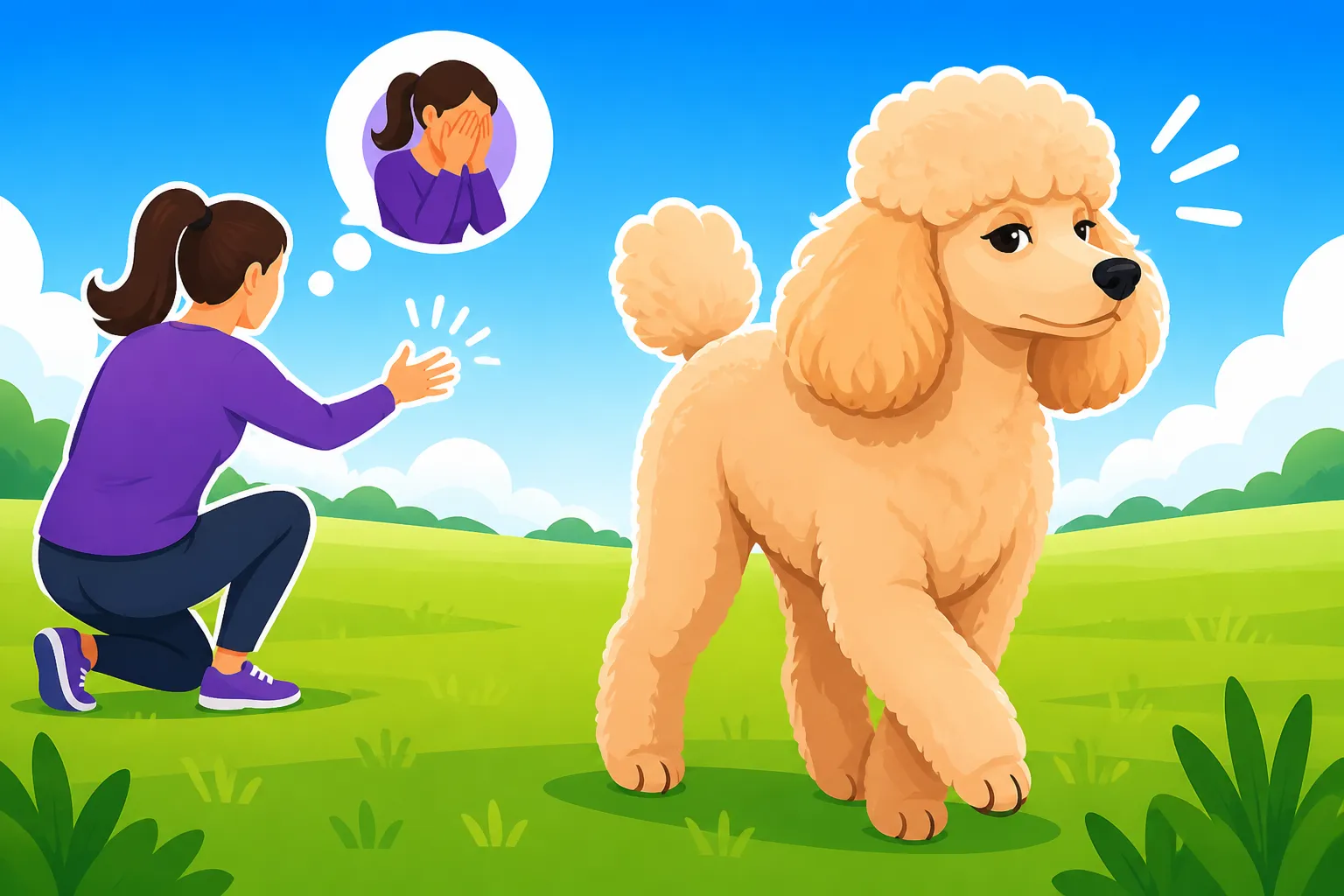
It’s a scenario many Poodle owners know all too well: you’re at the local park, a wide-open field stretching out before you, and you finally decide to let your clever Poodle off the leash. You watch them bound off, tail wagging, enjoying their freedom. Then, a squirrel darts by, a scent wafts on the breeze, or another dog appears on the horizon, and suddenly, your perfectly trained, highly intelligent Poodle develops a severe case of "selective hearing." Your calls fall on deaf ears, and that usually responsive dog acts as if they don't even know you. This guide is here to unravel why this happens and, more importantly, how you can build a recall that stands strong, even in the most distracting environments.
The Poodle Brain: Why Open Spaces Are Overwhelmingly Exciting
Poodles are renowned for their intelligence, often ranking among the smartest dog breeds. But that very intelligence, combined with their historical purpose and inherent drives, can sometimes work against us when they’re let loose in an engaging environment. An open field isn't just a patch of grass to your Poodle; it's a sensory smorgasbord, a call to their inner wild, and a place where every instinct can be indulged.
The Hunter's Instinct Awakened
Before they were pampered show dogs or cherished family companions, Poodles were working dogs, specifically bred for retrieving waterfowl. Their name, "Pudel," even comes from the Old German word for "to splash." This means they have a strong prey drive, an instinct to chase, and an incredible ability to focus on a moving target or an interesting scent. In an open field, this ancient programming kicks into high gear. The rustle of leaves could be a small critter, a distant bird taking flight triggers a chase response, or a new and exciting smell embedded in the grass becomes an irresistible trail.
It’s not that your Poodle is deliberately defying you; it’s that their brain is suddenly flooded with powerful, primal urges that are far more compelling in that moment than your voice. We might see a field, but they see a hunting ground, a playground, and a giant sniff-fest all rolled into one. Understanding this inherent drive is the first step in empathy and effective training. You can't scold away an instinct, but you can channel it and teach your Poodle to choose you over the distraction. Many Poodles still possess The Poodle's Retrieving Instinct, which means their drive to go after something is incredibly strong.
Intelligence Versus Distraction
While Poodles are quick learners and can pick up cues with remarkable speed, their intelligence can sometimes be a double-edged sword. They are excellent problem-solvers and can quickly figure out what they can get away with. If they’ve learned that ignoring your recall in a busy park often leads to them getting a few more glorious seconds of freedom before you eventually catch them, they might just decide it’s worth the temporary "time-out" or stern look when you finally reel them in. They weigh the reward of the chase against the reward of coming to you, and in a high-distraction environment, the field often wins.
This isn’t stubbornness; it’s logical decision-making from their perspective. They’re thinking, "Hmm, mom's calling, but that rabbit is right there. I bet if I ignore her, I can get a good sprint in before she gets mad." They're not being vindictive; they're simply being Poodles in an enticing situation. This is why Why a Poodle Invents Its Own Shortcuts often happens in training – they're always looking for the most efficient path to their desired outcome, and sometimes that outcome is more sniffing.
The Call of the Wild (or just the local park)
For a Poodle, the sheer novelty and freedom of an open field are intoxicating. They're often "velcro dogs" at home, sticking close by, but outdoors, the world opens up. They can stretch their legs, feel the wind in their coat, and explore a vast array of new scents and textures. This intense sensory experience can make it incredibly difficult for them to focus on a single, familiar voice. Think of it like a child in a candy store: even if they love their parents, the allure of all that sugary goodness can temporarily make them forget all their manners and promises.
Moreover, if your Poodle spends most of their time in a more restricted environment, an open field can be an explosion of pent-up energy and curiosity. They haven't had the chance to really run or sniff to their heart's content, so when the opportunity arises, they go for it with gusto. This isn't a fault in your Poodle; it’s a natural response to an exciting situation. Providing sufficient mental and physical exercise in daily life can help, but nothing truly replaces the stimulation of a new, wide-open space. This is also why What a Poodle Does When Its Brain Is Idle can be a problem at home – they need that outlet.
Common Pitfalls in Building Off-Leash Recall
Many Poodle owners make understandable mistakes when teaching recall, particularly when transitioning from a controlled environment to an open field. These pitfalls, while seemingly minor, can significantly undermine your Poodle’s reliability when distractions abound.
Lack of Progressive Training
One of the biggest mistakes is jumping straight from a quiet backyard to a busy open field. Recall needs to be built progressively, starting in low-distraction environments and gradually increasing the challenge. If your Poodle only practices recall when there are no tempting squirrels or interesting smells, they haven't learned to generalize the command. They simply associate "come" with "come when nothing else is happening."
Think of it like learning to drive. You don't go straight from a driving school parking lot to rush hour traffic on the highway. You start on quiet residential streets, then move to busier roads, and only then tackle the highway. Similarly, your Poodle needs to master recall in increasingly complex environments. This means practicing in your living room, then the backyard, then a quiet park on a leash, then a quiet park on a long line, and so on. Without this gradual progression, you're setting your Poodle up for failure and reinforcing the idea that your recall command is optional when things get exciting. It’s also crucial to remember that Why Poodles Learn a Cue in Five Repetitions in a quiet setting doesn't mean they'll perform it reliably in an open field without proofing.
Over-Reliance on "Good Dog"
While positive reinforcement is paramount in Poodle training, simply saying "good dog" or giving a generic pat isn't always enough when competing with the overwhelming draws of an open field. For recall to be truly reliable, the reward for coming to you must consistently outweigh the reward of staying out there. If your Poodle chases a rabbit, gets a burst of adrenaline, and then gets a lukewarm "good dog" and a dry piece of kibble upon return, the rabbit will always win next time.
This means upping your game with high-value rewards – think boiled chicken, cheese, or squeaky toys they adore. The reward needs to be exciting, immediate, and genuinely better than whatever they were doing. It's about creating a powerful positive association: "Coming to Mom/Dad equals THE BEST THING EVER." If the reward is inconsistent or low-value, your Poodle will quickly learn that ignoring you is often more fun. This is especially true given their sensitive nature; Why Harsh Handling Breaks a Poodle means you can't punish them for ignoring you, you must make coming back overwhelmingly rewarding.
Ignoring Environmental Factors
We often expect our Poodles to perform perfectly regardless of the environment, but every outdoor space presents unique challenges. Scent is a huge factor for dogs, and an open field is a tapestry of smells from other animals, people, and events. These scent trails can be incredibly captivating and difficult for a dog to disengage from. Visual distractions like distant dogs, cyclists, or wildlife can also trigger a strong chase response that overrides learned commands.
Furthermore, weather conditions can impact your Poodle's willingness to respond. A chilly, windy day might make them want to cut their run short and come back for warmth, while a warm, sunny day might encourage them to linger. As owners, we need to be observant of these environmental cues. If you know a particular field is a rabbit hotspot, or if it's especially windy and carrying scents from far away, adjust your expectations and potentially keep your Poodle on a long line. Understanding these factors helps you set your Poodle up for success rather than frustration.
Mastering Recall: Practical Training Strategies
Building a rock-solid recall, especially for an intelligent and sensitive breed like the Poodle, requires consistency, high-value rewards, and a step-by-step approach. It’s a marathon, not a sprint, and every successful recall in a distracting environment reinforces the behavior.
Starting Strong in Low-Distraction Environments
Before you even dream of an open field, solidify your Poodle's recall in the easiest places possible. Begin indoors, in a quiet room, with no distractions. Use a clear, happy tone of voice for your recall cue (e.g., "Come!" or your Poodle's name followed by "Here!"). When your Poodle comes, reward them lavishly with a high-value treat and enthusiastic praise. Practice this multiple times a day in short, fun sessions. As they become reliable indoors, move to your fenced backyard, still keeping distractions minimal.
The key here is to make "come" mean "jackpot!" every single time. Never call your Poodle to you for something unpleasant, like a bath or to leave the park if it's the end of playtime. Instead, randomly call them to you, give them a great treat, and then immediately release them back to play. This teaches them that coming to you doesn't mean the fun stops; it often means a bonus treat before the fun continues. Think of positive online training programs like those offered by BAXTER & Bella; they often break down recall into manageable, progressive steps perfect for setting this foundation.
Utilizing Long Lines for Safety and Practice
Once your Poodle is consistently coming to you in low-distraction, fenced areas, it's time to introduce the long line. This is a crucial safety tool that allows your Poodle to experience a sense of freedom while still giving you control. A long line, ranging from 15 to 50 feet, is like an invisible umbilical cord that lets you practice recall in more challenging environments without the risk of your Poodle disappearing. You can find excellent options on Amazon.
Start with a shorter long line in a slightly distracting park, then gradually increase the length as your Poodle's reliability grows. Let them explore, but every few minutes, call them back, reel them in if necessary, and reward them handsomely. The physical act of reeling them in with the line, if they ignore your vocal cue, teaches them that "come" isn't optional, but it's done gently and without punishment. It builds the understanding that ignoring you simply means you'll guide them back, and coming back is still highly rewarding. This practice is essential for Long Line Work With a Poodle.
High-Value Rewards and Variable Reinforcement
We talked about high-value rewards, but let's emphasize their importance. What is your Poodle's absolute favorite thing in the world? Is it a piece of real meat? A specific squeaky toy? Save these "jackpot" rewards only for recall practice in distracting environments. This makes coming to you the most exciting option available. You can even bring a special toy that only comes out for recall games in the field.
Additionally, incorporate variable reinforcement. This means you don't give the absolute top-tier reward every single time. Sometimes it's the jackpot, sometimes it's a slightly less exciting but still good treat, and sometimes it's just enthusiastic praise. This keeps your Poodle guessing and motivates them to respond every time, hoping for that jackpot. If they always know what they're getting, they might decide it's not worth it sometimes. This strategy keeps them engaged and makes coming to you unpredictable and therefore, more exciting.
Making Yourself More Interesting Than the Environment
In an open field, you are competing with a symphony of smells, sights, and sounds. To win, you need to be more engaging than all of it. Don't just stand there calling like a broken record. Change your tone of voice – make it high-pitched and excited. Clap your hands, get down low, run in the opposite direction, or even hide behind a tree. Poodles are social creatures and don't like to be left out or lose sight of their people.
Playing games like "hide and seek" can be fantastic for recall. Let your Poodle wander, then hide behind a bush or tree and call them. When they find you, it's a huge party with treats and praise. This teaches them to check in with you regularly and makes finding you a fun, rewarding game. Building Reliable Recall in a Standard Poodle often hinges on the owner becoming the most interesting part of the landscape. Remember, your Poodle loves connection, and you are the source of all good things!
Safety and Management for Off-Leash Freedom
Even with the best training, there are always risks associated with off-leash freedom. Responsible Poodle ownership means not only training for recall but also understanding your Poodle's limitations and implementing safety measures.
Essential Gear for Open Field Adventures
Beyond the long line, a few pieces of gear can make off-leash excursions safer and more enjoyable. A well-fitting harness (rather than just a collar) is crucial for a Poodle, as it distributes pressure evenly across their chest and prevents accidental neck injuries if you need to quickly grab them or use the long line. Ensure it's snug enough that they can't back out of it.
Consider a distinct, brightly colored vest or bandana for your Poodle, especially if they have a light-colored coat that might blend into the surroundings, or if you're in an area where hunting might occur. This increases their visibility to you and to others. A treat pouch or vest that allows you quick access to those high-value rewards is also a game-changer. Carrying a whistle can be incredibly effective for recall, as its sound carries further than your voice and isn't usually associated with other commands. Brands like Acme offer excellent dog training whistles.
Here’s a quick overview of essential recall tools:
| Tool | Purpose | Best For | Considerations |
|---|---|---|---|
| Long Line | Safe practice of off-leash commands; preventing escape | All stages of recall training, especially in new environments | Material (nylon/biothane), length (15-50ft), weight, proper handling technique. |
| High-Value Treats | Reinforcing positive behavior; making coming back highly desirable | Initial training & high-distraction environments | Small, soft, smelly; something your Poodle rarely gets. |
| Treat Pouch | Quick access to rewards; hands-free carrying | All training sessions, especially off-leash | Durable, easy to open/close, can attach to belt/pocket. Options available on Amazon. |
| Whistle | Long-distance recall; consistent, distinct sound | Open fields, windy conditions, when voice might be lost | Can be paired with vocal cue initially; requires consistency. |
| Harness | Secure attachment point for long line; safety | All Poodles, especially those prone to pulling or neck sensitivity | Comfortable fit, escape-proof, good for attaching ID tags. |
Understanding Your Poodle's Limits
Not every Poodle is destined for reliable off-leash adventures in every environment, and that’s perfectly okay. Some Poodles, especially those with an exceptionally high prey drive or those who are particularly sensitive to new stimuli, may simply be too overwhelmed by certain open spaces to ever be truly trustworthy off-leash. It’s important to be realistic about your individual Poodle's temperament and drives.
If you find that despite consistent training, your Poodle still struggles intensely with recall in certain areas, consider modifying your expectations. Perhaps off-leash time is reserved for quiet, less distracting fields, or perhaps they always stay on a long line in busier areas. There's no shame in prioritizing your Poodle's safety and your peace of mind over a perceived ideal of off-leash freedom. Remember, a happy, safe Poodle is the goal, regardless of how much "off-leash" time they get. Always be attuned to Reading Pain in a Sensitive Poodle and stress, as an overwhelmed Poodle is less likely to respond.
The Importance of Ongoing Practice and Proofing
Recall is not a "one and done" training exercise. It's a skill that needs regular maintenance and proofing throughout your Poodle's life. Even after your Poodle is reliable, continue to practice recall in various environments, gradually increasing distractions. This might mean practicing during different times of day, in new parks, or with other dogs around (if they are well-socialized).
Every successful recall, even when it feels like a small victory, builds upon the last. And crucially, don't forget the importance of making your Poodle's experience positive after they come to you. Don't immediately leash them up and leave, unless that's what they expect. Instead, reward, praise, and then let them go back to sniffing or playing for a bit. This reinforces the idea that coming to you doesn't end the fun, but rather enhances it. Online resources, like those offered by BAXTER & Bella, provide structured lessons that guide you through consistent, ongoing practice. This ensures your Poodle continues to see you as the most valuable and rewarding part of their world, even in the most tempting open fields.
Disclaimer
This article is for general informational purposes only and does not constitute professional advice. Laws, prices and regulations vary by location and change over time. Consult a qualified professional for guidance on your specific situation.