Diagnosing Addison’s in a Standard Poodle
It's incredibly disheartening when your beloved Standard Poodle just isn't acting like themselves, but their symptoms are so vague that they could be almost anything. That gnawing worry, the endless vet visits with no clear answers – it's a frustration many Poodle owners know all too well when faced with a mysterious illness. This comprehensive guide is here to walk you through the often-complex journey of diagnosing Addison's Disease in Standard Poodles, helping you understand the process, the tests involved, and what to expect from your veterinarian.
The Elusive Nature of Addison's Symptoms
One of the most challenging aspects of Addison's Disease, also known as hypoadrenocorticism, in our precious Poodles is its incredibly sneaky nature. It doesn't typically announce itself with obvious, specific symptoms that scream "Addison's!" Instead, it often whispers, mimicking a host of other common ailments, which makes it a truly frustrating puzzle for both owners and vets alike. If you've ever felt like your Poodle is experiencing symptoms that come and go, or just seem generally "off," you're not alone in that bewildering experience.
Why Addison's is Called "The Great Pretender"
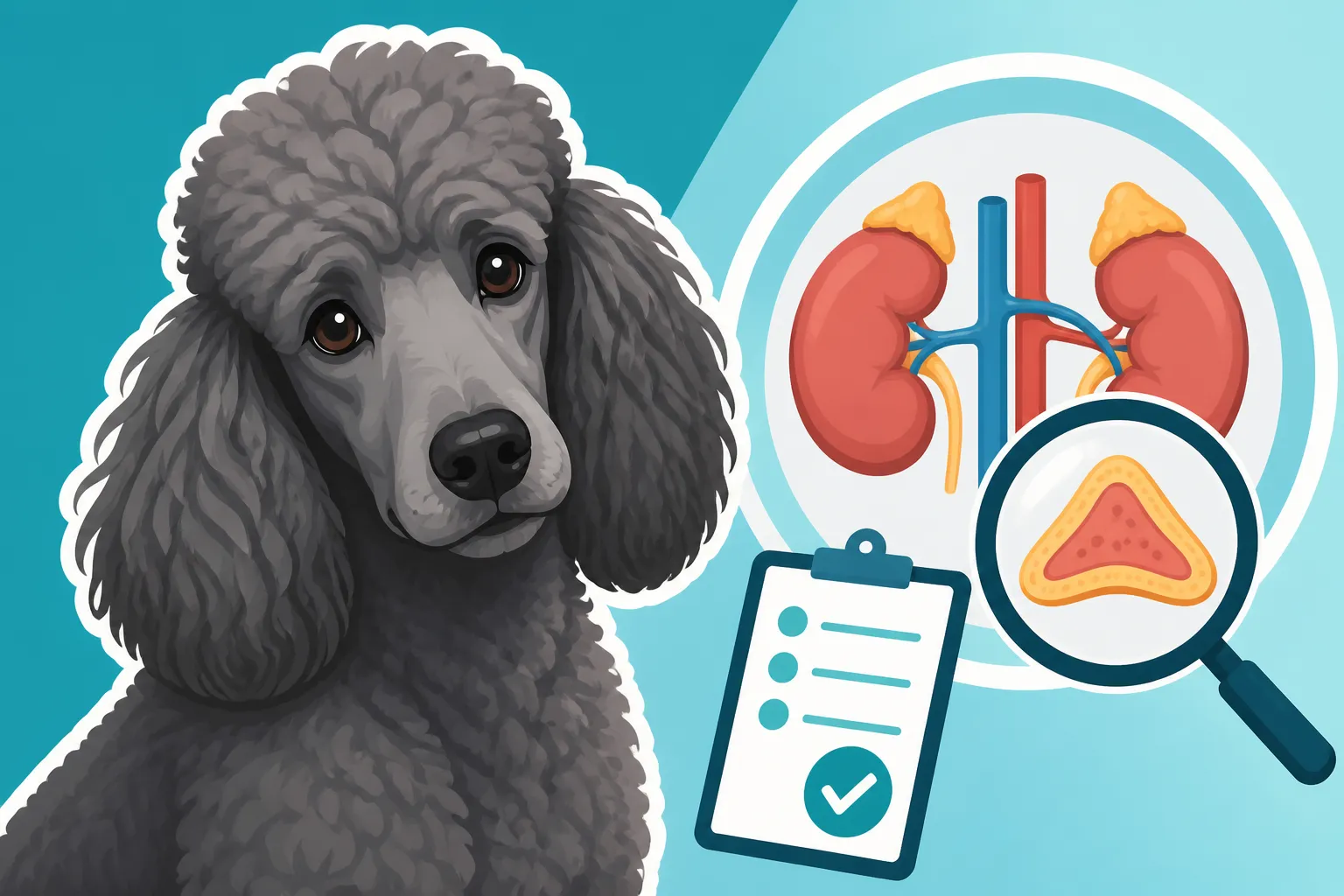
The nickname "The Great Pretender" isn't an exaggeration; it's a testament to the disease's ability to imitate other conditions so perfectly. Imagine your Standard Poodle, usually full of boundless energy, suddenly becoming lethargic, perhaps skipping meals, or experiencing intermittent vomiting and diarrhea. As a responsible owner, your first thought might be a dietary indiscretion, a stomach bug, or even just a bad day. You might wait it out, and sometimes, the symptoms might even temporarily resolve on their own, giving a false sense of security that whatever it was has passed. This waxing and waning pattern is a classic hallmark of Addison's, making it incredibly difficult to pinpoint. The illness strikes when the adrenal glands, which sit near the kidneys, stop producing enough vital hormones like cortisol and aldosterone. Without these, the body struggles to cope with stress, manage blood sugar, or regulate electrolytes. For more on the general condition, you might find our article on Addison's Disease in Standard Poodles helpful.
What makes it even trickier is that these symptoms aren't unique. A bout of lethargy could be anything from simple tiredness after a long walk to a sign of something more serious like a kidney issue. Vomiting and diarrhea are so common in dogs that they're often dismissed as a minor upset. But when these seemingly minor issues persist, recur, or are accompanied by a subtle lack of enthusiasm, it's time to dig deeper. Standard Poodles are generally sensitive dogs, and sometimes even their natural inclination to be quiet or reserved can mask early signs of illness, making it easy for Poodle Addison's Mistaken for Sulking.
When to Suspect Addison's in Your Poodle
While the symptoms are vague, certain patterns should raise an eyebrow, especially in a Standard Poodle, as this breed has a higher predisposition to the disease. Pay close attention if your Poodle is a young to middle-aged adult, typically between 2 and 8 years old, though it can occur at any age. Look for subtle changes that become persistent or cyclical. Is your Poodle drinking more water than usual, leading to more frequent urination? Are they unusually shaky or trembly, especially after exercise or stress? Do they have a poor appetite that seems to come and go, perhaps only eating small amounts or refusing food completely on certain days? These could be First Signs of Addison's in a Poodle.
Beyond the gastrointestinal and energy-related signs, some Poodles might show muscle weakness, a slower heart rate, or even signs of dehydration despite drinking water. If your Poodle seems unusually sensitive to stress, collapsing or becoming extremely weak during an exciting or frightening event, it's a major red flag. This can be particularly alarming during an "Addisonian crisis," which is a severe, life-threatening episode that requires immediate veterinary intervention. The crisis usually involves severe vomiting, diarrhea, collapse, and potentially shock. It's often the crisis that finally brings a definitive diagnosis, but ideally, we want to catch it much sooner.
Initial Veterinary Assessment and Screening
When you bring your Standard Poodle to the vet with these vague, fluctuating symptoms, the diagnostic journey begins. Your veterinarian will act like a detective, piecing together clues from your observations, a thorough physical exam, and initial screening tests. This stage is crucial for narrowing down the possibilities and deciding if Addison's is truly a suspect.
The Importance of a Detailed History
This might sound simple, but your input as the owner is absolutely invaluable. No one knows your Poodle better than you do, and your detailed observations can provide the missing puzzle pieces that lead to a correct diagnosis. Be prepared to discuss everything: when the symptoms started, how long they lasted, if they resolved and then returned, what makes them better or worse, and any changes in appetite, thirst, urination, or energy levels. Have there been any recent stressors? A new pet, a move, a change in routine, or even a recent grooming appointment could be relevant, as stress can sometimes trigger or worsen Addisonian symptoms.
It's helpful to keep a journal of your Poodle's symptoms, noting the date, time, specific behavior or physical signs, and how long they persisted. Did they refuse breakfast last Tuesday but eat normally Wednesday? Did they seem lethargic after a dog park visit but perk up by evening? This kind of detailed timeline helps your vet identify patterns that might otherwise be missed. The more information you can provide, the clearer the picture your vet can form, guiding them toward the most appropriate diagnostic tests. This is Why Poodle Addison's Is the Great Pretender really complicates things; the symptoms are rarely straightforward.
Routine Blood Work and Urinalysis
Once your vet has a good understanding of your Poodle's history, they'll typically recommend a series of routine diagnostic tests, starting with a complete blood count (CBC) and a biochemistry panel, along with a urinalysis. While these tests aren't definitive for Addison's, they can provide critical clues and help rule out other conditions.
- Complete Blood Count (CBC): In an Addisonian Poodle, a CBC might reveal anemia (low red blood cell count), or a lack of a "stress leukogram." Normally, a stressed or sick dog will show an elevated white blood cell count, particularly neutrophils, and a decreased lymphocyte count. In Addison's, the absence of this expected stress response can be a subtle but significant indicator.
- Biochemistry Panel: This is where some key red flags for Addison's often appear. The most classic finding is an imbalance in electrolytes: low sodium (hyponatremia) and high potassium (hyperkalemia). This specific ratio (sodium-potassium ratio) is often very low in Addisonian dogs. Your vet might also see elevated kidney values (BUN and creatinine), which can be concerning but are often a consequence of dehydration and poor circulation associated with Addison's, rather than primary kidney failure. Low blood glucose (hypoglycemia) can also be present, especially during a crisis. While these electrolyte changes are highly suggestive, they aren't always present, especially in cases of "Atypical Addison's," which we'll discuss later. Initial blood work is a crucial first step, and understanding What an Addison's Test Costs for a Poodle can help you prepare for the financial aspects. Many owners choose to mitigate these costs with pet insurance, and a provider like Healthy Paws can be a valuable partner in managing unexpected veterinary expenses, especially for conditions requiring extensive diagnostic work.
The Definitive ACTH Stimulation Test
If the initial physical exam, history, and routine blood work point towards Addison's, your veterinarian will recommend the "gold standard" diagnostic test: the ACTH (Adrenocorticotropic Hormone) stimulation test. This test directly assesses the function of your Poodle's adrenal glands and provides a definitive answer.
Understanding the ACTH Stim Test
The ACTH stimulation test is designed to see if your Poodle's adrenal glands are capable of producing cortisol, a crucial stress hormone. Here’s how it typically works:
- Baseline Blood Sample: First, a blood sample is drawn from your Poodle. This "baseline" sample measures the amount of cortisol already circulating in their bloodstream before any stimulation. This is an important starting point to gauge their natural hormone levels.
- ACTH Injection: Your Poodle is then given an injection of synthetic ACTH. ACTH is a hormone naturally produced by the pituitary gland that tells the adrenal glands to produce and release cortisol. By giving a synthetic version, the test bypasses the pituitary and directly stimulates the adrenal glands. This injection is usually given either intravenously or intramuscularly.
- Second Blood Sample: Approximately one hour (sometimes two hours, depending on the specific protocol and synthetic ACTH product used) after the injection, a second blood sample is drawn. This sample measures how much cortisol the adrenal glands produced in response to the ACTH stimulation.
The entire process usually takes about two hours, and your Poodle will need to remain at the vet's office during this time. It's a fairly straightforward procedure, but it's vital for an accurate diagnosis. This is the ultimate test for How a Vet Confirms Poodle Addison's.
Interpreting the Results
The magic of the ACTH stimulation test lies in comparing the baseline cortisol level to the post-stimulation level.
- Normal Response: In a healthy Poodle, the adrenal glands will respond to the synthetic ACTH by releasing a significant amount of cortisol. This means the post-stimulation cortisol level will be much higher than the baseline level, demonstrating that the adrenal glands are fully functional.
- Addisonian Response: In a Poodle with Addison's Disease, the adrenal glands are damaged or dysfunctional and simply cannot produce enough cortisol, even when strongly stimulated by ACTH. Therefore, both the baseline and the post-stimulation cortisol levels will be very low, and there will be little to no increase between the two samples. This flat, low response confirms the diagnosis of primary hypoadrenocorticism.
It's important to note that while this test is highly reliable, certain medications can interfere with the results, particularly steroids. Always inform your vet about any medications your Poodle is currently taking before the test. This test is crucial because it unequivocally determines whether the adrenal glands themselves are the problem, distinguishing Addison's from other conditions that might cause similar symptoms or electrolyte imbalances.
Differentiating Addison's from Other Conditions
Because Addison's is such a master of disguise, your vet will often need to rule out several other conditions that present with similar symptoms. This is a critical step to ensure that your Poodle receives the correct diagnosis and, consequently, the most effective treatment.
Ruling Out Other Common Ailments
Imagine your Poodle experiencing vomiting, diarrhea, and lethargy. These symptoms are incredibly common and can be caused by a myriad of issues. Your vet will consider and rule out things like:
- Gastrointestinal Upset/Pancreatitis: Simple dietary indiscretion, food allergies, or a more serious condition like pancreatitis can cause severe GI signs. Diagnostic tests such as abdominal ultrasounds, specific pancreatic enzyme tests (like canine pancreatic lipase immunoreactivity, or cPLI), and even dietary trials can help differentiate these.
- Kidney Disease: Elevated kidney values on a biochemistry panel can mimic the renal signs sometimes seen in Addison's. However, in primary kidney disease, the electrolyte imbalances (especially the low sodium/high potassium ratio) are typically not as pronounced or specific as in Addison's, and the kidney values won't usually normalize as quickly with fluid therapy. Further kidney function tests and imaging can help clarify.
- Liver Disease: Liver issues can also lead to lethargy, vomiting, and poor appetite. Blood tests specifically for liver enzymes and function, along with ultrasound, would be part of ruling this out.
- Other Autoimmune Diseases: Standard Poodles are prone to several autoimmune conditions, including Thyroid Disease in Poodles. While Addison's is distinct, it's part of a broader spectrum of immune-mediated issues this breed can face. Symptoms can sometimes overlap, so a holistic approach to diagnosis is key.
- Toxicity: Ingesting toxins, certain plants, or even some human foods can cause acute symptoms similar to an Addisonian crisis. Your vet will ask thorough questions about your Poodle's access to anything unusual.
The key to differentiation often lies in a combination of the Poodle's response to initial supportive care (like IV fluids), the specific electrolyte patterns, and finally, the definitive ACTH stimulation test.
The Atypical Addison's Challenge
Just when you thought diagnosing Addison's couldn't get more complicated, there's a variant called "Atypical Addison's Disease." This form presents a unique diagnostic challenge because it doesn't show the classic electrolyte imbalances (low sodium, high potassium) that are often the first red flags on routine blood work.
In Atypical Addison's, the adrenal glands are primarily deficient in glucocorticoids (like cortisol) but still produce sufficient mineralocorticoids (like aldosterone), which are responsible for electrolyte balance. This means your Poodle will exhibit the vague, "pretender" symptoms like lethargy, vomiting, diarrhea, and poor appetite, but their sodium and potassium levels will appear normal on a blood panel. This can make diagnosis even more difficult, as one of the most suggestive clues is absent.
If Atypical Addison's is suspected, often because of a Poodle's breed predisposition, clinical signs, and the absence of other definitive diagnoses, your vet might recommend a basal cortisol test. This test measures the baseline cortisol level in the blood. While a normal or high basal cortisol level effectively rules out Addison's, a very low basal cortisol level is highly suggestive of Atypical Addison's and would prompt the vet to proceed with an ACTH stimulation test to confirm. The ACTH stimulation test is still the definitive diagnostic tool for both classic and Atypical Addison's, as it directly assesses cortisol production regardless of electrolyte levels. Understanding that How Common Addison's Is in Standard Poodles and that both forms exist is important for owners and vets.
| Symptom Group | Classic Addison's Indicators | Atypical Addison's Indicators | Common Overlapping Symptoms (Shared with other diseases) |
|---|---|---|---|
| Energy & Behavior | Lethargy, weakness, depression, reluctance to move, shaking | Lethargy, weakness, depression, reluctance to move, shaking | Lethargy, weakness |
| Gastrointestinal | Vomiting, diarrhea, poor appetite, abdominal pain | Vomiting, diarrhea, poor appetite, abdominal pain | Vomiting, diarrhea, poor appetite, abdominal pain |
| Electrolytes | Low Sodium, High Potassium (low Na:K ratio) | Normal Sodium, Normal Potassium (normal Na:K ratio) | Can be normal or varied depending on underlying cause |
| Kidney Values | Elevated BUN/Creatinine (often dehydration-related) | Elevated BUN/Creatinine (often dehydration-related) | Elevated with kidney disease |
| Glucose | Low blood glucose (hypoglycemia) | Low blood glucose (hypoglycemia) | Can be normal or low with other illnesses |
| Stress Response | Absence of stress leukogram (normal white blood cell counts) | Absence of stress leukogram (normal white blood cell counts) | Present in most other stressed/sick dogs |
| Response to Stress | Worsening symptoms or crisis during stress | Worsening symptoms or crisis during stress | Variable, depends on underlying issue |
Post-Diagnosis and Moving Forward
Receiving an Addison's diagnosis for your Standard Poodle can be a heavy moment, but it's also a crucial turning point. While it's a lifelong condition, it's highly manageable with proper care, and a confirmed diagnosis means you can finally start the right treatment and see your beloved Poodle return to their vibrant self.
Confirming the Diagnosis and Next Steps
Once the ACTH stimulation test has definitively confirmed Addison's Disease, your veterinarian will sit down with you to discuss the specifics of your Poodle's condition. They will explain the type of Addison's (classic or atypical) and outline the treatment plan. This plan typically involves replacing the hormones that your Poodle's adrenal glands are no longer producing.
For classic Addison's, which involves deficiencies in both mineralocorticoids and glucocorticoids, treatment usually consists of two main components:
- Mineralocorticoid Replacement: This is often done with a monthly injectable medication, like desoxycorticosterone pivalate (DOCP), known by brand names such as Zycortal or Percorten-V. This medication helps regulate sodium and potassium levels.
- Glucocorticoid Replacement: A daily oral steroid, such as prednisone, is typically prescribed, especially during times of stress. The dosage is usually quite low and often adjusted based on your Poodle's needs.
For Atypical Addison's, where only cortisol is deficient, treatment might only involve the daily oral prednisone. Your vet will schedule follow-up appointments to monitor your Poodle's response to medication and adjust dosages as needed. This often includes regular blood tests to check electrolyte levels and overall well-being. It’s a journey, but one that leads to a normal, happy life for most Poodles. You can learn more about managing this condition in our article on Lifelong Treatment for an Addisonian Poodle.
Financial Considerations and Support
It's realistic to acknowledge that an Addison's diagnosis comes with financial implications. The diagnostic tests, especially the ACTH stim test, and the subsequent lifelong medication can add up. The initial work-up, including blood panels, consultations, and the ACTH test itself, can range from a few hundred to over a thousand dollars, depending on your location and veterinary practice.
Beyond diagnosis, the ongoing treatment involves regular medication costs. For monthly injectables and daily oral steroids, owners can expect to spend anywhere from $50 to $200+ per month, again, depending on the specific medication, dosage, and your Poodle's size. This doesn't include the cost of regular recheck appointments and blood work to ensure the medication is working effectively.
This is where planning ahead with pet insurance can make a significant difference. Many Poodle owners find immense relief in having a good pet insurance policy, especially from providers like Healthy Paws. If you enroll your Poodle before any symptoms or diagnosis of Addison's, a comprehensive policy can help cover a substantial portion of the eligible diagnostic costs and ongoing treatment expenses, making a chronic condition like Addison's much more manageable financially. Even for unforeseen issues down the line, pet insurance can be a lifeline. Consider investigating options such as Insuring a Poodle Against Addison's and Bloat to protect against various health challenges, as Addison's is just one of many potential health concerns for this wonderful breed.
Disclaimer
This article is intended for informational purposes only and does not substitute for professional veterinary advice. Always consult with a qualified veterinarian for any health concerns or before making any decisions about your Poodle's medical care.