Why a Fat Poodle Hides Under Its Coat
It’s a scenario many of us Poodle owners have faced: you look at your beloved curly companion, and they just seem… fluffy. Poodles are known for their magnificent coats, and it’s all too easy for that plush, dense hair to perfectly camouflage a gradual but concerning weight gain. Before you know it, you’ve got a Poodle whose health is silently suffering, simply because their luxurious coat made it hard to spot the extra pounds. This guide is here to help you peel back the layers, understand why your Poodle's coat is such a masterful disguise, and give you practical strategies to ensure their long-term health.
The Poodle Coat: A Master of Disguise
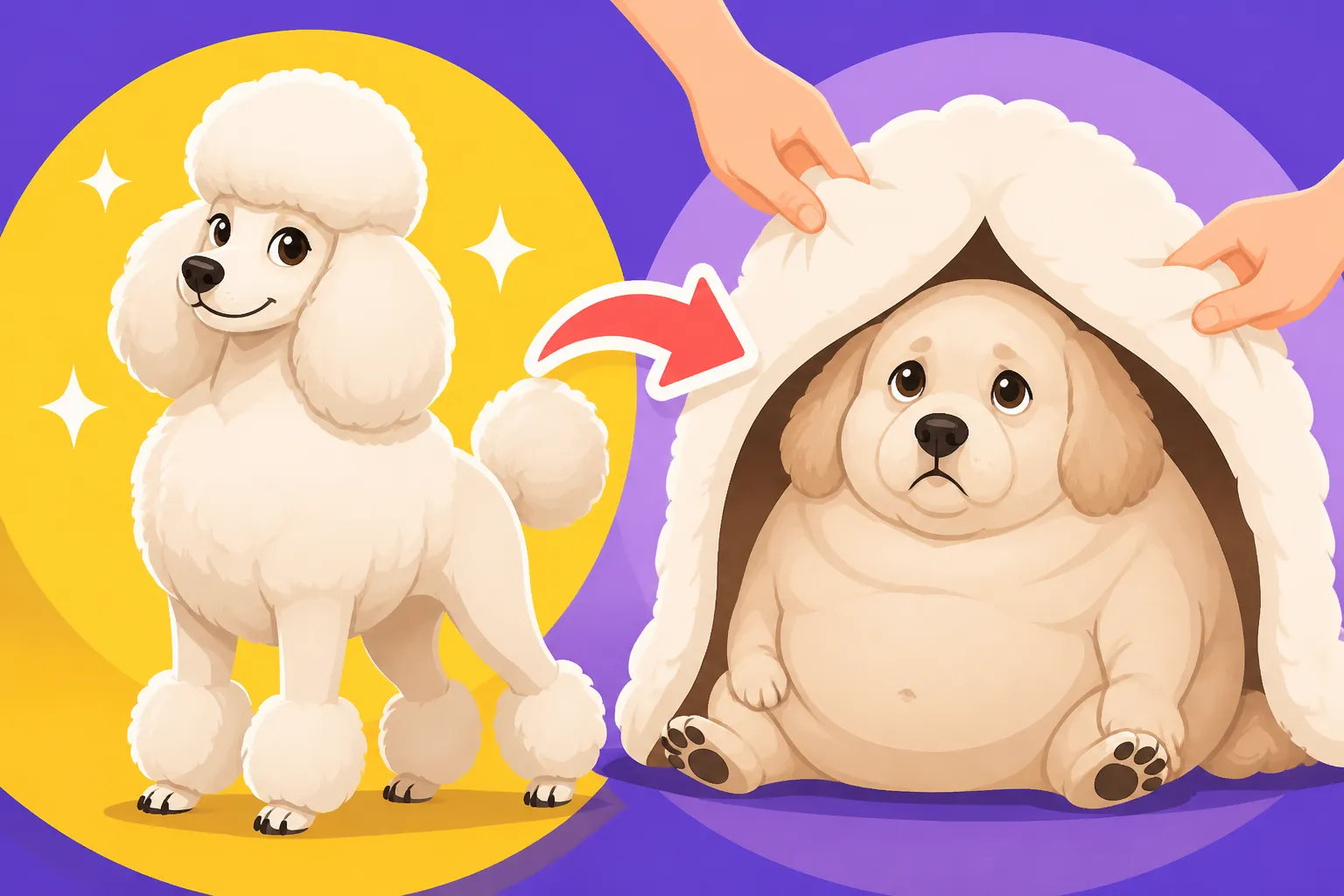
Poodles are famous for their unique, non-shedding coat, which is a big part of their appeal. However, this very characteristic can become a hindrance when it comes to assessing their physical condition. Unlike short-haired breeds where every curve and angle of their body is on display, a Poodle's coat can create a deceptive illusion of leanness, even when extra fat has started to accumulate underneath.
The Illusion of Fullness
Imagine looking at a cloud – it seems substantial, full of volume, yet it's mostly air. A Poodle's coat, while much more dense than air, works on a similar principle of creating an illusion. The tightly curled hair stands out from the body, creating a natural puffiness that adds visual bulk. This makes it incredibly difficult to truly see the underlying physique.
A Poodle in a full show clip, with elaborate rosettes and a massive topknot, appears much larger than they actually are. Even a Poodle in a more practical "pet clip" like a long lamb cut or a winter growth can appear robust and healthy when, in reality, they might be carrying more weight than is ideal. This optical illusion can lead owners to underestimate their dog's actual body condition. It's not uncommon to hear an owner say their Poodle is "just a big boned" or "just has a lot of hair" when, upon closer inspection, those descriptions don't quite tell the full story of their physique. The sheer volume of hair simply wraps them in a cozy, weight-hiding blanket year-round.
How Visual Cues Fail Us
Most conventional wisdom for checking a dog's weight relies heavily on visual cues: can you see their waist? Are their ribs visible, but not protruding? With a Poodle, these visual benchmarks become almost useless. That elegant tuck-up behind the rib cage that's so clear on a Boxer or a Greyhound? Practically invisible under inches of springy Poodle coat.
Even the most experienced Poodle owners can struggle. We tend to rely on what our eyes tell us, and when our eyes are consistently seeing a fluffy, rounded outline, our brains often register "healthy weight" or "just a bit of fluff." The truth is, that fluff could be masking a significant layer of fat padding. It’s particularly challenging when the weight gain is gradual. A few extra pounds here, a few more there, spread out over months or years, won't drastically alter the overall fluffy silhouette enough to raise immediate visual alarm bells. It’s also important to consider the breed standard, which describes Poodles as having a square, well-proportioned body, but the coat often obscures this underlying structure. This is why learning to truly assess your Poodle's body condition goes beyond just looking.
Beyond the Fluff: Spotting Weight Gain in Poodles
Since visual cues are so misleading with our Poodle pals, we need to employ different strategies to accurately gauge their weight and body condition. It's about getting hands-on and paying close attention to changes that aren't immediately obvious to the eye.
The Hands-On Approach: Palpation
This is where you become your Poodle's personal body condition detective. The most reliable way to assess a Poodle's weight is by feeling, not just seeing. You need to get past that gorgeous coat and feel what’s underneath.
Start by gently running your hands along your Poodle's sides, specifically over their rib cage. You should be able to feel their ribs individually, much like feeling the knuckles on the back of your hand when your palm is flat. You shouldn't see them, but you should definitely be able to distinguish each rib with light pressure. If you have to press firmly to feel them, or if it feels like a smooth, unbroken surface, then your Poodle is likely carrying too much fat.
Next, move your hands along their spine. You should be able to feel the bony prominences of the vertebrae without much effort. If the spine feels like a deep channel or if you can't easily feel the individual bones, it's another sign of excess fat cover. Finally, feel their waist. Stand above your Poodle and place your hands on their sides, just behind the ribs. You should feel a definite indentation or "tuck-up" where the abdomen narrows. If your hands slide straight down or if it feels broad and barrel-like, then the waistline has been lost to extra weight.
This hands-on check should become a regular habit, perhaps weekly, especially after a bath when their coat is wet and lies flatter. It’s far more accurate than trying to visually guess. To dive deeper into this technique, you might find our guide on Feeling Ribs Under a Thick Poodle Coat incredibly helpful.
Behavioral Clues and Subtle Changes
While their coat might hide the physical manifestation of weight gain, your Poodle's behavior often offers telling clues. A Poodle that's carrying extra weight will likely show a decrease in energy levels. They might be less enthusiastic about walks, lag behind you, or simply seem to tire more quickly than they used to. That joyful bounce might be replaced by a more labored gait.
You might notice they struggle with activities they once did with ease. Jumping onto the sofa or into the car might require more effort, or they might even avoid it altogether. They might be slower to get up from a lying position, or show reluctance to engage in strenuous play. Observe their breathing during and after exercise; if they're panting heavily after minimal activity, it could be a sign their cardiovascular system is working harder due to extra weight. Sometimes, they'll simply sleep more or seem less engaged with family activities, mistaking discomfort for simple relaxation. A change in appetite, an increase in thirst, or even a subtle shift in bathroom habits can sometimes accompany weight gain, signaling underlying metabolic changes that warrant a vet visit. It's worth remembering that Poodle Obesity and Its Consequences extend beyond just physical appearance.
Regular Weigh-Ins and Body Condition Scoring
Consistent weighing is an invaluable tool for monitoring your Poodle's progress. For Toy and Miniature Poodles, a regular bathroom scale will often suffice, especially if you weigh yourself, then weigh yourself holding your Poodle, and subtract the difference. For Standard Poodles, you'll likely need to use a veterinary scale, which most vet clinics are happy for you to pop in and use periodically, even just for a quick check. Aim for monthly weigh-ins to track trends.
Beyond just the number on the scale, understanding your Poodle's Body Condition Score (BCS) is crucial. BCS is a standardized, subjective assessment tool that helps veterinarians and owners evaluate a pet's fat reserves. It typically uses a 9-point scale, where 1 is emaciated, 9 is morbidly obese, and 4-5 is ideal.
Here’s a general guide for Poodles on a 9-point scale:
| BCS Score | Description | Poodle Indicators (Feel Test) |
|---|---|---|
| 1 | Emaciated | Ribs, spine, pelvic bones easily visible from a distance. No discernible fat. Severe muscle loss. |
| 2 | Very Thin | Ribs, spine, pelvic bones easily palpable and somewhat visible. Minimal muscle mass. Marked waist. |
| 3 | Thin | Ribs easily palpable, may be faintly visible. Spinal processes easily palpable. Obvious waist. |
| 4-5 | Ideal (Healthy Poodle) | Ribs easily palpable without excess fat cover. Waist easily noted when viewed from above and side. No significant fat deposits. |
| 6 | Overweight | Ribs palpable with slight excess fat cover. Waist discernible but not prominent. Some fat over lumbar spine. |
| 7 | Heavy | Ribs difficult to feel under moderate fat cover. Waist barely discernible or absent. Obvious abdominal distention. |
| 8 | Obese | Ribs very difficult to palpate. Heavy fat deposits over lumbar spine, face, and limbs. Abdomen pendulous. |
| 9 | Severely Obese | Massive fat deposits everywhere. Ribs unpalpable. Marked abdominal distention. |
By regularly performing the hands-on palpation and combining it with a BCS assessment, you can get a much clearer picture of your Poodle's true physical condition, regardless of their magnificent coat.
The Health Risks of Hidden Obesity in Poodles
The extra weight your Poodle is carrying, even if hidden by their voluminous coat, isn't just a cosmetic issue. Obesity is a serious medical condition that can significantly impact their quality of life, shorten their lifespan, and predispose them to a host of painful and debilitating diseases. It's a silent killer, slowly eroding their health from the inside out.
Joint Strain and Mobility Issues
One of the most immediate and impactful consequences of obesity in Poodles is the immense strain it places on their joints. Poodles, particularly Standard Poodles, can be prone to conditions like Poodle Hip Dysplasia by Size and, across all sizes, conditions like Luxating Patella in Toy and Miniature Poodles are concerns. When an already vulnerable joint is forced to bear extra weight, it accelerates the wear and tear on cartilage, leading to inflammation, pain, and the early onset or worsening of arthritis.
Imagine carrying a backpack filled with bricks all day, every day – that’s what excess weight feels like to your Poodle’s joints. An overweight Poodle may develop stiffness, limping, and a reduced range of motion. For an older Poodle, this burden is even greater, exacerbating existing conditions like Arthritis in a Twelve-Year-Old Poodle and severely limiting their ability to move comfortably. This pain, in turn, often leads to less activity, creating a vicious cycle where decreased exercise contributes to further weight gain, making the joint issues even worse.
Increased Risk of Metabolic and Chronic Diseases
Obesity isn't just about fat; it's about inflammation and metabolic disruption. Fat cells are not merely inert storage units; they are active endocrine organs that release hormones and inflammatory mediators. This chronic low-grade inflammation throughout the body can pave the way for a myriad of serious health problems. Overweight Poodles are at a significantly higher risk of developing Type 2 diabetes, where their bodies become resistant to insulin. They are also more susceptible to certain types of cancer, high blood pressure, and heart disease, putting immense strain on their cardiovascular system.
Furthermore, obesity can compromise the immune system and interfere with various organ functions, potentially reducing a Poodle's overall Poodle Lifespan Across the Three Sizes. It can even affect their ability to regulate body temperature, making them more prone to overheating, especially during warmer months or exercise. These conditions often require lifelong management with medication and strict dietary control, which can be emotionally and financially taxing for owners.
Surgical Complications and Reduced Quality of Life
Should your Poodle ever need surgery, being overweight adds a layer of significant risk. Anesthetic drugs are dosed by weight, and excess fat can alter drug distribution and metabolism, making anesthesia riskier. Overweight dogs also tend to have poorer lung function, making intubation and recovery more challenging. The surgical site itself can be harder to access, and the healing process might be slower due to compromised circulation in fatty tissues. Post-operative complications, such as wound infections, are also more common.
Beyond surgical risks, obesity undeniably diminishes a Poodle’s overall quality of life. They might be unable to participate in favorite activities like long walks, playing fetch, or swimming. They might become lethargic and withdrawn, losing their characteristic Poodle zest for life. Even basic grooming can become a challenge; an obese Poodle might struggle to stand for grooming, or it might be harder for owners or professional groomers to reach and properly brush all areas of their dense coat, leading to matting and skin issues. It's a harsh reality, but an overweight Poodle is a Poodle with less joy, more pain, and a higher chance of developing severe health complications down the road. This is precisely why having a robust pet insurance plan, like one from Healthy Paws, can be a godsend. It helps cover the unexpected veterinary bills that often accompany the chronic health issues stemming from obesity, allowing you to focus on your Poodle's health without constant financial stress.
Practical Steps to Manage Your Poodle's Weight
Once you've identified that your Poodle is carrying extra weight, it's time to take action. Managing a Poodle's weight effectively requires a consistent, multi-pronged approach focusing on diet, exercise, and regular veterinary oversight. Remember, this is a journey, not a sprint, and patience and dedication are key.
Tailored Nutrition and Portion Control
The cornerstone of any weight management plan is nutrition. Your first step should always be a consultation with your veterinarian. They can help determine your Poodle's ideal weight, calculate their daily caloric needs, and recommend a specific diet. Not all dog foods are created equal, and some prescription weight-loss diets are specifically formulated to help dogs feel full while consuming fewer calories. Brands like Purina Pro Plan Veterinary Diets or Royal Canin Veterinary Diet often have excellent weight management options tailored for specific needs.
Accurate portion control is paramount. Simply "eyeballing" portions is a common mistake that leads to overfeeding. Invest in a digital kitchen scale and weigh your Poodle's food precisely. Even a small handful of kibble over the recommended amount each day can add up to significant caloric excess over weeks and months. Our article on Weighing a Poodle's Meals offers great tips on this. Avoid feeding table scraps or excessive treats; these are often high in calories and fat and can quickly derail a diet. If you use treats for training, opt for low-calorie options like small pieces of carrot, green beans, or specialized low-cal training treats. Understanding Portion Control for a Poodle is crucial for success.
Structured Exercise and Mental Stimulation
While diet is critical, exercise plays an equally important role in burning calories and maintaining muscle mass. Poodles, regardless of size, are active and intelligent dogs that thrive on physical and mental engagement. Your vet can help you create an appropriate exercise regimen based on your Poodle's current weight, age, and any existing health conditions.
For most Poodles, this means daily walks, starting gently and gradually increasing duration and intensity as their fitness improves. For a Standard Poodle, two good walks a day, perhaps with some off-leash play in a safe, fenced area, is ideal. Toy and Miniature Poodles also need regular exercise, even if it's just energetic indoor play or shorter, more frequent walks. Don't underestimate the power of mental stimulation; puzzle toys, obedience training, and even scent work can tire out a Poodle's sharp mind and burn calories. Read more about Daily Work for a Poodle's Body and Mind and Mental Work That Tires a Poodle for great ideas. Swimming is an excellent low-impact exercise for Poodles, especially those with joint issues, as it burns calories without stressing their joints. Just be sure to rinse and dry their coat thoroughly afterwards! If the weight has already led to joint issues, rehabilitation therapy, sometimes involving hydrotherapy or specialized exercises, can be incredibly beneficial. Pet insurance providers like Healthy Paws can often help cover the costs of these types of therapies, making long-term management more feasible.
Partnering with Your Vet and Groomer
Your veterinary team is your most valuable partner in your Poodle's weight loss journey. Regular check-ups will allow your vet to monitor your Poodle's progress, adjust their diet or exercise plan as needed, and address any health concerns that arise. They can help rule out underlying medical conditions that might contribute to weight gain, such as thyroid issues, and ensure your Poodle loses weight at a safe and steady pace (typically 1-2% of body weight per week). Don't hesitate to ask for a weight chart or progress tracker to keep you motivated.
Your groomer can also be a helpful ally. Since they handle your Poodle regularly and are often the ones literally "feeling" their body underneath the coat, they might be able to offer objective observations about changes in body condition you might have missed. A good groomer might be the first to notice that the ribs are getting harder to feel or that the waistline is disappearing. They can also advise on clips that make it easier for you to perform your regular hands-on body condition checks. Open communication with both your vet and groomer creates a comprehensive support system for your Poodle's health. And again, having pet insurance from a reputable provider like Healthy Paws can provide immense peace of mind. Should any unforeseen health complications arise from or be exacerbated by your Poodle’s weight, such as diabetes or severe arthritis, knowing you have support for those ongoing veterinary bills can make all the difference in providing the best possible care.
Disclaimer
The information provided in this article is for general informational purposes only and is not a substitute for professional veterinary advice. Always consult with a qualified veterinarian for any health concerns or before making any decisions related to your Poodle's health, diet, or treatment plan.