Getting a Poodle Puppy Used to Being Handled
Bringing home a Poodle puppy is one of life's true joys, but let's be honest, those fluffy bundles of energy can sometimes be a handful – especially when it comes to getting them comfortable with being touched all over. Many new Poodle owners quickly discover that while their pups are smart and eager to please, they can also be quite sensitive, and resisting handling quickly becomes a huge source of stress for both dog and human. This guide is here to walk you through how to gently and effectively get your Poodle puppy used to handling, turning potential struggles into positive, bonding experiences for a lifetime of happy grooming and healthy living.
Why Handling is a Poodle Puppy Must-Have
It's easy to dismiss a puppy's squirming or protest as just being "puppy stuff," but for a Poodle, getting them accustomed to being handled is absolutely non-negotiable. This isn't just about making your life easier; it's about setting your Poodle up for a lifetime of comfort, health, and less stress during essential care routines. Without this foundational training, something as simple as a routine paw inspection can turn into a wrestling match, and that's not fun for anyone.
Grooming is a Lifetime Commitment
Let's talk about that glorious Poodle coat. It's beautiful, no doubt, but it's also a high-maintenance marvel that never stops growing. This means your Poodle will need regular brushing, bathing, and clipping for their entire life. If your puppy isn't comfortable with you touching their legs, tail, ears, or face, every grooming session will be a battle. Imagine trying to line brush a squirming, biting Poodle who hates having their armpits touched – it’s a recipe for matted fur, skin irritation, and a very unhappy dog.
Starting early by associating handling with positive experiences is crucial. A Poodle who tolerates, and even enjoys, being brushed and trimmed will have a much higher quality of life. They won't suffer from painful matting, they'll be clean, and they'll form a stronger bond with you because grooming becomes a shared, pleasant activity rather than a chore. It saves you from the heartbreak of having a groomer refuse to work on an unmanageable dog, or worse, having to resort to full sedation just for a haircut.
Vet Visits and Health Checks
Beyond the grooming table, think about all the times your Poodle will need to be handled by a veterinarian or veterinary technician. Vets need to look in ears, check teeth, listen to hearts and lungs, palpate tummies, give injections, and examine sensitive areas if there's an injury or illness. A Poodle who freaks out every time a stranger touches them or tries to look in their mouth will make these essential health checks incredibly difficult and stressful for everyone involved.
Imagine your Poodle suddenly develops an ear infection, a common issue under those drop ears. If they haven't been taught to accept ear handling, checking for discharge or applying medication becomes a nightmare. Similarly, regular dental checks are vital, especially for smaller Poodles prone to early tooth loss. A vet can't properly assess your dog's health or administer treatment if your Poodle is thrashing in fear. Proper early handling means your Poodle will be less anxious and more cooperative, leading to quicker, more accurate diagnoses and safer treatment. This groundwork can also make a huge difference if your Poodle ever needs urgent care or surgery, where calm cooperation from the patient is priceless. If you want to learn more about preventing these issues, check out Poodle Dental Disease by Size and Ear Infections Under a Poodle's Drop Ears.
Building Trust and Communication
The process of getting your Poodle puppy used to handling isn't just about tolerance; it's a powerful way to build trust and strengthen your communication. When you gently touch your puppy, reward them, and respect their comfort level, you're teaching them that your hands are safe and that you're a benevolent leader. They learn that even when you do something slightly uncomfortable, like inspecting a paw, it will be followed by something good.
This trust extends far beyond just handling. A Poodle who trusts your touch is generally more confident, less fearful, and more receptive to all forms of training. It helps them understand your intentions and feel secure in your presence. For a sensitive breed like the Poodle, this emotional security is invaluable. It forms the bedrock of a well-adjusted dog who feels safe and understood in their world.
The Gentle Art of Introducing Touch
The key to successful handling exposure is to make it a positive experience, every single time. This isn't about forcing your puppy to accept touch, but rather about teaching them to associate touch with good things. Patience, consistency, and high-value rewards are your best friends here.
Start Slow and Make It Positive
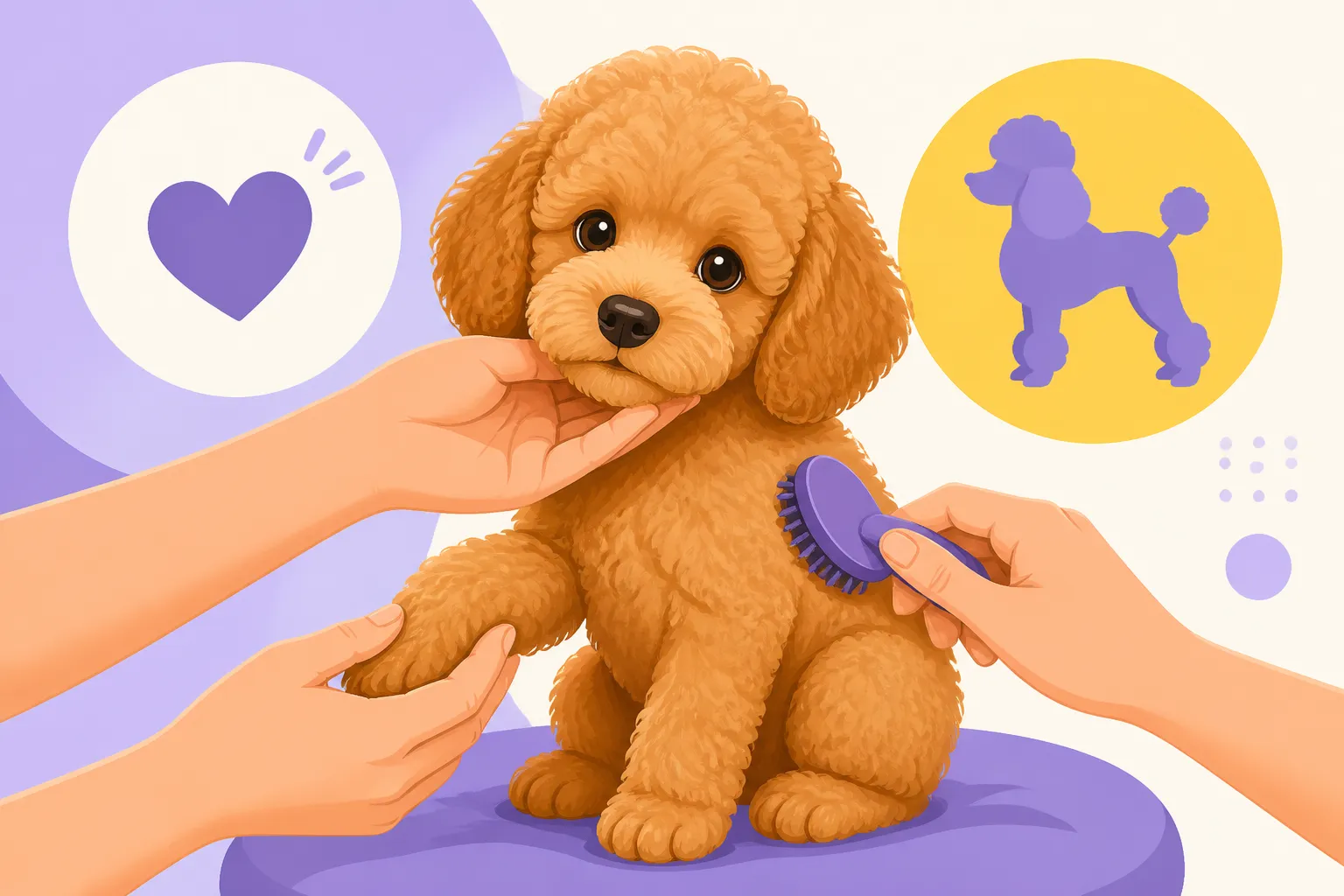
Think of this as a game. Begin by gently touching your Poodle puppy in less sensitive areas, like their shoulder or chest, for just a second or two. The moment they tolerate it without squirming or reacting negatively, give them a tiny, delicious treat and enthusiastic, calm praise. The treat should be something truly special – think small pieces of cheese, cooked chicken, or training treats that melt in their mouth.
Once they're comfortable with touches to their chest, gradually move to slightly more sensitive areas. Perhaps a gentle stroke down their back, then their side. Work your way up to touching their legs, then their paws, ears, and tail. With each successful, calm interaction, even for a split second, reward them generously. Keep sessions very short, perhaps just 30 seconds to a minute, multiple times a day. The goal is many positive repetitions, not long, drawn-out sessions that test their patience. Remember, you're building a foundation, not rushing to finish a project.
The Power of Desensitization and Counter-Conditioning
These are fancy terms for simple concepts that are incredibly effective. Desensitization means gradually exposing your puppy to something they might find scary or uncomfortable, in tiny increments, so they get used to it. For handling, this means starting with the gentlest touch on the least sensitive area and slowly increasing the duration, pressure, or location of the touch.
Counter-conditioning means changing your puppy's emotional response from negative (fear, discomfort) to positive (happiness, anticipation). We do this by pairing the potentially "uncomfortable" thing (your touch) with something they absolutely love (high-value treats). So, instead of thinking "Oh no, they're touching my paw," your Poodle puppy learns to think "Yay, they're touching my paw, that means tasty treats!" It's about creating a strong, positive association. Many reputable online training programs, like those offered by BAXTER & Bella, use these principles to guide new puppy owners through crucial early socialization and handling exercises, offering structured plans that can be incredibly helpful for a Poodle's unique needs.
Tools for Success
You don't need a lot of fancy equipment to start. In fact, keeping it simple is often best. A soft slicker brush or a good quality metal comb, designed for Poodle coats, is a must-have. Even if you're not brushing them thoroughly yet, just letting them sniff it, touch it to their fur, and then rewarding them makes it a neutral or positive object. You can find excellent options for Poodle grooming tools on Amazon, which often provides reviews and comparisons to help you choose.
Beyond brushes, think about other tools that will be part of their life. Have nail clippers or a nail grinder handy. Again, let them investigate it, touch it to a paw briefly (without actually clipping), and reward. A soft toothbrush and dog-specific toothpaste can be introduced in the same way. The idea is that these items are always paired with treats, so they never become a source of fear. The calmer you are with the tools, the calmer your puppy will be too.
Common Trouble Spots and How to Address Them
Poodles, being Poodles, often have a few areas where they're particularly sensitive. Anticipating these and approaching them with extra patience and positive reinforcement will make a world of difference.
Paw Sensitivity and Nail Care
Poodles, especially Toy and Miniature varieties, can be notoriously sensitive about their paws. This is a big problem because paw care, including nail trims and checking for injuries, is vital. Long nails can cause pain, deform the foot, and even lead to serious injuries. If your puppy hates their paws being touched, you're in for a rough ride.
Start by gently touching above the paw, on their lower leg, and rewarding. Gradually, move your hand down to cup their paw lightly in your hand, then release and reward. Build up to gently separating their toes for a quick peek, or touching the actual nail clipper or grinder to a single nail (without cutting!). You want them to feel completely unthreatened. Repeat this many times a day for short durations. If they pull their paw away, don't hold it captive. Release, wait a moment, and try again, perhaps with an even higher value treat. This teaches them that resisting doesn't get them into trouble, but cooperating brings good things. You can find more detail on this in Nail Care for a Poodle.
| Handling Area | Starting Technique | Progression | Reward Strategy |
|---|---|---|---|
| Paws | Lightly stroke leg above paw | Gently hold paw, touch toes, touch clippers/grinder to nail | High-value treats immediately after each touch/release |
| Ears | Gentle stroke outside ear | Lift ear flap, peek inside, gentle rub inside | Treat as ear is touched, then again after inspection |
| Mouth | Touch chin/cheek | Lift lip, touch gums, quick touch to a tooth | Treat after each step, focus on quick, positive exposure |
| Tail | Stroke base of tail | Lift tail gently, move side to side | Treat as tail is handled |
| Body | Gentle strokes on chest/shoulder | Progress to back, sides, belly, leg armpits | Treat for calm acceptance of touch |
Ear and Mouth Examinations
Those beautiful drop ears on a Poodle, while elegant, can also create a warm, moist environment perfect for yeast and bacteria to thrive. This makes regular ear checks and cleaning essential to prevent painful infections. Similarly, Poodles are known for having dental issues, making regular mouth inspections and brushing a key part of their health routine. If your puppy isn't cooperative, these tasks become impossible.
To tackle ear sensitivity, begin by simply stroking the outside of their ear while rewarding. Then, briefly lift the ear flap to peek inside, immediately rewarding. You can then progress to gently touching the inside of the ear canal opening with your finger, again, with a reward. For their mouth, start by touching their chin and muzzle, then gently lift a lip to expose their gums and teeth for a split second, followed by a treat. As they get more comfortable, you can touch a finger to their gums or even gently introduce a dog toothbrush with a tiny dab of tasty dog toothpaste. The key is never to push past their comfort level to the point of a full protest. Always end on a positive note.
Dealing with Squirming and Resistance
No matter how gentle you are, there might be times when your Poodle puppy will squirm, try to bite (usually soft puppy nips, not aggressive ones), or simply refuse to cooperate. It's crucial not to get frustrated or punish them. Punishment will only teach them to fear your hands and make the problem worse.
Instead, when your puppy starts to squirm, keep your hand steady but don't hold them captive. As soon as there's a tiny lull in the squirming, release your hand, reward them for that brief moment of stillness, and end the session. This teaches them that being calm and cooperative leads to release and treats. If you're encountering strong resistance, shorten your sessions even more – literally just a one-second touch and release with a treat. If you're seeing signs of discomfort, like lip licking, yawning, or averting their gaze, ease off. You're learning to read their signals, which is important for a sensitive breed like the Poodle. You can find more information about understanding your dog's signals in Reading Pain in a Sensitive Poodle. Consistency, small steps, and an abundance of high-value rewards will eventually break through.
Maintaining a Positive Handling Routine for Life
Getting your Poodle puppy used to handling isn't a "one and done" deal. It's a lifelong commitment that requires ongoing effort. What you establish in puppyhood needs to be reinforced regularly to ensure your Poodle remains a cooperative and comfortable companion throughout their years.
Consistency is Key
Just like with any training, consistency is paramount when it comes to handling. If you only practice handling when it's time for a dreaded nail trim or a full grooming session, your Poodle will quickly associate your touch with those specific, potentially uncomfortable events. Instead, incorporate short, positive handling sessions into your daily routine. This could be five minutes of gentle brushing while watching TV, a quick paw check before a walk, or a brief ear inspection during cuddle time.
By making handling a regular, positive, and low-stakes activity, you prevent your Poodle from backsliding. It keeps them accustomed to your touch and reinforces the idea that handling is a normal, non-threatening part of their day. A lapse in consistency can quickly undo weeks or months of hard work, leading to a resurgence of fear or resistance. Think of it like maintaining a muscle – if you stop exercising it, it weakens.
Recognizing Stress Signals
Poodles are intelligent and often quite stoic, which can sometimes make it hard to read their discomfort. However, they do communicate. Learning to recognize the subtle stress signals your Poodle gives will help you avoid pushing them too far and creating a negative association. Look for:
- Lip licking or yawning (when not tired): These can be displacement behaviors indicating stress.
- Averted gaze or "whale eye": Showing the whites of their eyes as they look away from you.
- Stiff body posture: Tensing up rather than remaining loose and relaxed.
- Low tail carriage (if not naturally low): A tail tucked between the legs is a clear sign of fear.
- Excessive panting (when not hot or exercised).
- Reluctance to take treats: A clear sign that they are too stressed to enjoy food.
If you see these signals, ease off. Take a break, give them space, and try again later with a less intrusive touch or a shorter session. Respecting their communication builds trust and prevents escalation of fear. You want to keep every handling experience well below their stress threshold.
When to Seek Professional Help
Sometimes, despite your best efforts, a Poodle puppy might exhibit significant resistance, fear, or even aggression when being handled. This isn't a reflection of your failure as an owner; it simply means you might need a little extra guidance. It's okay to ask for help! A professional dog trainer or a veterinary behaviorist can provide invaluable support.
They can assess your puppy's specific reactions, identify triggers, and teach you advanced techniques for desensitization and counter-conditioning. They can also help rule out any underlying pain or medical conditions that might be contributing to your puppy's discomfort. Early intervention is key if you're struggling. Don't wait until the problem becomes severe, as it's always easier to shape positive behaviors in a puppy than to undo deeply ingrained fears in an adult dog. Investing in professional help now will save you a world of stress, and potentially significant vet bills for sedation, down the line.
Disclaimer
This article is for general informational purposes only and does not constitute professional advice. Laws, prices and regulations vary by location and change over time. Consult a qualified professional for guidance on your specific situation.