Skin Infections Under a Matted Poodle Coat
It's heartbreaking to discover that beneath your Poodle's beautiful, fluffy coat, a nasty secret has been brewing: a painful skin infection, hidden away by dense matting. Many Poodle owners, despite their best intentions, can find themselves in this difficult situation because the breed's unique coat, while stunning, is also a magnet for trouble. This guide will walk you through why these infections occur, how to recognize the subtle (and not-so-subtle) signs, and what steps you absolutely must take to treat and prevent them, ensuring your Poodle lives a comfortable, healthy life.
Why Poodle Coats Are Prone to Matting and Skin Issues
Poodles are renowned for their magnificent, non-shedding coats. While this is fantastic for allergy sufferers and means less hair on your furniture, it also comes with a significant responsibility. Unlike dogs with fur that sheds, a Poodle's hair continuously grows, much like human hair. If not properly maintained, this dense, curly hair quickly intertwines, creating mats that can range from small tangles to thick, felt-like armor against the skin.
The Unique Structure of Poodle Hair
Imagine a spring: that's pretty much how a Poodle's individual hair strand is structured. It's curly, fine, and dense. This curl is precisely what makes it so efficient at trapping shed hair (yes, Poodles do shed, it just doesn't fall out!) and other debris. Instead of falling to the floor, dead hair gets caught within the live curls, forming a tightly woven mass. This process accelerates rapidly if the coat gets wet and is allowed to air dry without thorough brushing, or if the dog rolls around in dirt or leaves. The longer the hair, the faster and more severely it can mat. It's not uncommon for a Poodle to go from brushed to badly matted in just a few days if neglected, especially during seasonal changes or when they’ve been particularly active outdoors. This constant growth is also why proper The Poodle Coat and Why It Never Stops Growing is such a critical part of Poodle ownership.
Moisture, Dirt, and Debris Trapping
Once mats begin to form, they create a perfect storm for skin problems. A matted coat doesn't allow air to circulate properly to the skin. It acts like a thick blanket, trapping moisture from baths, rain, humidity, or even just sweat. This warm, damp environment is a paradise for bacteria and yeast, which thrive in such conditions.
Think about it: when your Poodle goes for a walk, they pick up dust, pollen, leaves, and sometimes even mud or burrs. These foreign bodies get embedded in the coat. If the coat is already matting, these particles become even more deeply entrenched, irritating the skin beneath. Without regular How to Line Brush a Poodle Properly that reaches all the way to the skin, these irritants build up. Over time, this constant irritation, coupled with the lack of air and trapped moisture, can lead to severe inflammation, bacterial infections (pyoderma), and yeast infections (malassezia dermatitis). The mats essentially prevent the skin from breathing, turning it into a petri dish for pathogens.
Recognizing the Signs of Skin Infections Under Mats
The biggest challenge with skin infections under matted Poodle coats is that the mats themselves often hide the problem until it's quite advanced. You can't just part the hair and take a quick look like you might with a short-coated dog. This requires a keen eye for subtle changes and an understanding of your Poodle's behavior. Many Poodle owners worry about Whether a Poodle's Itch Is Allergy or Adenitis, but matting adds another layer of complexity to diagnosing the source of irritation.
Visual Clues and Odor
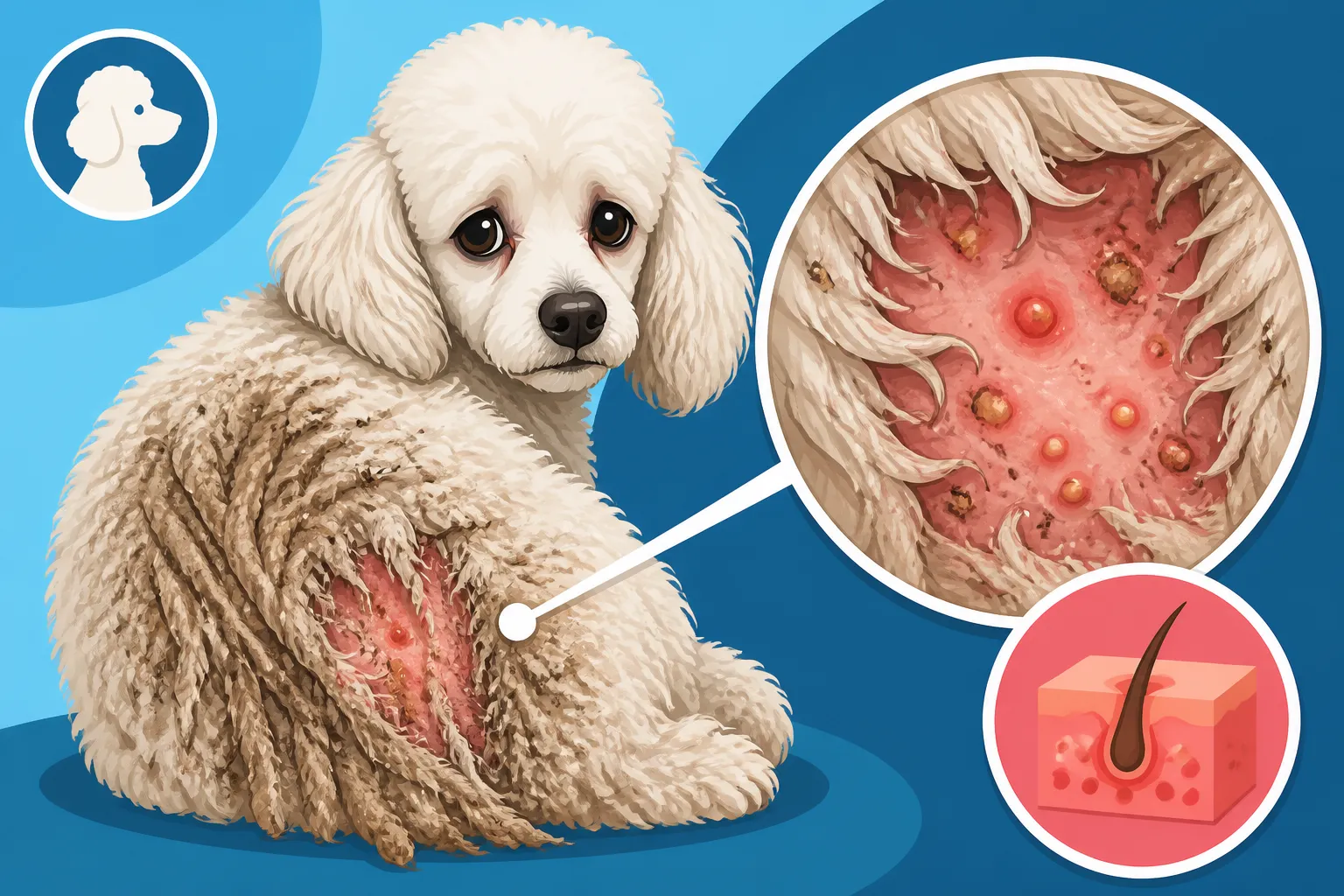
Even if you can't see the skin directly, mats provide their own set of clues. Look for any areas where the mats seem particularly hard, tight, or pulling on the skin. You might notice unusual lumps or bumps beneath the matted areas. In some cases, the mat might be so severe that it pulls the skin taut, making it look unnatural.
Perhaps the most telling sign is a foul odor emanating from your Poodle. This isn't just a "doggy smell"; it's often a distinctly yeasty, cheesy, or putrid smell that indicates a rampant bacterial or fungal infection. This odor can sometimes be detected even before you see any visual signs, especially if the matting is in areas like the armpits, groin, or behind the ears, which are naturally warm and moist areas where The Spots Mats Form First on a Poodle. If you're smelling something unpleasant despite regular bathing, it's a huge red flag that something is amiss beneath the coat. You might also see discharge or crusting around the edges of the mats, or even small wet spots where the skin has become macerated and infected.
Behavioral Indicators
Your Poodle's behavior can tell you a lot about their discomfort. Dogs are incredibly stoic, and Poodles, being sensitive creatures, might try to hide their pain or discomfort. However, persistent itching, scratching, licking, or chewing at specific areas are undeniable signs of irritation. If your Poodle is constantly trying to rub a particular spot on the furniture, or you notice them gnawing at their legs or flank with unusual intensity, investigate immediately.
They might also become withdrawn, irritable, or even snap when touched in certain areas. Imagine having a tight, painful band wrapped around your body, constantly pulling on your skin; that's what severe matting feels like. A Poodle in pain might also show reluctance to move, play, or jump, especially if the mats are pulling at sensitive joints or their skin is inflamed. They might also shy away from grooming sessions, which they usually tolerate or even enjoy, because the brushing is exacerbating the pain of the mats pulling on their already compromised skin. These behavioral changes are often the first, most obvious indicators that a deeper problem, potentially a severe skin infection, is at play.
The Dangers of Neglecting Matted Coats and Infections
It's tempting to think a few mats are just a cosmetic issue, but for a Poodle, severe matting is a serious health hazard. Neglecting a matted coat doesn't just lead to mild irritation; it can cause a cascade of painful, debilitating, and potentially life-threatening problems.
Infections: Bacterial and Fungal
As discussed, mats create a perfect breeding ground for bacteria and yeast. What starts as mild irritation can quickly escalate into a full-blown skin infection. Bacterial infections, known as pyoderma, can manifest as red, pustular lesions, crusts, or moist, raw areas. Yeast infections, often caused by Malassezia pachydermatis, present with greasy skin, a strong yeasty odor, and discolored (often reddish-brown) hair or skin. Both types of infections are intensely itchy and painful. If left untreated, these infections can spread across the skin, causing widespread discomfort. They can also become chronic, requiring long-term medication and management. In severe cases, bacteria can enter the bloodstream, leading to more serious systemic infections.
A veterinarian will often need to perform tests to determine the exact type of infection. This might involve skin scrapings, cytology (examining cells under a microscope), or even bacterial cultures. Sometimes, Skin Biopsies That Confirm Poodle Adenitis might be needed to rule out other complex skin conditions, though for matted skin, the primary culprits are usually bacterial and yeast overgrowths.
Hot Spots and Sores
One of the most immediate and painful consequences of a matted coat is the development of "hot spots," or acute moist dermatitis. These are rapidly developing, red, raw, and oozing skin lesions that appear when a dog incessantly licks or chews at an irritated area. The matting itself causes irritation, and the Poodle’s response to scratch or lick only makes it worse, quickly turning a small patch of itchy skin into a large, painful, weeping sore. Hot spots are extremely uncomfortable and can grow alarmingly fast.
Beyond hot spots, chronic matting can lead to pressure sores, especially in areas where mats press against bony prominences. The skin beneath severe mats can become so deprived of oxygen and circulation that it actually dies (necrosis), leading to open wounds that are incredibly difficult to heal. In extreme cases, mats can even constrict blood flow to limbs, leading to swelling and pain. I’ve seen cases where mats were so tight around an ear or a leg that they acted like tourniquets, causing serious tissue damage.
Beyond the Skin: Systemic Issues
While primarily a skin problem, neglected matting can have wider implications for your Poodle's health. The constant pain and irritation can lead to chronic stress, affecting their immune system and overall well-being. Severe infections can cause fever and lethargy, indicating a systemic response. In cases of very extensive matting, the sheer discomfort and difficulty moving can lead to reduced activity, which in turn can contribute to Poodle Obesity and Its Consequences.
Moreover, the process of removing severe matting can be traumatic. Often, a full shave-down under sedation is required, which carries anesthetic risks, particularly for older or already unwell Poodles. The underlying skin may be so damaged that it requires weeks or even months of veterinary care, specialized shampoos, antibiotics, antifungals, and pain relief. This can be a significant financial burden. This is precisely why many pet owners find value in pet insurance providers like Healthy Paws, which can help cover the unexpected costs associated with extensive veterinary treatments for conditions like these. Having coverage like that in place before issues arise can give you immense peace of mind.
Treating and Preventing Skin Infections in Poodles
When you discover skin infections hidden beneath mats, it's a distressing situation, but thankfully, it's often treatable. The key is swift and decisive action, followed by a commitment to consistent preventative care.
The Crucial First Step: Professional Dematting
If your Poodle has severe matting and suspected skin infections, do not attempt to cut the mats out yourself with scissors. You risk severely cutting or nicking the thin skin beneath, which can lead to even worse infections and a trip to the emergency vet. This is a job for a professional groomer or your veterinarian.
Often, if the mats are extensive and tight to the skin, the only safe and humane option is a full shave-down using clippers, often performed under sedation by a veterinarian. This allows the vet to assess the full extent of the skin damage, properly clean the area, and initiate treatment. Professional groomers are trained to handle matted coats, but even they might recommend a veterinary visit if the matting is too severe or skin infections are clearly present. Be prepared for the fact that a severe shave-down can expose very red, irritated, or even wounded skin, which can look shocking at first. However, this is the essential first step to healing. The cost of such a procedure, especially if sedation is involved, can be substantial, reinforcing the benefit of pet insurance plans from companies like Healthy Paws.
Veterinary Treatment and Medication
Once the mats are removed and the skin is exposed, your veterinarian will be able to properly diagnose and treat any underlying infections. Treatment typically involves:
- Topical Therapies: Medicated shampoos, rinses, and sprays are often prescribed to kill bacteria and yeast on the skin. These might contain ingredients like chlorhexidine, miconazole, or benzoyl peroxide. Regular bathing, as directed by your vet, is crucial for clearing the infection. Remember that Bathing and Drying a Poodle correctly is an art form itself, especially when dealing with sensitive, infected skin.
- Oral Medications: For more severe or widespread infections, oral antibiotics (for bacterial infections) or antifungals (for yeast infections) will be prescribed. It's vital to administer these exactly as directed and complete the full course, even if your Poodle seems to improve quickly, to prevent recurrence.
- Anti-Inflammatories and Pain Relief: Your vet may prescribe medications to reduce inflammation and pain, making your Poodle more comfortable during the healing process.
- Cone of Shame: To prevent your Poodle from licking or chewing at the healing skin, they will likely need to wear an Elizabethan collar (cone) until the skin has healed sufficiently.
The journey to clear skin might take several weeks, requiring consistent medication and follow-up vet visits. Regular vet check-ups are always a good idea, and knowing Yearly Routine Vet Spend for a Poodle can help you budget for potential issues, even if you have coverage from providers like Healthy Paws.
Ongoing Grooming and Maintenance
Prevention is truly the best medicine when it comes to Poodle coat health and avoiding skin infections. Once your Poodle has recovered, establishing a rigorous and consistent grooming routine is paramount.
- Daily or Every-Other-Day Brushing: A Poodle, especially one in a longer coat, needs to be brushed down to the skin at least every other day, and ideally daily. Use a good quality slicker brush and a metal comb to ensure you're getting through all the curls. This prevents new mats from forming and allows air to circulate. Knowing How Often a Pet Poodle Needs Brushing is key to staying ahead of the problem.
- Regular Professional Grooming: Schedule professional grooming appointments every 4-6 weeks, without fail. A skilled groomer can keep the coat trimmed, thoroughly brushed, and check for any developing issues. Don't underestimate Professional Grooming Costs by Poodle Size; it’s an investment in your Poodle’s health.
- Proper Bathing and Drying: If you bathe your Poodle at home, always ensure you fully brush out the coat before bathing and then thoroughly dry it immediately afterward, brushing as you go. Never let a Poodle air dry, as this is a prime recipe for matting.
- Diet and Allergies: If your Poodle has recurrent skin issues, discuss their diet with your vet. Sometimes, food allergies can contribute to skin inflammation and itching, making them more prone to infections. An Elimination Diets for an Itchy Poodle might be recommended.
- Proactive Health Monitoring: Be vigilant for any changes in your Poodle’s skin or behavior. Early detection of a small tangle or a hint of irritation can prevent a major problem. Remember that Poodle Allergies and Skin Reactions can manifest in various ways, so always be attentive to new symptoms.
- Pet Insurance: While not a preventative measure for the coat itself, having pet insurance, such as a plan from Healthy Paws, can significantly ease the financial stress if, despite your best efforts, your Poodle develops another serious skin condition or other health issue. Insuring a Poodle Before Any Diagnosis is crucial to ensure potential future conditions aren't considered pre-existing.
By understanding the unique challenges of the Poodle coat and committing to a diligent care routine, you can help your beloved companion avoid the painful reality of hidden skin infections and ensure their beautiful coat reflects the healthy dog underneath.
Understanding Common Skin Issues Under Mats
| Condition | Primary Cause | Common Signs | Odor | Treatment Approach |
|---|---|---|---|---|
| Bacterial Pyoderma | Bacteria (often Staphylococcus) thriving in warm, moist, matted skin. | Red bumps, pustules, crusts, scabs, hair loss, intense itching, raw skin. | Pungent, foul | Oral antibiotics, medicated shampoos (e.g., chlorhexidine), topical treatments. |
| Yeast Dermatitis | Overgrowth of Malassezia yeast in damp, warm areas. | Greasy skin, reddish-brown discoloration of skin/hair, scaly patches, intense itching. | Sweet, yeasty | Oral antifungals, medicated shampoos (e.g., miconazole), topical creams. |
| Acute Moist Dermatitis (Hot Spots) | Self-inflicted trauma (licking/chewing) due to underlying irritation or infection. | Rapidly developing red, raw, oozing, painful lesions. | Pungent | Clipping hair around lesion, cleaning, topical steroids/antibiotics, e-collar. |
| Maceration/Pressure Sores | Prolonged moisture and pressure from tight mats against skin, restricting air flow and circulation. | Wet, soft, often ulcerated skin, deep red or purplish areas, tissue death. | Putrid | Dematting, wound care, antibiotics, anti-inflammatories, pain management. |
Disclaimer
The information provided in this article is for general informational purposes only and is not a substitute for professional veterinary advice. Always consult with a qualified veterinarian for any health concerns or before making any decisions related to your Poodle's medical care.