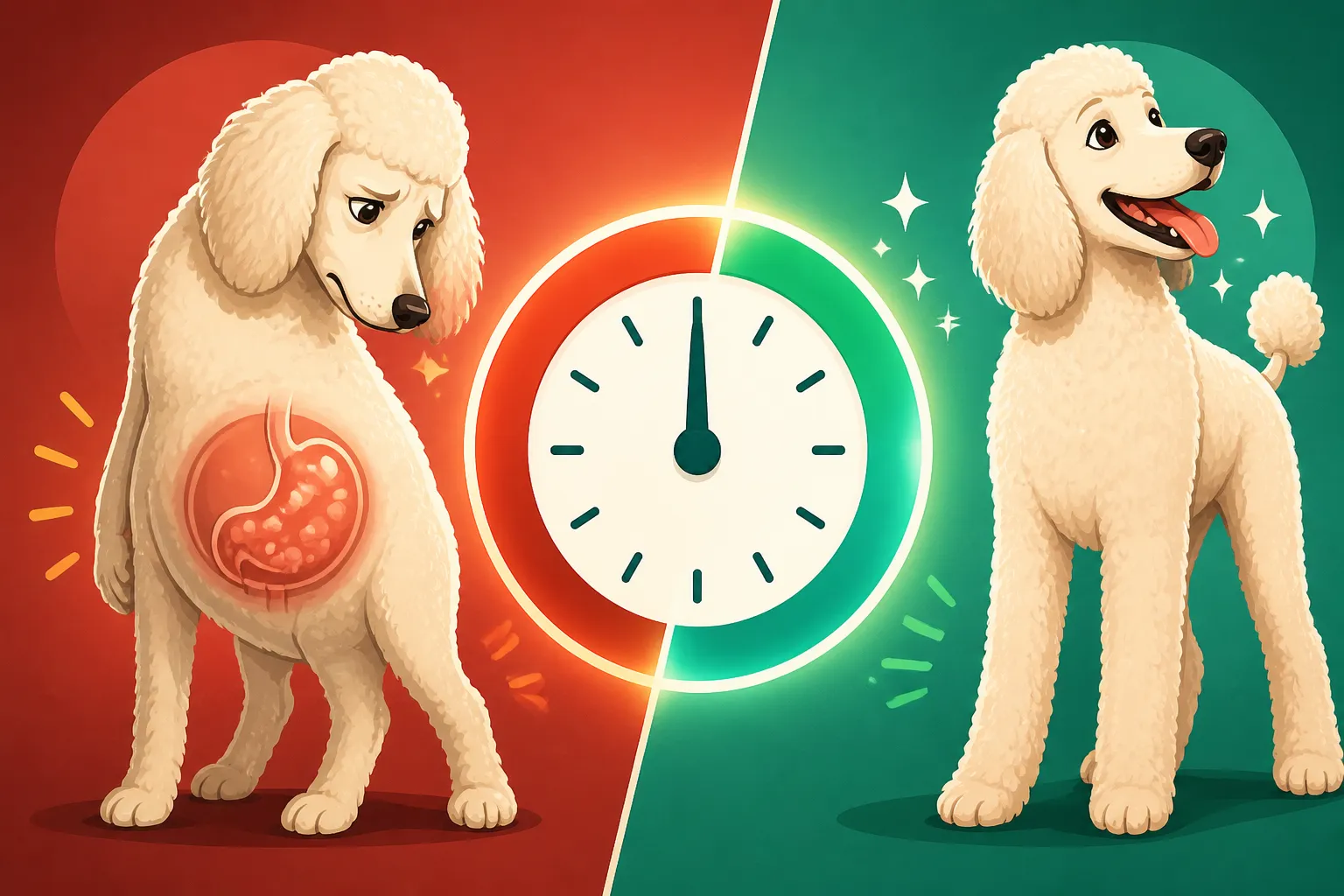
The Hour That Decides a Bloating Standard Poodle
The sheer terror that strikes any Standard Poodle owner at the first hint of bloat is a feeling I wouldn't wish on my worst enemy. That sudden swelling, the retching, the frantic panic – it’s a nightmare. This guide is dedicated to helping you understand why a Standard Poodle is so prone to this devastating condition, how to spot the signs, and crucially, what steps you need to take in those first, life-saving moments when every second truly counts.
Understanding Gastric Dilatation-Volvulus in Standard Poodles
When we talk about "bloat" in Poodles, we're not just talking about a little gas or an upset stomach. We're talking about Gastric Dilatation-Volvulus, or GDV, which is a rapid, life-threatening condition where the stomach first fills with gas and fluid (dilatation) and then twists upon itself (volvulus). This twisting cuts off blood supply to the stomach and often the spleen, trapping gas and food inside and causing immense pain and organ damage. It’s an agonizing, fast-acting emergency, and unfortunately, our beloved Standard Poodles are disproportionately affected due to their deep chests and genetic predisposition.
Why Standard Poodles Are So Susceptible to Bloat
It feels incredibly unfair that such a wonderful breed is so vulnerable to something so devastating, but there are some clear anatomical and genetic factors at play. The deep, narrow chest characteristic of the Standard Poodle, which contributes to their elegant silhouette, is also a major risk factor. This conformation allows the stomach more room to swing and twist when it's distended. Think of it like a pendulum in a tall, narrow space – it has more room to gather momentum and flip.
Beyond anatomy, genetics play a significant role. If you know your Poodle's family history and there are cases of bloat, your Poodle is at an even higher risk. It’s not just an isolated incident; there appears to be a hereditary component to this disease. This is why reputable breeders are so crucial and why understanding your Poodle's lineage is important. Knowing this predisposition helps us understand why we need to be extra vigilant. For a deeper dive into breed-specific risks, you might find information on Bloat and the Deep Standard Poodle Chest incredibly helpful.
The Life-Threatening Mechanism of GDV
When the stomach distends with gas and then twists, it creates a cruel cascade of events inside your dog's body. First, the twisted stomach pinches off the esophagus, meaning your dog can't burp or vomit to relieve the pressure. Then, the exit to the small intestine is also blocked, trapping everything inside. The stomach continues to expand, pushing against other organs, including the diaphragm, making it hard for your Poodle to breathe.
As if that weren't enough, the twisting also cuts off blood flow. The stomach tissue starts to die, and harmful toxins begin to build up. The spleen, which is often attached to the stomach, can also twist, leading to further internal damage and bleeding. The pressure can also impede blood return to the heart, leading to shock and a rapid decline. This entire process can unfold with terrifying speed, often within minutes to a couple of hours, which is why swift action is paramount. The phrase "the hour that decides" isn't an exaggeration; it's a stark reality for pets experiencing GDV.
Spotting the Critical Warning Signs of Poodle Bloat
One of the most frustrating and terrifying aspects of bloat is how quickly symptoms can escalate, and how some of the early signs can be easily mistaken for less serious issues. It's crucial for every Standard Poodle owner to be intimately familiar with these indicators, so you can act before it’s too late. Your vigilance truly is your Poodle's first line of defense.
Early and Subtle Indicators That Demand Attention
Sometimes, bloat doesn't start with the dramatic, unmistakable swelling. Instead, it might begin with subtle changes in your Poodle's behavior that you could easily dismiss. You might notice your Poodle seems restless, pacing, or unable to settle down. They might whine softly, seem anxious, or just look generally uncomfortable. They may stretch out in odd positions, trying to relieve pressure. These are often the very first whispers of trouble.
Another common early sign is unsuccessful retching or "dry heaving." Your Poodle might try to vomit, strain intensely, but produce nothing or only a small amount of foamy saliva. This is a huge red flag because it indicates their stomach opening is blocked. Excessive drooling can also accompany this. Don't wait for visible swelling if you see these signs; they are urgent. Sometimes, even just a reluctance to move, a "hunched up" appearance, or a sudden quietness in an otherwise lively Poodle can be an early indicator. Remember, Poodles can be quite stoic and may try to hide their pain, so learning to read subtle cues is vital. You can learn more about this tendency in Why a Sensitive Poodle Hides Illness.
Unmistakable Symptoms Requiring Immediate Action
While subtle signs give you a head start, some symptoms are undeniably indicative of bloat and require you to drop everything and rush to an emergency vet. The most classic sign is the visible distension or swelling of the abdomen, especially on the left side of their body, which will feel tight and drum-like if you tap it gently. This is the stage where the stomach has inflated significantly.
Other clear emergency signs include:
- Weakness and collapse: Your Poodle might suddenly become unsteady, unable to stand, or simply collapse.
- Rapid, shallow breathing: The expanded stomach puts pressure on the diaphragm, making it hard for them to take full breaths.
- Pale gums: This indicates poor blood circulation and shock. Gently lift their lip and check the color.
- Increased heart rate: Their heart will race as their body struggles to compensate for the shock.
- Excessive panting: Even if not hot, they might pant heavily due to pain and difficulty breathing.
- Profuse drooling: This can occur as they try unsuccessfully to vomit.
If you observe any of these symptoms, especially the distended abdomen coupled with unsuccessful retching, there is no time to waste. Call your vet or emergency clinic immediately while you are on the way. Every single minute counts. For a detailed list of what to look out for, you'll want to read about Emergency Signs of Poodle Bloat.
Here’s a quick reference table for common bloat symptoms:
| Symptom Category | Early/Subtle Signs | Urgent/Clear Signs |
|---|---|---|
| Behavior | Restlessness, pacing, anxiety, whining | Collapse, extreme lethargy, inability to move |
| Vocalization | Soft whining, groaning | Loud cries of pain, yelping when touched |
| Abdomen | Mild discomfort | Obvious swelling, tight, drum-like feel |
| Digestion | Repeated unsuccessful retching (dry heaves) | Retching with no production, profuse drooling |
| Breathing | Slight discomfort | Rapid, shallow breathing, heavy panting |
| Other | Hunched posture, seeking solitude | Pale gums, rapid heart rate, weakness, shock |
The Critical "Golden Hour" for a Bloating Standard Poodle
Once you suspect bloat, the clock starts ticking. The medical community often refers to a "golden hour" – a critical window during which prompt veterinary intervention offers the best chance of survival. For a Standard Poodle experiencing GDV, this hour is not a suggestion; it's a lifeline. Delays can drastically reduce the chances of a positive outcome.
What Happens During the First Hour at the Vet
When you arrive at the emergency veterinary clinic, expect immediate, rapid-fire action. There will be no waiting. The veterinary team will assess your Poodle's condition, focusing on stabilizing them and confirming the diagnosis. This usually involves:
- Immediate Assessment: A quick physical exam to check gum color, heart rate, respiration, and palpate the abdomen.
- Shock Treatment: IV fluids will be started immediately to combat shock and improve blood pressure. Pain medication will also be administered to help manage the intense discomfort.
- Diagnosis Confirmation: An X-ray of the abdomen will be taken to confirm if the stomach is dilated and, more importantly, if it has twisted. This is the definitive diagnostic step for GDV.
- Decompression: If the stomach is dilated but not yet twisted (dilatation without volvulus, which can progress to GDV), the vet may attempt to decompress it by inserting a tube down the esophagus into the stomach to release gas and fluid. If the stomach has already twisted, this tube may not pass, necessitating a different approach. Sometimes, a large needle (trocar) is used to carefully puncture the side of the abdomen and release gas, providing temporary relief, but this doesn't fix the twist.
This entire process is geared towards getting your Poodle stable enough for the next, crucial step: surgery. Your pet insurance, like a plan from Healthy Paws, can be incredibly helpful in covering these initial emergency costs, allowing you to focus on your Poodle's care rather than the financial strain.
The Emergency Surgery: What to Expect
If GDV is confirmed, surgery is the only definitive treatment. This is a complex, invasive procedure, but it's vital for your Poodle's survival. The main goals of the surgery are:
- Untwisting the Stomach: The surgeon will carefully untwist the stomach, returning it to its normal anatomical position.
- Assessing Tissue Viability: Once untwisted, the surgeon will assess the stomach wall and spleen for damage. If parts of the stomach tissue have died (necrosis), they will need to be removed. If the spleen is severely damaged, it might also need to be removed.
- Gastropexy: This is a crucial preventative step often performed during the same surgery. A gastropexy permanently attaches the stomach to the abdominal wall. This won't prevent the stomach from dilating with gas, but it will prevent it from twisting again, drastically reducing the risk of recurrence. This procedure is so important that many owners of at-risk breeds opt for prophylactic gastropexy even before bloat occurs. Understanding Whether a Standard Poodle Should Have a Gastropexy is key for long-term protection.
The surgery itself typically takes a couple of hours, but the recovery period is significant, involving intensive post-operative care, pain management, and monitoring for complications like arrhythmias or further tissue damage. The cost of this emergency surgery can be substantial, often running into several thousand dollars, making pet insurance, such as through Healthy Paws, a real lifesaver. It’s a huge financial commitment on top of the emotional distress, so having a plan in place for Saving Against a Standard Poodle Bloat Bill is a very smart move.
Preventing Bloat: Proactive Measures and Long-Term Care
The best way to deal with bloat is to try and prevent it from ever happening. While we can't eliminate the risk entirely for our deep-chested Poodles, there are several proactive steps you can take to significantly reduce their chances of experiencing this dreaded condition.
Dietary and Feeding Strategies to Lower Risk
How and when your Poodle eats can play a major role in bloat prevention. The goal is to minimize the amount of air swallowed and prevent rapid distension of the stomach.
- Multiple Smaller Meals: Instead of one or two large meals a day, consider feeding your Standard Poodle two or three smaller meals. This prevents the stomach from being overloaded.
- Slow Feeder Bowls: If your Poodle tends to eat quickly, a slow feeder bowl can be incredibly beneficial. These bowls have ridges or obstacles that force your dog to eat around them, slowing down their intake and reducing the amount of air they gulp down.
- Avoid Elevated Bowls (Mostly): While elevated bowls were once thought to prevent bloat, recent studies suggest they might actually increase the risk in some large, deep-chested breeds. It's generally recommended to feed your Poodle from a bowl on the floor, allowing them to eat in a natural posture. You can find more detail on this specific debate in Bowl Height and Standard Poodle Bloat Risk.
- Limit Exercise Before and After Meals: A full stomach combined with vigorous activity is a recipe for disaster. Avoid strenuous exercise for at least an hour before and two hours after meals. A gentle walk is usually fine, but no running, jumping, or intense play.
- Water Intake: Ensure your Poodle always has access to fresh water, but try to prevent them from gulping down huge amounts immediately before or after a meal. Offer smaller amounts more frequently.
- Avoid High-Fat Diets: Some research indicates that diets high in fat, particularly those where fat is listed as one of the first four ingredients, may contribute to a higher risk of bloat. Discuss your Poodle's diet with your vet to ensure it's appropriate. Information on Feeding Habits That Raise Poodle Bloat Risk provides more context.
The Role of Prophylactic Gastropexy
For many Standard Poodle owners, prophylactic gastropexy is the ultimate preventative measure. This elective surgery, typically performed at the same time as spaying or neutering when the dog is already under anesthesia, permanently tacks the stomach to the abdominal wall. As mentioned earlier, it doesn't prevent gas buildup, but it physically prevents the stomach from twisting.
This procedure dramatically reduces the risk of future GDV episodes by an estimated 90% or more. While it is still surgery with associated risks, it is far less invasive and less life-threatening than emergency bloat surgery. For breeds like the Standard Poodle, with such a high predisposition, it’s a conversation every owner should have with their veterinarian. Weighing the pros and cons of this procedure is critical. The cost of a prophylactic gastropexy is usually much lower than emergency surgery for bloat, but it's still a significant expense, and this is where pet insurance providers like Healthy Paws can often offer coverage for scheduled procedures.
| Prophylactic Gastropexy | Emergency GDV Surgery |
|---|---|
| Timing | Planned, elective |
| Cost | Typically lower |
| Invasiveness | Less |
| Risk of Complications | Lower |
| Primary Goal | Prevent twisting |
| Recovery | Generally smoother |
| Anesthesia Time | Shorter |
Lifestyle Considerations and Monitoring
Beyond diet and surgery, a holistic approach to your Poodle's well-being can contribute to prevention.
- Stress Reduction: Some studies suggest that stress can be a contributing factor to bloat. Maintaining a calm, predictable routine and avoiding sudden changes can be beneficial.
- Regular, Moderate Exercise: Consistent, moderate exercise helps maintain good muscle tone and overall health. Just remember the rule about not exercising vigorously around meal times.
- Recognize Early Signs (Again!): Even with all preventative measures, bloat can still occur. This is why being hyper-aware of your Poodle's normal behavior and quickly recognizing any changes remains the most important preventative tool in your arsenal. Don't hesitate to contact your vet if anything seems "off," even if you can't pinpoint why. A quick call or visit could save a life.
- Regular Vet Check-ups: Routine veterinary visits ensure your Poodle is in optimal health and allows you to discuss any concerns or changes with a professional.
By combining these strategies – careful feeding, considering prophylactic surgery, and maintaining keen observation – you give your beloved Standard Poodle the best possible chance against this terrifying condition. It’s about being proactive, not reactive, when it comes to bloat.
Disclaimer
The information provided in this article is for general informational purposes only and is not intended as a substitute for professional veterinary advice, diagnosis, or treatment. Always seek the advice of your veterinarian or other qualified health provider with any questions you may have regarding a medical condition. Never disregard professional veterinary advice or delay in seeking it because of something you have read in this article. In case of an emergency, contact your veterinarian or a local emergency veterinary clinic immediately.