Bloat Symptoms in a Standard Poodle
Few things strike fear into the heart of a Standard Poodle owner quite like the word "bloat." It's a terrifying, fast-acting condition that can turn a perfectly happy day into a life-or-death emergency in mere hours. This guide will walk you through the subtle and unmistakable signs of bloat, officially known as Gastric Dilatation-Volvulus (GDV), so you can act decisively and potentially save your beloved Poodle's life.
Understanding What Bloat Is and Why It's a Standard Poodle Concern
Bloat is not just a tummy ache; it's a catastrophic medical emergency unique to certain breeds, and Standard Poodles are, unfortunately, high on that list. Their distinctive deep, narrow chest conformation, while elegant, unfortunately predisposes them to this devastating condition.
Gastric Dilatation-Volvulus Explained
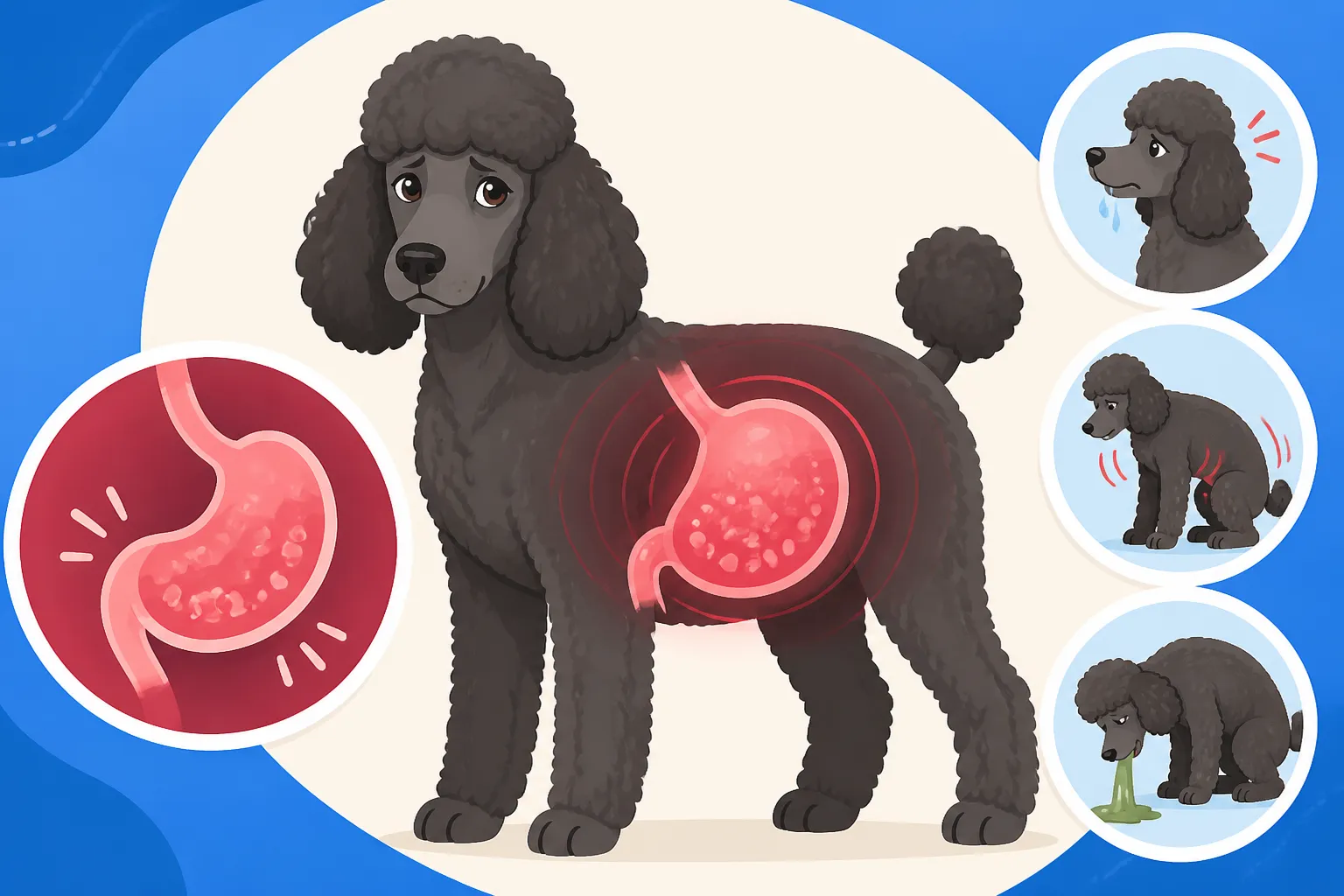
Imagine your Poodle's stomach filling rapidly with gas, like a balloon. That's the "dilatation" part. Now, imagine that balloon, once distended, twisting upon itself, effectively pinching off both the entrance and exit. This is the "volvulus." When this happens, food, gas, and fluids become trapped. The blood supply to the stomach is compromised, and pressure builds up, affecting major veins returning blood to the heart. This sequence of events is agonizingly painful for your dog and can quickly lead to shock, organ damage, and death.
The rapid onset is what makes it so terrifying for Poodle owners. One moment, your dog might seem fine, perhaps a little restless, and the next, they can be in critical condition. Because of the inherent risk, especially due to their anatomy, understanding Bloat and the Deep Standard Poodle Chest is critical for any owner of this magnificent breed. It’s not a matter of if you should be aware, but when you might need this knowledge.
The Silent Killer: Why Early Recognition is Crucial
The insidious nature of bloat lies in its initial subtlety. Some dogs, particularly Poodles who are often quite stoic, might not show overt signs of extreme distress until the condition has progressed significantly. You might notice something "off," but dismiss it as mild indigestion or a passing discomfort. This is precisely why it's often called a "silent killer." Every minute counts once a Poodle's stomach has begun to distend and twist. Delaying action, even for an hour or two, can drastically reduce survival rates.
It's not just discomfort; it's a rapidly deteriorating physiological crisis. The pressure from the distended stomach impairs circulation, leading to severe shock. Without immediate veterinary intervention, including surgical correction, the outcome is almost always fatal. This is why you can never adopt a "wait and see" approach with suspected bloat. If you have even the slightest suspicion, it’s always better to err on the side of caution and get your Poodle to an emergency veterinarian immediately. Your quick thinking can literally be the difference between life and death.
Recognizing the Early and Advanced Symptoms of Bloat
Knowing what to look for is your first line of defense. Bloat symptoms can start subtly and then escalate with terrifying speed. Learning to differentiate between minor discomfort and a full-blown emergency is vital.
Initial Warning Signs You Might Miss
The earliest signs of bloat are often behavioral and can easily be mistaken for general unease or mild digestive upset. However, for a Standard Poodle owner, these cues should trigger an immediate mental red flag.
- Restlessness and Pacing: Your Poodle might seem unable to get comfortable. They might get up, lie down, then get up again, constantly shifting their position. This isn't just a dog trying to find a comfy spot; it's a dog experiencing profound internal discomfort.
- Anxiety and Discomfort: You might notice an unusual anxiety in their eyes, or they might seem generally distressed. They might whimper softly or appear withdrawn. They might look at their side, as if acknowledging pain in their abdomen.
- Non-Productive Retching: This is a classic, but often misunderstood, sign. Your Poodle will attempt to vomit, gagging and heaving, but nothing or very little will come up. They are trying desperately to relieve the pressure, but because the stomach is twisted, they cannot expel anything. This is a critical symptom and should never be ignored.
- Excessive Drooling and Lip-Licking: The discomfort can trigger an increase in saliva production, and your Poodle might drool more than usual or repeatedly lick their lips as if nauseated.
- Looking at Their Flank/Abdomen: A dog in pain will often glance repeatedly at the area where they are hurting. If your Poodle keeps turning their head to look at their belly, especially if combined with other signs, it's a serious indicator.
- Hard, Tight Belly (Early Stage): While not always immediately obvious, gently feeling your Poodle's abdomen might reveal a tightness or firmness that isn't usually present. This might not be the massive distension of advanced bloat yet, but it's a change worth noting.
These initial signs are often what makes diagnosing bloat so challenging, as they can mimic other, less severe issues. However, when multiple of these symptoms present in a deep-chested breed like a Standard Poodle, it's time to take action. For a more exhaustive list of subtle red flags, refer to our guide on Emergency Signs of Poodle Bloat.
Clear and Unmistakable Indicators of a Crisis
If you've missed the early signs, or if the condition progresses rapidly, your Poodle will begin to show much more severe and unmistakable symptoms that demand immediate, emergency veterinary attention.
- Distended Abdomen: This is the hallmark sign. Your Poodle's belly will appear visibly swollen, often on the left side, and can become drum-tight and hard to the touch. This distension is due to the trapped gas and is a clear indicator of a severe problem.
- Extreme Pain: Your Poodle will be in obvious, excruciating pain. They might groan, cry out, or become defensive if you try to touch their abdomen. They might struggle to stand or walk, or even collapse. Reading pain can be tricky with sensitive Poodles, but this level of agony is unmistakable, as detailed in Reading Pain in a Sensitive Poodle.
- Weakness and Collapse: As shock sets in due to compromised blood flow, your Poodle will become profoundly weak. They may be unable to stand, collapsing or struggling to get up. Their hind legs might appear wobbly or give out.
- Rapid, Shallow Breathing: The distended stomach puts immense pressure on the diaphragm and lungs, making it difficult for your Poodle to breathe normally. Their breathing might become labored, fast, and shallow.
- Pale Gums: Check their gums; if they are pale, grayish, or bluish, it indicates poor circulation and oxygen deprivation, a sign of severe shock. Gently press a finger onto their gum; the color should return quickly (capillary refill time). If it takes more than 2 seconds, it’s a medical emergency.
- Increased Heart Rate: In an attempt to compensate for the failing circulation, your Poodle's heart will beat faster, often with a weak pulse. You might feel a rapid, thready pulse in their femoral artery (inner thigh).
When these advanced symptoms are present, there is absolutely no time to waste. The window for successful intervention is incredibly narrow – often described as "the golden hour." Our guide on The Hour That Decides a Bloating Standard Poodle delves into this critical timeframe and underscores the urgency of immediate action. This isn't a situation where you call your regular vet for an appointment; this is a dash to the nearest emergency veterinary hospital.
Immediate Action: What to Do When Bloat is Suspected
Suspecting bloat is terrifying, but knowing exactly what to do can make all the difference. Panic is natural, but clear, decisive action is paramount.
Time is Tissue: Getting to the Emergency Vet
This cannot be stressed enough: time is literally tissue when it comes to bloat. Every minute that passes increases the damage to the stomach, other organs, and reduces your Poodle's chances of survival. Do not waste a single second debating, searching for home remedies, or trying to "see if it gets better." Bloat does not get better on its own; it only gets worse.
- Call Ahead: As you're heading out the door, or while someone else drives, call the nearest emergency veterinary clinic. Tell them you suspect Gastric Dilatation-Volvulus (GDV) in your Standard Poodle and describe the symptoms. This allows them to prepare the surgical suite and have a team ready for your arrival, saving precious minutes. Don't assume they'll have everything set up if you just show up.
- Go Directly to an Emergency Facility: Your regular vet might not have the equipment, staff, or availability for immediate emergency surgery. If it's outside of business hours, your only option will be an emergency clinic. Know where your closest 24/7 animal emergency hospital is before a crisis strikes. In a city like Los Angeles, you might head to places like ACCESS Specialty Animal Hospital, while in a smaller town, it could be your local Animal ER.
- Do NOT Attempt Home Remedies: Internet searches might suggest remedies like antacids or trying to induce vomiting. These are incredibly dangerous for a Poodle with bloat and can cause further complications or delay crucial professional care. Your Poodle needs immediate medical and likely surgical intervention.
The speed of your response is the most significant factor in a positive outcome for a Poodle experiencing bloat. Getting there quickly is key, and our guide on The Hour That Decides a Bloating Standard Poodle explains why this critical window is so important.
Preparing for a Veterinary Emergency
While your priority is getting your Poodle to the clinic, it's helpful to be mentally prepared for what comes next and the financial implications.
Once at the emergency vet, a team will immediately stabilize your Poodle. This involves:
- Diagnosis: X-rays are typically used to confirm GDV, showing the distended, twisted stomach.
- Stabilization: Intravenous fluids will be administered to combat shock, pain medication will be given, and the vet might attempt to decompress the stomach by inserting a tube or needle to release gas.
- Surgery: If GDV is confirmed, surgical intervention is almost always necessary to untwist the stomach, assess for damage, and often perform a gastropexy. A gastropexy is a procedure where the stomach is surgically attached to the abdominal wall to prevent future twisting. It's a lifesaver.
Financial Considerations: Emergency bloat surgery is expensive. Costs can range from $3,000 to $7,000 or even more, depending on your location, the extent of the damage, and post-operative care. This is where pet insurance can be an absolute lifesaver. Providers like Healthy Paws offer robust coverage for emergencies like bloat, significantly easing the financial burden during an incredibly stressful time. Having a policy in place before a crisis, especially for a high-risk breed like a Standard Poodle, can make a huge difference. Planning for these potential costs is vital, as discussed in Emergency Bloat Surgery Prices for a Standard Poodle and tips for Saving Against a Standard Poodle Bloat Bill. It truly underscores the importance of being prepared for the unexpected when you own a deep-chested breed.
Risk Factors and Prevention Strategies for Standard Poodles
While bloat can happen to any dog, Standard Poodles face a higher risk due to a combination of genetic and environmental factors. Understanding these can help you implement strategies to protect your furry family member.
Understanding Predisposing Factors
It's not just bad luck; several factors contribute to a Standard Poodle's susceptibility to bloat. Awareness of these can help you mitigate risk.
- Breed and Conformation: As mentioned, the deep, narrow chest of the Standard Poodle is a primary anatomical risk factor. This conformation allows the stomach more room to swing and twist when distended. Other large, deep-chested breeds like Great Danes, Weimaraners, and German Shepherds also face similar risks.
- Age: While bloat can occur at any age, it is more common in middle-aged to senior Poodles (typically over 7 years old). However, younger dogs are certainly not immune.
- Temperament: Some studies suggest that anxious, fearful, or highly stressed dogs may have an increased risk. If your Poodle tends to be highly sensitive or nervous, this is something to consider.
- Eating Habits:
- Eating Too Fast: "Gulpers" who rapidly consume their food and gulp air along with it are at higher risk. The swallowed air contributes to stomach distension.
- One Large Meal a Day: Feeding a single large meal can overwhelm the digestive system and increase the likelihood of gas buildup compared to multiple smaller meals.
- Exercise Around Mealtimes: Strenuous exercise, running, or playing immediately before or after eating can increase the risk of bloat. This is particularly relevant for active Standard Poodles.
- Raised Food Bowls: For a long time, it was thought that elevated food bowls could prevent bloat. However, more recent studies, including a large study by Purdue University, actually suggest that elevated bowls increase the risk in large and giant breeds. The exact reasons aren't fully understood, but it's a critical piece of information to be aware of. We discuss this in more detail in Bowl Height and Standard Poodle Bloat Risk.
Understanding Gastric Torsion Risk in a Standard Poodle means understanding these predispositions. It's not about paranoia, but proactive care for a breed with specific vulnerabilities.
Practical Tips for Reducing Bloat Risk
While you can't eliminate the risk entirely, you can significantly reduce it by adjusting your Poodle's feeding and activity routine.
- Multiple Smaller Meals: Instead of one or two large meals, break your Poodle's daily food allowance into three or four smaller meals. This reduces the amount of food and gas entering the stomach at any one time, aiding digestion.
- Slow Feeder Bowls: For Poodles who eat too quickly, a slow feeder bowl can be a game-changer. These bowls have various ridges or obstacles that force your dog to eat around them, effectively slowing down their consumption and reducing air intake. Puzzle feeders can also serve a similar purpose, turning mealtime into a mental exercise.
- "Rest and Digest" Policy: Implement a strict "rest and digest" rule around mealtimes. Do not allow your Poodle to engage in strenuous exercise, vigorous play, or even get overly excited for at least one hour before and two hours after eating. A calm environment is key for digestion. Our guide on Feeding Habits That Raise Poodle Bloat Risk expands on these crucial dietary adjustments.
- Limit Water Intake Around Meals: While hydration is important, don't let your Poodle gulp down huge amounts of water immediately before or after eating, as this can also contribute to stomach distension. Offer smaller amounts more frequently.
- Consider a Prophylactic Gastropexy: This surgical procedure, often performed at the same time as spaying or neutering, permanently attaches the stomach to the abdominal wall, preventing it from twisting. While it doesn't prevent the stomach from dilating with gas, it eliminates the deadly "volvulus" aspect. This is a serious decision and one to discuss thoroughly with your veterinarian, but it offers significant peace of mind for owners of high-risk breeds. Our detailed article, Whether a Standard Poodle Should Have a Gastropexy, provides an in-depth look at this preventative measure.
- Dietary Choices: While no specific food has been definitively linked to bloat prevention, some owners opt for diets without a high percentage of fermentable ingredients if gas seems to be an issue. Always discuss significant dietary changes with your vet.
By being diligent with these preventative measures, you are taking active steps to protect your Standard Poodle from this life-threatening condition.
| Symptom Category | Early Warning Signs | Advanced/Critical Signs |
|---|---|---|
| Behavior | Restlessness, pacing, unable to get comfortable | Collapse, extreme lethargy, inability to stand |
| Vocalization | Whining, soft groans | Loud cries of pain, yelping |
| Digestion | Non-productive retching (trying to vomit, nothing comes up), excessive drooling, lip-licking | Foamy saliva, inability to pass stool |
| Abdomen | Looking at flank, mild tightness to touch | Visibly swollen, hard, drum-like belly (often on left side), painful to touch |
| Circulation | Elevated heart rate, panting | Pale or bluish gums, rapid shallow breathing, weak pulse |
| Energy | Unexplained anxiety, withdrawal | Profound weakness, shock |
Disclaimer
This article is intended for informational purposes only and is not a substitute for professional veterinary medical advice, diagnosis, or treatment. Always seek the advice of your veterinarian or other qualified animal health provider with any questions you may have regarding a medical condition. If you suspect your Poodle is experiencing bloat, seek immediate emergency veterinary care.