Mental Work That Tires a Poodle
It's a familiar scenario for many Poodle owners: you've just come back from a long walk, your Poodle has had plenty of physical exercise, and yet, they're still pacing, demand barking, or finding mischief. This isn't a sign that your Poodle needs more physical exercise; it's a clear signal that their brilliant, active mind is understimulated. This guide is here to walk you through a variety of engaging mental exercises to truly tire out your Poodle, leading to a calmer, happier companion.
Understanding the Poodle Brain and Its Needs
Anyone who lives with a Poodle knows they are far more than just pretty faces and fancy haircuts. These dogs possess an incredible intellect, a sharp wit, and a drive that often goes unacknowledged. When their minds aren't adequately challenged, all that intelligence can manifest in ways that are, shall we say, less than ideal for household harmony.
Why Poodles Need More Than Just Walks
Poodles were originally bred as water retrievers, a job that required not only physical prowess but also significant problem-solving skills, independence, and focus. They had to navigate complex environments, track game, and retrieve it, often working ahead of their handlers. This history imbues them with a deep-seated need for mental engagement. A simple walk around the block, while great for their legs and lungs, barely scratches the surface of what their brains crave. Think of it this way: you might be physically exhausted after running a marathon, but if you then had to sit in a quiet room with nothing to do for hours, your mind would quickly become restless and bored. Poodles are much the same. They need challenges that make them think, strategize, and use their inherent abilities. This intellectual demand is just as important as physical exercise for their overall well-being. Indeed, many Poodle owners discover that twenty minutes of focused mental work can be more exhausting for their dog than an hour of sniffing around the park. Why a Bright Poodle Gets Bored is a common lament in Poodle households, and it all comes back to this fundamental need.
Signs Your Poodle is Understimulated
Recognizing the signs of mental understimulation is the first step to addressing the issue. It's easy to mistake these behaviors for naughtiness or stubbornness, but often, they're just a cry for a job to do. Common indicators include destructive chewing, especially on items they shouldn't touch like furniture or remote controls. An understimulated Poodle might also develop excessive barking habits, whether it's alarm barking at every leaf that blows by the window or demand barking for attention, food, or simply something to happen. You might notice them pacing restlessly, seemingly unable to settle down even after a long walk. Some Poodles will start counter-surfing, getting into forbidden areas, or displaying anxiety, such as excessive licking or shadow chasing. They might ignore cues they know perfectly well, not out of defiance, but because their brain is too busy seeking out more interesting (and often disruptive) tasks. If your Poodle seems to invent problems, it's highly likely they're just trying to solve the problem of profound boredom. If you find yourself thinking, "My Poodle is always looking for trouble!" consider that they might simply be looking for a challenge.
Engaging the Poodle's Natural Instincts
Poodles are working dogs at heart, and tapping into their innate drives is a fantastic way to provide mental stimulation. By mimicking the tasks they were historically bred for, you can give them a sense of purpose and a satisfying mental workout.
Unleashing the Inner Retriever
The Poodle's name, derived from the German word "Pudel," meaning "to splash," speaks volumes about their retrieving heritage. They love to carry things, and they're often excellent at bringing them back. You can harness this instinct with various games of fetch that go beyond simply tossing a ball. Try hiding a favorite toy and then asking your Poodle to "find it" or "fetch the ball." Start in easy locations, then gradually increase the difficulty by hiding it under blankets, behind furniture, or in another room. Once they understand the game, you can turn it into a full-blown scent-based retrieval challenge. For example, have them "wait" in one room while you hide several toys in another. Then, release them with a command like "find your toys!" You'll be amazed at how their nose and brain work together to locate each item. This engages their problem-solving skills and their powerful sense of smell, providing a much deeper level of mental exhaustion than just chasing a thrown object. Think about how much mental processing goes into not just seeing the ball, but smelling it out. This is also a fantastic way to build a reliable "fetch and deliver" behavior. Teaching a Poodle to Fetch and Deliver is a rewarding process that leverages their natural inclination.
The Thrill of the Hunt: Scent Work and Nose Games
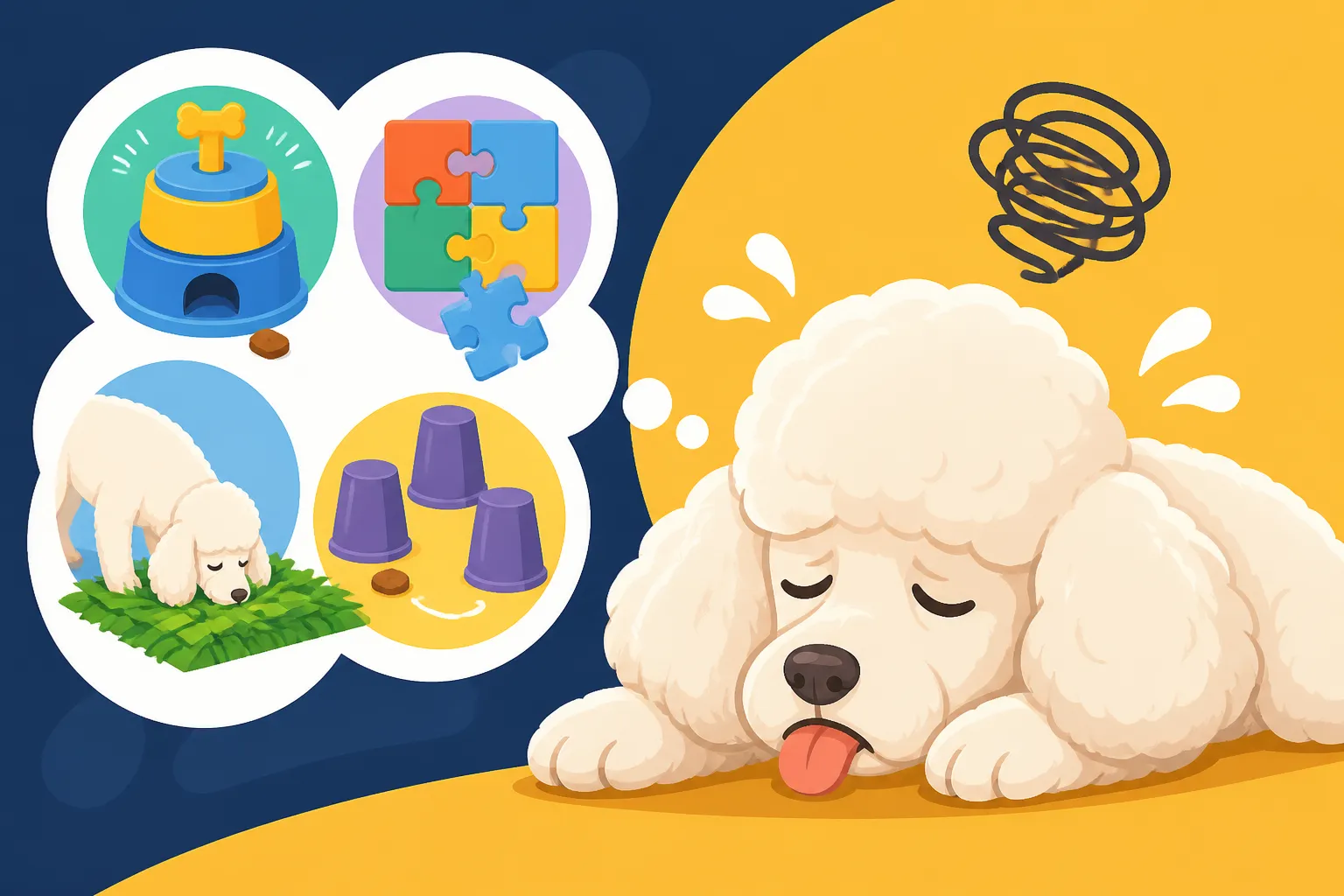
Scent work is perhaps one of the most powerful and accessible forms of mental enrichment for Poodles, as it taps directly into their most primal sense. Dogs experience the world through their noses, and allowing them to really work their sense of smell is incredibly tiring for their brains. You don't need fancy equipment to start. You can begin with a simple "find the treat" game. Hide small, high-value treats around a room while your Poodle watches, then release them to find them. As they get better, make it harder: hide treats in boxes, under towels, or behind doors, without them seeing where you put them. You can use specialized sniff mats or snuffle balls, readily available from retailers like Chewy or Amazon, which are designed to hide kibble or treats within fabric folds, forcing your Poodle to use their nose to extract their reward. These simple tools turn mealtime or treat time into a productive brain game. For a more advanced challenge, consider joining an introductory scent work class or trying K9 Nose Work exercises at home. This involves teaching your Poodle to identify specific odors (like birch or anise) and signal when they've found them. The focus and concentration required for even short sessions of scent work are immense, leaving Poodles happily exhausted. Nose Work as Exercise for a Poodle is something almost any Poodle can excel at, regardless of age or physical condition.
Brain Games and Puzzle Solving for Poodles
Just like humans enjoy Sudoku or crosswords, Poodles thrive on solving puzzles. These activities force them to think, plan, and execute sequences of actions to reach a desired outcome, often a tasty treat.
Interactive Puzzle Toys and Their Benefits
The market is overflowing with interactive puzzle toys, and for good reason! These toys are specifically designed to challenge a dog's cognitive abilities and provide a productive outlet for their energy. You'll find a wide range of options, from simple treat-dispensing balls that require batting or rolling, to more complex designs with sliding panels, levers, and hidden compartments. Brands like Kong and Nina Ottosson offer excellent puzzle toys that cater to different difficulty levels. When choosing a puzzle toy, start with something relatively easy. If it's too frustrating, your Poodle might give up or resort to destructive chewing out of frustration. Look for toys where the reward is easily accessible at first, then gradually introduce more complicated mechanisms. For example, a treat ball from Chewy might require just a few rolls to dispense kibble, while a multi-step wooden puzzle from Amazon might involve lifting pegs and sliding blocks. The beauty of these toys is that they provide independent mental stimulation, keeping your Poodle engaged even when you're busy. They teach perseverance, problem-solving, and self-control, all while delivering a delicious reward.
DIY Puzzles and Household Challenges
You don't always need to buy expensive toys to challenge your Poodle's mind. Many everyday household items can be transformed into engaging puzzles. One classic is the "towel roll": spread out a towel, sprinkle some kibble or small treats on it, and then roll it up tightly. Your Poodle will have to unroll and manipulate the towel to get to their prize. Another favorite is the "muffin tin game": place treats in some of the muffin tin holes, then cover each hole with a tennis ball. Your Poodle must figure out how to remove the balls to get to the treats. Empty cardboard boxes can also become fun, destructible puzzles. Place treats inside smaller boxes, then put those inside larger boxes, creating layers of discovery. These DIY options are fantastic because they're cost-effective, easily customizable to your Poodle's skill level, and can be changed up frequently to prevent boredom. You can also incorporate basic training cues into these games, such as asking your Poodle to "sit" and "wait" before you release them to solve the puzzle, adding another layer of mental control. What a Poodle Does When Its Brain Is Idle is often a desperate attempt to find some mental stimulation, and these simple games can redirect that energy positively.
Formal Training and Dog Sports as Mental Exercise
For Poodles, learning isn't just about obedience; it's a profound mental workout that satisfies their craving for engagement and purpose. Beyond basic commands, there's a whole world of structured activities that can truly challenge their brilliant minds.
Advanced Obedience and Trick Training
While 'sit,' 'stay,' and 'come' are essential, a Poodle's intelligence can handle much more. Moving into advanced obedience means teaching complex sequences, combining multiple cues, and achieving longer durations and greater distances. Imagine a "stay" not just for a minute, but for five, while you walk out of sight. Or a "down-stay" while another dog walks past. These exercises demand immense focus and self-control, which are incredibly tiring mentally. Trick training is another fantastic outlet. Poodles excel at learning new tricks because they enjoy the process of figuring things out and love to entertain. Think beyond the simple 'shake a paw.' Teach them to retrieve named objects (e.g., "get your blue ball"), close doors, turn on lights, or even weave through your legs. Chaining behaviors together, such as "spin, then down, then roll over," requires a sophisticated level of understanding and memory. This kind of nuanced training helps Why Poodles Learn a Cue in Five Repetitions become a testament to their capacity for higher learning, and it builds a stronger bond between you and your Poodle, as you work together as a team. Training a Poodle That Outthinks You becomes less of a challenge and more of a partnership when you embrace complex training.
Exploring Dog Sports for Poodle Minds
Dog sports offer an unparalleled level of mental and physical engagement for Poodles. These activities tap into their natural athleticism, intelligence, and desire to work. Agility, for instance, requires your Poodle to navigate an obstacle course (jumps, tunnels, weave poles, dog walk) quickly and accurately, often guided only by your voice and body language. This demands incredible focus, problem-solving, and a deep understanding of cues. Rally Obedience and traditional Obedience trials take precision and teamwork to a new level, with Poodles performing a series of exercises in a specific order, often off-leash, with high distractions. Scent work trials, an extension of the nose games we discussed earlier, involve finding hidden target odors in complex environments, such as boxes, vehicles, or even large outdoor areas. Beyond these, Poodles can also excel in activities like dock diving (showcasing their retrieving instinct and love of water), canine freestyle (dance with your dog!), or even therapy dog work, which requires a calm temperament and reliable obedience in stimulating environments. Engaging in these sports gives your Poodle a true "job," satisfying their inherent drive for purpose and leaving them both mentally and physically satisfied. Many Poodles Agility Titles Poodles Commonly Earn and Obedience Titles Poodles Take at Trials, demonstrating their incredible versatility.
| Type of Mental Exercise | Challenge Level | Poodle Suitability | Key Benefits |
|---|---|---|---|
| Simple Treat Ball/Snuffle Mat | Easy | All sizes, all ages | Low effort for owner, independent play, basic nose work |
| DIY Puzzle (Towel, Muffin Tin) | Medium | All sizes, all ages | Cost-effective, customizable, builds problem-solving |
| Interactive Puzzle Toy (Sliding, Lifting) | Medium-Hard | All sizes (choose size-appropriate toys) | Requires manipulation, builds persistence, varied mechanisms |
| Advanced Trick Training (Object Naming, Chaining) | Hard | All sizes, adolescent to adult | Deep cognitive engagement, strengthens bond, impressive skills |
| Scent Work (Formal Nose Work) | Hard | All sizes, all ages (adjust intensity) | Highly tiring, taps primal instinct, builds confidence |
| Dog Sports (Agility, Rally, Obedience) | Hard | All sizes, adolescent to adult | Full body & mind workout, teamwork, competitive outlet |
Incorporating Mental Stimulation into Daily Routines
Mental enrichment doesn't have to be a separate, dedicated hour-long session. The most effective way to keep a Poodle's mind engaged is to weave small bursts of mental work into their everyday life.
Making Mealtime a Mind Challenge
One of the easiest and most impactful ways to add mental stimulation is to make your Poodle work for their meals. Ditching the bowl entirely and replacing it with various enrichment feeders can transform a mundane five-minute gobble into a twenty-minute brain game. Instead of simply pouring kibble into a bowl, try scattering it across a clean floor or lawn, encouraging your Poodle to use their nose to "hunt" for each piece. This slows down eating and engages their natural foraging instincts. You can also invest in slow feeder bowls, which have raised patterns to make eating more difficult, or puzzle feeders, as mentioned earlier. For Poodles fed fresh food diets, like those from Ollie, you can often spread portions into lick mats or freeze them inside Kong toys, turning a quick meal into a prolonged, satisfying challenge. This not only provides mental exercise but can also aid digestion and prevent boredom-induced gulping. Even when using a bowl, you can incorporate a small challenge by asking for a series of known cues (sit, stay, down, shake) before you set the bowl down, making them "earn" their dinner. This practice reinforces good manners and adds a moment of mental focus to a daily ritual.
Structured Play and Brain Breaks Throughout the Day
Beyond meals, look for opportunities throughout the day to inject quick "brain breaks." These don't need to be long; even 5-10 minutes of focused activity can make a difference. For example, during commercial breaks of your favorite show, grab some treats and run through a quick training session, practicing known cues or teaching a new, simple trick. Rotate your Poodle's toys regularly, only offering a few at a time, and keep the others out of sight. This makes returning toys feel new and exciting, rather than stale. When you're out on a walk, instead of just plodding along, turn it into a sniffari by allowing your Poodle dedicated time to investigate interesting smells, or practice impromptu obedience cues like "heel" for a few steps, then release them with a "go sniff!" command. Introducing your Poodle to new, safe environments, even just a different block or a new dog-friendly store, can be mentally stimulating due to the novel sights, sounds, and smells. These small, consistent efforts add up, keeping your Poodle's mind ticking over and preventing the build-up of restless energy that can lead to undesirable behaviors. Think of it as intellectual snacking throughout the day, rather than one big mental feast.
Tailoring Mental Work to Your Poodle's Size and Age
While all Poodles share a fundamental intelligence and need for mental stimulation, the way you provide that enrichment can and should be adapted to their specific size and life stage. A tiny Toy Poodle has different physical capabilities and attention spans than a robust Standard.
Specific Needs of Toy and Miniature Poodles
Toy and Miniature Poodles, despite their smaller stature, possess the same keen intelligence as their larger cousins. However, their physical limitations mean that mental exercises need to be scaled down appropriately. For instance, while scent work is excellent for all sizes, hiding treats for a Toy Poodle should be done at floor level or on low shelves, not up high where they might injure themselves trying to reach. Puzzle toys for these smaller varieties should have pieces that are easy for their delicate mouths to manipulate, and they should be made of durable, non-toxic materials, perhaps from reputable brands found on Amazon that cater to small breeds. When doing retrieval games, use smaller, lighter toys that won't strain their necks or jaws. Treats Small Enough for a Toy Poodle are also crucial, both for their small mouths and to avoid overfeeding. Because Toy Poodles can be more prone to conditions like Luxating Patella in Toy and Miniature Poodles or Collapsing Trachea in a Toy Poodle, avoiding excessive jumping or pulling on collars during play is important. Instead, focus on ground-based nose work, intricate puzzle solving, and trick training that doesn't involve high impact. Short, frequent sessions (5-10 minutes) are often more effective than one long one, as their attention spans might be shorter.
Keeping Standard Poodles Engaged and Challenged
Standard Poodles, with their larger size and often boundless energy, require mental stimulation that can match their physical capabilities. They can handle more complex, multi-step puzzles, often for longer durations. Their stronger jaws mean they can tackle more robust puzzle toys, and they're less likely to be intimidated by a challenge. Scent work for a Standard Poodle can be expanded to larger areas, like a full backyard or even a local park (where allowed), with treats or toys hidden over a wider range. Retrieval games can involve more difficult terrains or multiple items. When engaging in formal dog sports, Standard Poodles often excel in agility, obedience, and even advanced retrieving exercises in water, truly tapping into their ancestral roots. They also benefit from longer training sessions, perhaps 15-20 minutes, where you can work on advanced obedience, chain commands, or teach them practical tasks around the house like bringing in the mail or helping with laundry. Daily Exercise for a Standard Poodle often includes long walks or runs, but pairing this physical activity with mental "homework" ensures they are truly tired, body and mind. It's about giving their impressive brain sufficient problems to solve, so they don't invent their own, less desirable ones.
Disclaimer
This article is for general informational purposes only and does not constitute professional advice. Laws, prices and regulations vary by location and change over time. Consult a qualified professional for guidance on your specific situation.