How to Line Brush a Poodle Properly
Oh, the Poodle coat! It's one of their most magnificent features, isn't it? That cloud of curls, so elegant and soft. But let's be real, beneath that beauty lies a challenge many Poodle owners dread: the dreaded mat. If you've ever thought you've brushed your Poodle thoroughly, only to have the groomer find a surprise mat the size of a golf ball hidden near the skin, you're not alone. This guide is here to unravel that mystery and show you exactly how to line brush your Poodle properly, ensuring a happy, healthy coat from root to tip.
Understanding Your Poodle's Unique Coat and Why Line Brushing is Non-Negotiable
Poodles are glorious creatures, but their coats aren't just for show. They're single-coated, meaning they don't have that fluffy undercoat that many other breeds shed seasonally. Instead, their hair just keeps growing and growing, much like human hair. And while this means less shed hair on your furniture, it also means that any hair that does come loose gets trapped within the dense curls, rather than falling out. This trapped hair is the sneaky culprit behind mats.
The Poodle Coat: Hair, Not Fur, and Its Matting Tendency
Unlike breeds with a double coat (think Golden Retrievers or Huskies) that "blow" their coat twice a year, Poodles have a single layer of continually growing hair. This is fantastic for those of us with allergies, as it means less dander and loose hair floating around the house. However, this unique texture also makes them incredibly prone to matting. Every loose strand, every bit of dirt, every rub against a collar or harness, can cause the curls to intertwine and tighten. Without proper intervention, these small tangles quickly escalate into dense, painful mats that pull at the skin. It’s not just about aesthetics; these mats can cause serious skin irritation, infections, and discomfort for your beloved Poodle. Imagine trying to walk around with your hair constantly being tugged – that's what a matted coat feels like to them.
Why Surface Brushing Just Doesn't Cut It
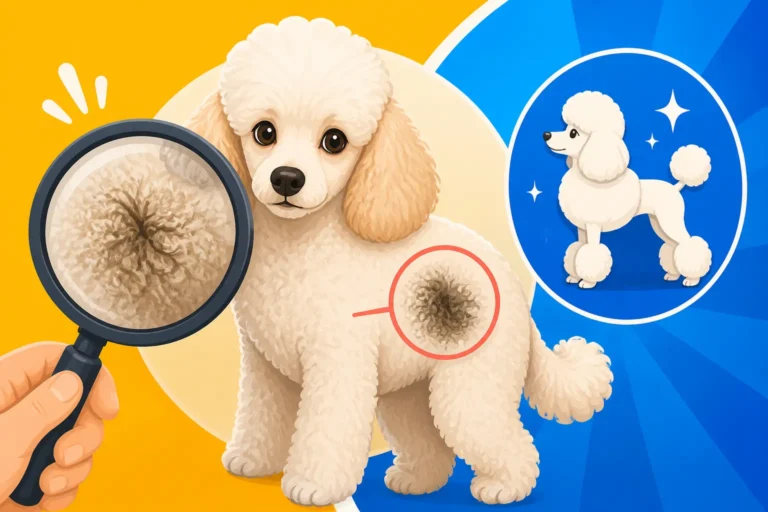
Many well-meaning Poodle owners grab a brush and run it over the top layer of their dog's coat, thinking they've done a thorough job. The Poodle looks fluffy and tidy on the surface, right? Wrong. This is the classic mistake that leads to hidden mats. Surface brushing simply smooths out the outermost layer of hair, leaving the tangled, shed hair near the skin completely untouched.
You might see your Poodle looking perfectly groomed, yet underneath, closer to their body, a dense felt of matted hair is forming. This is often why groomers have to shave down a seemingly well-kept Poodle, much to the owner's surprise and dismay. The surface hair masks the true condition of the coat underneath. If you're wondering how this sneaky process happens, you might find it helpful to read Why Surface Brushing Leaves Poodle Mats. It’s a common frustration, and understanding why it happens is the first step to preventing it.
The Science Behind Line Brushing for Poodle Health
Line brushing is more than just a grooming technique; it's a preventative health measure. By systematically working through small sections of your Poodle's coat, you ensure that the brush's pins reach all the way down to the skin. This action removes trapped shed hair and minor tangles before they have a chance to coalesce into painful mats.
Proper line brushing promotes healthy skin by stimulating blood flow and allowing air to circulate. When mats are present, they create a dense barrier that traps moisture, dirt, and bacteria against the skin. This can lead to hot spots, yeast infections, and general skin irritation that can be incredibly uncomfortable and costly to treat. A well-brushed coat also distributes the natural oils from the skin, leading to a healthier, shinier appearance. It's about maintaining their comfort and preventing pain, which is something every good Poodle parent strives for.
Gathering Your Poodle Grooming Arsenal: Tools for Success
Before you even think about putting brush to Poodle, you need to make sure you have the right tools. Trying to line brush with a flimsy or incorrect brush is like trying to cut steak with a butter knife – frustrating and ineffective. Investing in quality tools will save you time, effort, and your Poodle a lot of discomfort in the long run.
The Essential Brushes and Combs
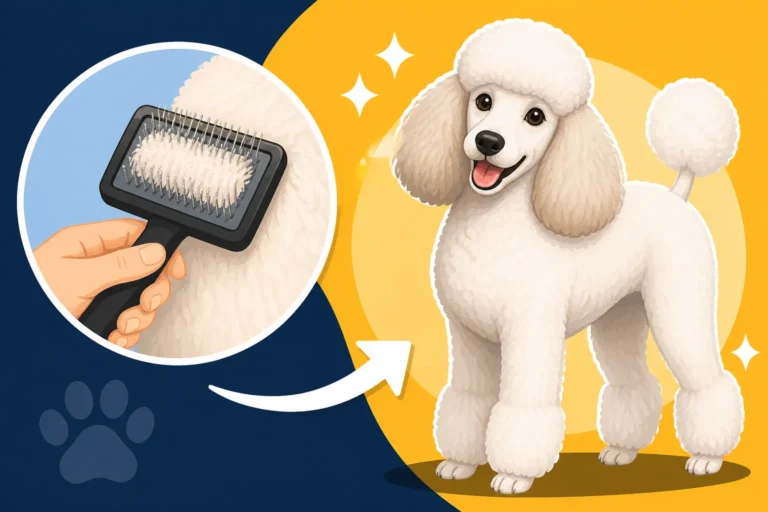
Your grooming kit for a Poodle needs to be robust. First and foremost, you'll need a good slicker brush. Not just any slicker, but one with firm, angled pins that are dense enough to grab and separate those tight curls without being too harsh on the skin. The size of the slicker brush should be appropriate for your Poodle – a tiny Toy Poodle won't need the same large paddle brush as a Standard Poodle, but all sizes need effective coverage. A quality slicker brush is your primary tool for detangling and lifting the coat. For more details on choosing the right one, check out Which Slicker Suits a Poodle Coat.
Secondly, a Greyhound comb is non-negotiable. This is typically a metal comb with two sections: wider teeth on one end and finer teeth on the other. It's not for brushing out mats, but rather for checking your work. After you've brushed a section, the Greyhound comb glides through if the hair is truly free of tangles down to the skin. If it snags, you know there's more work to do. Many new Poodle owners underestimate the importance of this simple tool, but it's the ultimate truth-teller for your grooming efforts. You might be interested in reading Whether a Poodle Owner Needs a Greyhound Comb to truly grasp its value.
Conditioning Sprays and Detanglers
Imagine trying to comb through dry, tangled human hair – it's a nightmare, right? The same applies to your Poodle's coat. A good conditioning spray or detangler is your secret weapon. Before you begin brushing each section, a light mist of spray will lubricate the hair, reducing friction and making it much easier for the brush to glide through. This minimizes breakage, static electricity, and makes the entire process more comfortable for your Poodle. Look for sprays specifically designed for dogs, ideally ones that are leave-in formulas and won't make the coat greasy. Brands like Chris Christensen, Earthbath, or even some generic pet store brands found on Chewy or Amazon can offer good options. Always ensure the ingredients are safe and suitable for your pet. Using a detangling spray is such a game-changer; you'll wonder how you ever brushed without it. If you want to know more about specific products, Detangling Spray for a Matted Poodle is a great resource.
Creating a Comfortable Grooming Space
Setting the stage for a positive grooming experience is crucial. Find a quiet, well-lit area where you and your Poodle can concentrate without distractions. A non-slip surface is essential – a rubber mat on the floor or a grooming table can provide stability. For smaller Poodles, a raised, sturdy surface like a kitchen counter or a dedicated grooming table can save your back and make it easier to reach all parts of their body. Ensure your Poodle feels secure and comfortable. If they're constantly shifting or trying to jump down, it makes the job harder and less safe. Positive associations are key here; make it a calm, almost meditative time for both of you.
| Tool Name | Primary Use | Key Features | Why It's Essential for Poodles |
|---|---|---|---|
| Slicker Brush | Detangling, removing loose hair, fluffing | Fine, angled pins; various sizes | Reaches deep into the coat without pulling |
| Greyhound Comb | Checking for mats, line brushing, finishing | Metal, wide & narrow teeth; sturdy | Confirms complete detangling to the skin |
| Detangling Spray | Lubricating coat, preventing breakage, de-matting | Conditioning ingredients, anti-static | Protects hair, makes brushing easier, prevents damage |
The Step-by-Step Guide to Proper Line Brushing
Now that you're armed with the right tools and knowledge, let's get down to the actual technique. Line brushing isn't just a haphazard swirl of the brush; it's a methodical approach that ensures every inch of your Poodle's coat is attended to. This takes time, especially for a Standard Poodle with a full coat, but the results are absolutely worth it.
Preparing Your Poodle and Your Tools
First, ensure your Poodle is calm and relaxed. A short walk or a potty break before grooming can help them settle down. Gather your slicker brush, Greyhound comb, and conditioning spray. Give your Poodle a good, gentle pat-down to feel for any obvious lumps, bumps, or tender spots on their skin that you'll need to be extra careful around.
Now, for the "line" part of line brushing. You'll be working in small, manageable sections. Imagine drawing an invisible line across your Poodle's body. The goal is to brush the hair below that line, exposing the skin, and then moving the line up slightly. This means you'll be holding the hair above the section you're currently working on, keeping it out of the way. You can use your free hand or even grooming clips to hold back the unbrushed hair. This creates a clear division, ensuring you don't miss any areas.
Before you start brushing a section, give it a light mist of your detangling spray. Just a spritz, you don't want to soak the coat. This helps protect the hair and makes brushing easier.
The Line Brushing Technique in Action
Let's begin. A common starting point is a leg, often the front leg, and working your way up.
- Isolate a section: Use your free hand to gently part the hair horizontally, creating a "line" of skin. Hold the hair above this line up and out of the way. You're aiming to expose a small strip of skin.
- Brush the section: With your slicker brush, start at the very bottom of the hair (the ends closest to the skin you just exposed) and brush outwards, away from the body. You want to feel the pins of the slicker brush gently stimulating the skin. Use short, confident strokes.
- Work upwards: After brushing that first section of hair until it's completely tangle-free, move your "line" up slightly, perhaps an inch or two, and repeat the process. You're essentially layering your brushing, ensuring that each new section is brushed down to the skin.
Think of it like peeling an onion, or brushing a very thick wig from the bottom up. You are systematically working from the bottom layer of hair, near the skin, outward, gradually moving up the body. This is what makes it "line" brushing – you're brushing distinct lines of hair. Take your time. For areas like the armpits, behind the ears, and around the tail, be extra gentle and work in even smaller sections, as these are prime matting spots. This meticulous process is exactly how to line brush a Poodle properly, ensuring no hidden mats remain. If you're tackling a larger Poodle, be prepared; How Long Brushing a Standard Poodle Takes can give you an idea of the commitment.
Checking Your Work with the Greyhound Comb
Once you've thoroughly line brushed a section, don't assume you're done. This is where your trusty Greyhound comb comes in. Take the fine-toothed side of the comb and gently try to slide it through the brushed section, all the way down to the skin. It should glide through easily, without snagging or pulling.
- If it glides through: Excellent! You've done a great job, and that section is mat-free.
- If it snags: Don't get discouraged! This means there's still a tangle or a small mat hiding in that spot. Go back with your slicker brush and detangling spray, and work that specific area again in even smaller subsections until the comb passes through smoothly.
This comb-through test is absolutely critical. It's the only way to truly confirm that you've reached down to the skin and removed all tangles. Skipping this step defeats the purpose of line brushing.
Dealing with Mats: Prevention and Gentle Removal
The best way to deal with mats is to prevent them in the first place through consistent line brushing. However, if you do encounter a small mat, here’s how to handle it gently:
- Assess the mat: Is it small and loose, or tight and close to the skin?
- Isolate the mat: Gently separate the matted hair from the surrounding healthy hair.
- Apply detangling spray: Liberally spray the mat with your detangler. Let it sit for a minute or two to penetrate.
- Work with your fingers: Using your fingers, try to gently tease apart the mat from the outside edges inwards. Imagine pulling apart cotton wool. This is often more effective and less painful than going straight in with a brush.
- Use the comb: Once you've loosened it with your fingers, use the wide-toothed side of your Greyhound comb to carefully pick apart the mat, starting from the very ends of the hair. Work slowly, one strand at a time if necessary, always pulling away from the skin, never directly on it.
- Slicker brush: Once it's mostly untangled, finish with your slicker brush to smooth out the section.
Never pull on a mat. This is painful for your Poodle and can cause skin irritation or even tears. If a mat is too large, too tight, or too close to the skin, it's safer and kinder to have a professional groomer shave it out. They have specialized clippers and experience to do it safely. Knowing Finding Poodle Mats Before the Groomer Does is crucial for proactive care. Be realistic about what you can manage at home. Sometimes, for a severely matted Poodle, the only humane option is a professional shave-down. For more on this difficult decision, see Whether a Matted Poodle Can Be Saved.
Making Line Brushing a Positive Experience for Your Poodle
Grooming shouldn't be a battle. For Poodles, who are intelligent and sensitive, creating a positive association with brushing is paramount. Consistent, gentle sessions can transform grooming from a chore into a bonding experience.
The Power of Positive Reinforcement
Poodles respond incredibly well to positive reinforcement. Throughout your grooming session, praise your Poodle gently and frequently. Offer small, high-value treats for cooperation, especially when they allow you to brush a tricky area or hold still. Break up the session into short, manageable chunks, particularly if your Poodle is new to line brushing or has a low tolerance.
For instance, you might brush one leg thoroughly, reward them, and then take a short break before moving to the next section. Over time, as your Poodle associates brushing with positive outcomes (treats, praise, gentle handling), they will become more tolerant and even enjoy the attention. This approach is key to Teaching a Poodle to Hold Still on the Table. Never scold or punish your Poodle during grooming, as this will only create negative associations and make future sessions more difficult.
Consistency is Key: Establishing a Routine
Regularity is the cornerstone of Poodle coat care. It's far easier to spend 15-20 minutes every day or every other day line brushing than to face a multi-hour battle with severe mats once a week or less frequently. Establishing a consistent grooming routine helps prevent mats from forming, keeps their coat healthy, and reinforces positive behavior.
For Poodles with longer clips, daily brushing is often necessary. If your Poodle has a shorter, more practical clip, you might be able to stretch it to every other day. However, daily quick checks, especially in high-friction areas like armpits, behind ears, and under collars, are always a good idea. The more consistently you brush, the less likely you are to encounter major matting issues. Consistency also allows you to quickly spot any new skin issues or parasites. For a detailed guide on frequency, consult How Often a Poodle Must Be Brushed.
Recognizing When to Call a Professional Groomer
Despite your best efforts, there might be times when you need to call in the professionals.
- Severe matting: If you find a mat that is tight, large, or pulling severely on the skin, it's often best to leave it to a professional groomer. They have specialized tools (like de-matting rakes or clippers) and techniques to remove mats safely and with minimal discomfort to your Poodle. Trying to cut out a mat yourself can easily lead to accidental cuts to the skin, which are painful and can lead to infection.
- Skin issues: If you notice any redness, inflammation, sores, or unusual odors on your Poodle's skin during brushing, it's time for a vet check-up, and then a professional groomer might be needed to address the coat around the affected area.
- Time constraints: Life happens. If you simply don't have the time to commit to consistent line brushing for a period, a professional groomer can maintain your Poodle's coat to prevent matting disasters. They can also offer advice on clips that are easier to maintain at home.
- Difficult Poodle: Some Poodles, despite positive reinforcement, simply don't tolerate extensive home grooming. A skilled professional can often work more efficiently and gently with a reluctant dog, ensuring their comfort and well-being.
Be aware that professional groomers will charge a surcharge for matted coats because it takes significantly more time, effort, and often requires blade sharpening or replacement afterwards. You can learn more about this by reading Surcharges Groomers Add for a Matted Poodle. In some severe cases, groomers may even refuse extremely matted Poodles due to the risk of injury and discomfort, so it's always best to be proactive. Why Groomers Refuse Severely Matted Poodles explains why groomers sometimes have to make this difficult call. Ultimately, your Poodle's comfort and health should always be the priority.
Disclaimer
This article is for general informational purposes only and does not constitute professional advice. Laws, prices and regulations vary by location and change over time. Consult a qualified professional for guidance on your specific situation.