Why Pad Hair Makes a Poodle Slip
It's incredibly frustrating, isn't it? You watch your beloved Poodle glide gracefully across the lawn, then they step indoors onto your beautiful hardwood or tile floors and suddenly, it's a slip-and-slide adventure. They might tense up, take hesitant steps, or even lose their footing entirely, leading to bumps, scares, or worse, actual injuries. This guide is here to shed light on exactly why your Poodle's paw pad hair makes them slip, the often-overlooked risks, and how you can manage it to keep your curly companion safe and confident on all surfaces.
The Unique Poodle Coat and Its Paw Pad Implications
Poodles are renowned for their distinctive, non-shedding coats, which are a major part of their charm and why so many people with allergies adore them. However, this unique hair growth also comes with its own set of responsibilities, particularly when it comes to their paws. What might seem like a small detail – the hair between their toes – can actually have a profound impact on their mobility and safety.
Understanding the Poodle's Non-Shedding Coat
Unlike many dog breeds that have a double coat and shed seasonally, Poodles possess a single layer of hair that grows continuously, much like human hair. This means that instead of shedding dead hair, their coat simply keeps growing and growing, intertwining and accumulating unless it's regularly brushed and trimmed. This characteristic is fantastic for keeping dander down and reducing allergens in your home, but it demands consistent grooming. Every strand of that luxurious, curly hair, from their stylish topknot to the fine wisps between their paw pads, is on an endless growth cycle. For an in-depth look at how to manage their coat, you might find our guide on The Poodle Coat and Why It Never Stops Growing helpful.
This continuous growth means that if left untended, the hair on a Poodle's entire body will simply become longer and longer, eventually matting. This isn't just about aesthetics; it's about comfort and function. Imagine trying to walk through tall grass with your shoelaces constantly untying and tangling around your ankles – that's a mild approximation of what prolonged, ungroomed hair can feel like for a Poodle. And the same principle applies, perhaps even more critically, to the hair growing on their paw pads.
How Paw Pad Hair Grows and What It Does
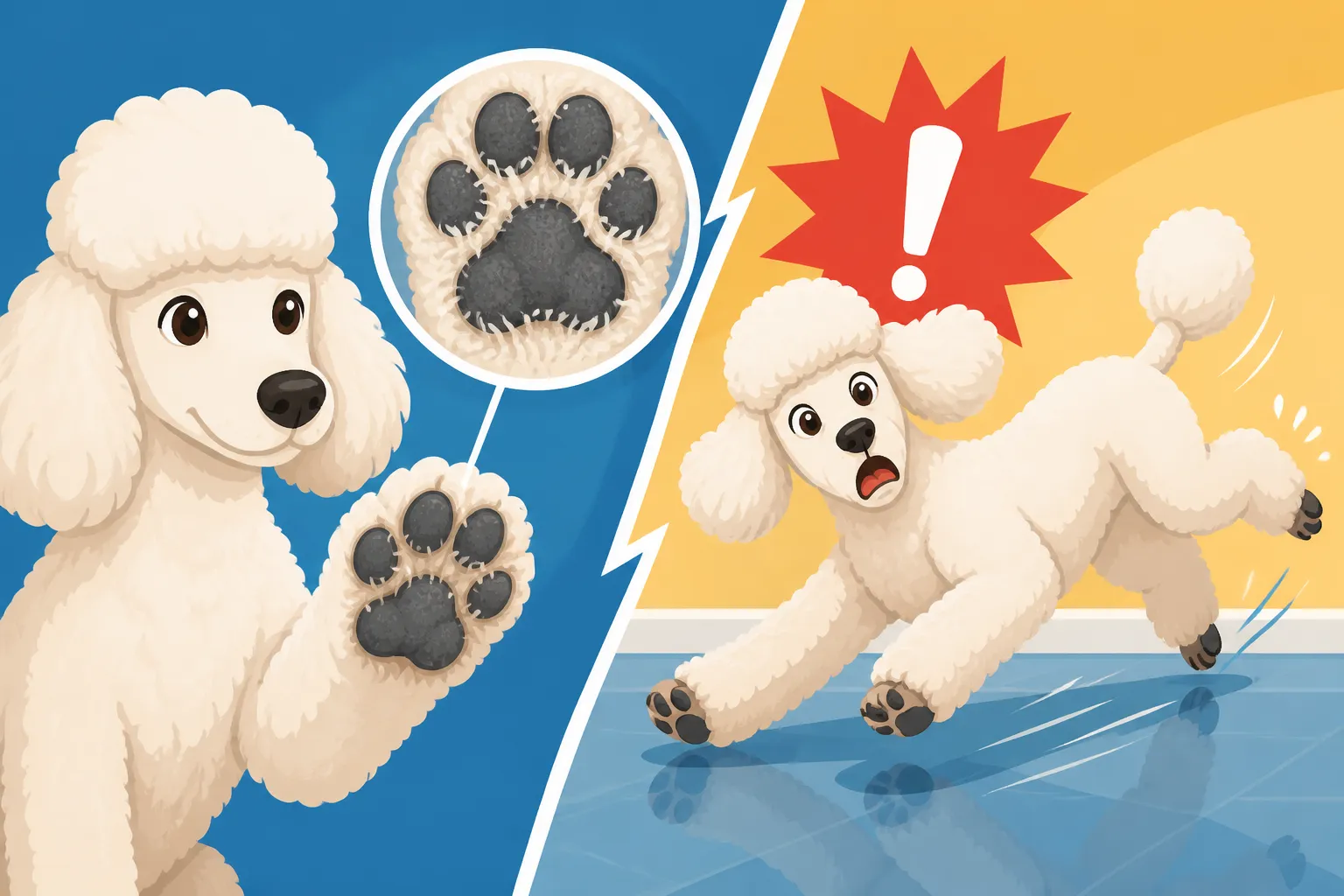
The paw pads are designed by nature to provide grip and traction, acting like the rubber soles of a good pair of shoes. They are tough, slightly textured, and provide direct contact with the ground, allowing your Poodle to push off, stop, and turn with agility. However, the continuous hair growth of the Poodle means that fine strands don't just stop at the edge of the paw; they continue to sprout between the individual paw pads. Over time, these strands grow longer and longer, forming a dense, soft cushion of hair right where the paw pads are supposed to meet the ground.
This thick layer of hair effectively lifts the paw pads away from the surface. Instead of the textured, gripping pad making contact, it's the smooth, soft, often slightly slick hair that touches the floor. On carpet or grass, this might not be immediately noticeable, as these surfaces offer their own friction. But introduce a smooth, hard surface like tile, laminate, or polished wood, and you've created a perfect storm for slipping. The hair acts like miniature skis, preventing the natural friction and grip your Poodle needs for stability. This can also lead to issues where a dog tries to Why Pad Hair Makes a Poodle Slip on certain surfaces.
The Mechanics of Slipping: Why That Extra Hair is a Hazard
When those little tufts of hair grow long enough to cover the paw pads, your Poodle's ability to navigate smooth surfaces is severely compromised. It's not just an occasional awkward step; it's a fundamental change in how their paws interact with the ground, leading to a cascade of potential issues.
Reduced Traction and Grip
Think about trying to walk on ice while wearing thick, fluffy socks. The soft, smooth fabric provides almost no purchase against the slippery surface, and your feet slide out from under you. This is precisely what happens when a Poodle's paw pad hair grows too long. The natural, rough texture of their actual paw pads, which is crucial for creating friction and stability, is completely obscured by the intervening hair.
Instead of the strong, resilient pad making direct contact with the floor, a cushion of hair meets the surface first. This hair compresses but offers very little resistance or grip, especially on common household flooring like ceramic tile, polished concrete, or sealed hardwood. The result is a significant reduction in traction, turning every step on these surfaces into a delicate balancing act. A Poodle, designed for agility and quick turns in the water, suddenly finds itself unsure and unstable, struggling to find solid footing. This diminished grip isn't just uncomfortable; it's genuinely dangerous.
Impact on Gait and Stability
When a Poodle's paws can't get proper traction, their entire gait changes. Instead of confident, flowing movements, you'll start to notice hesitation. They might spread their legs wider to try and find a more stable base, or take shorter, choppier steps, almost shuffling along. Some Poodles will even resort to tiptoeing, trying to minimize the contact area of the slippery hair. This unnatural way of moving puts undue stress on their joints, ligaments, and muscles.
A Poodle needs their paws to feel secure beneath them to maintain balance. When that security is gone, their confidence takes a hit. They might become reluctant to enter rooms with slippery floors, or avoid certain areas of the house altogether. This can be especially frustrating for an active and intelligent breed that loves to be involved in family life. Over time, this constant instability can even contribute to more serious conditions. Our article Poodle Hip Dysplasia by Size delves into joint health issues that can be exacerbated by poor footing.
Health Risks Associated with Slipping
The most immediate concern with a Poodle regularly slipping is the risk of injury. A sudden loss of balance can lead to:
- Sprains and Strains: The twisting motions as they try to regain footing can easily strain muscles or sprain ligaments in their legs, paws, or back.
- Joint Aggravation: For older Poodles or those with pre-existing conditions like arthritis, repeated slipping can exacerbate pain and inflammation. Imagine an older Poodle with Arthritis in a Twelve-Year-Old Poodle constantly struggling on slick floors; the wear and tear would be immense.
- Torn Ligaments: More severe slips or falls can result in serious injuries like a cranial cruciate ligament (CCL) tear, which often requires costly surgery and a lengthy recovery.
- Falls and Trauma: A bad fall could lead to bumps, bruises, or even fractures, particularly in smaller Poodles like Toys and Miniatures who are more delicate. Head injuries are also a concern if they hit their head during a fall.
- Behavioral Changes: Beyond physical injury, the fear of slipping can make a Poodle anxious or fearful on certain surfaces, impacting their quality of life and potentially leading to avoidance behaviors.
These risks highlight why managing paw pad hair isn't just about neatness; it's a critical component of your Poodle's overall health and well-being.
Practical Solutions for Maintaining Safe Poodle Paws
The good news is that preventing your Poodle from slipping due to overgrown paw pad hair is completely manageable. It requires a bit of dedication and the right tools, but the payoff in your Poodle's comfort and safety is immense.
Regular Trimming: Your First Line of Defense
Trimming the hair between your Poodle's paw pads is the most effective and direct solution. This should be a regular part of their grooming routine, ideally every 2-4 weeks, depending on how fast their individual hair grows. Here's how you can approach it:
- Gather Your Tools: You'll need a good pair of small, blunt-nosed scissors or a small, quiet clipper designed for delicate areas. Many Poodle owners find that a cordless trimmer works best for getting into those tight spots. You might find a good selection of specialized clippers or trimmers on sites like Amazon, which offer various brands and models suitable for detailed work. Having a comb and some styptic powder (just in case of a tiny nick) is also wise. Our guide Grooming Tools a Poodle Owner Must Buy has more on essential equipment.
- Make it a Positive Experience: Start slowly, especially if your Poodle is new to this. Offer treats and praise liberally. Short, frequent sessions are better than one long, stressful one. Getting a Poodle comfortable with handling, particularly their paws, is key.
- Positioning: Have your Poodle lie down or sit comfortably. You want to be able to access their paws without them feeling off-balance or nervous.
- The Technique: Gently spread the paw pads apart with your fingers to reveal the hair growing between them. Using your blunt-nosed scissors, carefully trim the hair flush with the paw pads. If using clippers, use a small blade (like a #10 or #15) and gently move it across the pads, being extremely careful not to touch the actual paw pad skin. Always point the scissors or clipper away from the pads and toes.
- Check for Mats: As you trim, feel for any small mats that might have formed deeper between the toes. These can be painful and pull on the skin. Address them gently.
- Consistency is Key: Don't wait until your Poodle is slipping. Incorporate paw pad trimming into your routine. Just like Nail Trims Between Poodle Grooms, it prevents bigger problems down the line.
Professional Grooming and Maintenance Schedules
If DIY trimming feels daunting, or if your Poodle is particularly squirmy, a professional groomer is an excellent resource. They have specialized equipment, experience, and techniques to safely and efficiently trim paw pad hair.
- What to Ask For: When you book your Poodle's grooming appointment, specifically mention that you want the hair between their paw pads trimmed short. Most groomers do this as a standard part of a full groom, but it's always good to confirm. If your Poodle only needs a quick tidy-up between full grooms, some groomers offer "paw and sanitary" trims, which can be a more affordable and quicker option.
- Frequency: Depending on your Poodle's hair growth rate, you might need a full groom every 4-8 weeks. Between those appointments, if you notice the paw pad hair getting long again, you can either attempt a quick trim yourself or schedule a mini-session with your groomer. Think of it like a haircut; you might get a full cut every couple of months, but you might need a fringe trim in between. For optimal health and coat maintenance, our article How Often a Poodle Must Be Brushed provides valuable insights into overall grooming frequency.
Beyond Trimming: Other Considerations for Paw Health
While trimming is paramount, there are other steps you can take to ensure your Poodle's paws are healthy and slip-resistant.
- Paw Balms: Consider using a paw balm or moisturizer, especially if your Poodle's pads become dry or cracked. Healthy, supple paw pads can provide better grip than dry, hardened ones. Look for natural, pet-safe ingredients.
- Dog Booties: For very specific situations, such as icy conditions or extremely hot pavement, dog booties can offer protection and added traction. However, most Poodles don't need to wear them indoors, and it's generally better to address the underlying hair issue for indoor slipping.
- Diet and Joint Support: Ensuring your Poodle has a balanced diet, perhaps from reputable providers like Ollie or Chewy, can support overall joint health. Strong joints and muscles are better able to cope with minor missteps, even if they still slip occasionally. Supplements containing glucosamine and chondroitin can also be beneficial, especially for larger Poodles or those prone to joint issues. Our article Joint Supplements Worth Giving a Poodle can offer more guidance.
- Weight Management: Keeping your Poodle at a healthy weight also reduces stress on their joints, making them less prone to injury if they do slip. An overweight Poodle will have more difficulty regaining balance and a fall could be more impactful. Read more about this in Poodle Obesity and Its Consequences.
Recognizing the Signs and Preventing Future Issues
Being observant of your Poodle's behavior and movement is key to catching issues early and proactively preventing future problems. Your Poodle can't tell you they're struggling, so it's up to you to read their cues.
Observing Your Poodle's Movement
Pay close attention to how your Poodle moves, especially on smooth floor surfaces. Subtle changes in their gait or behavior can be early indicators that their paw pad hair is getting too long or that they are experiencing discomfort.
- Hesitation: Do they pause before stepping onto a tiled kitchen floor or a wooden hallway? A moment of hesitation can signal a lack of confidence in their footing.
- Splayed Legs: When walking or standing, do they splay their legs wider than usual, as if trying to create a broader base of support? This is a clear attempt to compensate for poor traction.
- Shuffling or Tiptoeing: Instead of a natural stride, you might notice them shuffling their feet or walking gingerly on their toes, trying to avoid full pad-to-floor contact.
- Difficulty Getting Up/Down: Do they struggle to get up from a lying position on a smooth floor? Or do they lose balance when trying to lie down? This often indicates they can't get enough grip to push off or control their descent.
- Frequent Stumbles or Near-Slips: The most obvious sign is actual slipping. Even if they catch themselves, these frequent near-falls are a red flag.
- Reluctance to Play: If your Poodle, normally a playful companion, avoids games like fetch on certain surfaces, it might be due to discomfort or fear of slipping.
By regularly observing these subtle cues, you can intervene before minor slipping turns into a painful injury.
Creating a Paw-Friendly Home Environment
While regular paw pad trimming is your primary defense, you can also make your home a safer haven for your Poodle. Modifying their environment can significantly reduce the risk of slips and falls, providing them with greater confidence and comfort.
- Rugs and Runners: This is perhaps the easiest and most effective way to improve traction on hard floors. Place rugs, carpet runners, or anti-slip mats in high-traffic areas where your Poodle frequently walks, stands, or plays. Consider them particularly in hallways, around feeding stations, and near their favorite resting spots. Look for rugs with non-slip backing, or use rug grippers underneath to prevent the rugs themselves from becoming a hazard.
- Non-Slip Mats for Specific Areas: For areas like the kitchen or bathroom, where water spills are possible, consider waterproof, non-slip mats. These can provide a safe zone for your Poodle where they spend a lot of time.
- Stair Runners: If you have hard-surfaced stairs, adding a carpet runner can make a huge difference in safety, especially for older Poodles or those with any joint issues. Ensure it's securely installed.
- Paw Grips/Traction Socks: For Poodles who still struggle despite trimming and rugs, there are specialized paw grips or traction socks available. These typically have rubberized soles that provide extra grip. While not a permanent solution, they can be useful during recovery from an injury or for specific problematic areas.
- Regular Floor Cleaning: Keep your floors clean and free of dust, loose hair, or spilled liquids. A dusty floor can be surprisingly slippery, even with trimmed paw pads.
- Designated "Safe Zones": Ensure your Poodle has comfortable, carpeted or rug-covered areas where they can relax, eat, and play without constantly worrying about their footing.
By combining consistent grooming with thoughtful environmental modifications, you can ensure your Poodle lives a happy, active, and injury-free life, confidently navigating every corner of their home.
At-Home Trimming vs. Professional Grooming for Paw Pads
Deciding whether to tackle paw pad trimming yourself or rely on a professional groomer often comes down to comfort, time, and your Poodle's temperament. Here's a quick comparison to help you weigh your options:
| Feature | At-Home Trimming | Professional Grooming |
|---|---|---|
| Cost | Low initial investment (tools), then virtually free. | Regular recurring cost per visit. |
| Frequency | Can be done as often as needed (e.g., weekly, bi-weekly). | Typically every 4-8 weeks for full groom. |
| Convenience | On your schedule, no travel required. | Requires scheduling appointments and travel. |
| Skill & Experience | Requires learning proper technique and safety. | Performed by experienced, trained individuals. |
| Tools Needed | Small clippers/scissors, comb, styptic powder. | Professional-grade clippers, tables, restraints. |
| Poodle Temperament | Best for calm, cooperative Poodles. | Can handle more challenging or nervous Poodles. |
| Risk of Injury | Higher if inexperienced or Poodle is uncooperative. | Lower due to skill, but still possible. |
| Overall Coat Care | Focused only on paws. | Comprehensive care (bath, brush, full clip, nails). |
| Time Investment | Short, frequent sessions (5-10 minutes per paw). | Longer appointments (hours) but less frequent. |
Ultimately, the best approach might even be a combination: regular touch-ups at home between professional full grooms. This keeps costs down while ensuring your Poodle consistently has safe, well-maintained paws.
The joy of watching your Poodle prance and play freely, without the fear of a sudden slip, is truly immeasurable. Addressing their paw pad hair is a small but mighty step in ensuring their long-term health, comfort, and confidence in their home.
Disclaimer
This article is for general informational purposes only and does not constitute professional advice. Laws, prices and regulations vary by location and change over time. Consult a qualified professional for guidance on your specific situation.