Where Shed Poodle Hair Actually Goes
It's a question I've heard countless times from Poodle owners, new and seasoned alike: "If Poodles don't shed, why do I still find hair?" The common wisdom suggests Poodles are hypoallergenic and don't shed, a huge draw for many families. Yet, you're constantly brushing out tufts, finding stray curls on your clothes, and maybe even encountering a dreaded mat. This guide is here to unravel the mystery of Poodle "shedding" and explain exactly where all that hair goes, helping you understand your Poodle's unique coat and how to manage it.
The Poodle Coat: Not Truly Non-Shedding, Just Different
The idea that Poodles don't shed is one of those half-truths that gets passed around. While it's true they don't shed in the traditional sense like a Labrador leaving a carpet of fur, their hair still goes through a natural life cycle. Understanding this unique characteristic of the Poodle coat is key to managing it effectively and avoiding common frustrations.
Understanding the Poodle's Unique Hair Growth Cycle
Unlike many breeds whose fur grows to a certain length and then sheds out quickly in seasonal "blows," a Poodle's hair has a much longer anagen phase, which is the active growth period. This means their hair keeps growing and growing, much like human hair. Think about it: when was the last time you saw a Poodle with short hair that hadn't been clipped? Never, right? That's because it just keeps growing.
When a Poodle's hair does reach the end of its life cycle and naturally dies, it doesn't just fall out and float away to cover your sofa. Instead, it typically remains intertwined with the live, growing hair because of the coat's dense, curly texture. This is a crucial distinction from breeds that have a short anagen phase, where hair grows quickly and then sheds just as quickly, leading to those notorious fur tumbleweeds. For a Poodle, the vast majority of shed hair stays put, held captive by its own magnificent curl.
The Curl Trap: Where Shed Hair Gets "Stuck"
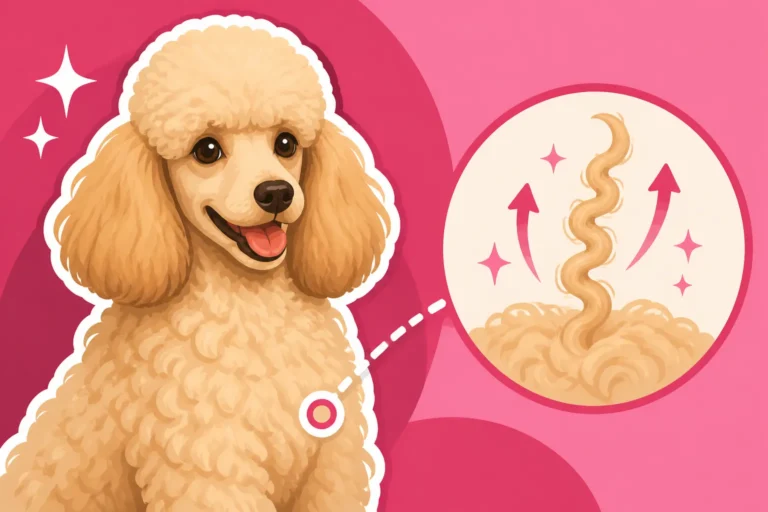
This is the big secret, the real answer to "where does it go?" The Poodle's signature dense, curly coat acts like a natural net. When a strand of hair reaches the end of its life and detaches from the follicle, it doesn't have an easy escape route. Instead of dropping to the floor, it gets caught and held by the surrounding active, healthy curls. Imagine a tightly coiled spring: anything caught within it is going to be held firmly in place.
This "curl trap" is why you don't see massive amounts of Poodle hair accumulating on your furniture or flooring. It's not that the hair isn't dying and detaching; it's simply that it's physically prevented from falling out freely. While this is wonderful for allergy sufferers and keeps your home tidier, it creates a unique challenge for the Poodle owner: that trapped dead hair must be physically removed. If it isn't, it becomes the primary ingredient for mats and tangles, which can quickly become painful and detrimental to your dog's skin health.
The Visible Signs: When and Where You Actually See Poodle Hair
Even with the "curl trap" at work, Poodle owners still encounter hair. It's not an illusion; you're not imagining things. The difference lies in how and where this hair becomes visible. It's less about passive shedding and more about active removal or the consequences of insufficient removal.
The Brush and Comb: The Primary Collection Point
If you're diligent about grooming, your Poodle's brush and comb will be the number one place you see shed hair. This is precisely how it should be! A good, thorough brushing session, reaching right down to the skin, is designed to extract all those dead, detached hairs that the curls have so effectively held onto. You might be surprised, especially if you've gone a few days without brushing, just how much hair can come out. It can look like a small, fluffy version of your Poodle has shed onto the brush, and that's completely normal.
This active removal is essential. By brushing regularly, you're not only preventing painful mats, but you're also promoting healthy skin and allowing new hair to grow freely. Think of it as manually shedding your Poodle, rather than waiting for gravity to do its slow, ineffective work. For many of us, this is a satisfying part of Poodle ownership, knowing we're actively maintaining that beautiful coat and keeping our pups comfortable. If you’re not seeing much hair on the brush, you might not be brushing deep enough or often enough.
Around the House: The Less Obvious Places Hair Accumulates
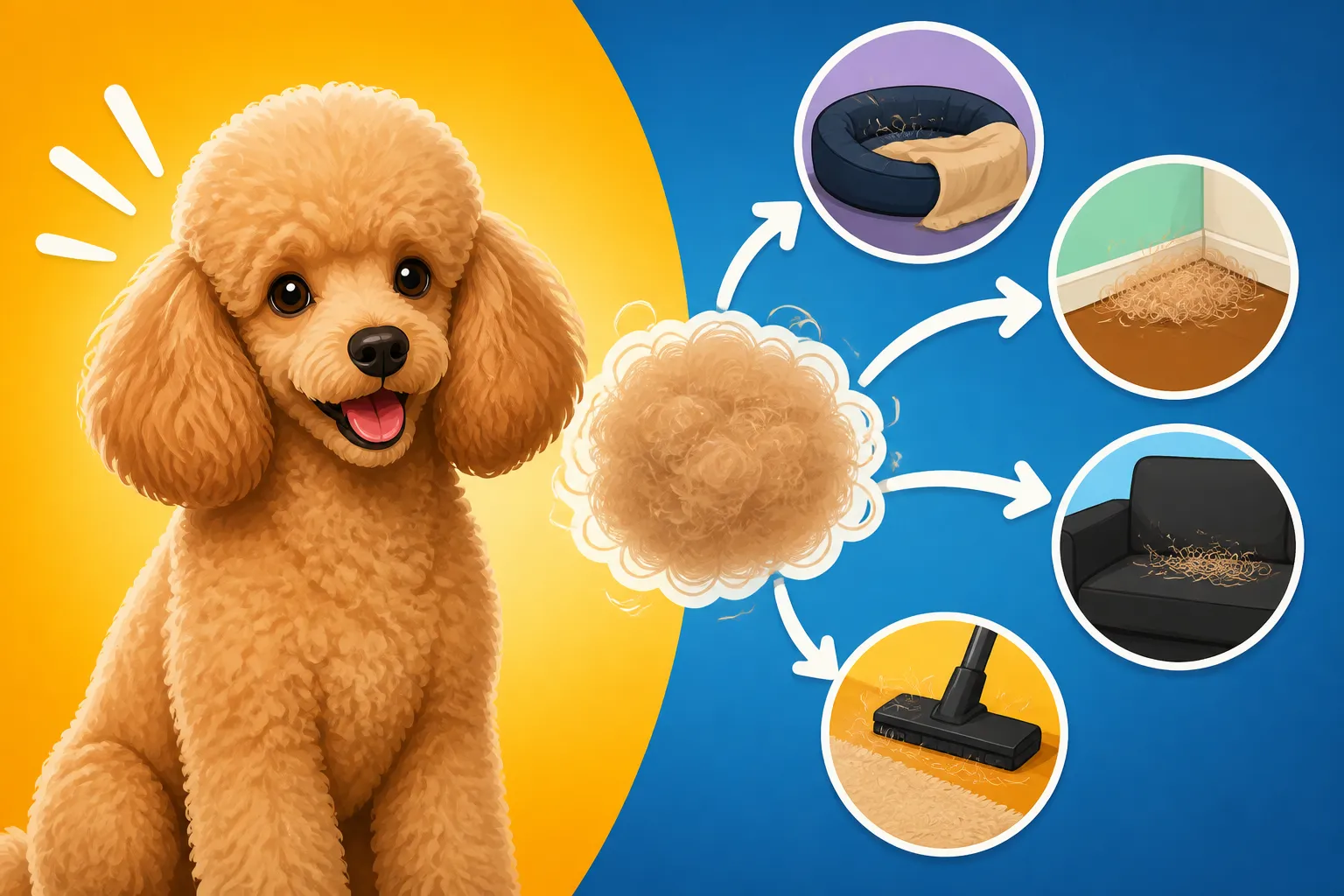
While Poodles won't typically leave drifts of hair, it's unrealistic to expect a completely hair-free home. There are still ways for those trapped hairs to make an escape. When your Poodle rubs against the sofa, brushes past your leg, or vigorously shakes, some of those loose, dead hairs can dislodge and find their way onto your clothes, upholstery, or carpets. You might find a stray curl or two, or notice more hair on sticky lint rollers than you'd expect from a "non-shedding" breed.
These small amounts of hair are often what cause confusion for new Poodle owners who were told their dog wouldn't shed at all. It's important to differentiate between actual shedding (the continuous, passive release of fur) and the occasional dislodged hair that's simply escaped the curl trap. Maintaining a regular grooming schedule significantly minimizes this, but a perfectly pristine, hair-free environment is almost impossible with any animal in the house, even a Poodle.
The Dreaded Mat: Shed Hair's Ultimate Destination
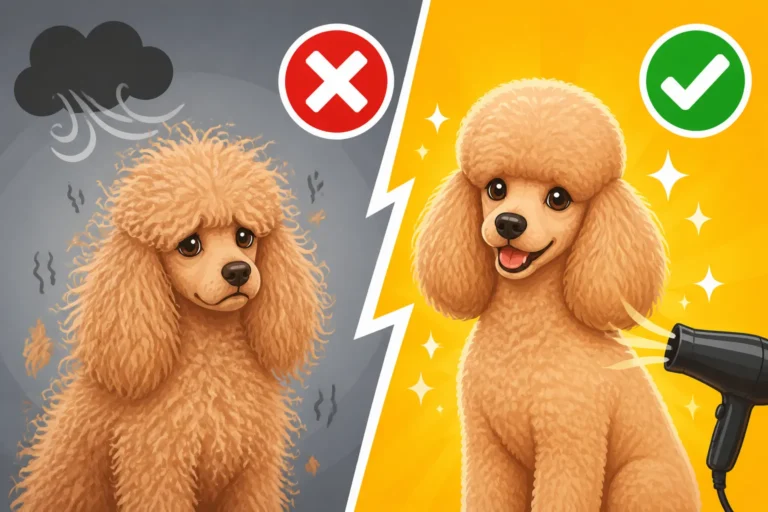
This is perhaps the most painful and common answer to "where shed Poodle hair goes" if a consistent grooming routine isn't in place. When dead hair remains trapped within the growing coat and isn't brushed out, it doesn't just sit there benignly. It quickly becomes entangled with the live hair, forming knots, tangles, and eventually, dense, painful mats. These mats start small, perhaps in high-friction areas like behind the ears, in the armpits, or under the collar.
Over time, if left unchecked, these mats can grow larger, pulling on the skin and creating hotbeds for skin infections, moisture buildup, and discomfort. A mat is essentially a compacted mass of shed, dead hair that has become hopelessly tangled with the surrounding live coat. It's the physical manifestation of what happens when the "curl trap" isn't emptied. Preventing mats is not just about aesthetics; it's a critical part of your Poodle's health and well-being. A severely matted coat often requires a complete shave-down by a professional groomer, which can be stressful for the dog and expensive for the owner.
Managing the Trapped Hair: Tools and Techniques
Dealing with the Poodle coat isn't just about brushing; it's about using the right tools and techniques to ensure you're effectively removing all that trapped, shed hair. It's a hands-on commitment, but one that is incredibly rewarding for both you and your Poodle.
The Essential Grooming Toolkit
To effectively manage your Poodle's coat, you need a few key pieces of equipment. Skimping on these tools is a false economy that will inevitably lead to frustration and mats.
First and foremost, you need a high-quality slicker brush. This isn't just any old brush; a good slicker has fine, wire pins that are slightly angled and flexible, designed to penetrate the dense Poodle coat without scratching the skin. It's your primary weapon against tangles and the most efficient way to remove shed hair. When looking for one, consider the size of your Poodle; a larger brush might be better for a Standard Poodle, while a smaller one works well for a Toy or Miniature. You can find excellent options on platforms like Amazon or specialized pet supply stores like Chewy.
Next up is a sturdy metal comb, often referred to as a Greyhound comb. This comb typically has two sections: one with wider teeth and one with finer teeth. It's invaluable for checking your work after brushing and ensuring you've reached all the way to the skin. If the comb glides smoothly through the hair, you've done a good job. If it snags, you've missed some tangles or trapped hair that needs further attention with the slicker. For more specifics on brushes, you might want to read Which Slicker Suits a Poodle Coat or Whether a Poodle Owner Needs a Greyhound Comb.
The Art of Line Brushing
Line brushing is the most effective technique for properly grooming a Poodle, and it’s non-negotiable if you want to prevent mats. It involves systematically working through the coat, section by section, layer by layer, rather than just brushing the surface.
Here's a simplified breakdown: you start at the bottom of a leg or the belly, and use one hand to hold the hair up, exposing a small "line" of skin. With your other hand, you use the slicker brush to brush downwards from the skin to the ends of the hair, making sure to remove any tangles or loose hair in that small section. Once that section is tangle-free, you drop a little more hair from your upper hand and repeat the process, working your way up the body. This methodical approach ensures no spot is missed, and every single dead hair gets removed. It's a time commitment, especially for a Standard Poodle, but it's the only way to truly conquer the curl trap. Learn more about the intricacies of this technique by checking out How to Line Brush a Poodle Properly.
Professional Grooming vs. Home Maintenance
Even with the best intentions and tools, regular professional grooming is often an essential part of Poodle ownership. A professional groomer has the expertise, high-quality equipment (like powerful dryers and sharp blades), and experience to handle even the most challenging Poodle coats. They can sculpt the coat into various clips, keep nails trimmed, and ensure ears are clean.
However, professional grooms, while vital, are typically not frequent enough to solely manage the coat. Most Poodles need to visit a groomer every 4-8 weeks, depending on their clip and lifestyle. In between these appointments, you are responsible for the daily or every-other-day brushing and combing to prevent mats from forming. Think of it as a partnership: the groomer provides the overhaul, and you provide the regular maintenance. Without your consistent home care, even a Poodle groomed monthly can quickly develop severe matting. Understanding How Often a Poodle Must Be Brushed can help you set a realistic home grooming schedule.
Common Misconceptions and Realities
The Poodle's coat is often the subject of many myths and misunderstandings. Let's clear up some of the most common ones and discuss the realities of living with this truly unique coat type.
The "Hypoallergenic" Myth
This is perhaps the biggest misconception. No dog is 100% "hypoallergenic," because people with dog allergies are usually reacting to dander (dead skin cells) and saliva, not just hair itself. However, Poodles are considered one of the best choices for allergy sufferers, and here's why: their curly coat traps not only shed hair but also most of the dander that would otherwise become airborne. Since they don't shed their coat freely, less dander is released into the environment.
This means that while a Poodle still produces dander, significantly less of it floats around your home, making it much easier for many allergy sufferers to live with them. It’s not that Poodles lack allergens; it's that their unique coat physically contains them better than most breeds. So, while they're not a miracle cure for every allergy, they offer a much lower allergen load.
Shedding During Coat Change
For those who bring home a Poodle puppy, there's a particular phase that often brings new questions about shedding: the "coat change." Around 9-18 months of age (though it can vary), a Poodle puppy's soft, fluffy puppy coat begins to transition to the coarser, denser adult coat. This period is notorious among Poodle owners for being a true grooming challenge.
During the coat change, the puppy hair that is shedding out gets incredibly tangled with the new adult hair growing in. It’s like having two different textures of hair trying to grow and shed simultaneously, creating a super-powered matting machine. Owners often report that their Poodle goes from being relatively easy to brush to a mat magnet overnight. This isn't "shedding" in the traditional sense, but rather a temporary increase in trapped dead hair that absolutely must be diligently brushed out, sometimes daily, to prevent severe matting. This period is a true test of a Poodle owner's grooming dedication. Learning about When a Poodle Puppy Coat Changes can help you prepare for this demanding phase.
Addressing Seasonal Changes and Diet
While Poodles don't experience the dramatic seasonal coat blows of double-coated breeds, there can be subtle changes in their coat throughout the year. Some Poodles might have a slightly thicker coat in winter or a marginally lighter one in summer. These changes are usually very minor and primarily affect the density rather than leading to noticeable shedding.
Diet plays a significant role in overall coat health and can indirectly impact how much hair you find. A Poodle on a high-quality, balanced diet will generally have a healthier, stronger coat, which means less breakage and a lower likelihood of excessive "shedding" (meaning, less hair getting dislodged or forming mats). Conversely, a poor diet can lead to a dull, brittle coat that breaks more easily, contributing to more visible hair around the house. Brands like Ollie focus on fresh, nutritious ingredients that can contribute to a lustrous coat. While a good diet won't stop the natural hair cycle, it supports the health of the hair that is growing, making it less prone to breaking off. If you're considering dietary changes, you might also be interested in Whether Prescription Diets Suit a Poodle.
Poodle Coat Management vs. Other Breeds
Here’s a quick overview contrasting how Poodles manage their shed hair compared to a typical heavy-shedding breed.
| Feature | Poodle Coat Management | Typical Heavy-Shedding Breed (e.g., Labrador) |
|---|---|---|
| Shedding Mechanism | Hair stays in the anagen (growth) phase longer; dead hair is trapped in curls. | Hair has shorter anagen phase; sheds freely from follicles. |
| Visible Hair | Primarily on brush/comb during grooming; occasional strands on surfaces. | Abundant hair on furniture, floors, clothes, tumbleweeds. |
| Allergen Impact | Less dander released airborne due to hair trapping it. | More dander released airborne, higher allergen load. |
| Grooming Need | Daily/every-other-day thorough brushing to prevent mats. | Regular brushing to remove loose hair and minimize spread. |
| Matting Risk | High if not diligently brushed. | Low risk of matting, more a nuisance of loose hair. |
| Professional Grooming | Essential for clipping, deep cleaning, and mat prevention. | Less frequent, often for de-shedding treatments or nail trims. |
Disclaimer
This article is for general informational purposes only and does not constitute professional advice. Laws, prices and regulations vary by location and change over time. Consult a qualified professional for guidance on your specific situation.