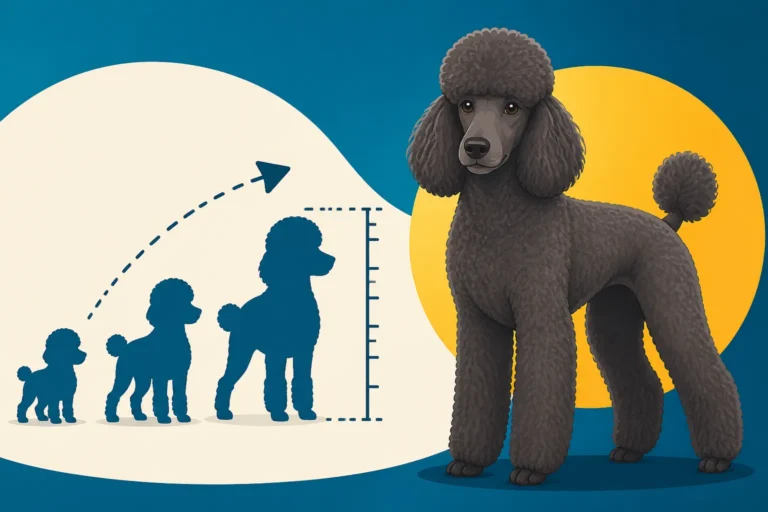
The Poodle the Standard Describes
Many prospective Poodle parents feel intimidated by talk of "breed standards," imagining it's all about fussy show clips and obscure rules that don't apply to a beloved family pet. The truth is, the breed standard is a living blueprint for the ideal Poodle, guiding responsible breeders and helping us all understand the fundamental health, structure, and temperament that make our Poodles so unique and wonderful. This guide will demystify what the standard truly means for every Poodle, whether they're a show ring champion or a cherished couch potato.
What a Breed Standard Actually Is
For many, the term "breed standard" conjures up images of highly sculpted show dogs parading around a ring, a world removed from the everyday joy of a Poodle snuggled on the sofa. But let me tell you, that perception misses the forest for the trees! A breed standard is, at its heart, a detailed description of the ideal specimen of a particular breed. It's written by the national breed club—in North America, that's often the Poodle Club of America, recognized by the American Kennel Club (AKC)—and it encompasses everything from physical appearance to temperament. Think of it as the original design document for the Poodle.
Why the Standard Matters Even for Pet Owners
You might wonder, "My Poodle is just a pet; why should I care about some fancy document?" Well, here's the thing: that standard is the very reason your Poodle is a Poodle! It defines the characteristics that make the breed distinct, healthy, and predictable in its traits. Responsible breeders dedicate themselves to producing Poodles that conform to this standard because it safeguards the breed's future. When a Poodle meets the standard, it's not just about looking "pretty"; it's about having the correct structure for good health, the right coat for easy maintenance (yes, even a dense, curly coat is "easy" when it's correct!), and the temperament that has charmed families for generations. Without the standard, the breed would quickly diverge, leading to unpredictable sizes, temperaments, and health issues. Understanding it helps you appreciate the care that went into your dog's lineage.
How Breed Standards Evolve Over Time
While a breed standard might seem like an ancient, unchanging decree, it actually has a pulse and can evolve, albeit slowly. These changes are usually made to address new health concerns that become prevalent, to clarify vague language, or sometimes to reflect a better understanding of the breed's origins and purpose. It's not a casual process, mind you. Any proposed changes are debated extensively by breeders, veterinarians, and breed enthusiasts, and must be approved by the overarching kennel club. For example, as our understanding of genetics and specific health conditions like Addison's disease or bloat has grown, there's a constant push to emphasize structural elements or breeding practices that promote longevity and well-being. This ensures that the Poodle you welcome into your home today is not just beautiful, but also has the best chance at a long, healthy life, informed by decades of collective wisdom in the breed.
The General Appearance: More Than Just Fluffy Hair
When you first see a Poodle, especially a meticulously groomed one, you might think it's all about the fluffy, intricate coat. While that coat is certainly a hallmark, the breed standard emphasizes something far more fundamental: the overall picture of elegance, balance, and athletic grace. A Poodle, regardless of its size, should exude an air of distinction and nobility. It's a dog that carries itself with confidence and purpose, not just a pretty face. This general appearance is the first thing a judge sees in the ring, and it's what draws people to the breed – that undeniable charisma and presence.
Proportions and Balance for Soundness
Beyond the glamour, the standard specifies crucial proportions that ensure a Poodle is sound and functional. Imagine a carefully engineered sports car – every part contributes to its performance. For a Poodle, the standard dictates that the length of the body, from the breastbone to the point of the rump, should be approximately equal to the height at the highest point of the shoulders. This square proportion is vital. It’s what gives a Poodle its characteristic agile movement and prevents structural weaknesses that could lead to joint issues or an awkward gait. A Poodle that is too long in the back might struggle with certain movements, while one that is too short might lack flexibility. This balance extends to all parts: the head should be in proportion to the body, and the legs should be long enough to allow for a graceful, unhindered stride. These are the details that ensure a Poodle not only looks good but feels good throughout its active life.
The 'Air' of a Poodle
It's hard to put into words, but every Poodle owner knows what I mean by the "air" of a Poodle. The standard describes it as an "air of distinction and dignity, setting it apart from all other breeds." This isn't just about good grooming; it's about the innate character and presentation of the dog itself. A Poodle should be intelligent, alert, and carry itself with a proud confidence. Think of how they hold their head high, their eyes bright and engaged. This regal bearing is an integral part of the breed. It speaks to their history as dogs of performance and companionship for nobility, and their capacity for sophisticated tasks. Even when they're being silly at home, there's always an underlying elegance. This 'air' is what makes a Poodle unforgettable, and it’s something breeders strive to maintain, understanding that it's as much a part of the standard as their physical attributes.
Head and Expression: The Poodle's Intelligent Gaze
The Poodle's head is often described as refined and intelligent, which perfectly captures the essence of this breed. It's not just a collection of features; it's the focal point that communicates their keen intellect and expressive nature. The standard goes into great detail about the skull, muzzle, eyes, and ears, ensuring that each component contributes to that overall distinguished look and functionality.
Eye Shape and Color
The eyes of a Poodle are often said to be the windows to their soul, and the standard certainly treats them as such. They should be very dark, oval in shape, and set rather wide apart. The darkness of the eye is crucial; it contributes to that soft, intelligent, yet often mischievous expression Poodles are known for. Light eyes can give a Poodle a hard or vacant look, which detracts from their characteristic keenness. When you look into a Poodle's dark, expressive eyes, you should see alertness and intelligence shining through. They are deeply sensitive and intuitive dogs, and their eyes reflect this profound capacity for understanding. This specific eye shape and color help define the Poodle's unique facial aesthetic, contributing to their overall elegant and intelligent appearance.
Muzzle and Jaw Strength
A Poodle's muzzle is not just for sniffing out squirrels; it’s a carefully described feature in the breed standard. It should be long, straight, and fine, but with strength in the jaw. This means a Poodle shouldn't have a snipey, weak muzzle that looks delicate, nor one that is too heavy or coarse, which would detract from their refined appearance. The length is important for balance with the skull, contributing to the graceful lines of the head. It's also a nod to their retrieving heritage; a strong, well-proportioned muzzle is essential for gently carrying game without damaging it. The lips should be tight and darkly pigmented, fitting neatly against the jaw. A Poodle's bite is also critically important: a scissors bite, where the outer side of the lower incisors just touches the inner side of the upper incisors, is preferred. This ensures efficient chewing and a strong grasp, reflective of their original working purpose.
Ear Set and Length
The Poodle's ears are a key part of their expressive face. The standard states they should be set approximately at eye level, or slightly below. They should hang close to the head and be long enough that when pulled forward, the leather (the actual ear flap, not the hair) reaches the corners of the lips. The ear leather itself should be rather thick. This specific set and length contribute to the Poodle's soft, intelligent expression, framing their face beautifully. These drop ears also come with a unique grooming challenge – the hair inside them needs regular attention to prevent infections. You can find specialized ear cleaning solutions and pluckers on sites like Chewy to help keep those long, furry ears healthy and clean. The standard prioritizes both the aesthetic appeal and the proper structure that ensures a Poodle's ears are both elegant and functional, though we owners know they also serve as excellent sound amplifiers for hearing a treat bag crinkle from three rooms away! Ear Infections Under a Poodle's Drop Ears often stem from incorrect ear maintenance.
Body Structure: The Athletic Foundation
Beyond the elegant coat, a Poodle's body structure is the powerhouse of its athleticism and grace. The standard describes a dog built for function, not just show. Every curve and angle of the body contributes to their ability to move fluidly, jump, and retrieve. This is where their working heritage truly shines through. A Poodle's body should be well-muscled and firm, reflecting its active nature and stamina.
Neck Length and Arch
The neck is crucial for a Poodle's proud carriage and efficient movement. The standard calls for a long, strong, and well-muscled neck that rises gracefully from the shoulders and arches elegantly to the head. This isn't just for looking good in the show ring; a long, arched neck allows for excellent reach and flexibility during activity. Imagine a dancer or a strong swimmer – that extended neck helps with balance and power. A short, thick neck would give a Poodle a clunky, less refined appearance and hinder its agility. This elegant line from the shoulders to the head is a hallmark of the breed's distinction and is something breeders pay close attention to, understanding its importance for both aesthetic and functional soundness.
Level Topline Requirements
A Poodle's topline, the line of the back from the shoulders to the tail, is another vital aspect of its structure. The standard demands a perfectly level topline. This means no dips or humps, just a strong, straight line that conveys power and proper skeletal alignment. A level topline is essential for distributing weight evenly and allowing for fluid, efficient movement. It indicates a strong back and core, which are fundamental for a dog that was originally bred to retrieve waterfowl from challenging terrain. Any deviation, such as a roached (arched) or sway (dipped) back, can indicate structural faults that might predispose a Poodle to back problems or affect its gait. Maintaining a healthy weight and providing appropriate exercise contribute to a strong, level topline throughout a Poodle's life.
Deep Chest and Well-Sprung Ribs
The chest and rib cage are critical for a Poodle's endurance and athletic capacity. The standard specifies a deep chest, with the breastbone extending visibly forward, and well-sprung ribs. "Well-sprung" means the ribs arch out from the spine, providing ample room for the heart and lungs. A deep chest reaching to the elbows is crucial for lung capacity, allowing the Poodle to sustain energy during strenuous activity, like retrieving in cold water or engaging in dog sports. A shallow or flat-sided chest would restrict lung function and diminish stamina. This robust chest structure underpins the Poodle's athleticism, reminding us that beneath all that beautiful coat is a truly capable and hardy working dog. This deep chest, particularly in Standard Poodles, is why issues like Bloat and the Deep Standard Poodle Chest are a concern for owners.
Tail Carriage and Set
A Poodle's tail is not just an appendage; it's an extension of their topline and an important indicator of their temperament and structure. The standard dictates that the tail should be set high, carried proudly, and docked (if customary in your region) to a length proportionate to the size of the dog. A high tail set seamlessly continues the level topline, emphasizing the Poodle's balance and elegant silhouette. A low-set tail can make the back appear longer or sloped. When a Poodle is excited or alert, the tail should be carried up, giving it an extra dash of pizzazz. It's an expression of their self-confidence and alert nature, often wagging with enthusiasm when greeting their favorite people.
Legs and Feet: Power and Agility
The legs and feet of a Poodle are not merely supports; they are meticulously described by the standard to ensure the breed's remarkable athleticism, agility, and endurance. Proper angulation and bone structure are paramount, allowing for a smooth, powerful, and efficient gait that speaks to their working heritage as retrievers.
Shoulder Layback and Forequarters
A Poodle's forequarters are crucial for reach and overall balance. The standard specifies that the shoulder blade should be well laid back, forming an approximate 90-degree angle with the upper arm. This "layback" is fundamental for allowing the Poodle to extend its front legs far forward, enabling an effortless, long stride. Without proper angulation, a Poodle would have a short, choppy gait, limiting its ability to cover ground efficiently. The forelegs themselves should be straight and parallel when viewed from the front, with strong, muscular elbows held close to the body. This entire assembly works in harmony, providing shock absorption and propulsion, much like the suspension system on a finely tuned vehicle.
Angulation in the Hindquarters
Just as important as the front, the hindquarters provide the power and drive for the Poodle's movement. The standard calls for strong, well-muscled hindquarters with good angulation. This means the bones of the pelvis, thigh, and lower leg should be angled to allow for maximum flexibility and propulsion. When viewed from the rear, the legs should be straight and parallel, neither too wide nor too close together. The hocks (the joint above the foot on the hind leg) should be relatively short and perpendicular to the ground. This correct angulation is what allows a Poodle to spring forward with incredible power, whether launching into a leap in agility or pushing off from the water during a retrieve. Poor hindquarter angulation can lead to a weak gait, reduced endurance, and potential stress on joints. Poodle Hip Dysplasia by Size is an important consideration here, emphasizing the need for sound structure.
Compact, Cat-Like Feet
The Poodle's feet are surprisingly compact and contribute significantly to their agility. The standard describes them as small, oval, and "cat-like," with well-arched toes and thick, firm pads. The toes should be tight, not splayed out, which provides better grip and protection. This foot structure is ideal for gripping various terrains, from slippery riverbanks to agility obstacles, and for enduring long periods of activity without injury. It's a testament to their heritage as water retrievers, requiring nimble feet that can navigate uneven ground. Keeping the hair trimmed between the pads is essential for maintaining this functionality, preventing mats, and ensuring good traction. Regular nail trims are also vital for proper foot health and comfort. You can find specialized grooming tools like paw trimmers and nail grinders on Chewy that make caring for these athletic feet much easier.
The Poodle Coat: Texture, Color, and Presentation
Ah, the Poodle coat! This is perhaps the most iconic feature of the breed, but also the most misunderstood. The standard goes into immense detail about its characteristics, not just its appearance, but its texture and density, which are critical for its function. It’s a truly unique coat, and understanding it helps us appreciate why it needs such specific care.
Correct Coat Texture and Density
The Poodle's coat is described as dense, harsh, and curly. Notice the word "harsh" – it's not meant to be soft and fluffy like a cotton ball! This harsh, wiry texture is what makes the coat water-resistant and allows it to form tight curls that do not shed easily. Each hair shaft is robust, and the density means there are many hairs packed closely together. This creates a protective barrier against the elements, particularly cold water, which was essential for their original retrieving work. A coat that is too soft, sparse, or woolly (often described as "cottony") is considered incorrect because it lacks the protective qualities and is more prone to matting and difficult maintenance. This correct texture is vital, making the Poodle's non-shedding, hypoallergenic qualities possible. The Poodle Coat and Why It Never Stops Growing means continuous grooming is essential.
Recognized Poodle Colors
Poodles come in a stunning array of solid colors, and the standard is quite specific about what is permissible. Recognized solid colors include black, white, silver, blue, gray, cream, apricot, red, and brown. What's crucial is that the color must be solid and even throughout, without any patches or white markings beyond a small amount on the chest. The skin, nose, eye rims, and lips should ideally correspond to the coat color – for example, a black Poodle should have black points (nose, lips, etc.), while an apricot Poodle might have liver or dark brown points. This uniformity of color is a hallmark of the breed and adds to their elegant presentation. While parti-colored (two-toned) and phantom Poodles exist and are loved by many, they are not recognized in the breed ring by the AKC standard. Understanding these color nuances helps appreciate the beauty and strict requirements of the standard. Solid Poodle Colors the AKC Recognizes delves deeper into these variations.
Acceptable Poodle Clips
Perhaps no other aspect of the Poodle standard generates more discussion and misunderstanding than the acceptable grooming clips. Historically, these clips served a purpose for the working Poodle, protecting vital organs and joints from cold water while allowing freedom of movement. Today, they are artistic expressions, but still rooted in tradition. For the show ring, the standard allows for several specific clips:
- The Continental Clip: This is the one most people associate with show Poodles – shaved rear, bracelets on the legs, and often a rosetted hip. It's stunning but requires immense upkeep. The Continental Poodle Clip and Its Upkeep can give you an idea of the effort involved.
- The English Saddle Clip: Similar to the Continental, but with an unshaved patch over the loin, resembling a saddle.
- The Puppy Clip: For Poodles under 12 months, this clip allows for a uniform length of coat over the body.
- The Sporting Clip: This is a much more practical clip for a pet Poodle, with a shorter overall length, leaving the face, feet, and tail base shaved. The Sporting and Kennel Poodle Clips are great for active dogs.
For pet Poodles, the sky's the limit in terms of creative clips, but the standard's focus on these specific styles highlights their historical significance and the dedication required to maintain them. Even if your Poodle sports a teddy bear cut or a simple lamb trim, understanding the traditional clips connects you to the breed's rich heritage.
Movement: Grace in Motion
The Poodle standard places significant emphasis on movement because it is the ultimate test of a dog's physical soundness and correct structure. A Poodle can have all the right pieces, but if they don't move correctly, those pieces aren't working together as they should. Movement isn't just about speed; it's about efficiency, power, and grace.
The Effortless Stride
When a Poodle moves, it should be an impressive sight. The standard describes their gait as "light, springing, and graceful, without roll or chop." This means their stride should appear effortless, with good reach in the front and strong drive from the rear. They should move with enthusiasm and purpose, covering ground efficiently without wasting energy. The legs should move straight and true, neither paddling nor crossing over. Watching a correctly moving Poodle is like watching a finely tuned athlete – every movement is deliberate, powerful, and beautiful. This effortless quality speaks volumes about their physical condition and the underlying soundness of their skeletal and muscular structure.
Importance of Soundness in Gait
Soundness in gait is paramount because it directly relates to a Poodle's health and longevity. A Poodle with proper movement distributes its weight evenly, minimizes stress on its joints, and maintains balance. This reduces the risk of injuries and degenerative conditions over time. When a Poodle moves, its head should be held high, with its tail carried proudly, reflecting its inherent dignity. Any signs of lameness, stiffness, or an unnatural gait are considered serious faults in the show ring, not just because they look bad, but because they often indicate structural problems that can lead to pain or reduced quality of life for the dog. Breeders strive to produce Poodles whose movement is a testament to their robust health and the careful adherence to the structural guidelines of the standard. This isn't just about winning ribbons; it's about ensuring a happy, active life for the dog, capable of enjoying activities like long walks, playing fetch, or even participating in dog sports.
Temperament: The Brains and Brawn
While physical attributes get a lot of attention, the Poodle's temperament is arguably its most defining characteristic, and the breed standard dedicates significant space to it. A Poodle's personality is as distinct and elegant as its physical form: intelligent, active, and dignified, but never dull. This combination of brains and brawn makes them incredibly versatile and engaging companions.
The Poodle's Famous Intelligence and Trainability
The standard emphasizes the Poodle's "alertness and intelligence," and boy, do they deliver on that! Poodles consistently rank among the most intelligent dog breeds, often second only to the Border Collie in some studies. This keen intellect makes them incredibly quick learners, eager to please, and highly trainable. They excel in obedience, agility, and other dog sports, often picking up new commands in just a few repetitions. However, this intelligence is a double-edged sword: a bored Poodle is a mischievous Poodle. If their minds aren't kept occupied with training, puzzle toys (which you can easily find on Chewy), or engaging activities, they will find their own "entertainment"—which often involves counter-surfing, excessive barking, or inventive ways to get into trouble. Poodle Intelligence and Coren's Ranking explains this more fully. Their trainability means they respond best to positive reinforcement and gentle handling; harsh methods can easily break their sensitive spirit.
Dignity Versus Aloofness
The Poodle standard describes a temperament of "dignity and animation." This means a Poodle should carry itself with self-assurance and grace, never appearing coarse or flighty. They are often reserved with strangers, observing new people or situations with a quiet intelligence before deciding to engage. This reservation can sometimes be mistaken for aloofness, but it's rarely true disinterest. Once a Poodle accepts you, they are incredibly loyal, affectionate, and deeply devoted companions. They might not be the type to greet every new person with an effusive, slobbery kiss, but they form incredibly strong bonds with their family. This dignified nature means they are often sensitive to their owner's moods and make wonderful, empathetic companions. They possess a quiet confidence that commands respect, whether they're in the show ring or simply curling up next to you on the couch. Whether Poodles Are Aloof With Strangers clarifies this common misunderstanding.
Alertness and Adaptability
An important aspect of the Poodle's temperament, as outlined in the standard, is their alertness. They are keen observers of their surroundings, always aware of what's happening. This makes them excellent watchdogs, often alerting their family with a bark to visitors or unusual sounds. While not aggressive, they are naturally protective of their loved ones and territory. Their intelligence also contributes to their remarkable adaptability. Poodles can thrive in a variety of living situations, from city apartments to sprawling country homes, as long as their physical and mental needs are met. They are happy to join you on a hike, a swim, or simply snuggle up for a quiet evening. This combination of alertness, dignity, and adaptability makes the Poodle a truly versatile and rewarding companion for families who understand and appreciate their unique qualities. The famous The Poodle Character is truly one of the best aspects of the breed.
Standard, Miniature, and Toy Poodle Differences within the Standard
One of the fascinating aspects of the Poodle is that it comes in three distinct sizes – Standard, Miniature, and Toy – all under one overarching breed standard. This means that, apart from height and weight, they should all embody the same ideal physical and temperamental characteristics. The standard is essentially a scalable blueprint.
The Height Divisions
The primary distinguishing factor among the three Poodle varieties is height. The standard explicitly defines the cut-off points:
- Standard Poodle: Any Poodle 15 inches or over at the highest point of the shoulders.
- Miniature Poodle: Any Poodle over 10 inches but under 15 inches at the highest point of the shoulders.
- Toy Poodle: Any Poodle 10 inches or under at the highest point of the shoulders.
These height divisions are strict, and a Poodle that falls between two categories (often called a "moyen" or "klein" in some European standards, but not officially recognized by the AKC as a separate variety) would not be eligible to compete in the show ring. These specific measurements ensure consistency within each size group, allowing for fair competition and predictable breeding outcomes. For pet owners, it simply means you can choose the Poodle that best fits your living situation and activity level, knowing you're still getting a true Poodle, just in a different package. Poodle Lifespan Across the Three Sizes can also be influenced by these differences.
Proportionality Across Sizes
Crucially, while the absolute size changes, the proportionality remains the same across all three varieties. A Toy Poodle should look like a miniature version of a Standard Poodle, not a different breed entirely. This means they all should have the same square build, elegant neck, dark eyes, correct coat texture, and dignified temperament. A well-bred Toy Poodle won't have a bulging forehead or delicate bone structure that looks out of proportion to its body; it will have the same refined head and strong build, just scaled down. This adherence to consistent proportions ensures that the essence of the Poodle breed is maintained, regardless of size. It's a testament to the careful breeding over generations to maintain the integrity of the Poodle ideal, from the smallest lap dog to the largest water retriever.
Understanding Faults and Disqualifications
The breed standard isn't just about describing the ideal; it also meticulously lists "faults" and "disqualifications." These are deviations from the ideal that range from minor imperfections to serious genetic or structural issues that compromise the Poodle's health, function, or breed type. For breeders, understanding these is crucial for making informed decisions and improving their lines. For pet owners, it can help explain why certain Poodles might look or behave differently from the breed ideal.
Common Faults That Affect a Poodle's Conformation
Faults are characteristics that detract from the ideal but don't necessarily disqualify a Poodle from competition or breeding. They are typically categorized by their severity. For example, a minor fault might be ears set slightly too high, or a coat that is a bit soft. More serious faults could include a bad bite, a roached or sway back, light eyes, or a coat that is particularly cottony. These faults affect a Poodle's overall balance, movement, or traditional appearance. A Poodle with several minor faults might still be a wonderful companion, but breeders will strive to avoid duplicating such traits in future generations. Recognizing these helps in appreciating the nuanced beauty and structural integrity of a truly well-bred Poodle.
Disqualifications: Major Deviations from the Standard
Disqualifications are serious deviations that render a Poodle unsuitable for the show ring and, often, for breeding, as they represent fundamental departures from the breed's essence. These are not subjective opinions but clearly defined traits in the standard. Examples of disqualifications include:
- Size outside the specified ranges: A Standard Poodle under 15 inches, a Miniature Poodle over 15 inches or under 10 inches, or a Toy Poodle over 10 inches.
- Any color other than the recognized solid colors: This includes parti-colors, phantom markings, or white patches on a solid-colored dog (beyond the tiny chest spot).
- Overshot or undershot bites: These can severely impact chewing ability and overall health.
- Temperament: Any sign of shyness, viciousness, or extreme nervousness. A Poodle must be dignified and alert, not fearful or aggressive.
- Monorchidism or cryptorchidism: When a male Poodle has only one or no descended testicles.
These disqualifications serve to protect the purity and health of the breed, preventing the proliferation of traits that undermine the Poodle's function, appearance, or temperament. They reinforce the meticulous care and selective breeding necessary to maintain the Poodle as the magnificent breed we know and love.
| Feature | Standard Ideal | Purpose/Impact |
|---|---|---|
| Size | Defined height ranges for each variety | Predictability, adaptability to different lifestyles, fair competition. |
| Proportion | Square build (body length = height at shoulder) | Agility, balance, efficient movement, structural soundness. |
| Head | Refined, long muzzle, dark oval eyes, set-at-eye-level ears | Intelligent expression, strong bite for retrieving, balanced appearance. |
| Neck | Long, strong, arched, carried proudly | Elegant carriage, reach in gait, powerful swimming. |
| Topline | Level, firm | Even weight distribution, strong back, efficient movement. |
| Chest | Deep, well-sprung ribs | Ample lung capacity, stamina, robust health. |
| Tail | Set high, carried up, often docked proportionate | Extension of topline, expression of temperament, balance. |
| Forequarters | Well laid-back shoulders, straight legs | Smooth reach, shock absorption, proper gait. |
| Hindquarters | Strong, well-muscled, good angulation | Powerful drive, endurance, athletic prowess. |
| Feet | Small, oval, cat-like, well-arched toes | Agility, grip on varied terrain, protection. |
| Coat | Dense, harsh, curly, non-shedding | Water resistance, protection from elements, hypoallergenic qualities. |
| Temperament | Alert, intelligent, dignified, active, trainable | Loyal companionship, versatility, quick learning, strong bond. |
| Movement | Light, springing, graceful, efficient | Endurance, athletic ability, structural soundness, reduced injury risk. |
Disclaimer
This article is for general informational purposes only and does not constitute professional advice. Laws, prices and regulations vary by location and change over time. Consult a qualified professional for guidance on your specific situation.