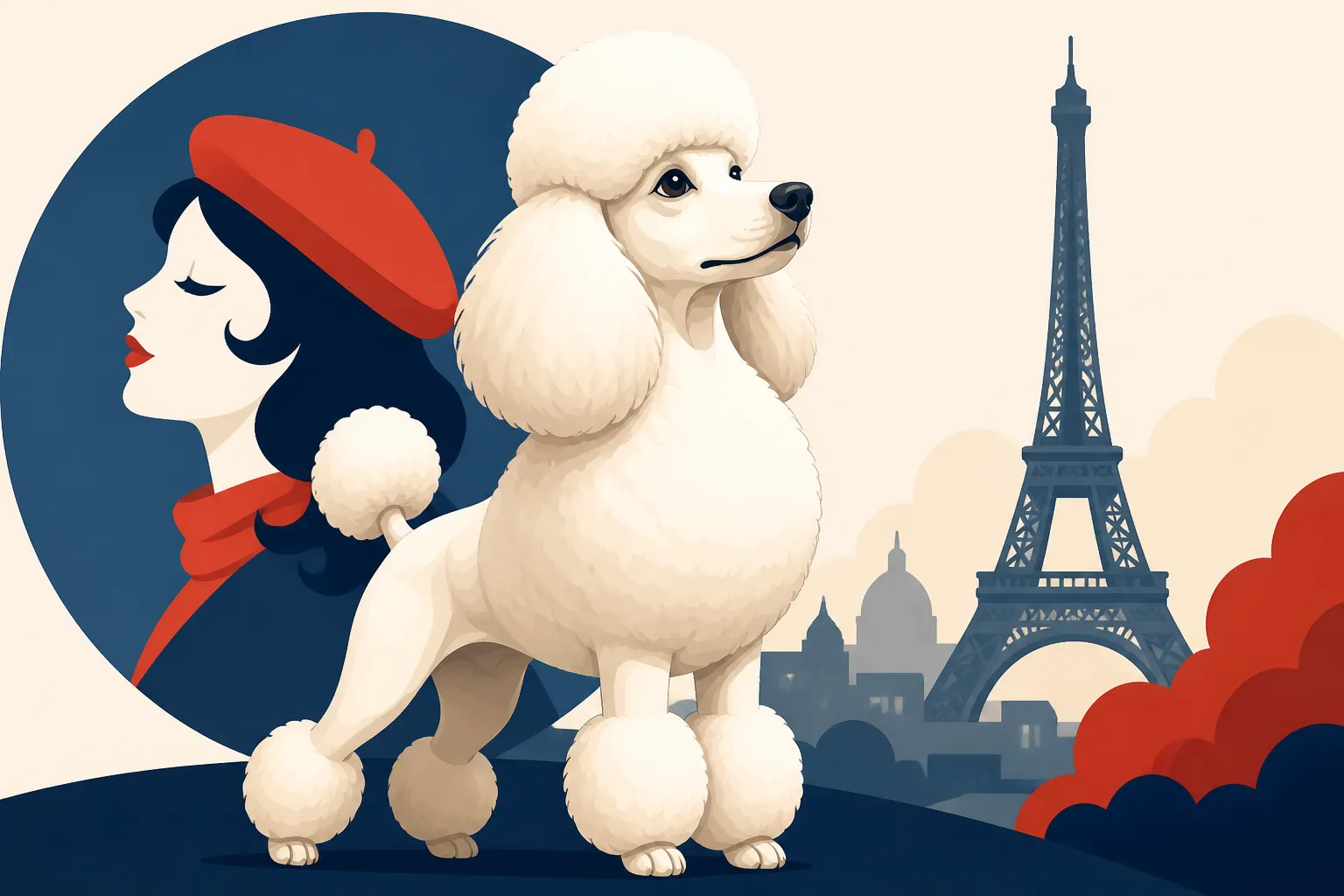
The Poodle as France’s National Dog
It’s a common sight on postcards and in cartoons: a chic person in a beret, strolling the boulevards of Paris with a perfectly coiffed Poodle by their side. We see it so often that it feels like an undeniable truth – the Poodle is as French as the Eiffel Tower or a croissant. But is it really? This guide will dive deep into the fascinating journey of the Poodle, from its working dog roots to its undeniable status as a beloved icon deeply woven into the fabric of French culture, exploring how this perception came to be and what it means for the breed's identity.
Disentangling the Poodle's True Origins
Before we can fully appreciate the Poodle's status in France, we have to address the elephant in the room – or rather, the water dog in the pond. While the Poodle is irrevocably linked with French elegance, its true origins lie elsewhere. It's a story often misunderstood, and frankly, it gives us Poodle lovers a chuckle because it highlights just how completely one nation can adopt a breed as its own.
The German Water Dog Roots
Believe it or not, the Poodle's ancestry isn't found in the salons of Versailles, but in the marshy wetlands of Germany. The very name "Poodle" itself is a clue! It comes from the German word "Pudel," which means "to splash in the water." And splash they did. These dogs were bred as hardy, intelligent water retrievers, tasked with fetching waterfowl for hunters. Imagine a robust, athletic dog, leaping into icy lakes and rivers, its dense, curly coat acting as insulation. That's the Poodle's original job description. You see, The Water Dog Behind the Poodle was no delicate show dog; it was a tireless working companion, built for strength and endurance in challenging environments.
Their incredible intelligence, keen scenting abilities, and powerful swimming strokes made them invaluable to hunters. They were often clipped in a very practical manner – not for fashion, but to reduce drag in the water and protect their vital organs from the cold. Those signature "pompoms" on their joints? Those were originally left as protection for sensitive areas like the hips and shoulders. It's a far cry from the modern image, isn't it? This utilitarian background is fundamental to understanding the breed's inherent smarts and athleticism, traits that persist in Poodles of all sizes today. For more on this, you might find Why the Poodle's Name Means to Splash quite interesting.
Early European Popularity
From its German origins, the Poodle, or "Pudelhund" as it was sometimes called, quickly spread across Europe. Its adaptability meant it found favor in various countries, taking on different roles and earning different names. In France, it became known as "Caniche," derived from "cane," the French word for a female duck, again highlighting its water retrieving prowess. In Spain, it was the "Perro de Agua," and in Russia, the "Sovetskaya Ovtcharka." Each culture recognized the Poodle's unique combination of intelligence and trainability.
As these dogs traveled with traders, soldiers, and eventually nobility, their reputation grew. They weren't just exceptional hunters; their sharp minds and eagerness to please made them quick studies for tricks and performances. It was during this period of European diffusion that the breed began its transformation from a purely working dog to a versatile companion capable of captivating audiences and endearing itself to high society. This widespread appreciation laid the groundwork for its eventual, deep integration into French culture. It truly is a fascinating journey for The Poodle as a Breed.
How France Adopted the Poodle
So, how did a German water dog become so quintessentially French? It wasn't through conquest or a formal declaration. It was a gradual, organic process of cultural embrace, where the Poodle's inherent qualities perfectly aligned with the aesthetic and practical needs of French society, particularly its elite.
From Working Dog to Noble Companion
The transition of the Poodle from wetlands to drawing rooms began in earnest in France. The French nobility, always with an eye for elegance and intelligence, recognized the Poodle's charm. Its graceful movements, striking appearance, and remarkably clever mind made it a perfect fit for courtly life. The dense, curly coat, which was so effective for insulation in cold water, also proved to be wonderfully amenable to elaborate grooming, a fashion trend that was taking hold.
While larger Standard Poodles were still valued for hunting, smaller varieties began to emerge, perfectly suited for the confined spaces of palaces and Parisian apartments. These smaller Poodles were not only charming companions but also symbols of status and sophistication. They were small enough to be carried, yet intelligent enough to be trained to perform tricks for entertainment, making them the ultimate accessory for the fashionable elite. This shift marked a significant evolution in the breed's purpose, from a rugged retriever to a treasured member of the household.
The Royal Court's Embrace
The true turning point in the Poodle's French identity came with its widespread acceptance by French royalty and aristocracy. From the 16th century onwards, Poodles became fixtures in the opulent courts of France. King Louis XV, for example, was known to be fond of his Poodles, and his successor, Louis XVI, and his queen, Marie Antoinette, were also documented as having Poodle companions. This royal endorsement was a massive boost to the breed's prestige. If it was good enough for the King and Queen, it was certainly good enough for everyone else!
Paintings from these eras often depict elegantly dressed ladies and gentlemen with their Poodles, sometimes adorned with ribbons or sporting intricate clips. These artistic portrayals further solidified the Poodle's image as a symbol of French luxury and good taste. The breed's keen intellect meant they were also superb at entertaining, performing tricks and delightful antics that charmed their noble owners. They were much more than just pretty faces; they were intelligent, interactive companions who could truly engage with their people. This deep integration into the lives of the most influential people in France cemented the Poodle's place in the nation's cultural consciousness, so much so that many people often ask Whether the Poodle Is German or French to this day.
The Poodle's Cultural Impact in France
Beyond the courts, the Poodle's influence permeated French culture, appearing in various forms of art and entertainment, further solidifying its "French" identity.
Artistic Depictions and Symbolism
Throughout centuries of French art, the Poodle has held a prominent and cherished position. From oil paintings to tapestries, the breed became a recurring motif, often embodying ideals of elegance, loyalty, and refined beauty. Artists like Jean-Honoré Fragonard and Antoine Watteau, among others, immortalized Poodles in their works, frequently portraying them alongside their aristocratic owners in pastoral or luxurious settings. These depictions weren't just accurate representations; they imbued the Poodle with symbolic meaning.
A Poodle in a portrait often signified the owner's wealth, sophistication, and good breeding. Its intelligent gaze and poised demeanor seemed to mirror the very qualities admired in French society. Even in less formal art, such as satirical cartoons or caricatures, the Poodle's distinct silhouette was instantly recognizable, a testament to its pervasive presence. This artistic legacy played a crucial role in crafting the Poodle's image as a quintessentially French dog, an emblem of national style and grace.
Performance and Entertainment
The Poodle's intelligence and eagerness to please made it a natural star in the world of entertainment, particularly in France. French circuses and street performers quickly discovered the Poodle's exceptional trainability and flair for the dramatic. These clever dogs could learn an astonishing array of tricks, from walking on their hind legs and jumping through hoops to intricate dance routines. Their showmanship, combined with their striking appearance, made them crowd favorites.
Poodles became staples in traveling troupes and established circuses, captivating audiences with their agility and charm. This performing role further ingrained them into the public consciousness, associating them not just with aristocratic luxury but also with joyful entertainment and cleverness. It's no wonder that a breed so adept at performance became a beloved part of France's cultural landscape. If you're curious about their theatrical side, you might enjoy learning more about Poodles in Circuses and Performance. Their theatrical background definitely contributes to The Poodle Character many of us know and love today.
The Official, Unofficial, and Enduring National Status
Despite the overwhelming cultural evidence, the Poodle's status as France's national dog is a bit more nuanced than many might assume. It’s a classic case of cultural consensus outshining any formal decree.
The Lack of Formal Declaration
Here’s the surprising truth for many: there is no official decree or governmental declaration that names the Poodle as the national dog of France. Unlike some countries that formally designate national animals, France has not done so for the Poodle. This often comes as a shock, given how strongly the breed is identified with the nation. France has its national emblems – the rooster (Gallia) is a prominent symbol, and Marianne represents the Republic – but a canine counterpart has never received official recognition.
This absence of a formal title doesn't, however, diminish the Poodle's deep-rooted connection to French identity. It simply means that its status is one earned through centuries of cultural adoption, affection, and artistic representation, rather than bureaucratic process. It’s a testament to the power of popular imagination and shared heritage, which can often be far more enduring than any official stamp.
Cultural Association and Identity
So, if it's not official, why does everyone think it is? The Poodle's connection to French identity is a powerful example of cultural osmosis. It's an association built on centuries of shared history, aesthetic appeal, and symbolic representation. The Poodle embodies qualities that are frequently associated with French culture itself: elegance, sophistication, intelligence, and a certain je ne sais quoi. Its refined appearance, often meticulously groomed, mirrors the French appreciation for artistry and presentation.
Moreover, the Poodle's long history with French aristocracy and its prominent place in French art and literature have woven it deeply into the national narrative. It's a dog that has witnessed and participated in key moments of French history, from royal courts to Belle Époque cafes. This rich tapestry of shared experience has solidified the Poodle's place in the collective imagination as a symbol of France, making it an unofficial, yet universally accepted, national icon. It’s part of what people think of when they imagine The Poodle the Standard Describes and its cultural standing.
The Poodle's Enduring Legacy in French Life
Even today, the Poodle continues to thrive in France, maintaining its status as a beloved companion and an international ambassador for French style.
Modern French Poodle Ownership
Walk through any French city park or village square, and you’re still likely to spot a Poodle. Whether it's a sprightly Toy Poodle peeking out of a handbag, a dignified Miniature Poodle trotting alongside its owner, or a majestic Standard Poodle making a statement, they remain popular companions. Modern French Poodle owners cherish their dogs for the same reasons their ancestors did: intelligence, loyalty, and an elegant appearance that, when well-groomed, turns heads. They're often seen accompanying their owners to cafes, boutiques, and on daily errands, embodying the very essence of a well-integrated family member.
Caring for these intelligent and active dogs means ensuring they have everything they need, from a nutritious diet to stimulating toys and top-notch grooming supplies. While specific French brands cater to Poodles, many owners also turn to well-stocked online retailers for their pet needs. For instance, if you're looking for a specific type of hypoallergenic shampoo for your Poodle's sensitive skin, or perhaps a puzzle toy to keep their brilliant minds occupied, you might explore options available from a retailer like Chewy, known for its extensive selection of pet products. These days, accessibility to quality care products is global, ensuring French Poodles, like their counterparts elsewhere, live happy, healthy lives. Of course, a Poodle year means a lot of investment in grooms, food, and vet care, as explored in A Poodle Year: Grooms, Food and Vet Care.
The Poodle's Influence on Global Perceptions of France
The Poodle's strong association with France hasn't just remained within its borders; it has transcended them, shaping international perceptions of the country. When people around the world think of French culture, images of haute couture, gourmet food, and often, Poodles, come to mind. This global recognition is largely thanks to French art, literature, and media, which exported the Poodle's image alongside other French cultural hallmarks.
The breed became a shorthand for French sophistication, often appearing in international advertisements, films, and cartoons to evoke a sense of European charm and elegance. This influence is a powerful testament to how a breed, though not officially designated, can become a de facto national symbol, representing an entire country's aesthetic and cultural values on a global stage. The Poodle, in essence, became a furry ambassador, cementing its place not just in French hearts, but in the world’s imagination of France. This global view helps us understand How Poodles Reached America and other parts of the world.
Distinguishing Between the Varieties and French Preference
The Poodle isn't just one size, and historically, France played a significant role in developing the smaller varieties that many now associate with the breed.
The Original Standard and the Miniaturization Trend
Originally, the Poodle was primarily a Standard Poodle – a medium to large-sized dog built for retrieving in water. However, as the breed gained popularity in France, particularly among the aristocracy and in urban settings, a demand for smaller versions emerged. This wasn't just a whimsical preference; it was a practical one. Smaller dogs were easier to keep in city apartments, could be carried more conveniently, and required less food and space. This led to a deliberate breeding down in size.
Breeders carefully selected smaller Standard Poodles, eventually establishing the Miniature Poodle. From these Miniatures, even smaller dogs were selected, leading to the creation of the Toy Poodle. France was instrumental in standardizing these smaller varieties, ensuring they retained the intelligence, elegant appearance, and distinctive coat of their larger ancestors. This miniaturization process catered directly to the lifestyle needs of French society, creating companions perfectly suited for urban life and as lapdogs for the nobility. It truly highlights When the Toy Poodle Appeared and Why City Buyers Wanted a Smaller Poodle.
Popularity of Different Sizes in France Today
Today in France, all three recognized Poodle sizes – Standard, Miniature, and Toy – continue to be popular, though preferences can vary. The Toy and Miniature Poodles are often favored by city dwellers and those looking for a charming, portable companion. Their smaller stature makes them ideal for apartment living and easier to take along on outings to cafes or shops. They embody the classic "French lapdog" image that has been cultivated over centuries.
The Standard Poodle, while less common in bustling urban centers due to its size and energy needs, still has a strong following, particularly in more rural areas or among those with larger homes and active lifestyles. These majestic dogs are prized for their athletic abilities, intelligence, and dignified presence. Regardless of size, the Poodle remains a beloved breed across France, cherished for its unique combination of beauty, brains, and personality. Each size maintains the core essence of the breed's character.
| Poodle Size | Historical Role in France | Modern Popularity in France | Key Traits |
|---|---|---|---|
| Standard Poodle | Original water retriever, royal hunting companion | Appreciated for elegance, athleticism; less common in dense cities | Athletic, dignified, highly intelligent |
| Miniature Poodle | Developed for nobility, urban living | Popular for versatility, medium size, companionability | Agile, adaptable, intelligent |
| Toy Poodle | Bred for lapdog status, fashion accessory | Highly popular in urban settings, cherished lapdog | Charming, portable, alert |
The journey of the Poodle, from a German water dog to France's unofficial national symbol, is a beautiful example of how culture and history intertwine. While no official decree exists, the Poodle's undeniable presence in French art, society, and everyday life has solidified its place as a cherished icon. For anyone contemplating bringing one of these smart, elegant dogs into their home, remember that you’re not just getting a pet; you're welcoming a piece of living history, a truly special companion. No matter the size, they are all fantastic, complex, and incredibly intelligent creatures. Perhaps you might be interested in What Poodle Owners Wish They Had Known before getting one!
Disclaimer
This article is for general informational purposes only and does not constitute professional advice. Laws, prices and regulations vary by location and change over time. Consult a qualified professional for guidance on your specific situation.