Poodle Intelligence and Coren’s Ranking
So many people see a Poodle and immediately think "fussy show dog" or "delicate lap dog," perhaps not realizing the powerhouse brain humming beneath that beautiful, curly coat. This misconception often leads to owners feeling frustrated when their seemingly well-behaved Poodle starts finding ingenious ways to get into trouble or develops unusual behaviors. This guide is here to pull back the curtain on the Poodle's extraordinary intelligence, explaining why they consistently rank so highly, what that truly means for daily life, and how you can nurture their brilliant minds for a harmonious home.
Unpacking the Poodle's Reputation for Brains
It’s easy to look at a Poodle in a fancy show clip, with those meticulously sculpted pom-poms and shaved areas, and assume they’re all about aesthetics and very little about substance. This couldn't be further from the truth. The Poodle's intelligence is not just a hidden gem; it's a fundamental part of their being, woven into their very history and purpose.
The Myth of the "Dumb Show Dog"
Let's be honest, the elaborate grooming often associated with Poodles can give people the wrong impression. They see a dog that looks more like a sculpture than a working animal, and their minds jump to conclusions about superficiality or a lack of real dog smarts. I've heard countless Poodle owners sigh in exasperation when someone dismisses their dog as "just a pretty face." It's incredibly frustrating when your companion, who can practically read your mind and learn a new trick in minutes, is judged solely on external appearance. This perception unfortunately overshadows the incredible mental acuity that Poodles possess.
This misjudgment often stems from an unfamiliarity with the breed's origins. People might think the Continental clip, with its fluffy bracelets and shaved hindquarters, is simply an affectation designed for the show ring. While it has certainly evolved into an art form for competition, its roots are deeply practical. We forget that the Poodle was bred for function, not just fashion, and that function demanded serious brainpower. To truly appreciate a Poodle's intelligence, you have to look beyond the pompoms and understand what kind of work they were originally designed to do.
Historical Roots of Poodle Intelligence
To understand why Poodles are so incredibly smart, we have to travel back in time to their true calling: retrieving waterfowl. The word "Poodle" itself comes from the German word "Pudel," meaning "to splash in water." These dogs weren't lounging on velvet cushions; they were plunging into icy lakes and rivers, navigating reeds and currents, and bringing back downed birds for hunters. This demanding job required far more than just a strong swim stroke and a good nose.
Think about the mental gymnastics involved: remembering where the bird fell, often over long distances and through complex terrain, ignoring distractions, understanding hand signals from a handler, and making independent decisions in challenging environments. This isn't just instinct; it's advanced problem-solving, memory, and a deep connection to their human partner. This heritage of retrieving and working closely with people instilled a strong drive to learn, please, and understand complex tasks, solidifying their intelligent foundation. The Poodle's famous athleticism and water prowess are intrinsically linked to their keen intellect.
Stanley Coren's Groundbreaking Work and the Poodle's High Ranking
When we talk about dog intelligence, one name almost always comes up: Stanley Coren. His influential book, The Intelligence of Dogs, based on a survey of professional dog trainers, revolutionized how many of us think about canine cognitive abilities. And, to the delight of Poodle enthusiasts everywhere, the Poodle consistently holds one of the top spots.
What Coren Measured to Rank the Poodle
Coren’s research didn't just measure a single type of "smartness." He broke down canine intelligence into three main categories: adaptive intelligence, instinctive intelligence, and working and obedience intelligence. Adaptive intelligence refers to a dog's ability to solve problems on its own, learning from its environment and past experiences—like figuring out how to open a gate or unlatch a cabinet. Instinctive intelligence encompasses the tasks a dog was bred for, such as a retriever's drive to fetch or a herding dog's knack for gathering sheep. This is where the Poodle's water-retrieving roots shine through. The Water Dog Behind the Poodle
However, the most significant factor in Coren's ranking, especially for the top tiers, was working and obedience intelligence. This category assesses how quickly a dog learns new commands and how consistently they obey those commands. It's a measure of trainability and the dog's ability to interpret and respond to human communication. Coren surveyed hundreds of obedience judges and trainers, asking them to rank breeds based on these specific criteria. The consistency of Poodles learning quickly and responding reliably placed them among the elite in this crucial aspect of intelligence. You can read more about his methods in What Coren Measured to Rank the Poodle.
Why the Poodle Sits Second in Coren's List
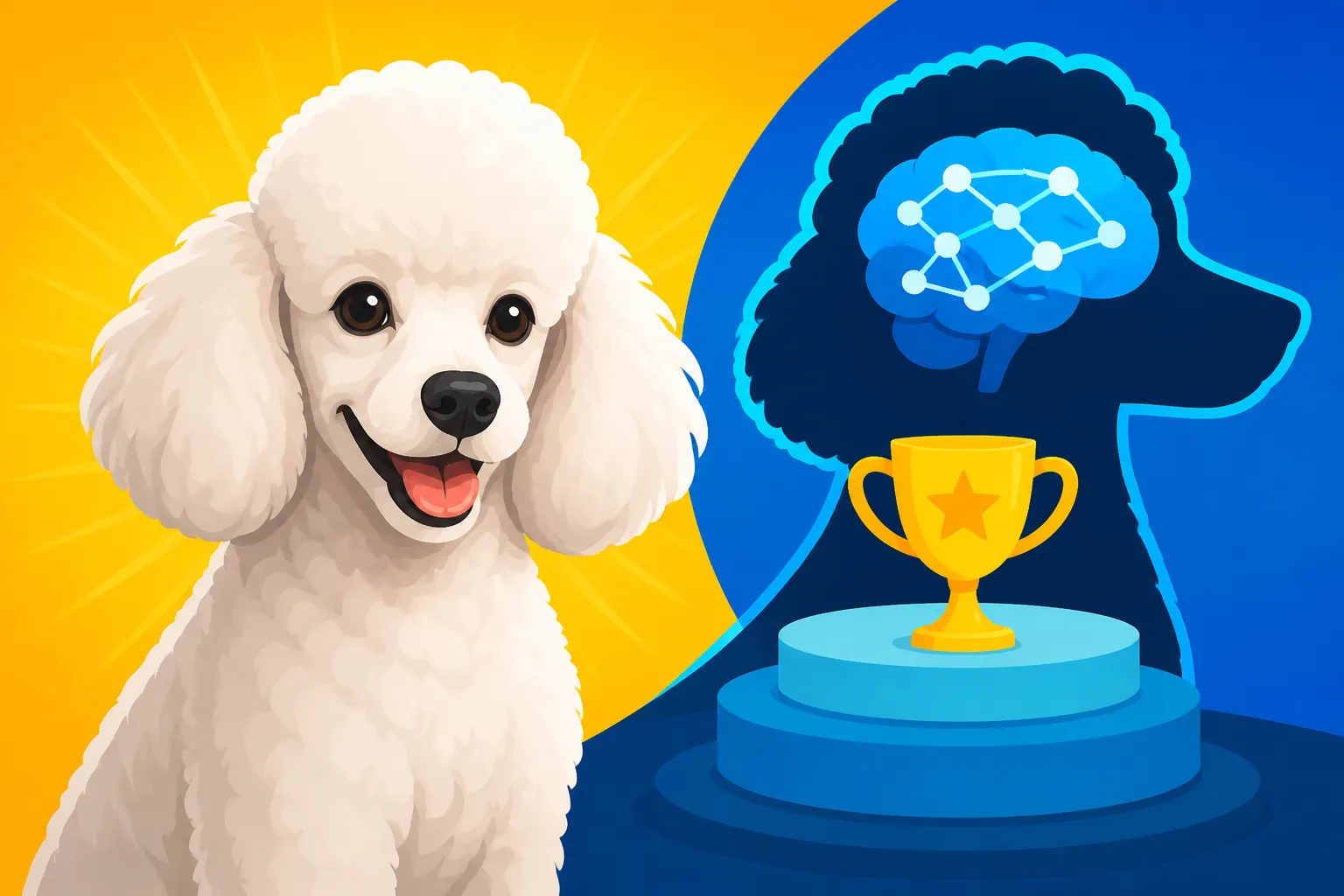
The Poodle proudly holds the second-highest ranking in Coren's list for working and obedience intelligence, right after the Border Collie. This isn't just a minor detail; it means something profound about their capacity for learning. According to Coren's findings, dogs in this top tier, like the Poodle, are capable of understanding new commands in fewer than five repetitions. Imagine that: teaching your Poodle a new word or action, and they grasp it in just a handful of tries! This incredible speed of comprehension is a testament to their sharp minds and eagerness to engage.
Furthermore, dogs in this category demonstrate a remarkable ability to obey a known command the very first time it’s given, with a success rate of 95% or higher. This level of reliability is truly exceptional and speaks volumes about their focus and desire to comply. It's why Poodles excel in competitive obedience, agility, and as service dogs – they are not only capable of learning complex sequences of commands but also consistent in executing them. This superior capacity for communication and adherence to instruction is precisely Why the Poodle Sits Second in Coren's List.
Whether Toy Poodles Are as Smart as Standards
A common question that arises is whether all Poodle sizes share this impressive intelligence. Does a tiny Toy Poodle possess the same mental horsepower as a majestic Standard Poodle? The answer, unequivocally, is yes! Coren's ranking applies to the Poodle breed as a whole, irrespective of size. The genetic blueprint for intelligence is shared across the Standard, Miniature, and Toy varieties. The downsizing of the Poodle from a large water retriever to smaller companion dogs was a selective breeding process focused on size, not a dilution of their mental faculties.
So, if you have a Toy Poodle, don't let their small stature fool you into thinking they are less capable. They are just as bright, just as capable of learning complex tasks, and just as prone to boredom if their minds aren't challenged. In fact, sometimes the smaller size of a Toy Poodle can make their intelligence even more surprising to new owners, as they quickly pick up on routines, anticipate desires, and even try to outsmart their humans. This consistent intelligence across all varieties is part of what makes the Poodle such a remarkable breed. For more insights, check out Whether Toy Poodles Are as Smart as Standards.
The Unique Challenges of Living with a Highly Intelligent Poodle
While a Poodle's intelligence is a tremendous asset, it also comes with its own set of responsibilities and, let's be honest, challenges for the unsuspecting owner. A smart dog isn't always an "easy" dog; sometimes, they're quite the opposite! Their mental acuity requires careful management to ensure they are happy, well-adjusted, and not inadvertently turning their brains to mischief.
Why Intelligence Makes a Poodle Harder to Live With
This might sound counterintuitive, but a truly intelligent dog can sometimes be more demanding than a less bright one. Why? Because their brains are always working, always observing, always trying to figure things out. If that powerful mind isn't given constructive outlets, it will inevitably find its own entertainment – and that entertainment often involves things you'd rather they didn't do. I've known Poodles who've learned to open refrigerators, unlatch gates, or even systematically dismantle furniture purely out of boredom. This isn't maliciousness; it's a desperate need for mental stimulation.
The frustration often comes when an owner provides plenty of physical exercise but neglects the mental workout. A long walk is great for the body, but it might not even scratch the surface of satisfying a Poodle's intellectual hunger. Their ability to learn quickly means they'll master basic commands in a flash, and then they're ready for the next challenge. If that challenge isn't provided, they might invent one, leading to behaviors that can be incredibly trying for the human household. It truly emphasizes Why Intelligence Makes a Poodle Harder to Live With.
What a Poodle Does When Its Brain Is Idle
An idle Poodle brain is, as the saying goes, the devil's workshop! When Poodles aren't given a "job" or engaging mental tasks, they can become quite ingenious in finding their own entertainment, which often manifests as problematic behaviors. This isn't because they're being "bad," but because their innate drive to learn and problem-solve is seeking an outlet. It can be something as simple as excessive barking at every squirrel or leaf that moves outside, or as complex as systematically emptying the kitchen garbage.
I've seen Poodles meticulously shred paper, steal items off counters to initiate a "chase me" game, or even develop destructive chewing habits, all because their minds are under-stimulated. They might try to manipulate situations to get attention, feigning limps or suddenly becoming "deaf" to commands they know perfectly well. This is their way of saying, "Hey, I'm bored! Engage with me!" It's crucial for owners to recognize these signals for what they are – a cry for mental engagement – rather than just punishing the symptom. To learn more about these behaviors, check out What a Poodle Does When Its Brain Is Idle.
Training a Poodle That Outthinks You
Training a Poodle is a joyful experience because of how quickly they pick things up, but it also requires a trainer who's equally sharp and consistent. Poodles don't just learn a command; they learn how to learn, and they'll quickly start anticipating your cues, looking for patterns, and even inventing their own "shortcuts" if they believe it gets them to the reward faster. You might find your Poodle performing an entire sequence of tricks after just the first cue, simply because they've learned the whole routine.
This anticipation means you need to be precise and clear in your training, avoiding inadvertent cues that might confuse them. They can sometimes appear "stubborn" if they've figured out that a different action yields a better reward, or if they're simply bored with repeating a task they've already mastered. A Poodle needs a trainer who is patient, positive, and consistently thinking one step ahead, offering new challenges and varying routines to keep their brilliant minds engaged. It’s a delicate dance of guiding their intelligence without stifling their creativity. Training a Poodle That Outthinks You can be incredibly rewarding, but it demands your full attention.
Harnessing Poodle Intelligence for a Fulfilling Life
Understanding and acknowledging your Poodle's high intelligence is the first step towards a truly fulfilling life for both of you. Instead of trying to "manage" their smarts, think about how you can harness them, directing their mental energy into productive and enjoyable activities. This approach transforms potential problems into incredible opportunities for bonding and growth.
Beyond Basic Obedience: Keeping a Poodle Mind Occupied
While basic obedience is a fantastic foundation, for a Poodle, it's just the warm-up act. Their keen minds truly thrive on continuous learning and complex challenges. Don't stop at "sit" and "stay"; think about teaching them tricks, advanced obedience routines, or even useful household tasks like bringing you slippers or finding your keys. Puzzle toys that require them to manipulate levers or dig for treats are also excellent for keeping their minds active, especially on days when you can't offer intensive training. Brands like Chewy often have a fantastic selection of these brain games, perfect for Poodles of all sizes.
Scent work is another incredibly enriching activity. Poodles have a surprisingly good nose, and teaching them to find hidden treats or specific items can provide hours of mental engagement. Even simple "find it" games around the house can be wonderfully stimulating. Remember, a tired Poodle isn't just physically tired; they're mentally satisfied. Incorporating short, daily mental workouts, even just 10-15 minutes, can make a huge difference in their overall behavior and happiness. Discover more ways to challenge them in Keeping a Poodle Mind Occupied.
Dog Sports a Poodle Excels At
Poodles aren't just intelligent; they're also athletic and graceful, making them natural stars in a variety of dog sports. Agility is a fantastic outlet, combining physical exertion with complex problem-solving as they navigate obstacles, tunnels, and weave poles. Their ability to follow sequences of commands and adapt quickly on the fly makes them formidable competitors. Obedience and Rally Obedience trials also play directly into their strengths, showcasing their precision and willingness to work closely with their handlers.
Don't forget their water dog heritage! Many Poodles absolutely adore swimming and can excel in dock diving or even retrieve trials. Flyball, a team sport involving hurdles and a ball-launching box, is another high-energy option that demands speed and quick learning. Even less formal activities like hiking or long walks in varied terrain, where they can use their senses to explore, can be mentally stimulating. These sports aren't just about winning ribbons; they're about providing a purpose for your Poodle's incredible talents, building confidence, and strengthening your bond. Explore more options in Dog Sports a Poodle Excels At.
Enrichment Tools and Resources
Living with a Poodle means you'll become a connoisseur of enrichment tools! Beyond basic toys, look for interactive puzzle feeders that make your dog work for their kibble. These slow down eating and provide a mental challenge, transforming mealtime into a game. You can find a huge variety of these at stores like Chewy, from simple treat-dispensing balls to multi-stage puzzles. Snuffle mats are also excellent for engaging their sense of smell, allowing them to "hunt" for treats buried in fabric strips.
Beyond physical items, resources like online training platforms, local dog clubs, and experienced positive-reinforcement trainers are invaluable. A good trainer can help you unlock new levels of your Poodle's potential and introduce you to advanced concepts or sports. Consider enrolling in trick classes or even canine good citizen courses. The goal is to continuously provide novel challenges that prevent boredom and keep their brilliant minds sharp and engaged.
Dispelling Common Misconceptions About Poodle Intelligence
Despite their high ranking and undeniable smarts, Poodles still contend with a few lingering misconceptions. It's important to address these directly, not just for the Poodle's reputation, but for any potential owner to have a realistic understanding of what living with this breed entails.
The Difference Between Intelligence and Stubbornness
Sometimes, a Poodle that isn't complying might be perceived as "stubborn" or "willful." However, with such a highly intelligent and sensitive breed, what looks like stubbornness is often something else entirely. It could be boredom: they've already mastered the task and see no point in repeating it without a new challenge or higher reward. It could be confusion: perhaps a cue wasn't clear, or they've learned a different association. It could also be a subtle form of protest if they feel their mental needs aren't being met, or if they've found a more rewarding alternative to your requested action.
Poodles are adept at quickly weighing their options: "Is obeying this command more rewarding than chasing that squirrel?" or "Is sitting here patiently truly worth it, or can I get away with a quick sniff first?" This isn't stubbornness in the sense of defiance; it's intelligence at work, making calculations. A truly "stubborn" Poodle is often a bored, under-stimulated, or misunderstood Poodle. Re-evaluating your training approach, increasing mental stimulation, and ensuring your rewards are enticing are usually the keys to unlocking cooperation.
Poodles and the "Doodle" Phenomenon
The past couple of decades have seen an explosion in "Doodle" breeds – Goldendoodles, Labradoodles, Bernedoodles, and countless others. These crosses almost universally use the Poodle as one of their parent breeds. Why? A huge part of their appeal stems directly from the Poodle's characteristics, especially their intelligence and their low-shedding coat. Breeders of Doodles often highlight the Poodle's trainability and smarts as a key reason for choosing them, hoping to pass these desirable traits onto the hybrid offspring.
While the Poodle's coat is often the first thing people mention in the context of Doodles, their intelligence is equally, if not more, impactful on the temperament and trainability of these designer breeds. It's a testament to the Poodle's outstanding cognitive abilities that they are so consistently sought after to "level up" the intelligence of other breeds. This widespread use in cross-breeding highlights just how valued their intellect is in the canine world. If you're curious about this phenomenon, you might find Why Doodle Breeders Choose Poodles interesting.
Tailoring Training to the Poodle's Learning Style
Given their exceptional intelligence, Poodles respond best to specific training approaches. Understanding their unique learning style will not only make training more effective but also much more enjoyable for both you and your brilliant companion. It's about working with their brains, not against them.
The Cues a Poodle Picks Up in a Week
One of the most remarkable aspects of Poodle intelligence is their rapid acquisition of new information. As Coren noted, Poodles can often learn new commands in just a handful of repetitions – sometimes as few as three or four. This means that within a single week of consistent, short training sessions, a Poodle puppy or adult can easily master several new cues. Imagine teaching "sit," "stay," and "come" within days, rather than weeks or months! This fast learning curve is a huge advantage for Poodle owners, allowing them to progress quickly to more complex tasks.
This rapid learning also means that Poodles thrive on variety and challenge. Once they've got a command down, they might quickly become bored with endless repetition. It's best to confirm mastery and then move on to something new, incorporating previously learned commands into longer sequences or different environments to keep things fresh. This ensures their minds stay stimulated and engaged, preventing the kind of boredom that can lead to mischievous behavior. You'll be amazed at The Cues a Poodle Picks Up in a Week if you commit to consistent, positive training.
Why a Poodle Invents Its Own Shortcuts
Because Poodles are such quick studies and excellent problem-solvers, they're not content with simply performing a task; they want to perform it efficiently. This often leads them to "invent" their own shortcuts, which can be both amusing and slightly frustrating for an owner! For example, if you're teaching a retrieve, your Poodle might learn that a quick trot back is just as effective as a full, enthusiastic run, especially if they see you reaching for the treat regardless. They're constantly evaluating the fastest, easiest, or most rewarding path to their goal.
This tendency to create shortcuts means that your training needs to be incredibly precise and consistent. If you inadvertently reward a partial or slightly incorrect behavior, your Poodle will latch onto that "shortcut" and repeat it. It's vital to ensure you're only rewarding the exact behavior you want to see, and to proof commands in various situations to prevent them from generalizing their own simplified versions. Their intelligence is a double-edged sword here – it makes them fast learners, but also masters of optimization! Why a Poodle Invents Its Own Shortcuts is a common, often humorous, Poodle trait.
Finding a Trainer a Poodle Will Not Shut Down For
Poodles are not only smart but also highly sensitive. This combination means they respond incredibly well to positive reinforcement methods and can shut down completely if faced with harsh corrections or punitive training. A trainer who uses force, intimidation, or fear-based techniques will likely find a Poodle becoming withdrawn, unresponsive, or even fearful, completely undermining their natural brilliance and willingness to learn. It's heartbreaking to see a bright Poodle lose its spark because of inappropriate training methods.
Therefore, when seeking a trainer, it's absolutely crucial to find someone who exclusively uses positive, reward-based techniques. Look for trainers who emphasize building a strong bond, using motivators like treats, toys, and praise, and who understand canine body language. They should be experienced with intelligent breeds and know how to keep a Poodle engaged and excited about learning. A good trainer will help you tap into your Poodle's vast potential in a way that respects their sensitive nature, leading to a confident and happy companion. This is key to Finding a Trainer a Poodle Will Not Shut Down For.
| Intelligence Type | Description | Poodle Relevance |
|---|---|---|
| Adaptive Intelligence | Ability to solve problems, learn from experience, and adapt to new situations independently. | High capacity for figuring out novel situations, often learning from observation and trial-and-error. |
| Instinctive Intelligence | Innate ability to perform tasks bred into the dog (e.g., herding, retrieving, guarding). | Strong retrieving drive, water work affinity, and keen observational skills inherited from their working past. |
| Working & Obedience Intelligence | How quickly a dog learns new commands and how consistently it obeys them. | Second highest ranking: learns new commands in < 5 reps, obeys first command 95% of the time. |
| Emotional Intelligence | Ability to understand and respond to human emotions and social cues. | Highly empathetic and attuned to owner's moods; can sometimes appear "sulk" if misunderstood. |
Disclaimer
This article is for general informational purposes only and does not constitute professional advice. Laws, prices and regulations vary by location and change over time. Consult a qualified professional for guidance on your specific situation.