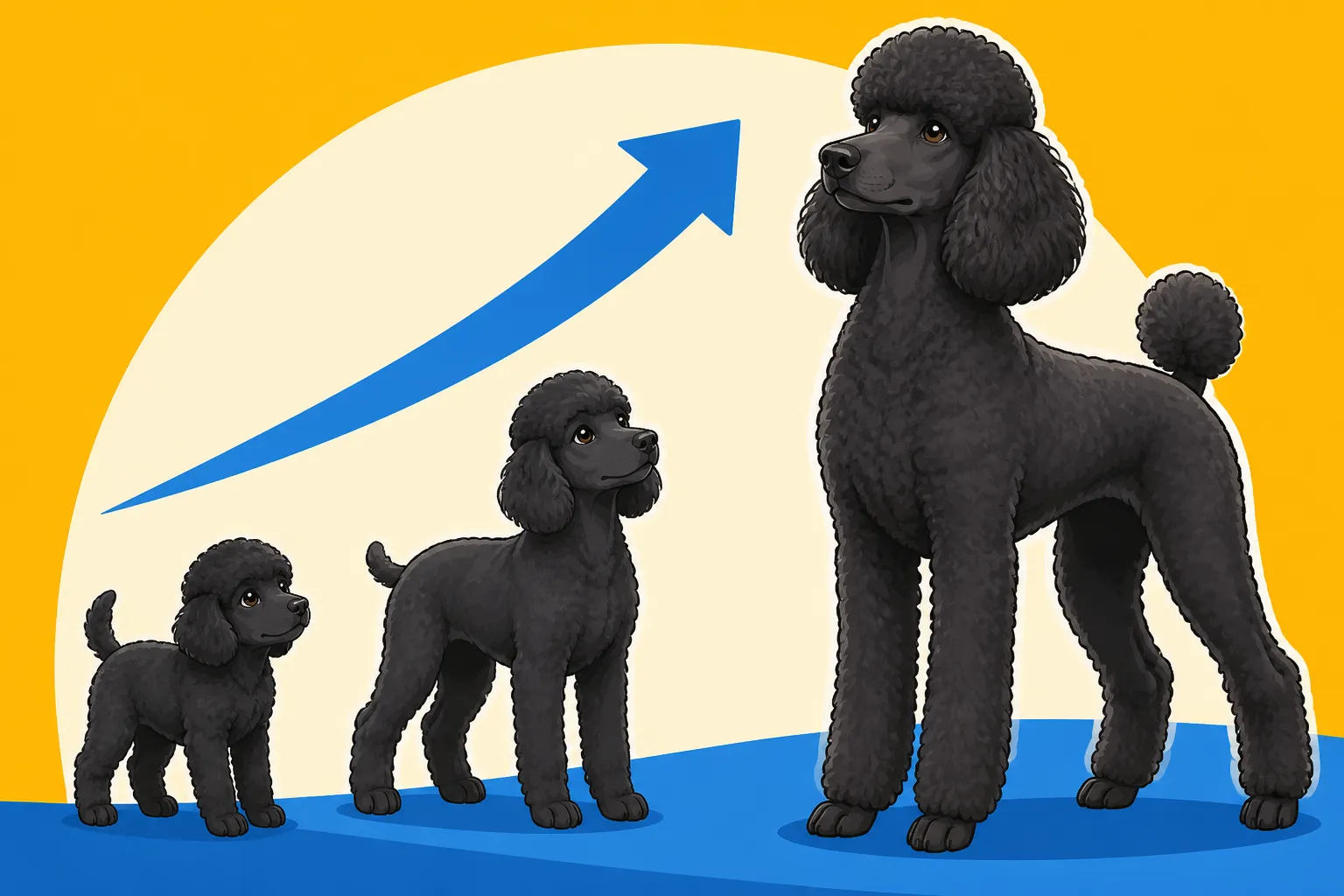
How Tall a Standard Poodle Grows
Bringing home a Standard Poodle puppy is an absolute joy, but it also comes with a lot of anticipation – and maybe a little bit of anxiety – about just how big your fluffy bundle of energy is going to get! Many prospective owners, and even those who've just welcomed a tiny floof, often wonder about their future Poodle's stature, envisioning anything from a graceful medium dog to a veritable pony. This guide will walk you through the typical growth trajectory of a Standard Poodle, helping you understand the milestones and what to expect as your pup blossoms into their magnificent adult size.
Understanding Standard Poodle Growth: The Basics
When you bring home a Poodle, especially a Standard, it's easy to be overwhelmed by their seemingly endless growth spurt. They sprout so quickly, gaining inches and pounds in what feels like mere days! But there's a method to this madness, a general timeline that most Standard Poodles follow. Understanding these basics can help you prepare for their eventual size and ensure you're providing appropriate care every step of the way.
What "Standard" Actually Means for Size
Let's clear up a common misconception right off the bat. The term "Standard" in Standard Poodle isn't just a fancy name; it literally refers to their size, distinguishing them from their Miniature and Toy counterparts. According to breed standards, a Standard Poodle must be over 15 inches (about 38 cm) tall at the shoulder. There is no upper height limit, which is why you can see such a wide range in adult Standards, from a very trim 20 inches to an imposing 27 inches or even more!
This broad range is precisely what makes predicting the exact adult height a bit of a guessing game without knowing the parents' sizes. When you're looking at a Poodle puppy, that little fluffball might one day stand taller than your kitchen counter. It's truly a magnificent transformation! Imagine your small puppy growing to be the height of a small pony when standing on its hind legs – it’s quite a sight. This significant size means they need space, both indoors and out, and that their development, particularly concerning their joints, needs careful attention. Owners sometimes underestimate just how much dog they're getting, leading to surprises later on.
Typical Growth Timeline for Standard Poodles
Standard Poodles generally experience rapid growth during their first six to twelve months, filling out in height and length quite dramatically. While individual growth rates can vary, you can typically observe these stages:
- Birth to 3 Months: This is where they're just tiny bundles, but the growth is already phenomenal. They'll gain weight and lengthen quickly.
- 3 to 6 Months: This stage is often called the "gangly" phase. They seem to shoot up, looking a bit disproportionate with long legs and a still-developing body. You'll likely see them hit a significant portion of their adult height during this period. For a quick reference, a good rule of thumb is that a Standard Poodle puppy will be about half its adult height around 4-5 months old.
- 6 to 12 Months: The growth in height starts to slow down, but they continue to fill out and gain muscle mass. While they might reach their adult height around 9-12 months, they are still very much adolescents. Their chest might deepen, and their overall frame will broaden. It's during this period that they often go through what's known as the "coat change," where their soft puppy coat transitions to the dense, adult Poodle coat, demanding extra grooming attention. Poodle Puppy Coat Changes
- 12 to 18 Months: Many Standard Poodles will reach their full height by their first birthday, but it's not uncommon for some to continue growing an inch or two until 18 months. What often continues to develop is their muscle mass and chest depth. They'll truly start to look like a mature adult Poodle, no longer quite so awkward or leggy. Their bones are generally considered fused around 18-24 months, which is a crucial consideration for activities like agility or strenuous exercise.
It's important to remember that these are averages. Some Standards might finish growing earlier, while others, particularly males, might take a bit longer to fully mature and fill out their frame. Patience is key as you watch your Poodle transform from a bouncing puppy into a stately adult.
Factors Influencing a Standard Poodle's Final Height
While the general timeline is helpful, several factors can influence exactly where your Standard Poodle lands within that 15+ inch height range. It's not just about what they eat, but also who their parents are and even when you choose to spay or neuter them. Understanding these influences can give you a better idea of what to expect and how to support healthy growth.
Genetics and Parental Lines
The most significant predictor of your Standard Poodle's eventual height is, without a doubt, their genetics. Just like in humans, taller parents tend to produce taller offspring. If you purchased your puppy from a reputable breeder, they should be able to provide you with information about the sire and dam's heights, as well as those of their ancestors. This information is invaluable for estimating your puppy's adult size.
A good breeder will aim to produce Poodles that fall within the breed standard, but also be able to tell you if their lines tend towards the taller or more compact end of the "Standard" spectrum. Don't be shy about asking to see the parents or, if not possible, photos and their registered names. This allows you to look up their pedigrees and get a clearer picture of what kind of growth you can expect. Observing the parents can also give you a sense of their overall build and structure, which contributes to their perceived height and presence. Responsible breeders will often track the growth of puppies from previous litters, providing even more insight into potential adult size.
Nutrition and Growth Plate Health
Proper nutrition plays a critical role in healthy growth, but it's often misunderstood. Many owners believe that feeding a puppy "more" or a "high-protein" diet will make them bigger, but this isn't necessarily true and can actually be harmful. For large breeds like Standard Poodles, slow and steady growth is the name of the game. Rapid growth, often fueled by diets too high in calories or calcium, can put undue stress on developing bones and growth plates.
Growth plates are areas of cartilage located near the ends of bones in growing puppies. They are responsible for lengthening the bones, and they remain open until the puppy reaches skeletal maturity. Injury or excessive stress to these plates can lead to permanent damage, joint issues like hip or elbow dysplasia, or even deformities. Growing Pains in a Standard Poodle Puppy
Therefore, it's crucial to feed a high-quality, large-breed puppy food that is specifically formulated for their needs. These foods are designed to support a moderate growth rate, with appropriate levels of protein, fat, calcium, and phosphorus. Brands like Purina Pro Plan Large Breed Puppy or Royal Canin Giant Puppy are often recommended for their carefully balanced formulas. Always follow the feeding guidelines on the bag, adjusting as necessary to maintain a healthy body condition, rather than trying to force faster growth. You can find a good selection of these specialized foods on Chewy. Overfeeding can lead to obesity, which further strains developing joints and sets the stage for future health problems.
Spaying/Neutering Timing and Its Impact
The timing of spaying or neutering your Standard Poodle can also have an impact on their eventual height. Sex hormones, which are removed or significantly reduced during these procedures, play a crucial role in the closure of growth plates. When these hormones are present, they signal the growth plates to close at a genetically predetermined time. If a puppy is spayed or neutered before puberty, the growth plates tend to close later than they otherwise would, leading to longer bones.
This means that a Standard Poodle spayed or neutered early (before 6-12 months, for example) might end up slightly taller and with a more lanky build than if they had been allowed to mature with their hormones intact for a longer period. While the difference might only be an inch or two, it can be noticeable.
There's ongoing discussion among veterinarians and breeders about the optimal timing for these procedures, balancing the risks of certain cancers and behavioral issues with the benefits of allowing full skeletal maturity. For large breeds, many now recommend waiting until at least 12-18 months of age, or even later for males, to allow the growth plates to fully close. This can help minimize the risk of orthopedic problems later in life, such as hip or elbow dysplasia, or cruciate ligament tears. Always discuss the best timing for your individual Poodle with your veterinarian, considering their specific breed, sex, and lifestyle. Desexing Timing Across the Three Poodle Sizes
Recognizing When Your Standard Poodle is Fully Grown
It's common for Poodle owners to wonder, "Are they still growing?" especially during that lanky adolescent phase. There are definite signs that your Standard Poodle has hit their peak height and is now just filling out. Knowing these indicators can help you adjust their diet, exercise, and overall care as they transition into adulthood.
Physical Cues and Indicators
While the exact moment a Standard Poodle stops growing taller can be subtle, there are several physical cues that indicate they are reaching or have reached their full adult height:
- Height Stabilizes: The most obvious sign is when their height at the shoulder no longer increases. You might notice that your regular measurements, taken every few weeks, show the same number. For many Standard Poodles, this happens between 9 and 12 months, though some can continue a slower growth until 18 months. Don't be alarmed if they seem to stop growing for a month, then add another half-inch; growth can be a bit sporadic towards the end.
- Proportionate Body: The "gangly" phase gradually gives way to a more balanced and proportionate physique. Their legs no longer seem disproportionately long for their body; instead, they fit their frame. Their chest will deepen, and their rib cage will round out.
- Adult Teeth Are Fully In: While not a direct indicator of height, the eruption of all adult teeth (around 6-7 months) signifies an important stage of physical maturity, and often correlates with the slowing of rapid bone growth.
- Filling Out, Not Up: After reaching their maximum height, your Poodle will continue to gain muscle mass and fill out. They might gain weight, but it will be distributed across a more mature frame, giving them a more robust and less delicate appearance. This filling out can continue until they are 2-3 years old, especially for males, who tend to mature a little slower than females. Their coat will also fully come in, becoming dense and curly, adding to their overall presence. When a Standard Poodle Stops Growing
Tracking Growth: Why it Matters
Keeping a rough track of your Standard Poodle's growth, even informally, can be incredibly beneficial. It helps you understand what's normal for your dog and provides valuable information for their vet, especially concerning diet, exercise, and preventative care.
Here’s why tracking matters and how to do it:
- Health Monitoring: Consistent tracking allows you to spot any unusual growth patterns – either too fast, which can indicate an issue with their diet, or too slow, which might signal an underlying health concern. Your vet can use this data to ensure their joints are developing correctly and that they're on a healthy trajectory. For example, if your puppy suddenly becomes very lame during a growth spurt, sharing your growth records can help your vet understand if it's a "growing pain" issue or something more serious.
- Diet Adjustments: Knowing when your Poodle is hitting their growth milestones helps you decide when to transition from puppy food to adult food. Generally, large breed puppies switch around 12-18 months of age, depending on their individual maturity. Your vet can guide this transition, but your observations are key. When your Poodle is fully grown, their calorie needs will typically decrease as they are no longer putting energy into rapid growth, so adjusting their food intake is important to prevent obesity. Chewy offers a wide range of adult large breed formulas to choose from.
- Exercise Planning: While Standard Poodles are active dogs, over-exercising a growing puppy can damage their still-developing joints and growth plates. Knowing roughly when they're reaching skeletal maturity (usually 18-24 months) allows you to gradually increase the intensity and duration of their physical activities, safely introducing more strenuous sports like agility or long-distance running. When a Standard Poodle Can Run With You
- Equipment Sizing: From crates to harnesses and beds, knowing your Poodle's current and estimated size helps you buy appropriate equipment. No one wants to buy three different crates! A good quality, appropriately sized crate is essential for safety and comfort, and you can often find options that can grow with your pup. A good harness will distribute pressure evenly and not interfere with their shoulder development.
To track, simply use a measuring tape to measure your Poodle from the ground to the top of their shoulder (the highest point between their shoulder blades) every few weeks. Note the date and measurement. You can also weigh them regularly. This creates a simple growth chart that can be surprisingly informative.
Living with a Full-Grown Standard Poodle
Congratulations, your Standard Poodle has reached their full, magnificent height! While the rapid growth phase is over, the responsibilities of living with a large, intelligent, and active dog continue. Their size influences many aspects of daily life, from the layout of your home to their exercise regimen. Embracing their adult stature means making conscious choices to ensure their comfort, health, and happiness.
Accommodating Their Size in Your Home
A full-grown Standard Poodle isn't just "big" – they have a commanding presence. This means your home environment needs to be set up to accommodate them comfortably and safely.
- Space is Key: While Poodles are often described as adaptable and can thrive in various living situations, a large dog benefits immensely from space. They need room to stretch out, turn around, and navigate without constantly bumping into furniture or people. If you live in a smaller home or apartment, ensuring they have their own designated, uncluttered space (like a large crate or dog bed area) is essential. They appreciate having a clear path to their favorite lounging spots.
- Comfortable Sleeping Arrangements: Investing in a high-quality, orthopedic dog bed is non-negotiable for a Standard Poodle. Their size makes them more prone to joint issues like hip and elbow dysplasia, even with excellent breeding. A supportive bed helps cushion their joints, especially as they age, and provides a comfortable resting place after a day of activities. Look for beds with dense foam that retains its shape, readily available on sites like Chewy. Consider placing beds in multiple rooms so they can always be near family.
- Managing High Surfaces: A tall Poodle means everything on your counters and tables is suddenly within reach! This requires a shift in how you manage your kitchen and dining areas. No more leaving tempting snacks unattended. Training "leave it" and teaching them boundaries around food preparation areas becomes even more crucial. While it might seem like a chore, consistency prevents accidents and keeps your Poodle safe from ingesting harmful foods. What a Counter-Surfing Poodle Must Not Reach
- Car Travel: Transporting a Standard Poodle requires adequate vehicle space. They won't comfortably fit on a small passenger seat. A large SUV, minivan, or the back of a hatchback with the seats down might be necessary. Always ensure they are safely restrained using a crash-tested harness or a secure crate to prevent injury to them and your human passengers in case of an accident.
Exercise Needs for a Large Poodle
Just because they've stopped growing taller doesn't mean their energy levels have plummeted. Standard Poodles are highly intelligent and athletic dogs that require significant daily exercise and mental stimulation to stay healthy and well-behaved.
- Daily Physical Activity: Plan for at least 60-90 minutes of vigorous exercise each day, ideally split into two sessions. This isn't just a leisurely stroll around the block; it needs to be engaging activity that really gets their heart rate up. Think brisk walks, jogging, hiking, or playing fetch in a securely fenced area. Many Standard Poodles love to swim and are natural retrievers, so opportunities for water work can be an excellent way to burn energy and build muscle without stressing joints. How Far a Standard Poodle Should Walk
- Mental Stimulation is Crucial: A large, smart dog like a Poodle will become bored and potentially destructive if their mind isn't challenged. Physical exercise alone won't be enough. Incorporate puzzle toys, training sessions, scent work, and interactive games into their daily routine. Teaching them new tricks or practicing obedience commands regularly keeps their sharp minds engaged. Consider dog sports like agility, obedience, rally, or even competitive dock diving, where Poodles often excel. Daily Work for a Poodle's Body and Mind
- Proper Gear for Walks: For a powerful Standard Poodle, a comfortable and effective harness is often preferred over a collar for walks, especially if they have a tendency to pull. It distributes pressure evenly across their chest rather than putting strain on their neck and trachea. Look for harnesses that allow a full range of shoulder motion. A sturdy leash is also a must for safe control, particularly in areas with distractions. Regular leash training, starting in puppyhood, is essential for enjoyable walks. Leash Manners for a Standard Poodle
- Managing Energy Indoors: Even with ample outdoor exercise, a full-grown Standard Poodle needs ways to channel their energy indoors, especially on bad weather days. Tug-of-war, indoor fetch with soft toys, or hide-and-seek games with treats can be great ways to keep them active and engaged without tearing up the house. A tired Poodle is a happy Poodle, and a well-exercised, mentally stimulated Standard Poodle will be a calm and content companion in your home.
Disclaimer
This article is for general informational purposes only and does not constitute professional advice. Laws, prices and regulations vary by location and change over time. Consult a qualified professional for guidance on your specific situation.