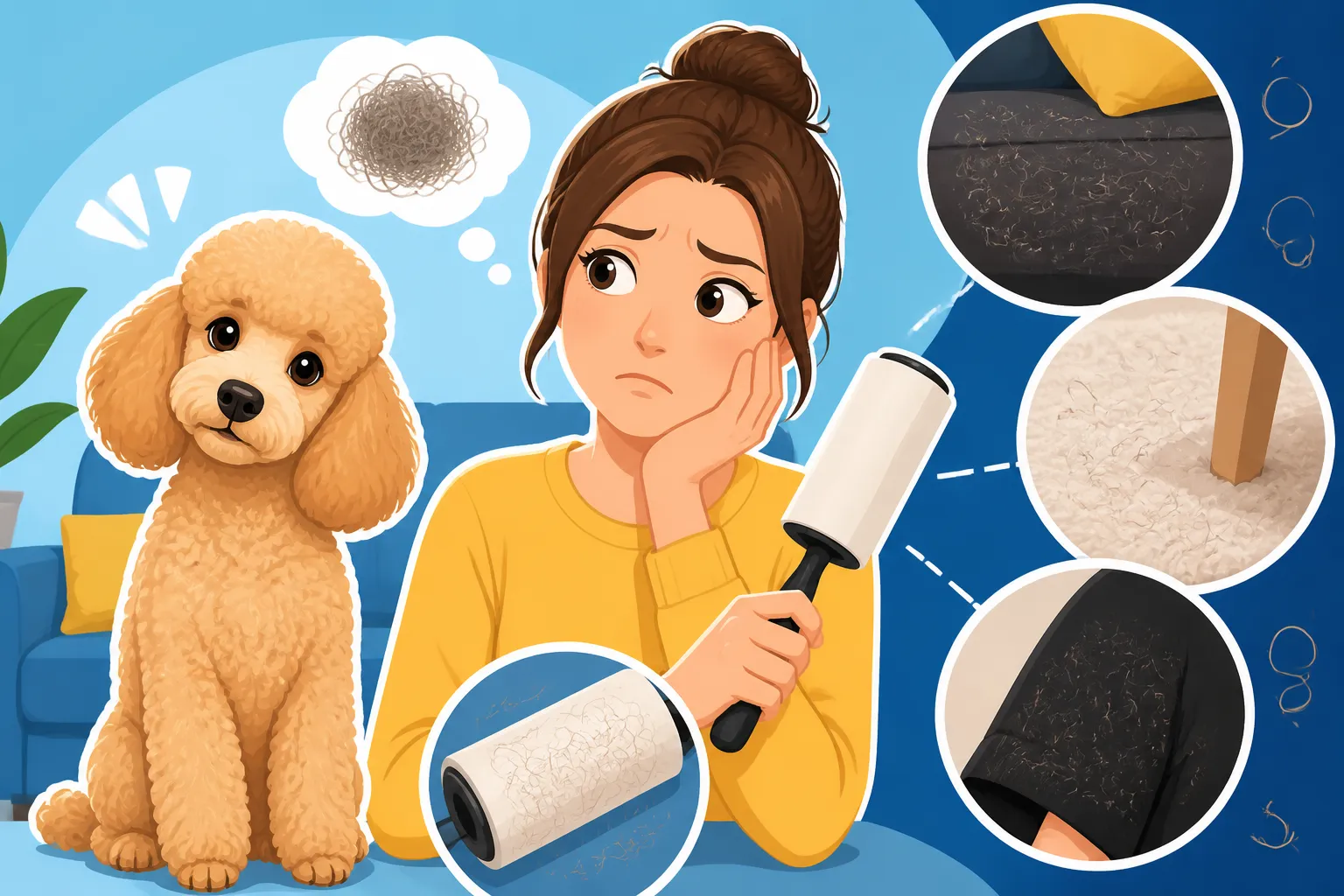
Why Poodle Owners Still Find Hair
It's a familiar scenario for many Poodle owners: you've heard all about how Poodles are "non-shedding" or "hypoallergenic," a claim that often draws people to the breed. Yet, you still find strands of that distinctive curly hair on your clothes, the furniture, or clinging to the broom. This guide is here to unravel the mystery of why Poodle owners still find hair, clarifying what "non-shedding" truly means and how you can best manage your Poodle's unique coat.
Understanding the Poodle Coat's Unique Biology
The Poodle coat is truly one-of-a-kind, and it’s this unique biology that leads to much of the confusion around shedding. Unlike many other breeds, a Poodle’s coat functions less like what we commonly think of as "fur" and more like human hair. Understanding these differences is key to managing your expectations and your Poodle's grooming needs.
The Difference Between Hair and Fur
When we talk about dogs, the terms "hair" and "fur" are often used interchangeably, but for a Poodle, the distinction is critical. Most dogs have a coat made of "fur," which typically grows to a certain length, then sheds out in cycles, often influenced by seasons. Think of the tumbleweeds of Golden Retriever fur in spring or the dense undercoat blown by a Husky. This fur is usually shorter, softer, and has a defined shedding period.
Poodle coats, on the other hand, are composed of "hair." This hair grows continuously, much like human hair, and has a longer growth cycle. Instead of shedding seasonally or in large clumps, individual Poodle hairs complete their life cycle, detach from the follicle, but often remain trapped within the surrounding curls. This is why you don't see the same widespread "shedding" as you would with a Labrador, but you still encounter loose hairs that need to be removed. It’s a constant, slow turnover rather than a dramatic seasonal event.
What "Non-Shedding" Actually Means
The term "non-shedding" is a bit of a misnomer, and it’s probably the biggest source of misunderstanding for new Poodle owners. It doesn't mean your Poodle is a magical creature that never loses a single strand of hair. What it does mean is that the Poodle's hair doesn't "shed" in the way that double-coated breeds do. Their hair doesn't fall out freely from the coat, scattering across your home.
Instead, when a Poodle's hair reaches the end of its growth cycle and detaches from the follicle, its curly texture acts like a natural Velcro, holding onto the dead hair. These detached hairs get tangled with the living, growing hairs. If these trapped hairs aren't regularly brushed out, they won't simply fall to the floor; they'll twist and knot, eventually forming mats. So, while you might not have dog hair coating every surface, you will find loose hairs, especially during and after grooming, because that's when you're actively removing what nature intended to be caught in the curls. It's a key reason why Why Poodle Owners Still Find Hair is a perpetual question.
Common Reasons You're Finding Poodle Hair
Even with a crystal-clear understanding of the Poodle's unique hair, it can still be surprising to find those curly strands appearing. There are several very normal, and often preventable, reasons why you might be seeing Poodle hair around your home, despite their "non-shedding" reputation.
Trapped Hair Released During Grooming
This is, by far, the most common reason Poodle owners encounter loose hair. Because the curly Poodle coat traps dead hair rather than releasing it to fall freely, it's during brushing and bathing that you're actively pulling out those hairs that have completed their life cycle. Think of it as a concentrated shedding event that you control. When you line brush your Poodle, you're systematically working through the coat, layer by layer, to dislodge and remove all the dead hair that has been held captive by the curls.
Without this regular manual removal, those trapped hairs would quickly form mats, which can be incredibly painful for your dog and lead to skin issues. So, while it might seem counterintuitive to find more hair after grooming, it’s actually a sign that you’re doing it right. You're effectively detangling and cleaning out the old coat, making space for new, healthy growth and preventing uncomfortable matting. It's a necessary part of maintaining their distinctive coat, and you might even find tools for the job on sites like Chewy. Learning How to Line Brush a Poodle Properly is an essential skill here.
Breakage and Environmental Factors
Sometimes, the hair you find isn't simply dead hair that's been brushed out; it's hair that has broken off prematurely. Poodle hair, like human hair, can be prone to breakage if it's not well-cared for. Dry, brittle hair is more likely to snap, especially in areas of high friction. If your Poodle frequently rubs against furniture, or if their coat isn't properly conditioned, those hairs can become damaged and break.
Environmental factors also play a role. Rough play, scratching due to an itch, or even the friction from a collar or harness can cause hair to weaken and break. Imagine if your own hair was constantly rubbing against something rough; you'd see more breakage. The same applies to your Poodle. Ensuring a healthy, well-hydrated coat through good nutrition and quality conditioning products can significantly reduce breakage. Furthermore, if you're ever wondering Why Poodle Owners Still Find Hair, consider areas where your Poodle frequently lies or rubs.
Normal Hair Turnover and "Blow Out" Coats
Even though Poodle hair grows continuously, it still has a finite lifespan, just like human hair. Individual hairs eventually die and detach from the follicle. This is a normal biological process, and the hairs you find are simply those that have reached the end of their journey.
Additionally, Poodles go through a significant "coat change" or "blow out" during adolescence, typically between 9 and 18 months of age. During this period, their soft, fluffy puppy coat transitions into the denser, curlier adult coat. This can be a challenging time for grooming, as the puppy hair becomes incredibly prone to matting as the adult coat grows in and pushes it out. You might find a noticeable increase in the amount of hair coming out during brushing, and your Poodle might seem to mat almost overnight. This phase requires even more diligent and frequent grooming to prevent major matting. Understanding When a Poodle Puppy Coat Changes will help you prepare for this challenging time.
Minimizing the Appearance of Loose Poodle Hair
While you can't eliminate hair turnover entirely, you can absolutely minimize the amount of loose Poodle hair you find around your house. The key lies in consistent, proper grooming practices that work with their unique coat rather than against it.
The Critical Role of Consistent Brushing
If there's one golden rule for Poodle owners, it's this: brush, brush, brush! Consistent, thorough brushing is your absolute best defense against both matting and scattered loose hair. Aim for daily brushing, or at the very least, every other day. This isn't just a quick once-over; it needs to be a full-body session where you methodically work through the coat.
Start by sectioning your Poodle's hair and using a good quality slicker brush to work from the skin out, ensuring you reach all the way to the root. After the slicker, follow up with a metal greyhound comb to check for any missed tangles or mats. If the comb glides through the hair easily, you've done a good job. Focus on high-friction areas like armpits, behind the ears, and around the collar, as these are prime spots for matting. Regular brushing removes those dead, trapped hairs before they have a chance to clump together or fall out unnoticed. You can find excellent quality Brushes and Combs a Poodle Owner Needs on sites like Chewy, which can make a huge difference in your grooming routine.
Bathing and Drying Techniques
Bathing is another crucial step in managing loose Poodle hair, but it must be done correctly. A proper bath actually helps to loosen dead hair from the follicles, making it easier to remove during the drying process. However, never bathe a Poodle that hasn't been thoroughly brushed and de-matted first. Water will tighten existing mats, making them almost impossible to remove without shaving.
After shampooing and conditioning (yes, conditioner is vital for Poodle hair to prevent dryness and breakage!), the drying process is where you truly remove the bulk of the loose hair. A high-velocity dryer is a game-changer for Poodle owners. It blasts out water and, crucially, propels out all those loose, dead hairs that have been freed by the bath. As you dry, continuously brush the coat to ensure it's straight and tangle-free. This combination of thorough brushing, bathing, and high-velocity drying ensures that the vast majority of shed hair is captured in your grooming area, not on your sofa. Look for quality shampoos and conditioners on Chewy, as Shampoo and Conditioner for a Poodle Coat can impact coat health and manageability.
Professional Grooming's Impact
While home grooming is essential, professional grooming every 4-8 weeks (depending on the length of clip and individual coat) is indispensable for Poodles. Professional groomers have specialized tools, high-powered dryers, and the expertise to thoroughly de-shed and demat a Poodle's coat. They can get to those hard-to-reach spots and ensure the coat is clean, healthy, and manageable.
Regular professional grooms also mean that any loose hair is dealt with systematically and efficiently. A Poodle in a shorter clip, like a kennel clip or sporting clip, will inherently shed less visible hair around the house simply because there's less length to fall. Discussing your lifestyle and desired level of home grooming with your professional groomer can help you choose a coat length and style that works best for you and your Poodle. Opting for a shorter, low-maintenance clip, such as The Kennel Clip on a Pet Poodle, can drastically reduce the appearance of loose hair and the frequency of home brushing needed between appointments.
Here's a quick comparison of how Poodle hair differs from typical shedding fur:
| Feature | Poodle Hair | Typical Dog Fur (e.g., Labrador) |
|---|---|---|
| Growth Cycle | Continuous, longer anagen (growth) phase | Cyclical, with distinct shedding phases |
| Texture | Curly, dense, often single-coated | Straight or wavy, double-coated |
| Shedding | Hairs detach but get trapped in curls | Hairs detach and fall freely |
| Allergy Impact | Less dander, trapped hairs; often preferred for allergy sufferers | More dander, freely shedding hair; can trigger allergies |
| Maintenance | Requires regular brushing to remove trapped hairs & prevent mats | Requires seasonal brushing to manage heavy shedding |
When to Be Concerned About Excessive Hair Loss
While finding some Poodle hair is completely normal, there's a difference between a few strands here and there and truly excessive hair loss. If you notice a sudden, significant increase in the amount of hair your Poodle is losing, or if you see bald patches, thinning, or changes in skin condition, it's time to pay close attention.
Underlying Health Issues
Excessive or unusual hair loss can often be a symptom of an underlying health problem. Just like in humans, a dog's coat is a good indicator of their overall health. Conditions that might manifest as hair loss include:
- Allergies: Environmental allergies (pollen, dust mites) or food allergies can lead to intense itching, which in turn causes scratching, licking, and chewing that breaks or pulls out hair. The skin may also become red, inflamed, or infected. For more on this, check out Poodle Allergies and Skin Reactions.
- Skin Infections: Bacterial or fungal infections (like ringworm) can cause localized hair loss, redness, and irritation.
- Parasites: Fleas, mites (like Demodex or Sarcoptes), or other external parasites can cause severe itching and subsequent hair loss from scratching.
- Hormonal Imbalances: Conditions like hypothyroidism (underactive thyroid) or Cushing's disease (overactive adrenal glands) can lead to symmetrical hair loss, often starting on the body and leaving the head and limbs unaffected. Hypothyroid Symptoms in a Poodle can include thinning hair.
- Nutritional Deficiencies: A poor-quality diet lacking essential fatty acids, vitamins, and minerals can result in a dull, brittle coat and increased hair loss.
- Stress: While more subtle, prolonged stress can sometimes contribute to a dull coat and increased shedding.
If you suspect any of these issues, a visit to your veterinarian is crucial. They can perform diagnostics to determine the cause and recommend appropriate treatment.
Medications and Stress
Sometimes, factors like medications or significant stress can contribute to temporary changes in your Poodle's coat, including increased hair loss. For example, certain steroids or other long-term medications might have side effects that impact coat health. Always discuss potential side effects with your vet when your Poodle starts a new medication.
Similarly, major life changes or periods of high stress can sometimes manifest physically. Moving to a new home, the loss of a family member (human or animal), or even a change in routine can sometimes cause a Poodle to "stress shed" or experience a duller coat. While this is usually temporary and resolves once the stressor is removed or the Poodle adjusts, it's worth noting. If your Poodle is undergoing significant stress, focusing on comfort, routine, and positive reinforcement can help their overall well-being, including their coat health. Your Poodle's coat is generally quite resilient, but persistent issues need attention.
Finding Poodle hair is a normal, albeit sometimes surprising, part of owning this wonderful breed. The "non-shedding" label simply means their unique curly hair doesn't fall out freely like fur, but rather gets trapped within the coat. It’s up to us, their dedicated owners, to consistently brush, bathe, and groom them to remove those trapped hairs and prevent painful matting. By understanding their coat's biology and committing to a solid grooming routine, you can keep your Poodle comfortable, looking fabulous, and significantly reduce the amount of hair you find on your floors and furniture. So, embrace the brush, perhaps pick up some supplies from Chewy, and enjoy the beauty of that magnificent Poodle coat!
Disclaimer
This article is for general informational purposes only and does not constitute professional advice. Laws, prices and regulations vary by location and change over time. Consult a qualified professional for guidance on your specific situation.