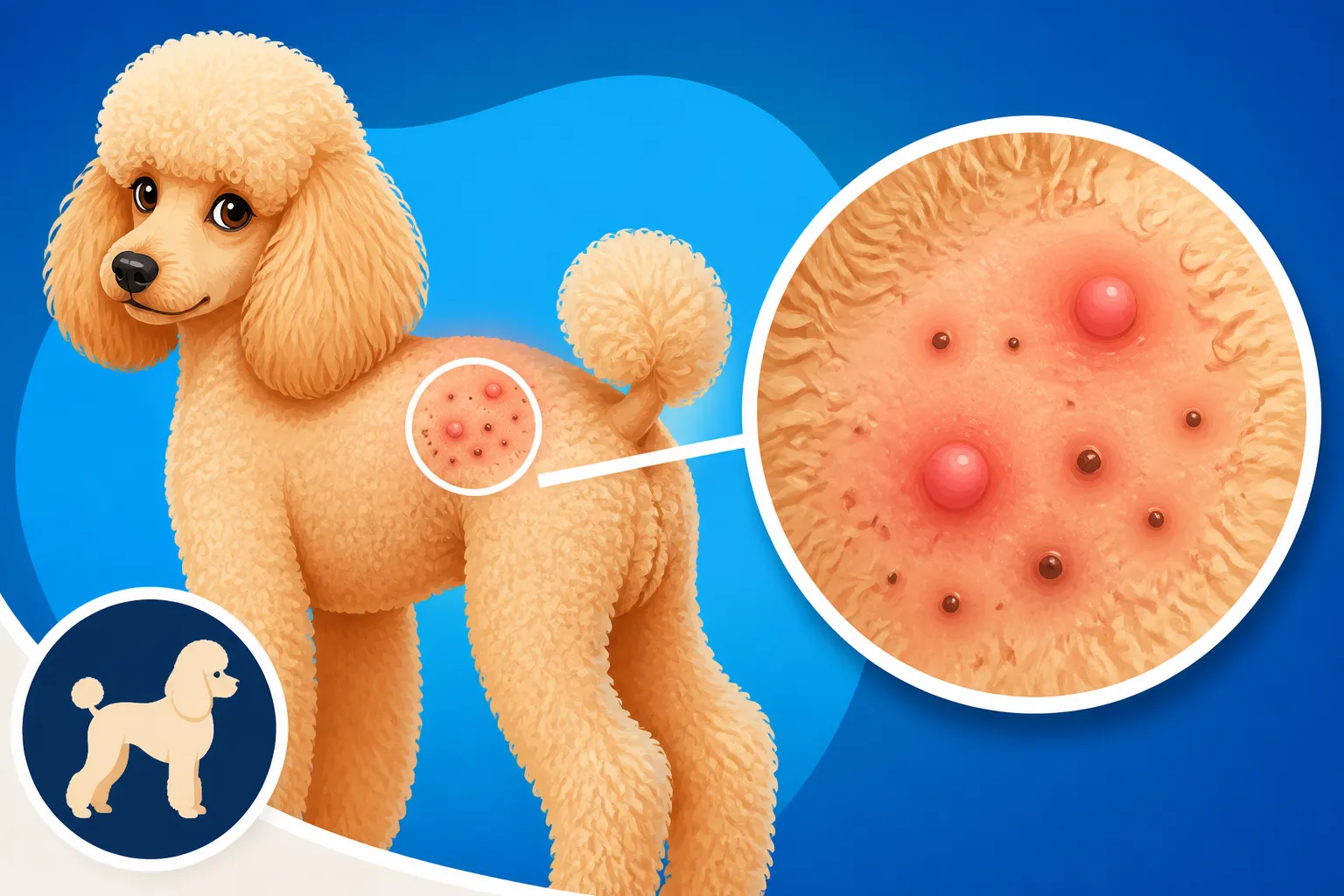
How Adenitis Shows Up on a Poodle’s Back
It’s truly disheartening to see your beloved Poodle start to develop skin issues, especially when you’re doing everything right with their grooming. You might notice their usually pristine coat becoming dull, flaky, or even thinning in patches, and it’s natural to feel a knot of worry. This guide is here to walk you through the distinct signs of Sebaceous Adenitis (SA) and how this challenging autoimmune condition often manifests on a Poodle's back, helping you identify these crucial early indicators.
Understanding Sebaceous Adenitis in Poodles
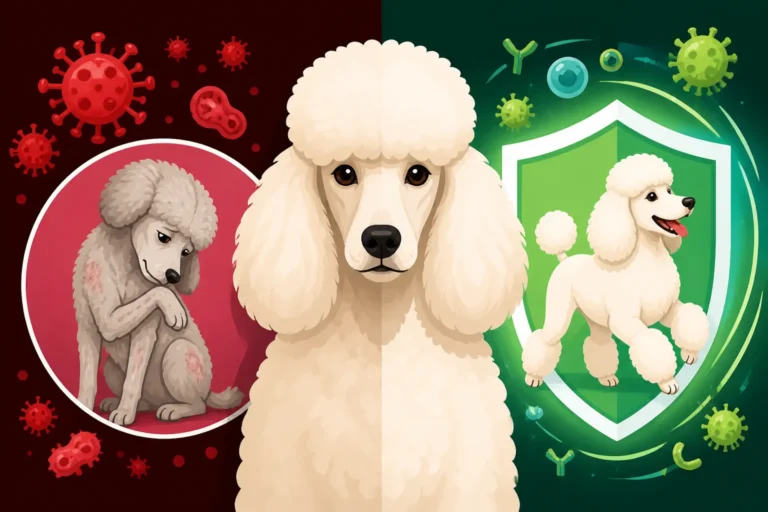
Sebaceous Adenitis (SA) is one of those frustrating conditions that Poodle owners, particularly those with Standard Poodles, often encounter. It's an immune-mediated disease where the body mistakenly attacks the sebaceous glands, which are tiny glands in the skin responsible for producing sebum – that natural, oily substance that keeps the skin moisturized and the coat healthy. When these glands are damaged, they stop producing sebum, leading to a cascade of problems for your Poodle's skin and coat.
What is Sebaceous Adenitis (SA)?
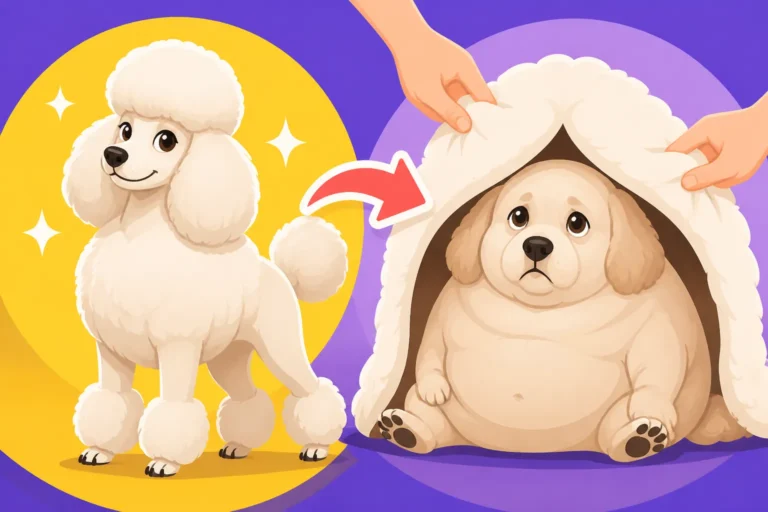
Think of sebum as your Poodle's natural conditioner and protective barrier. It’s what gives their coat that characteristic luster and keeps their skin supple and resilient against environmental irritants. In dogs with SA, these sebaceous glands become inflamed and are gradually destroyed by the immune system. Without sebum, the hair follicles and skin dry out, leading to a whole host of secondary issues. It's not just a cosmetic problem; it's a chronic, progressive condition that requires ongoing management. The lack of proper lubrication means the hair shafts become brittle, break easily, and the skin itself loses its protective qualities, making it more susceptible to infections.
Why Poodles Are Prone to SA
While SA can affect various breeds, Poodles, especially Standard Poodles, are disproportionately represented among those diagnosed. It’s widely believed to have a strong genetic component, meaning it’s something passed down through generations. This genetic predisposition is a significant concern for responsible breeders, who rigorously screen their breeding stock to try and minimize its occurrence. Unfortunately, even with careful breeding practices, SA can still pop up, which speaks to the complex nature of its inheritance. It's a cruel irony that a breed known for its magnificent coat is so vulnerable to a condition that directly attacks its health. This is why understanding What a Poodle Breeder Must Test For is so vital when bringing a new Poodle into your home, especially for conditions like SA.
The Importance of Early Recognition
Catching Sebaceous Adenitis early can make a significant difference in managing the condition and maintaining your Poodle's quality of life. The sooner you identify the signs and start a treatment regimen, the better you can control the symptoms and prevent the progression of severe skin and coat damage. Early intervention can slow down the destruction of the sebaceous glands, keep the skin barrier more intact, and reduce the likelihood of secondary infections that often complicate SA. It allows you to get ahead of the problem rather than constantly playing catch-up, which can be exhausting and costly in the long run.
Early Warning Signs on Your Poodle's Back
The back, particularly along the spine and over the rump, is often one of the first places where the tell-tale signs of Sebaceous Adenitis begin to emerge. Because Poodles have such dense, curly coats, these changes can be tricky to spot initially. It requires a keen eye and a thorough feel of their fur during regular grooming sessions. Don't just visually inspect; run your hands deeply through their coat, paying attention to texture and any subtle irregularities that might not be immediately visible.
Subtle Changes in Coat Texture and Luster
One of the earliest indicators you might notice is a change in the overall feel and appearance of your Poodle's coat. That luxurious, soft, and slightly oily texture that Poodles are famous for can start to feel dry, coarse, or even brittle. Imagine running your fingers through freshly conditioned hair versus straw – that’s the kind of difference you might encounter. This dryness often leads to the coat losing its natural sheen, appearing dull and lifeless, almost as if it's perpetually dusty even after a fresh bath. You might also find that the coat becomes much harder to brush and tangles more easily, even with diligent effort, because the individual hairs are less lubricated and more prone to static and breakage. Keep an eye out for Early Sebaceous Adenitis on a Poodle's Topknot as well, as this area, like the back, can show early signs.
Flaking, Scaling, and Dandruff-Like Appearance
As the sebaceous glands fail to produce enough oil, the skin becomes dry and flaky. This manifests as excessive dandruff-like flakes, which can vary in size from fine dust to larger, greasy scales that are noticeable, especially on darker-colored Poodles. These flakes might accumulate at the base of the hair shafts, clinging to the coat, or even fall off onto your furniture and clothing. It's more than just a bit of dry skin; it’s often widespread and persistent, not relieved by regular brushing or typical moisturizing shampoos. You might even feel a grittiness to the skin when you part the fur, signaling that the skin barrier is compromised and cellular turnover is disrupted due to the lack of natural oils.
Patches of Hair Loss and Thinning
Left unaddressed, the dryness and inflammation associated with SA will eventually lead to hair loss, or alopecia. Initially, this might appear as subtle thinning, making the coat look less dense than usual. Over time, these areas can progress to distinct patches of hair loss, often symmetrical, on the Poodle's back, particularly over the topline and flanks. The hair might also seem sparse, or you might find short, broken hairs mixed in with the longer ones. It's not uncommon to see hairs easily plucked or falling out during brushing, far more than typical shedding. This hair loss isn't just about aesthetics; it exposes the skin further, making it more vulnerable to sunburn, irritation, and secondary infections, underscoring the critical need for prompt veterinary attention.
Progressive Symptoms and Skin Manifestations
As Sebaceous Adenitis advances, the skin changes become more pronounced and can significantly impact your Poodle's comfort and overall health. What started as subtle coat changes can evolve into more severe dermatological issues, requiring intensive care and management.
Crusts, Pustules, and Secondary Infections
With the skin's natural barrier compromised, it becomes an open invitation for bacteria, yeast, and other opportunistic pathogens. This often leads to secondary skin infections, which are a common complication of SA. You might start to notice the development of greasy, waxy crusts forming on the skin, particularly around the areas of hair loss and inflammation on the back. These crusts can be yellowish or brownish and feel sticky to the touch. Sometimes, small pustules – pus-filled bumps – might also appear, indicating a bacterial infection (pyoderma). These infections can be itchy and painful, causing your Poodle further distress. It’s a vicious cycle: the SA damages the skin, leading to infection, which in turn exacerbates the skin inflammation and discomfort.
Skin Thickening and Hyperpigmentation
Over time, chronic inflammation and repeated infections can cause the skin on your Poodle's back to undergo structural changes. You might observe that the skin in affected areas becomes noticeably thicker and tougher, losing its normal elasticity. This thickening is often accompanied by hyperpigmentation, where the skin turns darker, taking on a gray, brownish, or even blackish hue. This dark, leathery appearance is a common sign of chronic skin irritation and inflammation. It's a visible marker of the long-term impact of SA on the skin's health and integrity, indicating that the body is trying to protect itself by creating more layers of skin cells, but without the necessary oils, it remains dry and damaged.
Itching, Discomfort, and Behavioral Changes
While SA itself isn't always intensely itchy in its early stages, the subsequent dryness, flaking, and particularly the secondary infections can lead to significant discomfort and itching. Your Poodle might start scratching, rubbing, or even biting at their back and flanks more frequently. This constant scratching can further damage the skin, creating open sores and increasing the risk of more severe infections. Beyond the physical symptoms, you might notice behavioral changes. A Poodle in chronic discomfort can become restless, irritable, or even withdrawn. They might be less enthusiastic about being petted or groomed, especially around their back, as it can be tender or painful. This change in behavior is a strong indicator that something is amiss, signaling that their quality of life is being affected by the persistent skin issues.
Differentiating SA from Other Skin Conditions
Diagnosing Sebaceous Adenitis can be tricky because its symptoms often mimic those of other common skin conditions. It's not always a straightforward case, and a thorough diagnostic process is essential to rule out other possibilities and ensure your Poodle receives the correct treatment. This is where the expertise of your veterinarian, and often a specialist, becomes invaluable.
SA vs. Allergies and Environmental Irritants
Many Poodle owners first suspect allergies when they see skin irritation, flaking, or itching. It’s easy to confuse the two because there's a lot of overlap in general skin inflammation. However, key differences exist. Allergic reactions, whether to food, fleas, or environmental allergens like pollen, tend to cause generalized itchiness, redness, and sometimes hives or hot spots, often affecting the belly, paws, ears, and armpits in addition to the back. While SA can cause itching, it's typically more focused on the coat dryness, flaking, and hair loss pattern, usually starting on the back and head. For allergies, you might see a more immediate reaction after exposure to an allergen, whereas SA is a progressive, chronic condition. Exploring Poodle Allergies and Skin Reactions can help you understand the nuances, but ultimately, specific diagnostic tests are needed to differentiate. Often, the skin changes in SA are much more profound in terms of texture and thickness than with typical allergies alone.
SA vs. Fungal or Bacterial Skin Infections
Secondary infections are a big part of SA, but sometimes an infection can be the primary problem, not just a complication. Fungal infections, like ringworm, can cause circular patches of hair loss, redness, and scaling, which might look similar to early SA. Bacterial infections (pyoderma) also cause crusting, pustules, and itching. The main difference lies in the underlying cause and how they respond to treatment. Primary infections usually improve significantly with appropriate antibiotics or antifungals, whereas the skin issues related to SA persist or reoccur because the underlying gland destruction isn't addressed by these medications. A veterinarian can often distinguish these by taking skin scrapings for fungal culture or cytology (examining cells under a microscope) to look for bacteria and yeast, helping to decide if Why a Poodle's Itch Is Allergy or Adenitis is the primary concern or if it's an infection.
When to Suspect Something More Serious
If your Poodle's skin issues are chronic, progressive, and don't respond to conventional treatments for allergies or infections, it's time to consider more serious conditions like SA. If you notice persistent hair loss, significant changes in coat texture despite regular grooming, greasy or waxy scales that keep coming back, or skin thickening and darkening on their back, these are strong indicators that you might be dealing with something more complex than typical seasonal allergies or a minor skin bug. Furthermore, if the condition seems to be spreading or getting worse despite your best efforts, or if your Poodle is showing signs of systemic illness such as lethargy or changes in appetite, it's crucial to seek specialized veterinary care, potentially from a veterinary dermatologist. They have the tools and expertise to perform definitive diagnostic tests.
The Diagnostic Process for Sebaceous Adenitis
Confirming a diagnosis of Sebaceous Adenitis requires more than just a visual examination. Because its symptoms overlap with so many other dermatological issues, your vet will need to perform specific tests to rule out other conditions and get a definitive answer. This process can take a little time and patience, but it’s crucial for accurate treatment.
The Role of a Veterinary Dermatologist
While your primary veterinarian can identify suspicious signs, a board-certified veterinary dermatologist is often the best person to diagnose and manage SA. These specialists have advanced training and experience in complex skin conditions, and they are adept at distinguishing between similar-looking diseases. They'll conduct a thorough physical exam, review your Poodle's history, and often perform initial tests like skin scrapings, fungal cultures, and cytology to rule out parasites, fungi, and bacteria. If SA is still suspected after these initial screenings, they will proceed with the more definitive diagnostic procedures. Their expertise ensures that the right tests are done efficiently and interpreted correctly, saving you time, worry, and potentially unnecessary treatments.
Skin Biopsies and Histopathology
The gold standard for diagnosing Sebaceous Adenitis is a skin biopsy followed by histopathological examination. This involves taking small tissue samples from the affected areas, typically under local anesthetic and sometimes light sedation, and sending them to a specialized veterinary pathologist. The pathologist then examines these samples under a microscope, looking for the characteristic destruction of the sebaceous glands and the associated inflammation. They can also identify other cellular changes that differentiate SA from other skin conditions. It's a precise diagnostic tool that provides a definitive answer. This procedure is key in situations where Skin Biopsies That Confirm Poodle Adenitis are the only way to be absolutely sure about the diagnosis, ensuring that the prescribed treatment plan targets the actual problem.
Ruling Out Other Conditions
Before a definitive SA diagnosis can be made, the veterinary team will systematically rule out other conditions that present similarly. This might include:
- Hypothyroidism: Thyroid hormone deficiencies can cause dry skin, dull coat, and hair loss. Blood tests are used to check thyroid levels.
- Adrenal Gland Disorders (like Cushing's disease): These can also lead to hair loss, thin skin, and secondary infections. Specific blood tests and sometimes urine tests are performed.
- Allergies: As mentioned, environmental, food, or flea allergies can cause intense itching, redness, and secondary skin issues. Elimination diets or allergy testing might be recommended.
- Folliculitis: Inflammation of the hair follicles, often bacterial, can cause pustules, crusts, and hair loss. Cytology and culture are used to identify the causative agent.
The process of elimination ensures that no stone is left unturned, leading to the most accurate diagnosis possible. This thoroughness is crucial because treating SA is very different from treating, say, a simple bacterial infection or a food allergy.
| Symptom Feature | Early SA on Back | General Skin Allergies | Primary Bacterial Infection |
|---|---|---|---|
| Coat Texture | Dry, brittle, coarse, dull, lacks sheen | Often normal, or greasy from licking/scratching | May be matted or greasy from discharge |
| Flaking/Scaling | Excessive, often greasy, adherent flakes | Mild to moderate, dry dandruff-like flakes | Can have crusts, pus, localized scaling |
| Hair Loss | Gradual thinning, symmetrical patches on back/rump | Patchy, irregular, often from self-trauma | Patchy, circular, often with pustules/crusts |
| Itchiness | Variable, often mild to moderate initially (from dryness) | Intense, generalized, persistent | Moderate to severe, localized to infected areas |
| Skin Appearance | Dry, possibly reddish, eventual thickening/darkening | Redness, inflammation, hot spots | Redness, pustules, crusts, sometimes odor |
| Response to Antibiotics | Minimal improvement if primary SA | No improvement | Significant improvement with appropriate antibiotics |
Living with a Poodle Diagnosed with SA
Receiving a diagnosis of Sebaceous Adenitis can feel overwhelming, but it's important to remember that SA is a manageable condition. While there's no cure, a consistent and dedicated management plan can significantly improve your Poodle's comfort and coat health. It's a marathon, not a sprint, and requires a strong partnership with your veterinary team.
Managing Symptoms Through Topical Treatments
Topical treatments are the cornerstone of SA management. The goal is to restore moisture and oil to the skin and coat, compensate for the lack of natural sebum, and control secondary infections.
- Bathing Protocols: This usually involves frequent bathing with specialized shampoos. Some dermatologists recommend shampoos with ingredients like salicylic acid or benzoyl peroxide to help exfoliate scales and flush hair follicles. This is often followed by moisturizing shampoos that contain ceramides or essential fatty acids to hydrate the skin.
- Conditioning Rinses and Emollients: After shampooing, heavy conditioning rinses are crucial. These often contain emollients that help trap moisture in the skin and hair.
- Oil Soaks: One of the most effective topical treatments involves oil soaks. Typically, pure virgin coconut oil, mineral oil, or specific veterinary-prescribed oils are massaged into the coat and skin, left on for several hours (often overnight, protected by a doggy sweater or wrap), and then thoroughly washed out. This helps to re-lubricate the skin and loosen scales. You can find more detailed instructions on Oil Soaks for a Poodle With Adenitis. This routine is labor-intensive but critical for coat health.
- Spot Treatments: For localized crusting or infection, your vet might prescribe topical antibiotics or antifungal creams.
Consistency is key here. Missing treatments can quickly lead to a regression in skin health, making it harder to get symptoms back under control.
Systemic Medications and Supportive Care
In addition to topical treatments, many Poodles with SA benefit from systemic medications, especially during flare-ups or if the condition is severe.
- Immunomodulators: Since SA is an immune-mediated disease, drugs that modulate the immune system are often used. Cyclosporine (e.g., Atopica) is a common choice, working to calm the overactive immune response that attacks the sebaceous glands. Other options might include oclacitinib (Apoquel) or corticosteroids, though these are often used short-term or to manage severe itching/inflammation.
- Essential Fatty Acid Supplements: Omega-3 and Omega-6 fatty acids can help improve skin barrier function and reduce inflammation from the inside out. Supplements like fish oil are often recommended.
- Vitamin A: Some anecdotal evidence suggests high doses of Vitamin A might help some dogs with SA, though its efficacy varies.
- Antibiotics/Antifungals: If secondary bacterial or fungal infections are present, oral antibiotics or antifungals will be prescribed to clear them up. These are often used in conjunction with the main SA treatments.
It's a delicate balance to find the right combination of medications that works for your individual Poodle, and it may require some trial and error under veterinary guidance.
The Long-Term Commitment to Care
Living with a Poodle with SA is a long-term commitment. There will be good days and bad days, and managing the condition requires patience, consistency, and a significant investment of time and resources. Regular follow-up visits with your vet or dermatologist are essential to monitor your Poodle's progress, adjust treatments, and catch any new developments early.
Financially, the costs associated with SA care can add up. Specialized shampoos, conditioners, oils, medications, and frequent vet visits can become a substantial expense. This is where having good pet insurance can make a huge difference. Companies like Healthy Paws offer coverage for chronic conditions, and while they won't cover pre-existing conditions, insuring your Poodle before any symptoms appear can provide a safety net for conditions like SA. It's definitely something to consider for the peace of mind it offers, knowing that you can afford the best care for your furry family member. Understanding Whether a Poodle Policy Excludes Adenitis is a critical question to ask any potential insurer.
Emotionally, it can be tough. It's heartbreaking to see your Poodle uncomfortable or to spend hours on grooming only for their coat to still struggle. But your dedication and love will make all the difference in their quality of life. The bond you share will only strengthen as you navigate this journey together, providing them the comfort and care they deserve.
Disclaimer
Please remember that this article is intended for informational purposes only and should not replace professional veterinary advice. Always consult with a qualified veterinarian or a board-certified veterinary dermatologist for any health concerns or before making any decisions about your Poodle's medical care.