Skin Biopsies That Confirm Poodle Adenitis
One of the most disheartening things for any Poodle parent is watching their beloved companion suffer from persistent skin issues, especially when those issues seem to defy easy explanation or treatment. It's a frustrating merry-go-round of creams, dietary changes, and vet visits, often without a clear diagnosis, leaving you feeling helpless. This guide is here to shed light on a crucial diagnostic tool for one particularly vexing Poodle skin condition, Sebaceous Adenitis (SA): the skin biopsy. We'll delve deep into why this procedure is so important for confirmation and what you can expect every step of the way.
Understanding Sebaceous Adenitis in Poodles
Sebaceous Adenitis, often abbreviated to SA, is a tricky and disheartening inflammatory skin disease that primarily affects the sebaceous glands – the tiny glands in the skin responsible for producing sebum, a natural oily substance that keeps the skin and coat healthy and moisturized. When these glands become inflamed and ultimately destroyed, it leads to a cascade of problems, from dry, scaly skin to hair loss and secondary infections. It's particularly prevalent in Standard Poodles, making it a condition every owner of this majestic breed should be aware of.
The Elusive Nature of Poodle Skin Issues
Poodle skin problems can be a real diagnostic challenge because so many different conditions present with similar symptoms. You might notice your Poodle has dry, flaky skin, dull or brittle hair, or even patches of hair loss. Sometimes, there are scales that stick to the hair shaft, almost like dandruff but more severe. It can start subtly, maybe just a little thinning on the topknot or along the back, and then gradually worsen. The confusion often comes because these signs could also point to allergies, fungal infections, bacterial infections, or even hormonal imbalances like hypothyroidism. This overlap in symptoms is precisely why a definitive diagnostic test like a biopsy becomes indispensable. Without it, you're essentially playing a guessing game, and that's not fair to your Poodle or your wallet.
For many owners, the first signs might be a change in their Poodle's beautiful coat texture, perhaps noticing that the hair is breaking more easily or feels greasy and waxy in some spots, yet dry and brittle in others. They might scratch or chew at themselves more often, opening the door for secondary bacterial or yeast infections that complicate the picture further. This is where conditions like Whether a Poodle's Itch Is Allergy or Adenitis become a critical consideration, as distinguishing between the two can be incredibly difficult based on visual symptoms alone. SA can mimic so many other common dermatological issues that it often leads to weeks, or even months, of ineffective treatments before the true culprit is identified.
Why Poodles Are Prone to Sebaceous Adenitis
While SA can affect various breeds, Poodles, especially Standard Poodles, have a well-documented genetic predisposition to it. It's considered an inherited autoimmune disease, meaning the dog's own immune system mistakenly attacks and destroys its sebaceous glands. There's a strong genetic component, and responsible breeders will actively screen for this in their breeding lines to try and reduce its incidence. This inherited vulnerability means that if you have a Poodle exhibiting these symptoms, SA should be high on your vet's list of differential diagnoses, even if it's less common than, say, environmental allergies.
The exact mode of inheritance is still being studied, but it's believed to be polygenic, meaning multiple genes are involved. This makes it challenging to breed out entirely, even for the most diligent breeders. The selective breeding for certain Poodle traits, unfortunately, has also inadvertently narrowed the gene pool in some lines, which can increase the prevalence of certain genetic conditions like SA. Understanding this predisposition is key, not to blame the breed, but to arm yourself with the knowledge that this specific condition is a real possibility and to push for thorough diagnostic investigation if symptoms arise. When considering a puppy, it's always wise to ask What a Poodle Breeder Must Test For to understand their commitment to genetic health, especially for conditions like SA.
When to Consider a Skin Biopsy
The journey to a skin biopsy for suspected Sebaceous Adenitis usually begins after other, more common skin conditions have been ruled out or failed to respond to treatment. It's rarely the first diagnostic step, but rather a crucial one taken when the puzzle pieces don't quite fit or when initial treatments prove ineffective. It’s a moment where you might feel a mix of frustration and relief – relief that you’re finally moving towards a definitive answer, but frustration that it’s taken this long.
Initial Investigations and Differential Diagnoses
Before a biopsy is recommended, your veterinarian will typically perform a series of less invasive tests to rule out other potential causes for your Poodle’s skin problems. This might include skin scrapes to check for mites like Demodex, fungal cultures to identify ringworm, or cytology to look for yeast or bacterial infections. They might also suggest blood tests to check for underlying hormonal imbalances, such as hypothyroidism, which can cause similar dry skin and coat changes. Dietary trials for food allergies might also be attempted, especially if itching is a prominent symptom.
It's a process of elimination, which can feel protracted. You might go through rounds of antibiotics, antifungal medications, or even hypoallergenic diets. Each step is necessary, though, because treating an allergic reaction is very different from managing an autoimmune disease. For instance, if your Poodle is experiencing Poodle Allergies and Skin Reactions, a specific dietary change or allergy medication might resolve the issue completely, making a biopsy unnecessary. However, if these treatments bring no lasting improvement, or if the symptoms recur rapidly, that's a strong signal that something else is at play, pushing SA higher on the list of suspects and making a biopsy the logical next step.
The Limitations of Non-Invasive Tests
While initial tests are valuable for ruling out common culprits, they have their limitations when it comes to diagnosing conditions like Sebaceous Adenitis. A skin scrape can tell you about mites, and cytology about superficial infections, but they can't show you the structural changes occurring deep within the skin layers, specifically the destruction of the sebaceous glands. Blood tests might indicate inflammation or hormonal issues but won't pinpoint SA directly.
The crucial point here is that SA is a histological diagnosis – meaning it needs to be diagnosed by examining tissue under a microscope. No blood test or superficial skin swab can provide that level of detail. It’s important for owners to understand this, as it explains why your vet is recommending a more invasive procedure. It’s not that they don’t know what they’re doing; it’s that they need specific information that only a biopsy can provide. It's the gold standard for confirming SA, giving a clear answer when other tests only offer pieces of the puzzle. Without this definitive step, managing the condition effectively becomes incredibly difficult, because you're treating symptoms without knowing the root cause. This is a common frustration for pet parents who just want to help their Poodle feel better and need a clear path forward.
The Skin Biopsy Procedure: What to Expect
The idea of your Poodle undergoing a biopsy can be daunting, but understanding the process can alleviate a lot of anxiety. It's a relatively straightforward procedure, often performed under sedation or general anesthesia, to collect small tissue samples for microscopic examination. Your veterinary team will walk you through each stage, ensuring you're comfortable and informed.
Preparing Your Poodle for the Biopsy
Before the biopsy, your veterinarian will conduct a thorough physical exam and often recommend pre-anesthetic blood work. This is to ensure your Poodle is healthy enough to undergo sedation or general anesthesia. It checks organ function and blood clotting abilities, minimizing risks. You'll likely be instructed to withhold food and water for a certain period before the appointment, typically 8-12 hours for food and a few hours for water, to prevent aspiration during anesthesia. It's also critical to discuss any medications your Poodle is currently taking, as some may need to be temporarily stopped. For instance, if your Poodle is on steroids or certain anti-inflammatory drugs, these might need to be tapered or paused as they can alter the inflammatory response in the skin and potentially skew biopsy results.
Your vet will also choose the biopsy sites carefully. Ideally, they will select areas that are representative of the disease but haven't been severely traumatized by scratching or secondary infection, as these can obscure the primary disease process. Usually, multiple samples from different affected areas are taken to increase the chances of getting a diagnostic sample. Sometimes, samples are even taken from "normal" looking skin adjacent to affected areas for comparison. This meticulous selection process is crucial for obtaining accurate results and is a testament to the detail involved in diagnosing a condition as complex as SA.
The Biopsy Technique: Punch vs. Wedge
There are two primary methods for performing a skin biopsy: punch biopsy and wedge biopsy.
-
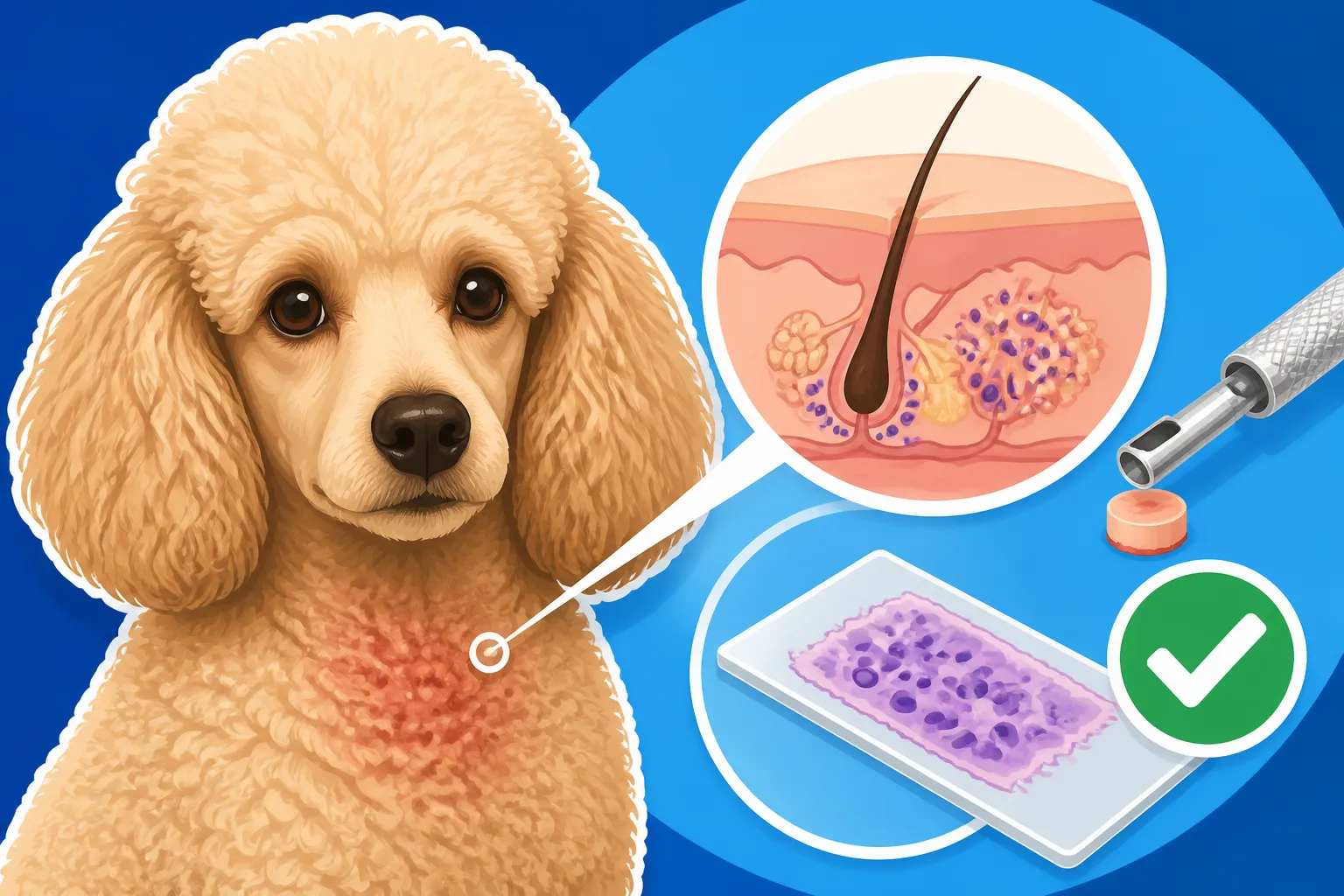
Punch Biopsy: This is the most common method for dermatological biopsies. A special circular instrument, resembling a tiny cookie cutter, is used to remove a small cylinder of skin. These punches come in various sizes (e.g., 4mm, 6mm, 8mm). The vet will typically numb the area with a local anesthetic first, even if the Poodle is sedated, before using the punch to extract the sample. The small hole left behind is usually closed with one or two stitches. It's a quick procedure and leaves a minimal scar. This method is preferred when multiple samples are needed from different locations, as it's less invasive.
-
Wedge Biopsy: This technique involves surgically removing a larger, wedge-shaped piece of skin using a scalpel. This might be chosen if a deeper or larger sample is required, or if a lesion is particularly large and lends itself to this method. A wedge biopsy typically requires more stitches to close the incision and may result in a slightly larger scar. However, for diagnosing SA, punch biopsies are generally sufficient and preferred due to their less invasive nature and ability to get multiple samples. The goal is always to get a full-thickness sample, from the epidermis down to the subcutaneous fat, as the sebaceous glands are located within the dermis.
Regardless of the technique, the samples are immediately placed in a preservative solution, usually formalin, and sent to a veterinary dermatopathologist. These specialists have extensive training in interpreting skin pathology and are adept at identifying the subtle changes indicative of conditions like Sebaceous Adenitis.
Post-Biopsy Care and Recovery
After the biopsy, your Poodle will likely be a bit groggy from the anesthesia or sedation. The vet team will monitor them closely as they recover. You'll receive specific instructions for at-home care, which usually includes keeping the incision sites clean and dry, preventing your Poodle from licking or chewing at the stitches (an Elizabethan collar, or "cone," is often a necessity here!), and administering any prescribed pain medication or antibiotics. Typically, the stitches will need to be removed in 10-14 days. It's important to keep your Poodle’s activity level calm during this healing period to prevent strain on the incision sites.
Observing the biopsy sites daily for any signs of infection, such as redness, swelling, discharge, or foul odor, is crucial. If you notice any of these, contact your vet immediately. While rare, complications can include infection or the stitches coming out prematurely. Your vet might also recommend delaying baths until the stitches are removed and the skin has fully healed. This recovery period, while sometimes challenging with a Poodle who dislikes cones, is vital for proper healing and to prevent any disruption to the biopsy sites. For many Poodles, especially sensitive ones, this time might require extra comfort and reassurance.
Interpreting Biopsy Results for Sebaceous Adenitis
Once the samples are taken, they are sent to a specialized veterinary dermatopathologist. This is where the definitive diagnosis of Sebaceous Adenitis is made, often providing that clear answer you've been so desperately seeking. The waiting period for results can feel agonizing, usually taking anywhere from a few days to a couple of weeks, but the detailed insights gained are invaluable.
Microscopic Hallmarks of Sebaceous Adenitis
The dermatopathologist examines the tissue samples under a microscope, looking for specific cellular and structural changes characteristic of SA. The primary finding will be the inflammation and destruction of the sebaceous glands. In early stages, they might see inflammatory cells, like lymphocytes and macrophages, surrounding and infiltrating the glands. As the disease progresses, these glands become completely obliterated, replaced by fibrous tissue, or simply disappear altogether. You might see a lack of sebaceous glands in certain areas where they should normally be abundant.
Other findings often include:
- Follicular hyperkeratosis: An excessive accumulation of keratin (a protein that makes up skin, hair, and nails) around the hair follicles, sometimes forming "follicular casts" or sleeves of keratin that encircle the hair shaft. This can manifest as the flaky, scaly appearance on your Poodle's coat.
- Mural folliculitis: Inflammation of the wall of the hair follicle.
- Parakeratotic hyperkeratosis: An abnormal type of keratinization where cell nuclei are retained in the stratum corneum (outermost layer of the epidermis), leading to excessive scaling.
These specific microscopic changes are the "smoking gun" that confirms Sebaceous Adenitis, distinguishing it from other conditions that might look similar on the surface. For instance, while allergies might cause inflammation, they typically don't cause the specific destruction of sebaceous glands seen in SA. This is why the biopsy is so critical; it looks beyond the superficial symptoms to the underlying pathology.
Understanding the Pathologist's Report
When the report comes back, it will be comprehensive. Your veterinarian will review it with you, explaining the findings in detail. The report will typically describe the microscopic appearance of the tissue, specify the type of inflammation present, and most importantly, provide a definitive diagnosis. It might also note any secondary changes, such as bacterial or yeast infections, which often occur alongside SA due to the compromised skin barrier.
The report might classify the severity of the SA, from mild to moderate to severe, based on the extent of sebaceous gland destruction. This information is crucial for tailoring a management plan. For example, a dog with mild SA might respond well to topical treatments, while a severe case might require more aggressive systemic medications. Don't hesitate to ask your vet questions about the terminology or implications of the report. This is your opportunity to truly understand your Poodle's condition and to work collaboratively on the best way forward. It’s important to remember that this report isn’t just a piece of paper; it’s the blueprint for your Poodle’s future care.
Life After a Sebaceous Adenitis Diagnosis
Receiving a diagnosis of Sebaceous Adenitis can be overwhelming. It’s a chronic, incurable condition, but it is manageable. The key is to commit to a long-term management plan tailored to your Poodle’s specific needs, focusing on symptom control and improving quality of life. Many Poodles with SA can live happy, comfortable lives with consistent care.
Managing the Symptoms of SA
Management for Sebaceous Adenitis typically involves a multi-pronged approach:
-
Topical Therapies: These are the cornerstone of SA treatment. The goal is to replace the lost sebum and moisturize the skin. This often includes:
- Oil soaks: Specific oils, like mineral oil or baby oil, are applied to the coat and skin, allowed to sit for several hours (often overnight), and then shampooed out. This helps to loosen scales and provide much-needed moisture. Oil Soaks for a Poodle With Adenitis are a common and effective home treatment.
- Medicated shampoos and conditioners: Products containing ingredients like salicylic acid, sulfur, or tar can help reduce scaling and control secondary infections. Moisturizing conditioners are essential.
- Leave-on conditioners and sprays: These provide continuous moisture and help maintain skin barrier integrity between baths.
-
Systemic Medications: For more severe or resistant cases, oral medications may be prescribed:
- Immunosuppressants: Drugs like cyclosporine (e.g., Atopica) are often very effective. They work by modulating the immune system, reducing the attack on the sebaceous glands. However, they can have side effects and require careful monitoring.
- Corticosteroids: Sometimes used short-term to control severe inflammation, but generally avoided for long-term use due to significant side effects.
- Omega-3 Fatty Acid Supplements: These supplements have anti-inflammatory properties and can improve skin and coat health.
-
Controlling Secondary Infections: Because the compromised skin barrier is prone to bacterial and yeast infections, antibiotics or antifungals (topical or oral) are often necessary, especially during flare-ups. Regular monitoring for these infections is part of the ongoing management.
The exact regimen will depend on your Poodle’s individual response and the severity of their condition. It's often a process of trial and error to find the most effective combination of treatments, so patience and close communication with your vet are essential. While SA cannot be reversed, treatments aim to restore some function and certainly improve the comfort and appearance of the skin and coat.
Long-Term Outlook and Quality of Life
The long-term outlook for a Poodle with Sebaceous Adenitis is generally good with consistent management. The primary aim is to maintain a good quality of life by controlling symptoms and preventing discomfort. It does require commitment from the owner, as topical treatments, especially oil soaks, can be time-consuming and messy. Many Poodle owners adapt their grooming routines significantly. For example, some choose to keep their Poodles in a shorter clip to make the skin treatments easier to apply and manage.
Without treatment, SA can lead to chronic discomfort, severe hair loss, skin infections, and a generally miserable Poodle. However, with dedicated care, many Poodles with SA live full and happy lives. It’s important to understand that there will be good days and bad days, and flare-ups can occur. Stress, changes in weather, or even dietary factors can sometimes trigger a worsening of symptoms. Regular vet check-ups are crucial to monitor the condition, adjust treatments as needed, and address any secondary issues promptly. The bond you share with your Poodle will certainly strengthen through this journey, as your consistent care will bring them immense relief.
Financial Considerations and Insurance
A diagnosis of Sebaceous Adenitis often comes with an emotional toll, but it also carries significant financial implications. The diagnostic process itself, and certainly the long-term management, can be costly. Being prepared for these expenses is part of being a responsible Poodle owner.
Costs Associated with Diagnosis and Treatment
The initial biopsy procedure, including sedation/anesthesia, the biopsy itself, and the pathology fees, can range from a few hundred dollars to over a thousand, depending on your location, the number of samples taken, and the specific veterinary clinic. This is just for the diagnosis.
Once SA is confirmed, the ongoing treatment costs can add up quickly. Consider:
- Medicated shampoos, conditioners, and oils: These are daily or weekly expenses that can cost $20-$50 per product, needing regular replenishment.
- Oral medications: Cyclosporine, for example, can be quite expensive, especially for larger Standard Poodles, potentially costing hundreds of dollars per month. Other supplements also add to the bill.
- Veterinary visits: Regular follow-up appointments, especially initially, are necessary to monitor treatment effectiveness and adjust dosages. These visits, plus any blood work required for monitoring systemic medications, add to the overall cost.
- Treating secondary infections: When flare-ups occur, additional vet visits, antibiotics, antifungals, or anti-inflammatory drugs will incur further costs.
Over a Poodle's lifetime, especially given that they can live 10-18 years, these expenses can amount to thousands of dollars. It’s a significant commitment, but one that is well worth it for the comfort of your furry family member. Being aware of these potential costs upfront helps you plan and make informed decisions about your Poodle's care.
Navigating Pet Insurance for Chronic Conditions
Pet insurance can be a lifesaver for managing the costs of chronic conditions like Sebaceous Adenitis, but it’s crucial to understand how it works. Most pet insurance policies will cover SA, provided the condition is not considered "pre-existing." This means the diagnosis or symptoms of SA must not have occurred before you enrolled your Poodle in the insurance plan or during the policy's waiting period. This is why it's always recommended to get pet insurance as early as possible, ideally when your Poodle is a puppy, before any health issues arise.
When looking at policies, pay close attention to:
- Deductibles: The amount you pay out-of-pocket before your insurance starts covering costs.
- Reimbursement rates: The percentage of covered costs the insurance company will pay (e.g., 70%, 80%, 90%).
- Annual limits: The maximum amount the policy will pay out in a year.
- Exclusions: Policies might exclude certain conditions or treatments, though most comprehensive plans will cover SA. However, it's worth checking Whether a Poodle Policy Excludes Adenitis specifically, just to be sure.
Providers like Healthy Paws are known for comprehensive coverage that generally extends to chronic conditions like Sebaceous Adenitis, often reimbursing a high percentage of eligible veterinary bills after your deductible is met. Having a good insurance policy can significantly ease the financial burden of managing SA, allowing you to focus on providing the best possible care for your Poodle without constantly worrying about the bill. It's an investment in your peace of mind and your Poodle's health.
Disclaimer
Please remember that the information provided in this guide is for educational and informational purposes only and does not constitute medical advice. Always consult with a qualified veterinarian or veterinary dermatologist for any health concerns or before making any decisions related to your Poodle's health care. Individual cases may vary, and only a professional can provide an accurate diagnosis and appropriate treatment plan.