Telling a Poodle From a Doodle by Coat
One of the most common questions I get from folks looking into Poodles, or even just admiring them from afar, is how to really tell the difference between a purebred Poodle and one of the many Poodle crossbreeds, often called "Doodles." It's a valid point of confusion, especially when some Doodles have a curl that looks so much like a Poodle's. The truth is, while a Poodle's proud stance and intelligent eyes are dead giveaways to us Poodle lovers, the coat is often the first visual cue people rely on, and it's where the most significant distinctions — and sometimes the most frustrating surprises for owners — lie. This guide will help you understand the nuances of the Poodle coat versus the varied coats of Doodles, giving you clear markers to tell them apart.
Understanding the Poodle Coat: Predictable Perfection
Let's start with our beloved Poodle. For centuries, the Poodle's coat has been selectively bred for a very specific look and feel, and it's remarkably consistent across all three sizes: Standard, Miniature, and Toy. When you see a purebred Poodle, you know what kind of coat you're going to get. This predictability is one of its hallmarks and a testament to generations of thoughtful breeding.
The Signature Single Coat and Its Growth
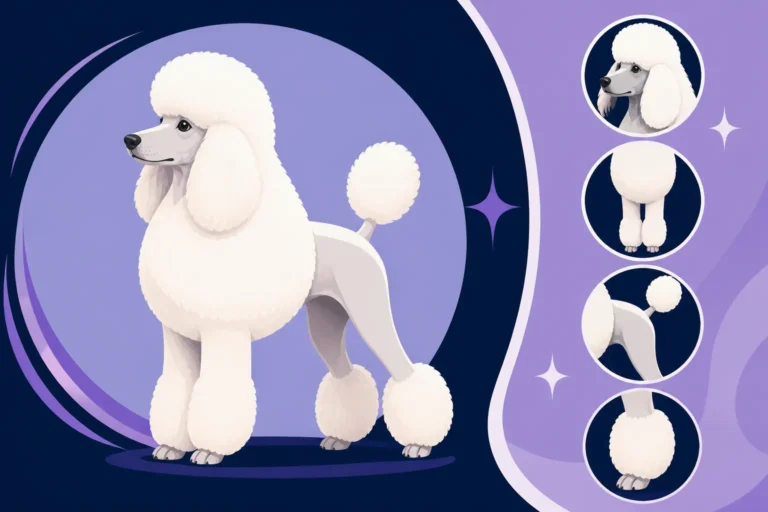
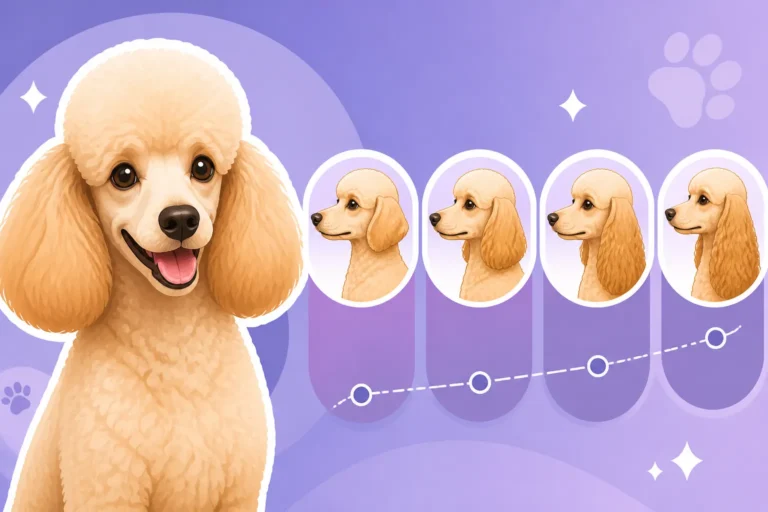
A Poodle's coat is often described as "hair" rather than "fur," and that's because it behaves much more like human hair. It's a single coat, meaning there's no soft, dense undercoat beneath a coarser outer layer. Instead, it's uniformly curly, dense, and grows continuously, never stopping. This continuous growth is why Poodles demand such rigorous and consistent grooming. If left untrimmed, a Poodle's coat will simply grow longer and longer, eventually becoming a tangled, matted mess that can be painful for the dog and a nightmare to detangle.
Think about it this way: if you stopped cutting your own hair, it would just keep growing, right? The same principle applies to a Poodle. This characteristic is precisely why they are considered a good choice for people with allergies, but it comes with a significant grooming commitment. Understanding The Poodle Coat and Why It Never Stops Growing is crucial for any potential owner.
Why the Poodle Coat Never Truly "Sheds"
This is a point of frequent misunderstanding. Many people believe Poodles are "non-shedding," and while it's true they don't shed in the traditional sense like a Labrador or a Golden Retriever, they do lose hair. The difference is in what happens to that lost hair. Instead of falling out onto your furniture and clothes, a Poodle's shed hair gets caught within the surrounding curls. It's like trying to comb a dreadlock; the loose hairs don't fall free.
This trapped hair, combined with the continuous growth, is the primary reason Poodles mat so easily. Without regular brushing, the shed hair becomes tightly tangled with the growing hair, forming dense, painful knots right down to the skin. This isn't just an aesthetic issue; severe matting can cause skin infections, restrict movement, and lead to significant discomfort. It's why consistent Brushing a Poodle to the Skin is non-negotiable, and understanding Where Shed Poodle Hair Actually Goes clarifies why it’s so critical.
Consistent Texture and Curl Patterns
Regardless of size or color, a purebred Poodle's coat has a distinct texture: typically dense, harsh to the touch in some lines, springy, and curly. The curls should be tight and uniform, springing back into place when you run your hand through them. You won't see straight patches, wavy areas, or differing textures on a purebred Poodle. The entire body, from the topknot to the tail, should have that signature curly Poodle coat.
This consistent curl is part of what makes Poodle grooming so iconic, allowing for those elaborate show clips as well as practical, easy-to-maintain pet clips. A professional groomer can tell a Poodle coat almost instantly by feel, even before they see its shape, because the texture is so characteristic.
Decoding the Doodle Coat: The Genetic Lottery
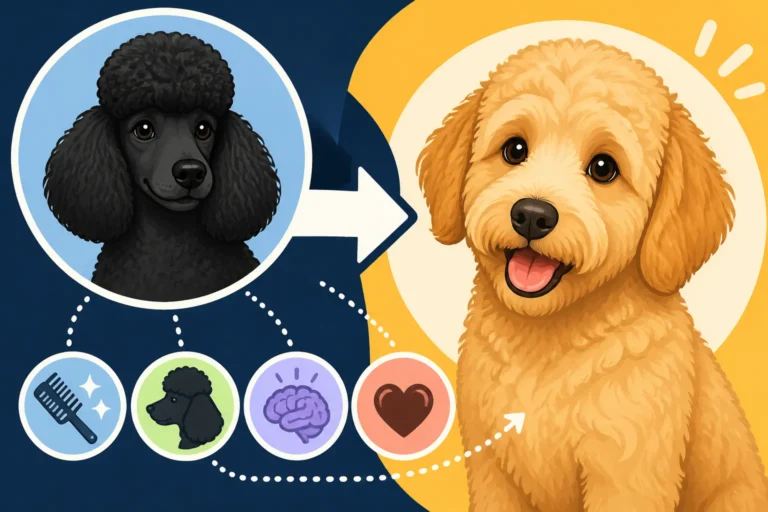
Now, let's talk about Doodles. The term "Doodle" generally refers to any dog that is a cross between a Poodle and another breed, like a Labrador (Labradoodle), Golden Retriever (Goldendoodle), or Bernese Mountain Dog (Bernedoodle), just to name a few. The intent behind these crosses is often to combine the Poodle's "non-shedding" coat and intelligence with the desirable traits of another breed. However, when you mix two different breeds, especially when one has a single, continuously growing coat and the other has a double coat that sheds, the results are, to put it mildly, a bit of a genetic lottery.
The Unpredictable Nature of Mixed Coats
This is the core difference. Unlike the predictable Poodle coat, a Doodle's coat can take on a wide variety of appearances and textures, even within the same litter. Why? Because puppies inherit genes from both parents. There's no guarantee which coat traits will be dominant or how they will combine.
Some Doodle puppies might inherit more of the Poodle's curl, while others might lean heavily towards the other parent breed's coat. This unpredictability extends beyond just shedding; it affects texture, density, and even how fast the coat grows. This is why it's so difficult to predict Whether Doodle Coats Are Predictable in a first-generation cross (F1). Even in later generations, while some predictability might emerge, it's rarely as consistent as a purebred Poodle.
Common Doodle Coat Types: Fleece, Wool, and Hair
Doodle coats are often categorized into three main types, though these can blend and vary significantly:
- Hair Coat (or Straight Coat): This type is the least Poodle-like and most resembles the shedding parent breed (e.g., a Labrador's coat). It's typically straight or slightly wavy, sheds moderately to heavily, and will likely trigger allergies. Owners who get a Doodle hoping for a non-shedding dog are often disappointed with a hair coat.
- Fleece Coat: This is often the most desired Doodle coat. It's soft, wavy, or loosely curly, and has a silky or fleecy texture. It tends to shed minimally, if at all, and is often considered the most "hypoallergenic" of the Doodle coats. However, it's also highly prone to matting because of its soft texture and the way it traps shed hairs.
- Wool Coat: This coat type is the most Poodle-like. It's dense, tightly curled, and has a texture similar to lamb's wool. It's generally considered non-shedding and very allergy-friendly. However, like the Poodle coat, it requires significant grooming to prevent matting.
It's important to understand that a single Doodle might even have different coat types on different parts of its body, making grooming a complex challenge. You might find a straighter patch on the back, a wavy area on the flanks, and tight curls on the legs or tail.
Why Grooming Doodles Can Be So Challenging
The unpredictability and combination of coat types can make grooming a Doodle significantly more challenging than grooming a purebred Poodle. A Poodle groomer knows exactly what to expect: a uniform, tightly curled coat that needs line brushing and regular clipping. With a Doodle, particularly an F1 or F1b generation, it's a constant adventure.
Their coats often combine the density and shedding of one parent with the matting tendencies of the Poodle, creating a perfect storm for knots and tangles. Many Doodle owners, expecting an "easy-care" coat, quickly find themselves overwhelmed. Groomers often report Doodles coming in severely matted, simply because owners didn't realize the intensity of brushing required for a fleece or wool coat that combines traits from two very different coat types. Finding the right brushes, combs, and detangling sprays on a site like Chewy can be a full-time job in itself, and even then, dedication is key.
Visual Cues: How to Spot the Difference
So, how can you visually tell a purebred Poodle from a Doodle just by looking at their coats? It comes down to consistency, uniformity, and knowing what to look for beyond just "curly."
Uniformity Versus Variety in Curl and Texture
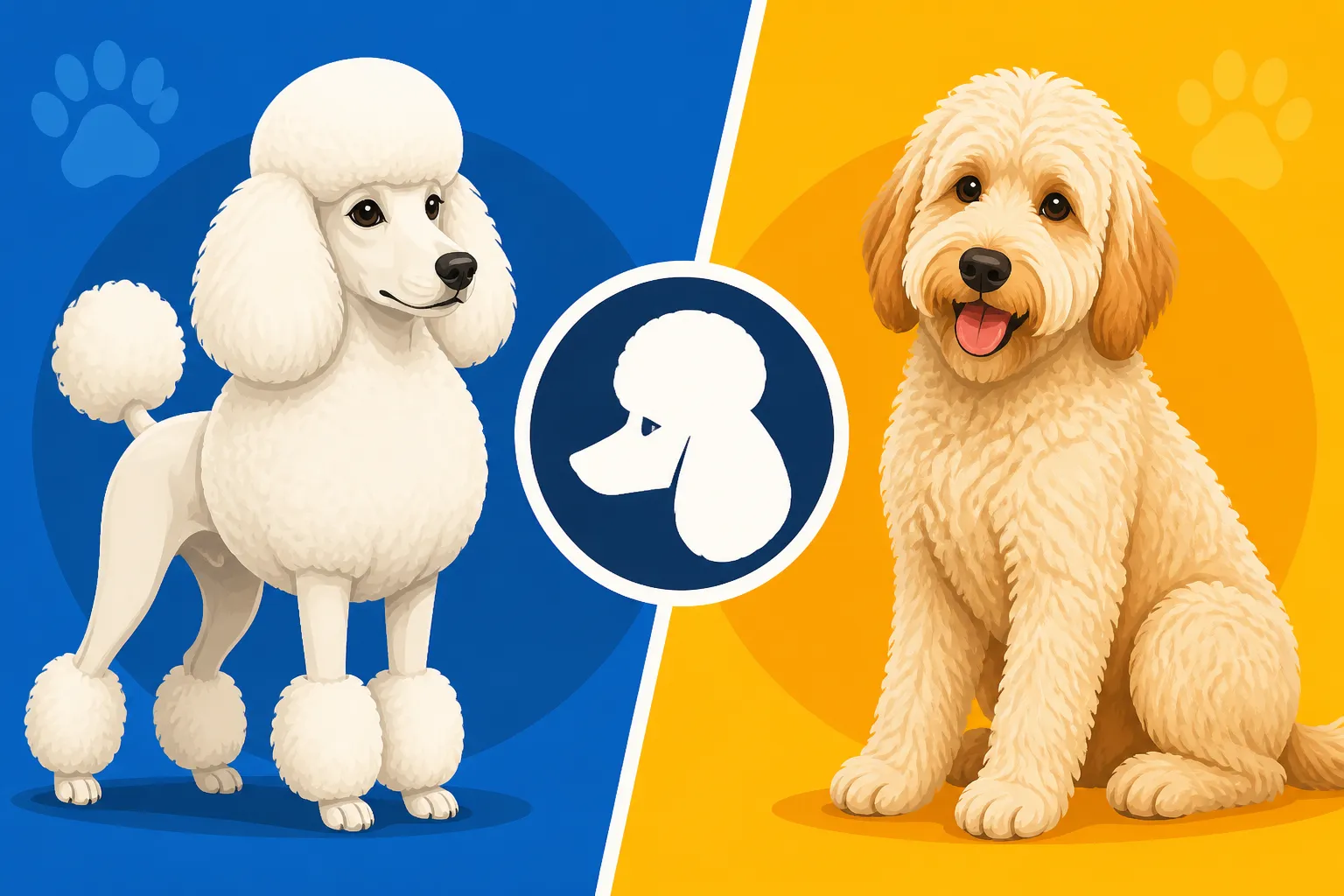
The biggest visual clue is uniformity. A purebred Poodle's coat, from head to paw, should exhibit a consistent, tight, springy curl. There should be no noticeable difference in curl pattern or texture between, say, its ears and its back, or its chest and its legs. The entire dog is covered in that signature Poodle curl.
Doodles, on the other hand, frequently show variation. You might see looser waves on their back, tighter curls on their head, or even some straighter patches, particularly on the legs or tail, depending on how much of the non-Poodle parent's coat genes they inherited. This mosaic of textures is a strong indicator you're looking at a crossbreed. Even Doodles with a desirable "fleece" or "wool" coat might have subtle differences in their curl pattern that a keen eye can pick up, making it distinct from the Poodle's unwavering consistency.
The Impact of "Generations" on Doodle Coats
The "generation" of a Doodle also plays a role in its coat appearance, though still with no absolute guarantees.
- F1 Doodles: (First generation, Poodle x other breed) These are the most variable. You'll see the widest range from straight, shedding coats to more Poodle-like curls.
- F1b Doodles: (First generation backcross, F1 Doodle x Poodle) These typically have more Poodle in them (75%), so their coats are usually curlier, denser, and less likely to shed, making them more similar to a Poodle in coat appearance and maintenance.
- F2, F3, Multi-generational Doodles: While breeders work to create more consistent coats in these generations, true uniformity is still difficult to achieve and maintain without decades of selective breeding, which purebred Poodles have had. You might find Doodles described as "multi-generational" with coats that are very Poodle-like, but still, a true Poodle will have that absolute, historical consistency.
If you're looking at a dog that looks like a Poodle but the owner says it's an F1B Goldendoodle, the coat might indeed be very similar. However, a purebred Poodle's coat is almost a perfect example of The Poodle the Standard Describes – every detail is consistent, whereas the Doodle is still a work in progress, genetically speaking.
When a Poodle's Coat Can Mimic a Doodle's
Sometimes, an unkempt or poorly groomed Poodle can accidentally be mistaken for a Doodle. If a Poodle's coat is allowed to grow out without regular brushing, the curls can relax and stretch out under their own weight, especially if they become slightly matted. This can give the impression of a wavy or shaggy coat, rather than the tight, springy curls you'd expect.
Similarly, Poodles can be clipped in a "teddy bear" or "shaggy" style that purposefully leaves the coat longer and less defined, resembling some of the popular Doodle clips. However, if you were to wash and thoroughly dry brush such a Poodle, its inherent tight curl would return. With a Doodle, even after proper grooming, the underlying genetic variation in curl and texture would still be present. This is why learning to groom The Teddy Bear Trim on a Poodle can sometimes make them look more "Doodle-like" to an untrained eye.
Beyond the Coat: Other Distinguishing Features
While the coat is a primary differentiator, there are other subtle clues that can help you distinguish a purebred Poodle from a Doodle, especially if the Doodle has a very Poodle-like coat. These are rooted in the overall breed standards and physical characteristics developed over centuries for the Poodle.
Build and Proportions
Purebred Poodles, regardless of size, adhere to a very specific set of physical proportions as outlined in their breed standard. They are known for being elegant, square-built dogs with a proud carriage. This means their body length (from breastbone to rump) should be roughly equal to their height at the shoulder. They have a refined bone structure, a long, aristocratic neck, and a well-muscled body.
Doodles, being crosses, will often exhibit a mix of the physical traits of both parent breeds. A Labradoodle, for example, might be stockier than a Poodle, with a broader chest and heavier bone structure inherited from its Labrador parent. A Goldendoodle might have a more rectangular body shape, less refined features, and a different tail set than a purebred Poodle. While specific size standards vary, the overall outline of a Poodle is distinct. You can learn more about What the Standard Says About Poodle Proportion.
Facial Features and Expression
The Poodle's face is quite distinctive. They typically have a long, straight muzzle, dark, almond-shaped eyes that convey intelligence and alertness, and long, flat drop ears that lie close to the head. Their expression is often described as smart, dignified, and somewhat reserved.
Doodles, again, can have a blend of facial features. A Goldendoodle might have a broader skull and a shorter, wider muzzle resembling a Golden Retriever, along with the softer, "friendlier" expression typical of that breed. A Schnoodle might have more pronounced eyebrows and a wiry beard. While a Doodle might have a curly muzzle like a Poodle, the underlying bone structure of the skull, the shape of the eyes, and the length and set of the ears can often reveal its mixed heritage. For example, a purebred Poodle's eyes are always dark, conveying that classic Poodle gaze, as described in The Long Muzzle and Dark Poodle Eye.
Ultimately, while many Doodles are absolutely lovely dogs and make wonderful companions, their coats (and overall appearance) are inherently less predictable than that of a purebred Poodle due to their mixed genetic background. The Poodle's coat is a marvel of consistent breeding, a testament to its long history and careful development.
| Feature | Purebred Poodle Coat | Doodle Coat (Variable) |
|---|---|---|
| Genetic Basis | Generations of selective breeding for consistency | Hybrid cross, blending two distinct genetic lines |
| Shedding | "Non-shedding" (shed hair trapped in curls) | Highly variable; can be low-shedding to heavy-shedding |
| Texture | Uniformly dense, springy, tight, often harsh/woolly | Variable: straight/wavy (hair), soft/wavy (fleece), dense/curly (wool) |
| Curl Pattern | Consistent, tight, uniform curls over entire body | Variable; often different curl/wave patterns on different body parts |
| Predictability | Extremely predictable (same across all purebred Poodles) | Unpredictable (even within same litter); depends on genetics of individual dog |
| Grooming Needs | High; consistent brushing to prevent matting | High; can be more challenging due to varied textures, prone to matting |
| Allergy-Friendly | Generally considered highly allergy-friendly | Variable; depends on genetic inheritance; some are, some aren't |
Remember, whether you choose a Poodle or a Doodle, understanding the coat and its care requirements is paramount. Don't be swayed by marketing terms that promise "hypoallergenic" and "easy-care" without doing your research. Invest in good grooming tools from reputable suppliers like Chewy and commit to the maintenance, and you'll have a happy, comfortable canine companion, no matter their lineage.
Disclaimer
This article is for general informational purposes only and does not constitute professional advice. Laws, prices and regulations vary by location and change over time. Consult a qualified professional for guidance on your specific situation.