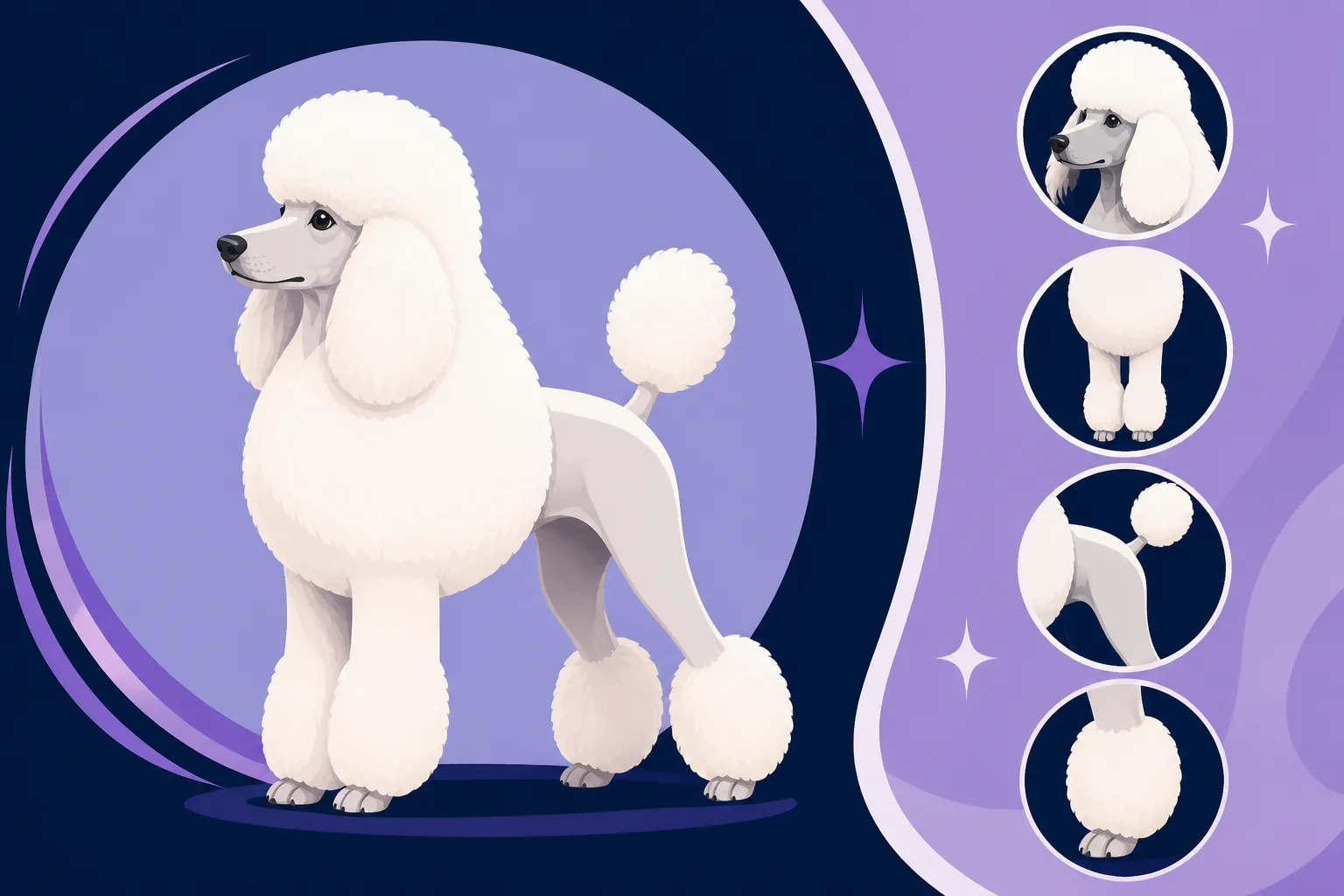
The Poodle Coat in the Standard
The Poodle coat is often misunderstood, viewed either as a high-maintenance fashion statement or an easy, "hypoallergenic" solution. Many new and prospective Poodle owners struggle to truly grasp what the breed standard dictates about this unique coat, leading to confusion about its care, appearance, and implications for daily life. This guide aims to demystify the Poodle coat by breaking down exactly what the breed standard expects, explaining why it is the way it is, and offering practical insights into living with and caring for this magnificent coat.
What the Breed Standard Actually Says About the Poodle Coat
When you look at a Poodle in the show ring, it's easy to get lost in the elaborate clips and assume that's the only way a Poodle's coat is supposed to be. But the breed standard, which is essentially the blueprint for what makes a Poodle a Poodle, speaks very specifically about the coat's quality, texture, and density, not just its styling. It sets the bar for what a truly well-bred Poodle should possess, whether they're destined for the spotlight or simply your sofa. Understanding these foundational descriptions helps you appreciate the Poodle for what it truly is, beyond any trendy haircut.
The Ideal Texture: Coarse, Curly, and Dense
The standard describes the Poodle's coat as "dense, harsh texture, good not woolly or silky." It specifies "curly, naturally harsh to the touch," or for corded Poodles (a less common show presentation), "hanging in tight, even cords of varying length." This isn't just about aesthetics; it speaks to the coat's historical purpose. Poodles were originally water retrievers, and that dense, harsh, curly coat was a marvel of natural engineering, providing insulation and protection against cold water and tangled brush. It's meant to be robust, not fine and delicate. When you run your fingers through a correctly coated Poodle, you should feel a springy resistance, a thick cushion, rather than a soft, fluffy cloud.
Many people expect a Poodle's coat to feel like a cloud, akin to some Doodle crosses, but that's a misconception that deviates from the true breed standard. A coat that is too soft, too silky, or too thin ("woolly" in standard terms) lacks the protective qualities historically essential to the breed. Such coats are often harder to maintain in terms of matting and can fail to provide adequate insulation. Breeders who adhere strictly to the standard focus on producing coats with this specific texture because it is integral to the Poodle's heritage and function. It’s a coat designed for resilience, not just prettiness.
The Non-Shedding Myth and Its Nuances
One of the most appealing aspects of the Poodle for many families is its reputation as a "non-shedding" breed. While it's true that Poodles don't "shed" in the same way as, say, a Labrador Retriever, referring to them as completely non-shedding is a bit misleading. The standard doesn't use the term "non-shedding" directly, but the nature of the coat implies it. Poodles have hair, not fur, and their hair grows continuously, much like human hair. This means that individual hairs do complete their growth cycle and die, but instead of falling out and scattering everywhere, they get caught within the dense, curly coat.
This trapped dead hair is the reason Poodles develop mats if not regularly brushed. It's why grooming is such a critical part of Poodle ownership. It's not that the hair doesn't shed; it's that it doesn't release from the coat easily. This characteristic is precisely why Poodles are often considered more suitable for people with allergies, as the dander and shed hair that typically trigger reactions are contained within the coat rather than floating freely in the environment. So, while you won't be constantly vacuuming Poodle hair tumbleweeds, you'll be dedicating significant time to brushing those dead hairs out to prevent painful matting. This distinction is crucial for any potential owner to grasp; "non-shedding" doesn't mean "no maintenance." Why Poodles Are Called Non-Shedding further elaborates on this.
Acceptable Length and Presentation
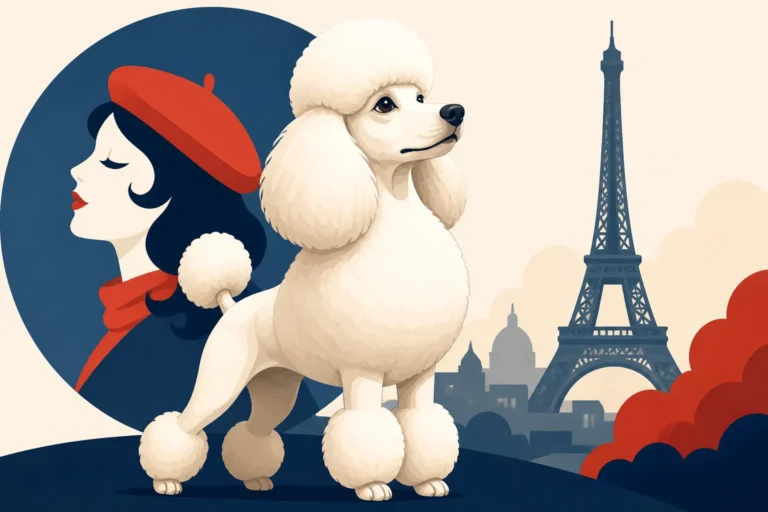
The breed standard is quite flexible when it comes to the length and style of the Poodle's coat, particularly for pet Poodles. For exhibition Poodles, it describes specific clips, such as the "Continental Clip" or the "English Saddle Clip," which were historically practical for water retrieval, allowing free movement of joints while protecting vital organs. These clips, with their shaved areas and elaborate pom-poms, often define the Poodle in public perception, but they are primarily for the show ring. The standard permits other clips for puppies and older dogs in competition, but it largely focuses on the quality of the coat itself.
For a pet Poodle, the coat can be kept in any length or style that is manageable for the owner. Many opt for a practical "kennel clip" or "sporting clip," which involves keeping the coat uniformly short all over, or a "teddy bear clip" that leaves a slightly longer, softer look. The key is that the coat, regardless of length, should still exhibit the correct texture and density described by the standard. A Poodle with a coat that is sparse, overly soft, or prone to extreme matting even with diligent care, would not meet the ideal described in the breed standard, irrespective of the clip. The standard cares about the raw material, not just the finished sculpture.
Understanding the Poodle Coat's Unique Texture and Growth
Delving deeper into the physical characteristics of the Poodle coat helps us appreciate why it behaves the way it does and why it requires such specific care. It's a marvel of canine evolution, perfectly adapted to its original function, but also demanding a committed owner to keep it in prime condition. From its single-layer construction to its relentless growth, every aspect of the Poodle's coat contributes to its unique nature.
The Single Layer: Hair Not Fur
Unlike many dog breeds that have a double coat consisting of a soft undercoat and a coarser outer coat, Poodles possess a single-layer coat. This is often referred to as "hair" rather than "fur," which is a distinction that explains many of the Poodle's unique coat traits. Dogs with fur typically have a shorter growth cycle, leading to seasonal shedding of the undercoat, which is then replaced. Poodle hair, however, has a much longer anagen (growth) phase, more akin to human hair. This continuous growth, without a periodic "blowing" of coat, is a hallmark of the breed. Why a Poodle Has Hair Rather Than Fur explains this difference in detail.
This single layer also contributes to the Poodle's dense, uniform texture. There's no fine undercoat to separate and trap moisture; instead, the entire coat is designed for insulation. This is a significant factor in why a Poodle's coat can mat so quickly if neglected. When dead hairs are not brushed out, they intertwine with the continuously growing live hairs, forming tight knots that pull at the skin. Understanding this single-layer structure is fundamental to appreciating the care required. It’s not just a cute curl; it's a highly functional, specialized type of hair that needs specific management.
Continuous Growth and the Matting Challenge
The Poodle coat's most defining characteristic, from a practical standpoint, is its continuous growth. It truly never stops growing. This is a blessing for allergy sufferers but can quickly become a curse for owners who aren't prepared for the grooming demands. Think of it like a dense, highly textured wool blanket that constantly adds new fibers. If you don't regularly untangle and remove the old fibers, the whole thing turns into a solid, impenetrable mass. This is the essence of the matting challenge with a Poodle. The Poodle Coat and Why It Never Stops Growing highlights this characteristic.
Mats don't just look bad; they can be incredibly painful for the dog. They pull at the skin, restrict movement, and create breeding grounds for skin infections, parasites, and hot spots. A seemingly innocent tangle can, within days, become a tight, painful pelt that can only be removed by shaving the dog completely down. This is why brushing a Poodle "to the skin" is crucial, rather than just skimming the surface of the coat. Every single strand needs to be separated and free of tangles. Neglecting this continuous growth leads inevitably to extensive, painful matting, which often necessitates a complete shave-down by a professional groomer, a process that is stressful for the dog and costly for the owner.
Coat Change in Adolescence
Just when you think you've got the hang of grooming your adorable Poodle puppy, they hit adolescence, and the coat undergoes a significant transformation. This "coat change" typically occurs between 9 and 18 months of age, though it can vary. The soft, fluffy puppy coat, which was relatively easy to brush, begins to be replaced by the coarser, denser adult coat. During this period, the old puppy hair and the new adult hair intertwine, creating a matting nightmare if you're not prepared. Many first-time Poodle owners are caught off guard by this, suddenly finding their once-manageable puppy covered in mats overnight. Coat Change in an Adolescent Poodle offers more insight into this stage.
This transition requires an even more rigorous grooming schedule. Daily, thorough line brushing becomes absolutely essential to work through the mixture of textures. It's a phase that tests the patience and commitment of many Poodle owners. Ignoring it will inevitably lead to severe matting, requiring a full shave. Many Poodles surrendered to rescues are victims of this coat change, with owners simply unable or unwilling to manage the sudden increase in grooming demands. It’s a temporary, albeit intense, phase, and understanding it means you can prepare and ensure your Poodle comes through it comfortable and mat-free.
The Importance of Color and Markings in the Standard
While the texture and density of the Poodle coat are paramount, the breed standard also places significant emphasis on color and markings. For show Poodles, specific colors and patterns are recognized, and deviations can lead to disqualification. For pet Poodles, these considerations might be less critical for daily life, but they still reflect the breed's heritage and the breeder's adherence to established lines. The standard seeks purity and consistency in presentation.
Solid Colors: The Foundation of the Standard
The Poodle breed standard recognizes Poodles in a wide array of solid, even colors. These include black, white, cream, apricot, red, blue, grey, silver, brown, and cafe au lait. The key is "solid and even." This means that the color should be uniform throughout the coat, with no patches or markings of a different color. Even a slight hint of white on the chest, a common occurrence in many breeds, can be a disqualifying fault in a show Poodle. The pigmentation of the nose, eye rims, and lips should also correspond to the coat color – for example, black Poodles should have black pigment, while brown Poodles should have liver-colored pigment. Solid Poodle Colors the AKC Recognizes lists these accepted colors.
This strict adherence to solid colors underscores a historical preference for uniformity in working and show dogs. It helps breeders maintain consistent lines and ensures that the dogs presented adhere to a specific aesthetic ideal. While a pet Poodle with a small white patch will be just as loving and intelligent as a show-ring champion, understanding this aspect of the standard explains why some colors and patterns are valued differently in the breeding world.
Variations and "Disqualifications" for the Show Ring
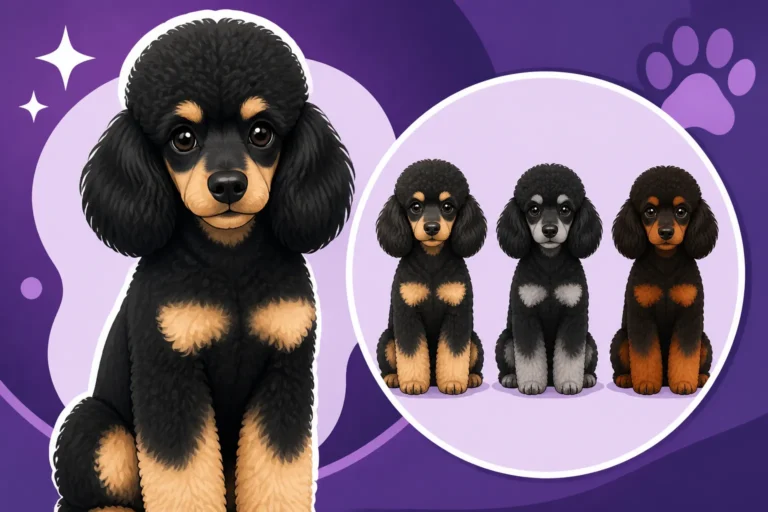
Beyond the solid colors, other coat patterns exist within the Poodle population, but they are not recognized or are actively disqualified in the show ring under the current breed standard. These include "parti" Poodles (white with patches of another solid color), "phantom" Poodles (a solid base color with distinct tan or apricot markings similar to a Doberman's), and "sable" Poodles (hair tipped with black). While these Poodles are purebred and possess all the wonderful qualities of the breed, their coat patterns make them ineligible for conformation showing.
This can be a point of confusion for new owners who encounter these striking patterns. It's important to understand that a disqualification from the show ring does not mean the dog is unhealthy, poorly bred, or any less of a Poodle. It simply means its appearance does not conform to the specific visual criteria set by the breed standard for competition. Many responsible breeders produce parti or phantom Poodles and place them in loving pet homes, often at a lower price than their show-prospect littermates because they cannot compete in conformation. Parti Poodles and the Show Ring delves into this topic more.
Fading and Clearing: Color Evolution
Another fascinating aspect of the Poodle coat is how its color can evolve over time, particularly in certain shades. "Fading" or "clearing" refers to the lightening of a Poodle's coat color as they mature. For instance, a black puppy might "clear" to a blue or silver as an adult, or an apricot puppy might lighten to cream. This is especially common in Poodles with diluting genes. Reputable breeders can often predict how a puppy's color might develop based on its parents' and grandparents' lines, but it's never an exact science.
This phenomenon is simply a natural genetic trait within the breed and doesn't signify a health issue. It's just part of the Poodle's unique genetic tapestry. Owners who specifically desire a deep, rich red, for example, might find their adult Poodle's coat settling into a lovely, lighter apricot. Conversely, a silver Poodle is often born black and gradually "silvers out" as it matures, a process that can take up to two years. Embracing this color evolution is part of the Poodle journey, and it's a characteristic that adds to the individual beauty of each dog.
Maintenance and the Standard: Beyond the Show Ring
While the breed standard largely describes the ideal appearance of the Poodle coat for competition, its underlying descriptions about texture and density directly inform the necessary daily and professional maintenance for all Poodles. You might not be aiming for a Continental clip, but the quality of your Poodle's coat, as outlined in the standard, dictates the fundamental care practices required to keep them healthy and comfortable.
Daily Care for a "Standard" Coat
Regardless of whether your Poodle is a show dog or a beloved pet, maintaining the correct coat texture and preventing mats requires consistent daily care. The standard's emphasis on a dense, curly coat means it's a magnet for debris and tangles. You can't just run a quick brush over the top and call it a day; you need to get down to the skin. This means line brushing, a technique where you systematically part the coat in small sections and brush from the skin outwards, ensuring every layer is free of knots. How to Line Brush a Poodle Properly offers a detailed guide to this essential technique.
For a Standard Poodle in a longer clip, this might mean 30 minutes or more of dedicated brushing daily. Even Poodles in a short "kennel clip" benefit from daily brushing to remove loose hair and stimulate the skin. Neglecting this leads to compacted mats that are not only painful but also difficult and expensive to remove. It's a commitment that Poodle owners sign up for, and one that is non-negotiable for the dog's comfort and well-being. Regular checks of high-friction areas like armpits, behind the ears, and around the collar are crucial, as these are common hotspots for mats.
Grooming Tools Recommended by the Standard's Demands
The unique demands of the Poodle coat mean that specific grooming tools are not just helpful, but absolutely essential. A slicker brush, a Greyhound comb (or a metal comb with varied tooth spacing), and a good quality detangling spray are your basic arsenal. The slicker brush helps to separate the curls and lift dead hair, while the metal comb is indispensable for checking for mats and working through smaller tangles. You'll often find these and other essential grooming supplies, like high-quality shampoos and conditioners, readily available on sites like Chewy. Having the right tools makes the daily grooming routine much more effective and less frustrating for both you and your Poodle.
For those planning to do some at-home trimming, a good set of clippers designed for dense dog coats, along with various blade sizes, will be necessary. Even if you rely on professional groomers, owning your own brushes and combs is non-negotiable for daily maintenance between appointments. Investing in quality tools from the start will save you a lot of headaches (and potential vet bills from matting-related skin issues) in the long run. Skimping on tools often leads to ineffective brushing and ultimately, a matted Poodle.
Impact of the Standard on Pet Clips
While the dramatic show clips like the Continental might seem intimidating, the reality is that the vast majority of pet Poodles live in much more practical, easy-care clips. However, even these pet clips are influenced by the understanding of the Poodle's coat as described in the standard. A groomer understands that a Poodle's coat continuously grows and mats easily, so they will advise on a clip that is both aesthetically pleasing and manageable for your lifestyle. Many opt for a short "sporting clip" or "lamb clip," which keeps the body fairly short while leaving some length on the legs and head.
The key is that the underlying quality of the coat, as described by the standard (dense, harsh, curly), dictates the frequency of grooming, regardless of the chosen clip. Even a closely shaved Poodle will need a trim every 4-8 weeks because that hair will grow back. A good groomer will educate owners on this ongoing need, ensuring the dog remains comfortable and healthy. They also know that certain areas, like the sanitary region, face, and feet, are typically kept very short or shaved to prevent matting and maintain hygiene, a practice rooted in both practicality and, indirectly, the Poodle's historical working clips.
Common Misconceptions and Realities About the Poodle Coat
The Poodle coat is arguably one of the most distinctive features of the breed, yet it's also a source of widespread misunderstanding. From its "hypoallergenic" status to its comparison with Doodle coats, many ideas about the Poodle's hair are not entirely accurate. Separating fact from fiction is essential for anyone considering bringing one of these magnificent dogs into their home.
The "Hypoallergenic" Label
Poodles are frequently touted as "hypoallergenic," and while they are often a good choice for allergy sufferers, this label is a common misconception. No dog breed is truly 100% hypoallergenic. The term implies "less allergenic" or "better tolerated by allergy sufferers." Allergies to dogs are typically triggered by dander (flakes of skin), saliva, and urine proteins, not just the hair itself. Because Poodles don't shed their dead hair into the environment like other breeds, they release less dander into the air, which is why many people with mild to moderate dog allergies can comfortably live with a Poodle.
However, a Poodle still produces dander, still licks itself (depositing saliva proteins on its coat), and still urinates. Individuals with severe allergies may still react to a Poodle. It's crucial for prospective owners with allergies to spend time with Poodles before committing to ensure they don't experience a reaction. The "non-shedding" aspect is a huge advantage, but it's not a magical cure for all pet allergies. The reality is that they are low-shedding and low-dander-releasing, which often makes them tolerable, but not truly "hypoallergenic." Whether a Poodle Suits an Allergy Sufferer gives more perspective.
Poodles Versus Doodles: Coat Differences
With the immense popularity of Poodle crosses (Doodles), many people mistakenly assume that a Poodle's coat is essentially the same as a Doodle's. This couldn't be further from the truth. While Doodles inherit some Poodle coat characteristics, their coats are highly unpredictable due to their mixed parentage. A Doodle might have a Poodle-like curly coat, a wavy coat, or even a straight, shedding coat, depending on the genetic lottery. The beauty of the Poodle breed standard is its predictability: you know exactly what kind of coat you're getting in terms of texture, density, and growth.
The Poodle's coat, as described by the standard, is a consistent, dense, harsh curl. A well-bred Poodle will almost invariably have this distinct coat type. Doodle coats, by contrast, can range from silky to coarse, from open waves to tight curls, and their shedding can vary wildly. This unpredictability means that while some Doodles may have a Poodle-like coat that is low-shedding, many others will shed, mat just as easily (if not more so, due to conflicting coat textures), and require equally, if not more, intensive grooming than a purebred Poodle, without the benefit of consistent quality.
Show Clips Versus Practicality
The image of a Poodle in a grand Continental clip, with its elaborate shaved patterns and fluffy bracelets, is iconic. Yet, this often creates a perception that Poodles are inherently "fussy" or require this kind of showy presentation. This is simply not true. These clips were originally functional, designed to protect joints and vital organs while the dog worked in cold water, and over time evolved into an art form for the show ring. For the average pet Poodle, such clips are impractical and incredibly time-consuming to maintain. The Poodle's Place in Dog Intelligence is linked here to remind readers of the dog behind the coat.
Most pet Poodles live in sensible, shorter clips that are easy to maintain at home between professional grooming appointments. These can range from a uniform "kennel clip" to a slightly longer "lamb clip" or "teddy bear cut." The priority for a pet Poodle's coat is health, comfort, and manageability, not elaborate styling. While the standard's description of coat quality is universal, its prescribed show clips are specific to competition. Any Poodle owner can choose a clip that suits their lifestyle, as long as they commit to the regular maintenance required by the continuously growing, dense Poodle coat.
| Feature | Breed Standard Description | Common Belief / Misconception | Reality for Owners |
|---|---|---|---|
| Texture | Dense, harsh, curly; not woolly or silky | Soft, fluffy, like a cotton ball | Requires specialized brushes and combs to manage the density and curl. |
| Shedding | Continuous hair growth; dead hair trapped in coat | Completely non-shedding; no hair ever comes off | Hair sheds, but it mats if not brushed out; still requires daily removal of dead hair. |
| Growth | Continuously growing hair, like human hair | Stops growing at a certain length, like fur | Needs regular trimming (every 4-8 weeks) or it will grow indefinitely and mat. |
| "Hypoallergenic" | Low dander release due to trapped hair | 100% hypoallergenic; no allergic reactions possible | Less allergenic, but dander and saliva can still trigger sensitive individuals. |
| Show Clips | Specific historical and aesthetic clips for competition | The only way a Poodle should look; fussy and impractical | Many practical, easy-care clips are available for pets; show clips are optional. |
| Adolescent Coat | Puppy coat transitions to adult coat, often causing severe matting | Puppy coat is easy, adult coat is similar; no special phase | Requires intense daily brushing during the 9-18 month "coat change" phase. |
Disclaimer
This article is for general informational purposes only and does not constitute professional advice. Laws, prices and regulations vary by location and change over time. Consult a qualified professional for guidance on your specific situation.