Where Phantom Markings Sit on a Poodle
One of the most captivating things about Poodles, beyond their undeniable intelligence and elegant presence, is the incredible variety of colors and patterns they come in. While many people are familiar with the classic solid black, white, or apricot Poodle, there's a particular pattern that often sparks curiosity and admiration: the phantom. If you've ever seen a Poodle with striking tan or silver points that look almost painted on, you've encountered a phantom Poodle, and you're probably wondering exactly where these beautiful, contrasting marks are supposed to appear. This guide will take a deep dive into the specific locations of phantom markings, helping you understand this unique and beloved Poodle coat pattern.
The Poodle Color Palette and Phantom's Place
Poodles are celebrated for their sophisticated appearance and their remarkable coats, which come in a vast array of solid colors, from the deepest black to the palest cream, vibrant red, or serene blue. The official breed standard, which guides breeders and judges in the conformation ring, primarily emphasizes solid colors. This focus means that certain patterns, while absolutely purebred and stunning, are considered "non-standard" for show purposes. This doesn't make them any less of a Poodle; it just means they don't conform to a specific show ideal.
Understanding the Official Standard Versus Pet Appeal
The Poodle's journey from a working water retriever to a beloved companion and show dog has shaped perceptions of its appearance. When you look at Solid Poodle Colors the AKC Recognizes, you'll see a list that sticks to single, uniform coat colors. For those passionate about the show ring, adherence to these standards is paramount. However, for pet owners, the world of Poodle colors and patterns is much broader and more exciting.
Phantom is one such pattern that thrives in the pet world. It's not a new or "designer" color; it's an ancestral pattern that has been present in the Poodle gene pool for generations. The reason it's considered non-standard for showing is simply that the official standard prioritizes solid coats. This distinction is important for understanding why a phantom Poodle might not be seen in a major conformation event, but it has absolutely no bearing on its health, temperament, or its status as a purebred Poodle. In fact, many people specifically seek out phantom Poodles for their distinctive and beautiful appearance, appreciating the unique artistry of nature.
Why Phantom is "Non-Standard"
The term "non-standard" can sometimes carry a negative connotation, implying something is wrong or impure. With phantom Poodles, nothing could be further from the truth. The pattern simply means the dog carries specific genes that result in distinct areas of lighter color, typically tan, cream, or silver, against a darker base coat. Think of it like a beautiful painting where the artist has chosen contrasting shades to highlight certain features. These Poodles are still 100% Poodle, with all the intelligence, charm, and curly coat you'd expect.
The official breed standard often outlines specific traits, including body proportions, gait, and coat characteristics, and for Poodles, it largely calls for a self-colored dog. This means the dog should be one uniform color without patches or distinct markings of a different shade. While there are a few exceptions within the broad term "parti-color" or "abstract," phantom patterns typically fall outside the strict interpretation of a solid coat. For most Poodle lovers, this simply adds to their appeal, making each phantom Poodle a living work of art that stands out from the crowd. Understanding What the Standard Says About Poodle Proportion helps contextualize how rigorously show Poodles are evaluated on appearance.
Pinpointing Phantom Markings: Where They Appear
Now, let's get down to the exciting part: exactly where these striking phantom markings are located on a Poodle's body. The phantom pattern is essentially a specific type of bi-color or tri-color pattern, often referred to as "tan points." Imagine a solid-colored Poodle, and then envision specific areas where a contrasting color, usually tan, apricot, or silver, would naturally appear. The key here is symmetry and distinct placement.
The Distinctive Pattern
A true phantom Poodle will have a solid base color, such as black, brown, red, or silver, with sharply defined markings of a lighter color. These markings are not haphazard splotches; they follow a very predictable and genetically determined pattern, similar to what you might see on a Doberman Pinscher, Rottweiler, or Bernese Mountain Dog. This precise placement is what makes a phantom Poodle so recognizable and beautiful.
The contrast between the base color and the points can be quite dramatic, like a black Poodle with vivid red phantom markings, or more subtle, such as a silver Poodle with lighter cream points. The clarity and definition of these markings are what breeders and enthusiasts look for. A Poodle with Phantom Poodle Markings is truly a sight to behold, showcasing a unique aspect of the breed's genetic diversity.
Common Areas for Tan Points
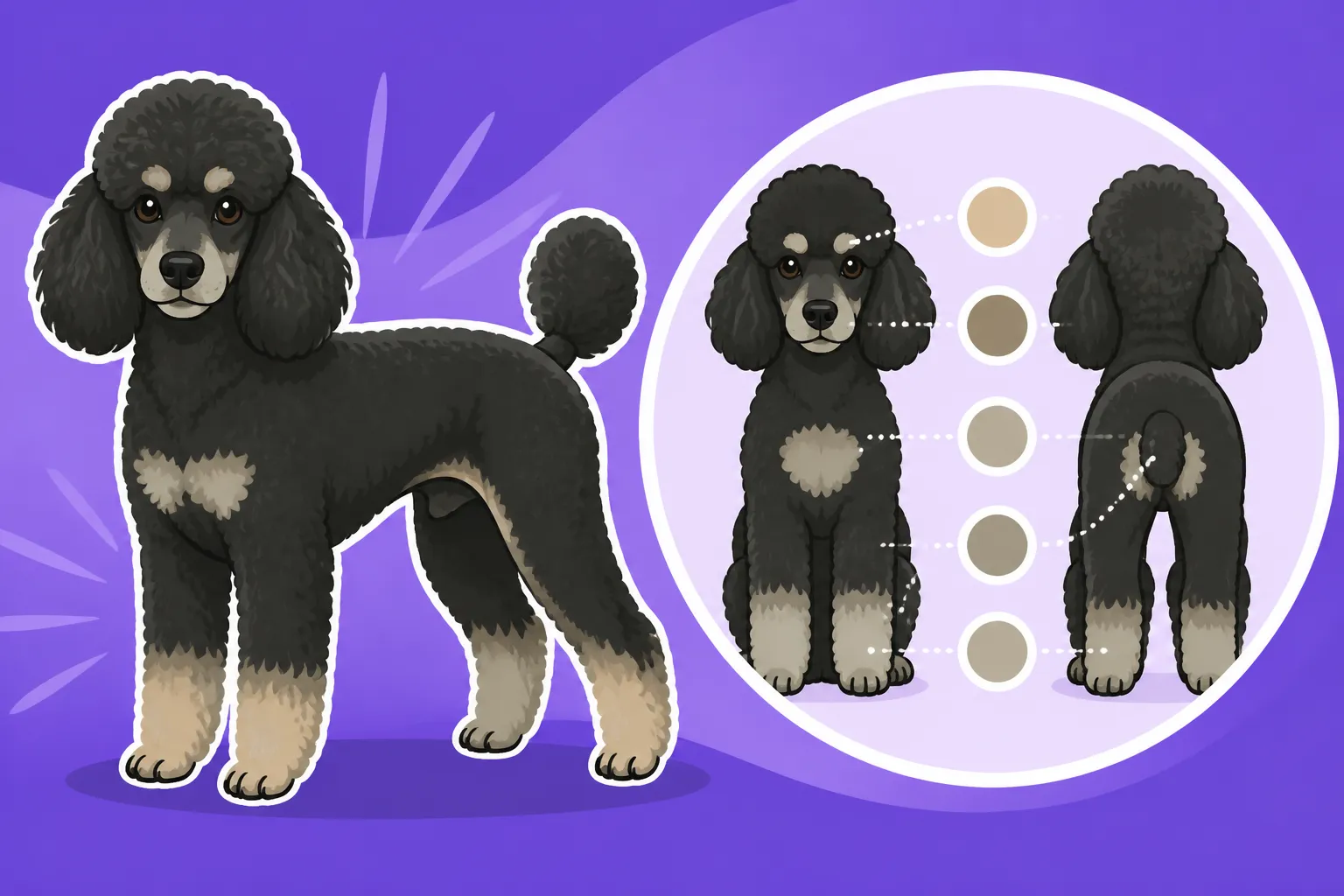
The phantom markings typically appear in these very specific locations on a Poodle:
- Above Each Eye (Eyebrows): Perhaps the most endearing feature of a phantom Poodle, these small, distinct markings above each eye give them an expressive, almost perpetually surprised or curious look. These "eyebrows" are usually a clear, lighter shade.
- On the Sides of the Muzzle/Cheeks: You'll see the lighter color extending from the sides of the muzzle, often blending towards the cheeks and throat. This creates a charming mask-like effect, framing their intelligent Poodle eyes.
- Across the Chest (Bib): A clear, often triangular, patch of the contrasting color will be visible on the chest. This "bib" can vary in size but is consistently present and well-defined.
- Down the Legs (Lower Legs and Feet): The lighter markings will typically cover the lower parts of all four legs, from above the paw down to the feet. Sometimes, these extend up the front of the leg a bit further. It looks like they're wearing little boots!
- Inside the Legs: Flip a phantom Poodle over (gently, of course!), and you'll likely see the lighter markings extending up the inside of their legs.
- Under the Tail: A splash of the contrasting color is found on the underside of the tail, often starting at the base and extending partway down. This can be a subtle but definitive indicator of the phantom pattern.
Here's a quick summary table of where to look for those distinctive phantom markings:
| Body Part | Typical Phantom Marking Location |
|---|---|
| Eyes | Distinct 'eyebrows' above each eye |
| Muzzle/Cheeks | On the sides of the muzzle, extending to cheeks/throat |
| Chest | A clear 'bib' marking across the chest |
| Legs | Lower parts of all four legs, including feet and inside |
| Tail | On the underside, starting at the base |
These markings should ideally be clear and well-defined, not muddied or streaky. The richer the contrast, the more striking the phantom pattern often appears. This genetic trait is separate from other patterns like parti-color, which involves larger patches of white, or abstract markings, which are usually smaller, irregular white patches. A phantom Poodle's pattern is precise and elegantly placed.
The Beauty and Practicality of Phantom Poodles
Beyond their stunning looks, phantom Poodles are, at their heart, Poodles. This means they come with all the wonderful traits and unique care requirements of the breed. Their coat, regardless of its beautiful pattern, still needs dedicated attention.
Grooming Considerations for Phantom Coats
Just like any Poodle, a phantom Poodle's coat is a non-shedding, continuously growing marvel that requires regular grooming. The Poodle Coat and Why It Never Stops Growing means consistent brushing and professional clipping are non-negotiable. For phantom Poodles, grooming can be even more of an art form, as groomers often aim to highlight the distinct markings.
When bathing your phantom Poodle, especially if they have lighter points on a dark base, you might want to use shampoos designed for specific coat colors to keep the contrast vibrant. For instance, a shampoo for black coats might enhance the depth of their base color, while a brightening shampoo could keep the lighter points crisp. Always follow up with a good conditioner to maintain coat health and prevent mats. Bathing and Drying a Poodle thoroughly covers the process. You can find a great selection of grooming tools, including those special shampoos, on sites like Chewy. Regular line brushing with quality tools is essential to prevent tangles that can obscure those lovely phantom markings. Having essential Grooming Tools a Poodle Owner Must Buy is crucial for maintaining any Poodle coat, but especially one with intricate markings you want to show off.
Living with a Phantom Poodle
Bringing a phantom Poodle into your life means embracing their intelligent, often sensitive, and highly engaged personalities. They thrive on companionship and mental stimulation. Their unique coat pattern doesn't change their inherent Poodle traits—they'll still want to be your shadow, learn new tricks, and probably try to outsmart you!
Many owners adore the distinctiveness of their phantom Poodles. It's not uncommon for people to stop and ask about their dog's beautiful coat, sparking conversations and admiration. While some might incorrectly assume they are a mixed breed due to the pattern, rest assured, Whether Phantom Poodles Are Purebred is a resounding yes. They are a purebred Poodle, showcasing a natural genetic variation. Just be prepared to explain their origins to curious admirers!
Finding a Phantom Poodle (Ethically)
If you're captivated by the idea of a phantom Poodle, the next step is to find one responsibly. As with any Poodle, ethical breeding practices are paramount to ensuring a healthy, well-adjusted companion.
What to Ask a Breeder
When looking for a phantom Poodle puppy, it's vital to seek out reputable breeders who prioritize health, temperament, and ethical breeding. Don't be swayed by breeders who market "rare" colors at exorbitant prices without proper health clearances. A responsible breeder will be transparent about their dogs' health testing, pedigree, and the specific phantom lines they are working with. Always inquire about the health clearances of both parents, especially for genetic conditions prevalent in Poodles, such as those covered by Genetic Panels for the Three Poodle Sizes.
A good breeder will also be keen to educate you about the phantom pattern and where their particular dogs' markings sit. They should be able to show you photos of the parents, and ideally, previous litters, so you can see the consistency of their phantom markings. Be wary of anyone who is secretive about their breeding practices or the health of their dogs, or who can't explain What a Poodle Breeder Hiding the Sire Is Hiding. Finding a breeder who tests is a commitment to the health of your future companion. Finding a Poodle Breeder Who Tests is critical, and a good breeder will happily discuss What a Poodle Breeder Must Test For.
Phantom Poodles in Rescue
While breeders are often the primary source for phantom Poodles, don't overlook Poodle-specific rescues. Sometimes, phantom Poodles, like any other Poodle, find themselves in need of a new home due to unforeseen circumstances. Adopting from a rescue can be an incredibly rewarding experience. Rescue organizations often have a thorough vetting process for both their dogs and potential adopters, ensuring a good match.
While you might not find a puppy with precise phantom markings in a rescue, you might discover a loving adult phantom Poodle who would be a perfect addition to your family. Rescues will often be very clear about any health or behavioral considerations, and they work hard to ensure their dogs are ready for their forever homes. Many rescues even use resources like Chewy for food and supplies for their foster dogs.
No matter where you find your phantom Poodle, understanding their unique markings and appreciating the specific places they appear adds another layer of joy to owning one of these truly magnificent dogs. Their striking appearance is a testament to the Poodle's diverse genetic tapestry, and a beautiful deviation from the typical solid-color norm.
Disclaimer
This article is for general informational purposes only and does not constitute professional advice. Laws, prices and regulations vary by location and change over time. Consult a qualified professional for guidance on your specific situation.