Whether a Guarantee Covers Poodle Adenitis
Discovering a health issue in your beloved Poodle is always heartbreaking, but the frustration often compounds when you realize the specific condition might not be covered by your breeder's health guarantee. Many Poodle owners find themselves in this difficult spot with Sebaceous Adenitis (SA), a chronic skin condition that can be costly and challenging to manage. This guide will walk you through the complexities of breeder guarantees, what they typically cover, and why a condition like SA often falls into a grey area, leaving you to navigate the financial and emotional burden.
Understanding Sebaceous Adenitis in Poodles
Sebaceous Adenitis (SA) is one of those frustrating conditions that can truly test a Poodle owner's resolve. It's not just a superficial skin issue; it's an autoimmune disease that specifically targets the sebaceous glands, which are responsible for producing the oily sebum that keeps your Poodle's skin and coat healthy. When these glands become inflamed and are eventually destroyed, the consequences for the coat and skin can be quite severe, leading to significant discomfort for your dog and a lot of work for you.
What is Sebaceous Adenitis?
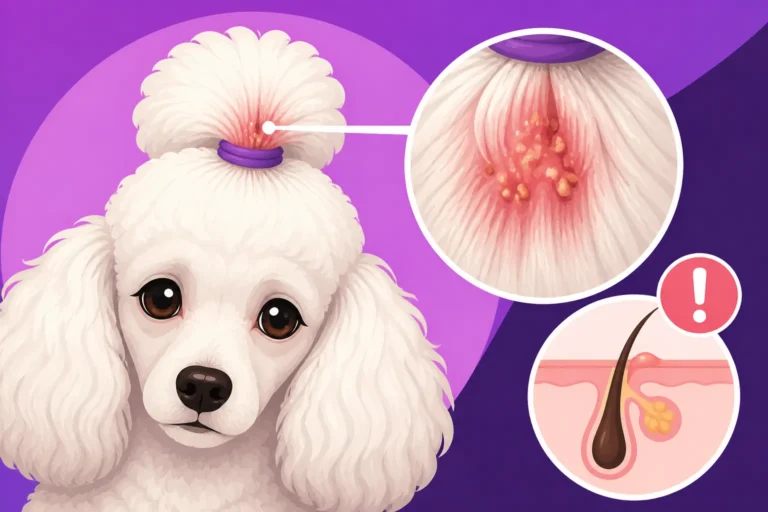
At its core, Sebaceous Adenitis is an inflammatory disease that, for reasons not fully understood, causes the immune system to mistakenly attack the very glands meant to protect the skin. Imagine your body's defense system turning on itself; that's essentially what happens with SA. This destruction of the sebaceous glands leads to a lack of natural oils, resulting in a dry, flaky, and often odorous coat. Owners commonly first notice a dulling of the coat, followed by symmetrical hair loss, especially along the back, ears, and head. You might see scaling on the skin, thickened patches, and even secondary skin infections because the natural barrier is compromised. The severity can vary wildly, from mild cases with minor flaking to advanced stages where the Poodle is almost completely bald and suffering from constant skin infections. It’s a relentless battle for many.
If you want a more in-depth look at how this tricky condition manifests, I've written a detailed piece on Sebaceous Adenitis and the Poodle Coat that might be helpful.
Diagnosing SA: The Breeder's Perspective
Diagnosing Sebaceous Adenitis isn't always straightforward, and this often plays a crucial role when it comes to breeder guarantees. The definitive diagnosis requires a skin biopsy, where a small tissue sample is taken and examined under a microscope by a veterinary dermatopathologist. Blood tests or other routine screenings won't confirm SA. The problem is that early symptoms can be quite subtle – just a bit of dryness or flaking that might be mistaken for allergies or normal coat changes. It often takes months, sometimes even a year or more, for the clinical signs to become obvious enough to warrant a biopsy. This timeline is critical because many breeder guarantees are only for the first year or two of a puppy's life, specifically covering congenital or hereditary diseases that present early. If SA only rears its ugly head later, it can complicate claims. Responsible breeders do try to monitor their lines, but because SA can skip generations or manifest subtly, even the most diligent breeder might not be aware they have a carrier line until multiple puppies are affected. For a clearer picture of what to look for, check out How Adenitis Shows Up on a Poodle's Back, and for the diagnostic process, read Skin Biopsies That Confirm Poodle Adenitis.
Genetic Predisposition and Poodle Varieties
While SA can theoretically affect any dog breed, Poodles, particularly Standard Poodles, are disproportionately represented among affected individuals. This strong breed predisposition points directly to a genetic component. It's believed to be an autosomal recessive trait, meaning a puppy needs to inherit a copy of the gene from both parents to develop the disease. If a Poodle only inherits one copy, they are a carrier and won't show symptoms but can pass the gene to their offspring. This makes managing the disease through breeding incredibly challenging, as carriers look perfectly healthy. While it's most commonly associated with Standard Poodles, Miniature and Toy Poodles can also be affected, though less frequently. This genetic link is why a breeder's awareness and testing of their breeding stock are so important. However, as of now, there isn't a simple DNA test for SA like there is for some other genetic diseases, which further complicates prevention and guarantees.
The Nuances of Breeder Health Guarantees
Breeder health guarantees are contracts designed to protect both the buyer and the seller, ensuring that puppies sold are healthy and free from certain debilitating genetic conditions. However, "healthy" can be a subjective term, and the specifics of what's covered, for how long, and under what conditions, vary enormously from one breeder to the next. It’s absolutely vital to read these documents with a fine-tooth comb, long before you bring your Poodle puppy home.
Typical Coverage and Exclusions
Most reputable Poodle breeders will offer a health guarantee, often ranging from one to three years, sometimes even five, covering severe, life-altering, or life-threatening congenital and hereditary defects. This typically includes things like severe hip or elbow dysplasia, certain heart conditions, or inherited eye diseases like Progressive Retinal Atrophy. The intent is to cover conditions that are unmistakably genetic and have a significant impact on the dog's quality of life or lifespan.
However, where Sebaceous Adenitis often falls short of these guarantees is in its nature and presentation. SA is an autoimmune disease, and while it has a clear genetic predisposition in Poodles, it's not always considered a "life-threatening" defect in the same vein as a severe heart defect. It's chronic and manageable, though costly and impactful. Furthermore, many guarantees explicitly exclude skin conditions, allergies, or issues that aren't deemed "life-threatening." If a guarantee only covers conditions diagnosed before, say, 12 months, and your Poodle's SA symptoms don't become clear until 18 months, you could be out of luck, even if the genetic predisposition was present from birth. This is why understanding What a Poodle Breeder Must Test For is essential when looking for a puppy, as a proactive approach can mitigate some of these risks.
Here's a simplified look at how guarantees often stack up against SA:
| Guarantee Aspect | Typical Breeder Guarantee | Sebaceous Adenitis (SA) |
|---|---|---|
| Duration | 1-3 years (common) | Symptoms often appear after 1 year |
| Covered Conditions | Life-threatening genetic defects (e.g., severe hip dysplasia, heart defects, PRA) | Autoimmune skin condition; not always considered "life-threatening" |
| Exclusions often include | Allergies, mild cosmetic issues, non-life-threatening conditions | Frequently falls under "skin conditions" or "allergies" exclusions |
| Diagnosis Method | Vet exam, X-rays, specialist reports | Requires skin biopsy by dermatopathologist |
| Resolution | Replacement puppy, partial refund, vet bill contribution (specified limits) | May not qualify for any resolution if excluded or outside timeline |
The Fine Print and Documentation
Never, ever skim your puppy contract. The "fine print" is where all the critical details reside. Pay close attention to clauses regarding health guarantees:
- Specific Conditions Listed: Does it explicitly list conditions covered? If not, is there a broad statement about "hereditary defects"? SA might or might not be interpreted as one.
- Timeframes for Diagnosis and Notification: How long do you have to get a diagnosis? How quickly must you notify the breeder once a condition is identified? Missing these windows, even by a day, can void your claim.
- Required Documentation: Most breeders will require a definitive diagnosis from a licensed veterinarian, often a specialist. For SA, this means a dermatopathologist's report confirming the biopsy results. They might also require proof of proper care and nutrition.
- Breeder's Recourse: What exactly is the breeder obligated to do? Offer a replacement puppy (often requiring you to return the original Poodle, which is emotionally difficult), a partial refund, or contribute to vet bills? These terms are highly variable.
- Arbitration/Mediation: Some contracts specify how disputes will be handled, which can be useful but also add to the complexity.
It's common for these contracts to put the onus on the buyer to prove the condition falls within the guarantee's parameters. This can be a high bar to clear, especially with conditions like SA that have a variable onset and are not always universally recognized as "covered."
When SA Emerges Outside the Guarantee Window
This is arguably the most common and devastating scenario for Poodle owners. You diligently selected a reputable breeder, got your puppy, and everything seemed fine during the first year or two. Then, at 2.5 or 3 years old, your Poodle starts showing the tell-tale signs: dry skin, dull coat, scaling, and symmetrical hair loss. You take them to the vet, go through the biopsy, and boom – it's Sebaceous Adenitis. You look back at your contract, only to find the guarantee expired at 18 or 24 months.
This leaves you in a heartbreaking position. You have a beloved Poodle who needs ongoing care, but no recourse with the breeder, despite the condition clearly having a genetic basis rooted in their lineage. This situation underscores the limitations of even well-intentioned guarantees. The genetic nature of SA means it was always a possibility, but its insidious onset often allows it to bypass the protections breeders offer. This is also why understanding the difference between various skin issues, such as Why a Poodle's Itch Is Allergy or Adenitis, is crucial for early detection, though even early detection doesn't always guarantee coverage.
Navigating the Financial Burden of Poodle Adenitis
Once a diagnosis of Sebaceous Adenitis is confirmed, the immediate concern shifts from the guarantee to the long-term management of the condition. SA is chronic; there's no cure, only management. This means ongoing veterinary care, specialized products, and potentially medications, all of which come with a significant financial commitment over the lifespan of your Poodle.
Treatment Costs and Long-Term Care
Managing Sebaceous Adenitis effectively requires a consistent and often expensive regimen. The cornerstone of treatment usually involves topical therapies aimed at restoring skin barrier function and hydrating the skin. This often translates to:
- Specialized Shampoos and Conditioners: These are not your average pet shampoos. They often contain ingredients like sulfur, salicylic acid, or ceramides to help desquamate dead skin and moisturize. Expect to pay a premium for these, and they'll be a regular purchase.
- Oil Soaks: One of the most common and effective treatments is applying oils, such as mineral oil, baby oil, or specific veterinary-formulated oils, to the Poodle's coat and skin. These need to soak for several hours before bathing, and the process is time-consuming and can be messy. You might spend a significant amount on these oils over time. For more on this, check out Oil Soaks for a Poodle With Adenitis.
- Immunomodulating Drugs: For more severe cases, your vet might prescribe oral medications like cyclosporine (Atopica is a common brand) or corticosteroids to suppress the immune system's attack on the glands. These drugs can be quite expensive, especially for larger Poodles, and often require regular blood tests to monitor for side effects.
- Antibiotics/Antifungals: Secondary bacterial or yeast infections are common due to the compromised skin barrier. These require courses of antibiotics or antifungals, adding to the medication costs.
- Regular Vet Visits: You'll need frequent check-ups, especially when initiating treatment or if flare-ups occur, to monitor your Poodle's progress and adjust the treatment plan. Each visit, consultation, and diagnostic test (like skin scrapes to rule out other issues) adds up.
Over a Poodle's lifespan, the cumulative cost of managing SA can easily run into thousands of dollars, making it a substantial financial burden for many families. It's important to remember that this isn't a condition that can be "reversed" in the traditional sense, though symptoms can often be managed effectively. If you're wondering about the long-term prognosis, you might find some answers in Whether Poodle Adenitis Can Be Reversed.
Pet Insurance as a Safety Net
Given the potential for high, ongoing treatment costs for chronic conditions like Sebaceous Adenitis, pet insurance emerges as a critical safety net. However, there's a vital caveat: pet insurance typically does not cover pre-existing conditions. This means you must enroll your Poodle in a policy before any symptoms of SA appear or a diagnosis is made. If you wait until your Poodle is diagnosed, the condition will be considered pre-existing, and any related treatments will be excluded from coverage.
When choosing a policy, look for one that covers chronic conditions, as SA will require lifelong management. Comprehensive accident and illness plans are usually the best choice. Companies like Healthy Paws are known for their comprehensive coverage, but it's crucial to read their policy details carefully regarding hereditary and chronic conditions. It's often worthwhile to get quotes from several providers and compare what they cover, their deductibles, reimbursement percentages, and annual limits. Inquiring specifically about coverage for autoimmune diseases or chronic skin conditions like SA, before enrollment, is a smart move. Having a policy from a reputable provider like Healthy Paws in place early can make the financial burden of managing SA significantly more manageable, turning potentially crippling vet bills into a predictable monthly premium and a co-pay. This is a topic I delve into more deeply in articles like Insuring a Poodle Against Addison's and Bloat and Whether a Poodle Policy Excludes Adenitis.
Advocacy and Communication with Your Breeder
Even if your Poodle's Sebaceous Adenitis diagnosis falls outside the explicit terms or timeline of your breeder's health guarantee, open and respectful communication with the breeder is still highly recommended. A truly ethical and responsible breeder cares deeply about the health of the puppies they produce and the integrity of their lines.
- Inform Them: First and foremost, inform your breeder about the diagnosis, providing all veterinary documentation. They need this information for their own breeding program, even if there's no contractual obligation. They may want to review their breeding pair's history or that of their relatives.
- Discuss Lineage: Ask if there's any history of SA in the Poodle's pedigree that they might not have been aware of. Genetic diseases can sometimes pop up unexpectedly.
- Seek Support, Not Demands: Instead of immediately demanding compensation, approach the conversation from a place of seeking support and sharing information. An ethical breeder might still offer some assistance, even if not legally required, out of goodwill or concern for the breed's health. They might also be able to offer advice from their own experiences or connections in the Poodle community.
- Be Realistic: Understand that without contractual backing, any assistance is at the breeder's discretion. The goal is to build a cooperative relationship for the benefit of all their Poodles and future litters, and your Poodle, of course.
The experience of dealing with Sebaceous Adenitis in your Poodle, especially when health guarantees don't quite cover it, can be incredibly stressful and expensive. This chronic autoimmune condition demands ongoing care and financial resources. While breeder guarantees offer some peace of mind, their limitations, particularly with conditions that manifest later or are not explicitly "life-threatening," highlight the need for careful contract review and proactive measures like pet insurance. By understanding the nature of SA, the specifics of your guarantee, and the options available, you can better navigate this challenging journey and provide your Poodle with the best possible quality of life.
Disclaimer
The information provided in this article is for general informational purposes only and does not constitute veterinary advice. Always consult with a qualified veterinarian for any health concerns or before making any decisions about your Poodle's care or treatment. Health guarantees and pet insurance policies vary, and it is crucial to review your specific documents and speak with professionals to understand your coverage and obligations.