Whether Poodle Adenitis Can Be Reversed
Receiving a diagnosis of Sebaceous Adenitis (SA) for your beloved Poodle can feel like a punch to the gut. Owners often cling to the hope of a full "reversal" — a return to the pristine, healthy coat they once knew or dreamt of. It’s natural to want to fix what’s broken, especially when it comes to the health of your furry family member. This guide will explore the often-misunderstood nature of Poodle Adenitis and candidly address whether a true reversal of this challenging condition is genuinely possible, focusing instead on comprehensive management strategies.
Understanding Sebaceous Adenitis in Poodles
Poodles, unfortunately, are genetically predisposed to several health conditions, and Sebaceous Adenitis is one of the more heartbreaking ones. It’s a chronic, inflammatory skin disease that primarily affects the sebaceous glands in the skin. These glands are responsible for producing sebum, a waxy, oily substance that keeps the skin moisturized and the coat healthy. When they stop working correctly, or are completely destroyed, the consequences for a Poodle’s skin and coat are profound.
What Sebaceous Adenitis Actually Is
At its core, Sebaceous Adenitis is an autoimmune disorder. This means your Poodle’s own immune system, for reasons not fully understood, mistakenly attacks and destroys the very sebaceous glands it’s supposed to protect. Imagine your body suddenly deciding that its own oil factories are invaders and launching a full-scale assault. That’s what’s happening in a Poodle with SA. The destruction is progressive, meaning it tends to get worse over time if not managed. This unique curly coat, which is one of the breed's defining characteristics, sadly also becomes a major challenge when SA strikes. For a deeper dive into the condition itself, you might find our article on Sebaceous Adenitis and the Poodle Coat helpful.
The sebaceous glands are found all over the body, but particularly in areas like the back, neck, and head. As these glands are destroyed, they can no longer produce sebum. This leads to extremely dry, flaky skin, poor hair quality, and eventually, hair loss. The skin becomes vulnerable, losing its natural protective barrier, which then opens the door for secondary bacterial or fungal infections that complicate the picture even further. It's a cascade of issues stemming from a single, insidious autoimmune attack.
The Heartbreaking Reality of an SA Diagnosis
Many Poodle owners first notice the symptoms as a dulling of the coat, excessive dandruff, and patches of hair loss, particularly along the back, ears, and topknot. It’s not just a cosmetic issue; the skin can become incredibly itchy, inflamed, and develop a distinct, sometimes unpleasant, odor due to the buildup of dead skin cells and secondary infections. Seeing your vibrant, plush Poodle transform into a dog with thinning, greasy, or scaly patches is incredibly distressing. It’s easy to feel helpless, watching them scratch and become uncomfortable. Early symptoms can sometimes be subtle, so knowing How Adenitis Shows Up on a Poodle's Back can be really useful for early detection.
Adding to the frustration, SA symptoms can mimic other common skin conditions, like allergies, fungal infections, or even hypothyroidism. This often leads to a frustrating journey of misdiagnosis, trying various treatments that offer little relief, before finally arriving at the correct diagnosis. A definitive diagnosis typically requires a skin biopsy performed by a veterinarian, often a veterinary dermatologist. It’s a moment of relief to finally have an answer, but also one of profound concern for your Poodle's future quality of life. Understanding the diagnostic process, such as with Skin Biopsies That Confirm Poodle Adenitis, is crucial for any owner navigating this difficult journey.
The Truth About Reversal and Management
When faced with a diagnosis like Sebaceous Adenitis, the first question on most owners' minds is, "Can we reverse it?" The desire to restore our Poodles to perfect health is powerful, but with SA, it's important to approach this question with realism and a clear understanding of the disease's nature.
Is True Reversal Possible?
To be blunt and realistic: no, true "reversal" in the sense of completely regenerating destroyed sebaceous glands and eradicating the autoimmune process is generally not possible. Sebaceous Adenitis is considered a chronic, incurable disease. Once those glands are gone, they're gone. The immune system's attack is persistent, and while we can suppress it and manage the symptoms, we cannot magically rebuild the damage that has already occurred or stop the underlying autoimmune tendency altogether. This can be a tough pill to swallow, especially after holding onto hope.
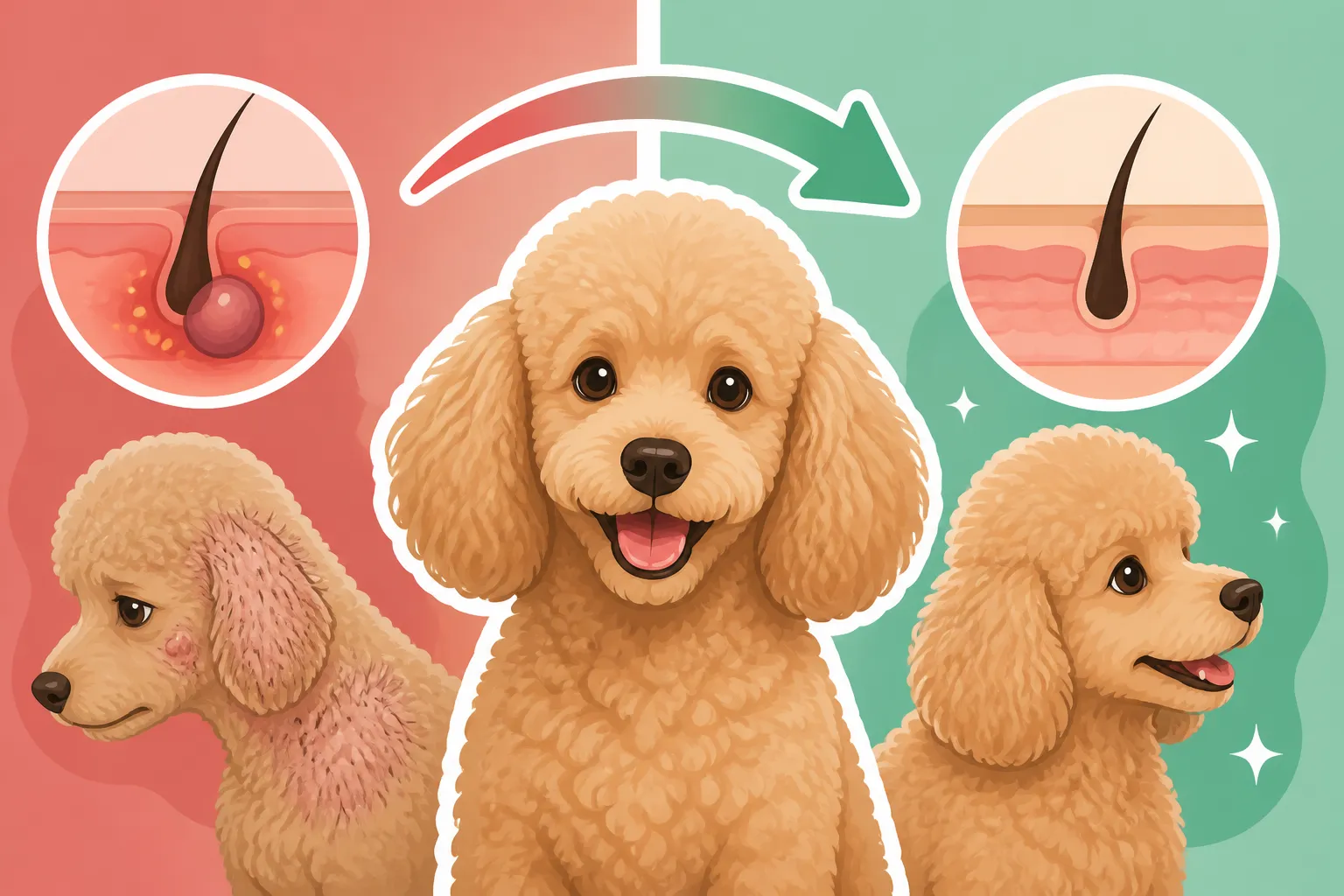
However, the term "reversal" is often loosely used when people talk about achieving remission. Remission, in the context of SA, means getting the clinical signs and symptoms of the disease under control to the point where your Poodle looks and feels significantly better. It means successfully managing the inflammation, scaling, and secondary infections, and often seeing substantial hair regrowth. This isn't a cure, but it dramatically improves the Poodle's quality of life and appearance, sometimes to a near-normal state. It requires diligent, lifelong commitment to treatment, but it is absolutely achievable for many Poodles.
Goals of SA Treatment: Remission and Symptom Control
The primary goal of treating Poodle Adenitis is to induce and maintain remission, essentially bringing the disease to a stable, manageable state. This involves a multi-pronged approach aimed at reducing inflammation, restoring skin barrier function, and preventing or treating secondary infections. When treatment is successful, you'll see a noticeable reduction in scaling, itching, and odor. Hair regrowth is often significant, especially in areas that weren't completely bald for extended periods.
Achieving this level of control requires patience, consistency, and a close working relationship with your veterinarian. It’s not a quick fix, but a marathon. This long-term commitment often comes with significant financial considerations, including ongoing medication, specialized shampoos, and regular vet visits. Pet insurance, such as a policy from Healthy Paws, can be incredibly helpful in offsetting these substantial and continuous costs, providing peace of mind as you manage your Poodle’s lifelong care. Without such support, the financial burden can become a serious stressor for families dedicated to providing the best for their affected Poodle.
A Comprehensive Approach to Managing Poodle Adenitis
Effectively managing Poodle Adenitis requires a combination of topical and systemic therapies, often adjusted over time as your Poodle's condition changes. It's truly a partnership between you and your vet, aiming to minimize discomfort and restore your Poodle’s skin and coat health as much as possible.
Topical Treatments: The Foundation of Care
Topical treatments are arguably the cornerstone of SA management. They work directly on the skin to address dryness, scaling, and inflammation, and to replace some of the lost sebum. Consistency is absolutely critical here. Without it, you'll be fighting an uphill battle.
One of the most effective topical approaches involves regular oil soaks. These soaks aim to soften and lift the thick, adherent scales that accumulate on the skin, and to moisturize deeply. Many owners use mineral oil, baby oil (which is just scented mineral oil), or even specialized veterinary oils. The process typically involves saturating your Poodle’s coat and skin with oil, letting it sit for several hours (often overnight, with a t-shirt or cover to protect furniture), and then thoroughly bathing with a degreasing shampoo followed by a moisturizing conditioner. This can be a messy and time-consuming process, but it yields remarkable results for many Poodles in managing the scaling and discomfort. For detailed instructions, our guide on Oil Soaks for a Poodle With Adenitis offers a comprehensive walkthrough.
Beyond oil soaks, specialized shampoos and conditioners are vital. Your vet might recommend a degreasing or keratolytic shampoo to help remove scales, followed by a deeply moisturizing or emollient conditioner to hydrate the skin. If secondary bacterial or yeast infections are present, medicated shampoos containing ingredients like chlorhexidine or miconazole will be prescribed. These products help to restore the skin barrier, reduce inflammation, and combat opportunistic pathogens that thrive on compromised skin. These baths might be needed weekly initially, gradually decreasing in frequency as the condition improves.
Systemic Medications: Addressing the Autoimmune Response
While topical treatments manage the external symptoms, systemic medications work internally to modulate the immune system and address the root cause of the autoimmune attack. These are often used in conjunction with topical therapies, especially during initial stages or flare-ups.
Immunosuppressant drugs, most notably cyclosporine (often prescribed under brand names like Atopica), are frequently used for Poodles with SA. Cyclosporine works by selectively suppressing the specific immune cells responsible for attacking the sebaceous glands. It can take several weeks to months to see the full effect, and close monitoring by your vet is essential due to potential side effects like gastrointestinal upset or increased susceptibility to infections. The dosage will often be started high and then gradually tapered down to the lowest effective dose for maintenance. This medication can be quite expensive, so having a good pet insurance plan, like one from Healthy Paws, can be a real lifeline for managing these ongoing costs.
Corticosteroids, such as prednisone, can be used for short periods to control severe inflammation during acute flare-ups. However, due to their significant potential side effects with long-term use (e.g., increased thirst, urination, appetite, muscle weakness, and liver issues), they are generally not recommended for long-term management of SA. Instead, they are reserved for crisis intervention or to help bridge the gap while other medications, like cyclosporine, begin to take effect.
Additionally, certain supplements can play a supportive role. Omega-3 fatty acids, known for their anti-inflammatory properties, are often recommended. High doses can help reduce the overall inflammatory response in the body, benefiting both the skin and general health. Your vet might also suggest vitamin A supplementation, as it plays a crucial role in skin cell health and sebaceous gland function. However, always consult your vet before adding any supplements, as incorrect dosages can be harmful.
Nutritional Support and Environmental Considerations
While there isn't a specific "cure-all" diet for SA, nutritional support can certainly complement medical treatment. A high-quality diet rich in easily digestible proteins and healthy fats, particularly those high in omega-3 and omega-6 fatty acids, can support skin health. Some Poodles may benefit from diets specifically formulated for sensitive skin or those that are limited ingredient if concurrent food sensitivities are suspected (though SA is not typically allergy-driven). This distinction is important, as SA is an autoimmune condition, while Poodle Allergies and Skin Reactions are often driven by environmental or food triggers.
Environmental factors can also impact skin health. Maintaining a comfortable humidity level in your home, especially during dry winter months, can prevent further skin dryness. Avoiding harsh chemicals or irritants in grooming products or household cleaners is also wise. Finally, for practical reasons, many owners choose to keep their Poodle in a shorter clip. This makes applying topical treatments much easier, helps to keep the skin cleaner, and can reduce the accumulation of scales and debris in the coat. It won't reverse the condition, but it makes day-to-day management significantly more practical and comfortable for your Poodle.
Living with a Poodle with Sebaceous Adenitis
Living with a Poodle diagnosed with Sebaceous Adenitis is a journey that requires immense dedication, patience, and love. It’s not just about managing a disease; it’s about providing comfort and quality of life for a cherished family member facing a lifelong challenge.
The Commitment and Emotional Journey
There's no sugarcoating it: managing Poodle Adenitis is a significant commitment. It involves a consistent routine of baths, oil treatments, medication administration, and regular veterinary check-ups. This routine can be time-consuming, and the financial cost, especially for medications like cyclosporine, can be substantial over the lifetime of your Poodle. Many owners feel a rollercoaster of emotions – from the initial shock and sadness of diagnosis to the frustration when treatments don't work as quickly as hoped, and then the joy when their Poodle finally starts to look and feel better. It's a testament to the bond we share with our Poodles that we embark on this demanding journey with such unwavering dedication.
It's also important to acknowledge that the visible effects of SA, particularly hair loss and scaling, can be difficult for owners. We want our Poodles to look their best, and seeing their beautiful coats diminish can be emotionally taxing. However, focus should always remain on your Poodle's comfort and health, not just aesthetics. Many online communities and support groups exist for owners of dogs with SA, offering a invaluable space to share experiences, tips, and emotional support. This kind of community can be a real lifeline. When considering the long-term costs, it's also worth noting that things like whether a breeder's guarantee covers SA, as discussed in Whether a Guarantee Covers Poodle Adenitis, become critical considerations for new puppy owners.
Partnering with Your Veterinarian and Specialist
A strong partnership with your veterinary team is paramount. Your regular veterinarian will be your primary guide, but don't hesitate to ask for a referral to a board-certified veterinary dermatologist, especially if your Poodle's case is severe, complex, or not responding well to initial treatments. A specialist has advanced knowledge and experience in managing challenging skin conditions and can offer more specialized diagnostic tests or treatment protocols. They can also help you understand the nuances of the disease and how to best tailor a plan for your specific Poodle.
Regular follow-up appointments are crucial for monitoring your Poodle’s response to treatment and adjusting protocols as needed. Your vet will assess skin condition, hair regrowth, and overall comfort, and may perform blood tests to monitor medication levels or check for secondary infections. This adaptive approach ensures that your Poodle is always receiving the most effective and appropriate care. Just as with humans, conditions can change as your Poodle ages, so understanding comprehensive care, like that detailed in Caring for an Aging Poodle, becomes increasingly relevant for long-term SA management. By maintaining open communication and actively participating in your Poodle's care plan, you can help them live a happy, comfortable life despite this challenging diagnosis.
Disclaimer
This article is intended for informational purposes only and does not constitute veterinary advice. Always consult with a qualified veterinarian for any health concerns or before making any decisions about your Poodle's medical care.