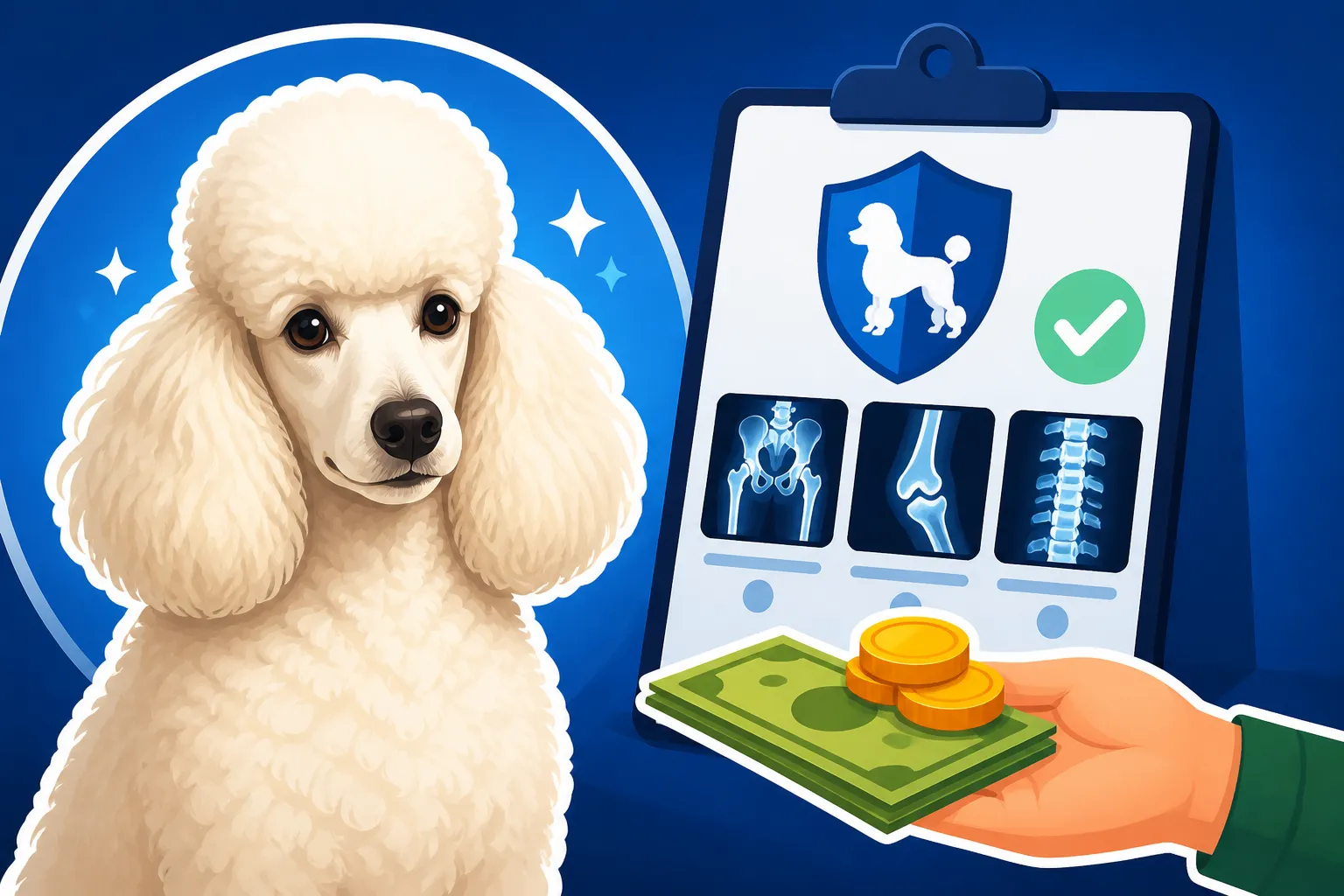
Paying to See a Poodle Line’s OFA Results
Finding a Poodle puppy feels like an exciting adventure, but it also comes with a lot of responsibility and sometimes, a bit of mystery. You're trying to do everything right, diligently researching breeders and asking all the important questions about health testing. It's incredibly frustrating when a breeder tells you their dogs are health tested, perhaps even provides an Orthopedic Foundation for Animals (OFA) number, but then you hit a wall trying to verify those results yourself. You just want peace of mind, and it feels like you shouldn't have to jump through hoops or even pay to get basic information that directly impacts your future Poodle's well-being. This guide will walk you through exactly what OFA results are, why they're so vital for Poodles, and crucially, how you can access them, discussing both the free and, occasionally, the paid avenues you might encounter.
Understanding OFA Results and Their Importance for Poodles
When you're looking for a Poodle, whether it's a tiny Toy, an elegant Miniature, or a majestic Standard, health testing should be at the absolute top of your checklist. The Orthopedic Foundation for Animals (OFA) is a not-for-profit organization dedicated to promoting the health and welfare of companion animals through genetic disease control. Essentially, they provide a centralized database for various health screenings, helping breeders make informed decisions to reduce the incidence of inherited diseases.
For Poodles, this isn't just a nicety; it's a necessity. This breed, like many purebreds, can be prone to certain genetic conditions that diligent testing can help mitigate. For instance, Standard Poodles are more susceptible to conditions like hip dysplasia and certain autoimmune diseases, while Toy and Miniature Poodles can struggle with luxating patellas. Without OFA testing, breeders are essentially guessing, and you, the prospective owner, are taking a significant gamble with your future Poodle's health, and by extension, your wallet and heart. Knowing a Poodle's parents have been cleared of common genetic issues through OFA testing dramatically increases your chances of bringing home a healthy, happy companion. It's a foundational step in responsible breeding, and it’s why breeders who test are worth their weight in gold. You might be surprised at what a Poodle breeder must test for to truly ensure the health of their lines.
What OFA Screens For in Poodles
OFA offers certifications for a wide array of conditions, but for Poodles, some are more commonly sought and critically important. These include evaluations for:
- Hip Dysplasia: This is a hereditary condition where the hip joint doesn't form properly, leading to arthritis and pain. While more commonly associated with larger breeds, Poodles of all sizes can be affected, though Poodle Hip Dysplasia by Size often sees Standards with more severe issues. OFA evaluates X-rays and assigns ratings like Excellent, Good, Fair, Borderline, or Dysplastic.
- Elbow Dysplasia: Similar to hip dysplasia, this affects the elbow joint. While less prevalent in Poodles than some other breeds, it’s still a critical screening, especially for Standards.
- Patellar Luxation: This is particularly relevant for Toy and Miniature Poodles. It involves the kneecap slipping out of place, causing lameness. OFA assigns grades (0-4) based on the severity. You can read more about Luxating Patella in Toy and Miniature Poodles.
- Eye Diseases: Through examinations by a board-certified veterinary ophthalmologist (recorded by OFA), breeders screen for inherited eye conditions such as Progressive Retinal Atrophy (PRA), which can lead to blindness. If you're looking into buying a Poodle puppy, it's worth understanding Inherited Blindness in Poodles.
- Thyroid Disease: Hypothyroidism is not uncommon in Poodles. OFA provides a registry for thyroid function, helping identify dogs that may be prone to this condition. Getting a full thyroid panel is often something reputable Poodle breeders order, as covered in Thyroid Disease in Poodles.
- Cardiac Disease: OFA screens for various heart conditions through auscultation (listening with a stethoscope) and sometimes echocardiograms.
- Sebaceous Adenitis (SA): This autoimmune skin condition, particularly prevalent in Standard Poodles, causes inflammation of the sebaceous glands, leading to hair loss, scaling, and secondary skin infections. OFA has a database for SA results, although diagnosis is often clinical and confirmed by biopsy. You can learn more about Sebaceous Adenitis and the Poodle Coat.
- Von Willebrand Disease (vWD): This is a genetic bleeding disorder. DNA testing can identify affected dogs and carriers, which is crucial for preventing its spread. Von Willebrand Disease in Poodles explains this in more detail.
Reputable breeders invest time, effort, and money into these screenings, understanding that their breeding choices impact generations of Poodles. These tests offer an invaluable snapshot of a dog's genetic health, moving beyond just looks or temperament to ensure a sound foundation for the puppies they produce.
When OFA Results Might Not Be Immediately Publicly Available
It's common to assume that if a dog has undergone OFA testing, the results will be instantly searchable and publicly accessible. For the most part, this is true and ideal. The OFA website's public search database is a fantastic tool for verifying a breeder's claims. However, there are a few scenarios where you might find yourself needing to take an extra step, and in rare cases, face a small fee, to get the full picture.
The biggest frustration often comes from transparency, or lack thereof. A breeder might tell you "all our dogs are OFA tested" and provide a registration number or a dog's call name. You plug it into the OFA search, and… nothing. Or maybe you find partial results, but not for everything you expect. This can be genuinely anxiety-inducing, making you wonder if you're being misled or if there's something to hide. It's a common concern, especially when you're making such a significant investment in a puppy. This is where a little investigative work, and understanding the OFA system, comes into play.
Reasons for Non-Public or Hard-to-Find Results
Several factors can lead to OFA results not appearing immediately or completely in the public database:
- Pending Results: Sometimes, tests have been submitted, but the official evaluations are still pending. This is common with puppies or younger breeding prospects who might have preliminary hip/elbow evaluations before their final, age-appropriate clearances at two years old. While preliminary results are good indicators, final certifications are the gold standard. A breeder should always be upfront if results are pending.
- Privacy Settings Chosen by the Owner: When a dog owner submits tests to OFA, they have the option to make the results public or private. While most reputable breeders choose public disclosure for transparency, some might opt for privacy, often for personal reasons or if they only intend to use the results internally and share them directly with prospective puppy buyers. If a breeder has done this, you won't find the results on the public database, which is a red flag in terms of transparency.
- Older or Obscure Tests: While major orthopedic and genetic screenings are usually well-documented, very old results or highly specialized, less common tests might require a more specific search query or direct inquiry with OFA's administrative team. However, for core Poodle health screenings like hips, eyes, and patellas, this is rarely the issue.
- Mismatched or Incomplete Information: A typo in the dog's registered name, a missing registration number, or variations in how a breeder refers to a dog can make finding records difficult. Always ask for the dog's registered name and registration numbers (e.g., AKC, UKC) as these are the most reliable identifiers in the OFA database.
- Tests from Other Databases: Sometimes breeders use different health registries or specialized labs for certain genetic tests (e.g., specific DNA panels for diseases like PRA or vWD). While these are often excellent tests, they might not be centralized on the OFA website itself. However, OFA often links to or integrates results from other recognized labs for genetic screenings, creating a more comprehensive picture. Always ask for the specific testing body if it's not OFA.
If a breeder seems hesitant or gives you vague answers when you can't find results, that's a serious warning sign. Transparency is key. A responsible breeder wants you to feel confident in their dogs' health and will go above and beyond to provide documentation. After all, they are selling a living creature, and you deserve to know its genetic background. This is far more important than any Poodle Puppy Prices Across the Three Sizes.
Navigating OFA Results: Free and Potentially Paid Access
The good news is that for the vast majority of cases, accessing a Poodle's OFA health test results should be straightforward and completely free. The OFA website is designed to promote transparency. However, understanding the different paths to get information, and what to do if you hit a snag, is crucial for any responsible Poodle owner.
Free Access Methods: Your First Line of Defense
The OFA website is your primary, free resource for verifying a breeder's health claims. Here's how to use it effectively:
-
The OFA Public Search Database: Head over to the Orthopedic Foundation for Animals' official website. Look for a section titled "Search Database" or "Online Cerf/OFA Data." You'll typically find search fields where you can enter:
- Registered Name: The full, official registered name of the Poodle (e.g., "CH Poodletopia's Royal Reflection"). This is often the most reliable way.
- Registration Number: The dog's American Kennel Club (AKC) or United Kennel Club (UKC) registration number.
- OFA Number: If the breeder provides a specific OFA certification number (e.g., "PO-XXXXXG24F-VPI"), you can use this directly.
- Breed: Select "Poodle" (or the specific variety if listed separately, though usually just Poodle covers all).
Once you search, you should see a list of results, often showing all public certifications for that dog, including hip, elbow, patella, eye, thyroid, and other relevant screenings. You'll see the date of the evaluation, the result (e.g., "Good," "Normal," "Clear"), and the OFA number. This is where you can confirm if the results match the breeder's claims.
-
Requesting Documentation Directly from the Breeder: A truly reputable breeder will not only provide the registered names and numbers but will also offer copies of all health certificates. They might even have a binder or a digital file ready for you to review. Don't be shy about asking for these. This includes copies of official OFA certificates, as well as results from other labs for DNA testing (like for vWD or PRA) that might not be directly linked to OFA yet. A transparent breeder will happily share these documents. If a breeder is trying to hide the sire, for example, that's a massive red flag, as discussed in What a Poodle Breeder Hiding the Sire Is Hiding.
When You Might Encounter a "Paywall" (and What It Usually Means)
It's rare that you'll have to pay directly to OFA for a standard search of public records. OFA's mission is public health, and that includes making information accessible. However, there are nuances:
- Advanced Searches or Historical Data: For the average puppy buyer, this isn't usually an issue. But if you were, say, a researcher or a breeder delving into decades-old pedigrees or very specific, obscure data not easily indexed by the general search, you might need to make a formal request to OFA for research purposes, which could incur an administrative fee. This is far beyond what a typical puppy buyer would need.
- Third-Party Pedigree Databases: Some specialized canine pedigree databases or breeding software subscriptions (often used by serious show breeders) integrate OFA data and other health clearances. These are subscription services, and while they compile vast amounts of information in one place, you're paying for the service of compilation and ease of access, not for the OFA data itself. Think of it like a premium analytics tool for breeders. For example, systems that help analyze genetic diversity or coefficient of inbreeding (COI) might pull in health data, and access to these systems has a cost.
- Non-OFA Testing Labs: If a breeder uses a specific lab for genetic DNA testing (like Embark Veterinary or Canine Health Check for various Poodle panels), those labs will provide results. While a breeder should always provide you with these copies, if you, for some reason, wanted to independently verify the results directly from the lab without the breeder's help (which would be an unusual and challenging situation), the lab might charge you for a report or access. Again, this isn't paying OFA; it's potentially paying another entity for a service.
Important Note: If a breeder implies you need to pay them to see OFA results, or pay OFA directly for a basic public search, that's a massive red flag. Reputable breeders understand that transparency builds trust, and the core OFA database is free to use for this purpose. If you're encountering resistance, it's wise to consider why. Sometimes, this can be an indicator that the breeder hasn't actually done the testing, or the results are not favorable.
Comparing Free and Paid Access Methods
Here’s a quick overview to help you understand your options:
| Feature | Free Access (OFA Website) | Potentially Paid Access (Third-Party/Specific Request) |
|---|---|---|
| Purpose | Verify basic health certifications (hips, elbows, eyes, etc.) | Access specialized reports, historical data, integrated pedigree analysis, or specific genetic lab results if not provided by breeder (rare for buyers). |
| Information Required | Dog's registered name, registration number, or OFA number | Often requires specific subscription to breeding software, direct contact with OFA for research, or specific genetic lab account information. |
| Transparency | High, if breeder submitted results publicly. | Varies; depends on the third-party service or specific lab. Breeder transparency is still paramount. |
| Cost | Free | Can range from small administrative fees for specific historical requests to monthly/annual subscriptions for advanced breeder databases or direct lab reports. |
| Typical User | Prospective puppy buyers, concerned owners, researchers | Advanced breeders, genetic researchers, breed club health committees. |
| Key Takeaway | Should be your first and often only necessary step. | Rarely needed for the average puppy buyer. If a breeder pushes you toward a paid option, be wary. |
When you're comparing pet insurance plans like those offered by Healthy Paws, understanding a Poodle's health history, backed by OFA results, can give you a clearer picture of potential future veterinary costs. While insurance won't cover pre-existing conditions, knowing a puppy comes from health-tested lines reduces the likelihood of costly surprises. Similarly, managing your Poodle's diet with high-quality options from places like Chewy or fresh food services like Ollie can contribute to long-term health, but it all starts with a healthy genetic foundation.
Interpreting OFA Results and Recognizing Red Flags
Once you get your hands on those OFA results, whether directly from the website or from your breeder, it's crucial to understand what you're looking at. The raw data won't mean much without knowing how to interpret it. This is where you transition from simply accessing information to actively making an informed decision about your future Poodle.
Decoding the OFA Certifications
Each OFA certification provides specific terminology that indicates the health status of the dog for that particular condition:
- Hips: Rated as Excellent, Good, Fair (all considered passing), Borderline, or Dysplastic (Mild, Moderate, Severe). You want to see Excellent, Good, or Fair. Any form of Dysplastic is a fail.
- Elbows: Rated as Normal (Grade I, II, or III for un-united anconeal process, fragmented coronoid process, or osteochondrosis respectively). Normal is what you want. Any grade indicates dysplasia.
- Patellas (Kneecaps): Graded on a scale of 0 to 4. Grade 0 is normal. Grades 1-4 indicate luxation, with increasing severity. For a Poodle, especially a Toy or Miniature, you absolutely want a Grade 0.
- Eyes: Certified by an ophthalmologist. The result will often state "Normal" or list any specific conditions found. You want "Normal" or "Clear." If a condition is listed, it means the dog is affected.
- Thyroid: Results typically indicate "Normal," "Autoimmune Thyroiditis," or "Hypothyroid." "Normal" is the desired result.
- Cardiac: Results are typically "Normal" or describe any diagnosed heart conditions.
- Genetic DNA Tests (e.g., vWD, PRA): These usually have results like "Clear" (meaning the dog does not carry the gene for the disease), "Carrier" (the dog carries one copy of the gene but is unaffected, though can pass it on), or "Affected" (the dog has two copies of the gene and will be affected by the disease). For recessive genetic conditions, you want at least one parent to be "Clear" to ensure no affected puppies are produced. Ideally, both parents are "Clear." This is vital information if you're looking into Genetic Panels for the Three Poodle Sizes.
What to Look for and What Raises a Red Flag
When reviewing OFA results, here's what to keep in mind:
- Passing Grades: All breeding dogs should have passing grades for all relevant health clearances for the Poodle breed. Anything less than "Normal," "Clear," "Good," or "Fair" for the appropriate conditions should make you pause.
- Age of Testing: Hips and elbows cannot receive final OFA certification until a dog is 24 months (two years) old. Preliminary results can be done earlier, but final clearances are crucial for breeding. If a breeder is breeding a dog under two years old that has not had its final hip/elbow clearances, that's a concern.
- Consistency Across Litters/Parents: If you're looking at a breeder with multiple litters, do their other breeding dogs also have consistent, good health clearances? This indicates a pattern of responsible breeding.
- Missing Tests: If a breeder claims extensive testing but you only find one or two results for a Poodle, or crucial tests like patellas for a Toy Poodle are missing, that's a red flag. A comprehensive approach means testing for all breed-relevant conditions.
- Vague Explanations: If a breeder gives you a convoluted story about why results aren't public or why a dog with a "Fair" hip score is still being bred, listen to your gut. Reputable breeders are transparent and willing to educate.
- No OFA Number, Just a Vet Letter: While a vet might confirm a dog is healthy, an official OFA certification comes from a panel of veterinary specialists reviewing the findings. A general vet letter isn't the same as a recognized OFA clearance and should not be accepted as such.
Understanding these results and knowing what to look for empowers you to choose a Poodle puppy from a breeder who genuinely prioritizes health and longevity. It's an essential part of responsible ownership, helping to ensure your furry family member has the best possible start in life. Always remember that a health clause in a Poodle breeder contract should clearly outline what happens if a genetic condition emerges, giving you an extra layer of protection and showing the breeder's commitment to their puppies' well-being. Knowing the full health picture truly does matter, and it's a key part of the value when considering Why a Tested Standard Poodle Reaches Five Thousand.
Disclaimer
The information provided in this guide is for general informational purposes only and does not constitute veterinary advice. Always consult with a qualified veterinarian for any health concerns or before making any decisions about your Poodle's health care.