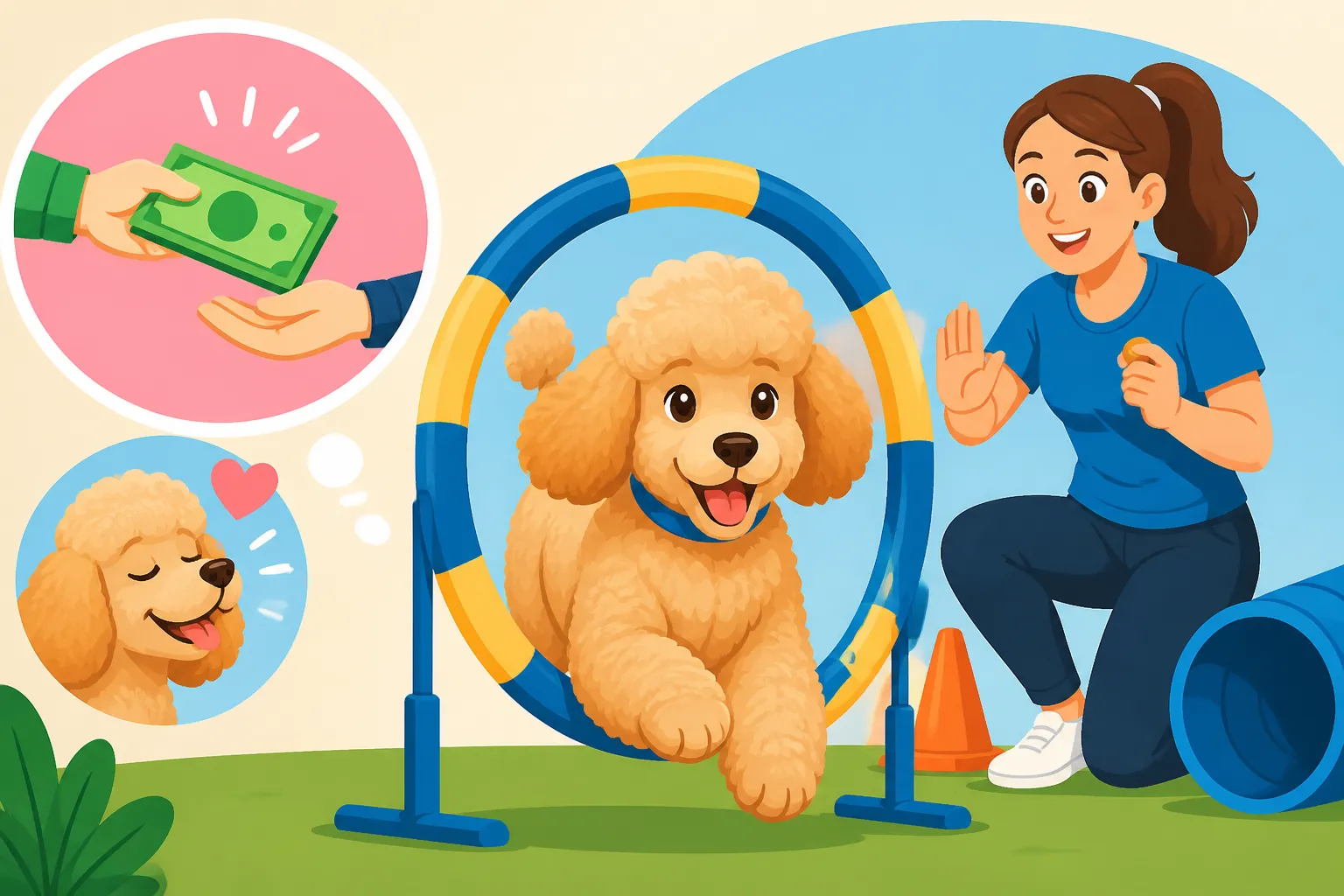
Paying a Trainer to Keep a Poodle Busy
It's a common story: you bring home your brilliant Poodle, full of expectations for a calm, well-behaved companion, only to find their incredible intelligence can turn into a whirlwind of mischief when not properly channeled. A bored Poodle is often a destructive, vocal, or anxious Poodle. This guide is here to walk you through the various options and costs associated with hiring a professional trainer to keep your clever companion mentally stimulated and happily engaged.
Why a Poodle Needs More Than Just a Walk
Many Poodle owners discover quite quickly that while daily walks are essential for physical health, they're often not enough to satisfy the profound intelligence lurking behind those bright, inquisitive eyes. Your Poodle needs a "job" to do, a way to use their brain, or they'll likely invent their own, which might not align with your home's decor or your neighbor's peace and quiet.
The Poodle Brain: A Double-Edged Sword
Poodles consistently rank among the most intelligent dog breeds, often second only to Border Collies on lists like Stanley Coren's "The Intelligence of Dogs." This incredible intellect, a legacy of their working heritage as waterfowl retrievers, means they thrive on mental challenges. If you’ve ever wondered Why a Poodle Learns a Cue in Five Repetitions, you’ve seen this intelligence in action. They pick up new commands with startling speed, but that also means they get bored with repetition just as quickly.
This can be a double-edged sword for owners. While it’s wonderful to have a dog that learns fast, it also means that Why a Bright Poodle Gets Bored is a question many Poodle parents find themselves asking. Without sufficient mental exercise, that sharp mind can easily turn to less desirable activities. This might manifest as incessant Poodle Barking and Alertness at every leaf falling outside, excessive chewing on furniture legs, or even developing Separation Anxiety in a Velcro Poodle because they haven't learned independent problem-solving. It's not malice; it's simply a Poodle finding an outlet for their unspent mental energy. They’re like a gifted child left without books or puzzles – they’ll likely dismantle something interesting instead.
Beyond Basic Obedience: Tapping into Poodle Potential
While basic obedience is a fantastic foundation, for a Poodle, it's merely the starting block. To truly engage their sophisticated minds and prevent those frustrating behaviors, you need to go further. This often means exploring advanced training that leverages their natural aptitudes. Think of it as providing a diverse curriculum for a canine genius.
Professional trainers can introduce your Poodle to a world of activities that will challenge them in ways a simple "sit" or "stay" never could. These activities aren't just about learning tricks; they're about teaching your Poodle how to think, problem-solve, and channel their energy constructively. This deep engagement can transform a bored, chaotic Poodle into a contented, focused companion. It’s about building a better relationship through mutual understanding and shared mental work, helping you avoid Training a Poodle That Outthinks You by proactively engaging their intellect.
Types of Professional Training That Engage a Poodle's Mind
When considering how to keep your Poodle busy, there’s a whole spectrum of professional training options available, each with its own benefits and cost implications. Deciding which route is best often depends on your Poodle's personality, your budget, and your own availability.
Group Classes: Socialization and Structure
Group classes are a fantastic starting point for many Poodle owners. They offer a structured environment where your Poodle can learn new skills while also getting valuable socialization with other dogs and people. This is particularly important for Poodles, who can sometimes be reserved with strangers if not properly socialized from a young age.
You'll find a wide variety of group classes that cater to a Poodle's innate abilities. Dog Sports a Poodle Excels At include agility, where they navigate obstacle courses with speed and precision, and rally obedience, which combines traditional obedience with a course of numbered stations. Scent work, or "nose work," is another excellent choice, tapping into their incredible sense of smell and giving them a "job" that truly tires them out mentally. These classes usually run for several weeks, with a set schedule (e.g., once a week for six weeks). The costs for these classes can vary significantly depending on location, the trainer’s reputation, and the complexity of the course. Expect to pay anywhere from $150 to $300 for a multi-week session. These classes are an investment, but they offer a great way for your Poodle to learn and for you to connect with other dog enthusiasts.
Private Coaching: Tailored Mental Challenges
For Poodles with specific behavioral challenges, or for owners who want to fast-track their Poodle's learning in a particular sport or skill, private coaching can be an invaluable option. Unlike group classes, private sessions offer one-on-one attention from the trainer, allowing for a customized curriculum tailored precisely to your Poodle's needs and your goals. This focused approach can be especially beneficial if your Poodle is easily distracted in group settings or has a sensitive nature that might make them Why Harsh Handling Breaks a Poodle in a less individualized environment.
A private trainer can help address issues like Telling Poodle Boredom From Real Panic or fine-tune skills for competitive Agility Club Fees for a Poodle. They can introduce advanced trick training, develop complex scent detection games, or work on specific impulse control exercises that will keep your Poodle's brain whirring. While private sessions are typically more expensive per hour than group classes, the intensive, personalized attention often means you see faster results. A single private session can range from $75 to $200 or more, depending on the trainer's experience, certifications, and travel time. Many trainers offer packages of multiple sessions, which can sometimes reduce the per-session cost.
Online Courses and Workshops: Flexible Learning for Busy Owners
In our increasingly digital world, online training options have exploded in popularity, offering a flexible and often more affordable way to engage your Poodle's mind. These can range from self-paced courses with pre-recorded videos to live, interactive virtual workshops. They're perfect for owners with unpredictable schedules or those who live in areas with limited access to specialized in-person training.
Platforms like Fenzi Dog Sports Academy or other online academies offer comprehensive courses in everything from advanced obedience and rally to canine fitness and Scent Games That Stretch a Poodle's Mind. Many of these courses are taught by highly experienced trainers and offer detailed modules, video demonstrations, and sometimes even personalized feedback on submitted videos. While you miss out on in-person socialization, the flexibility allows you to work at your Poodle's pace and integrate training seamlessly into your daily life. The costs for online courses can vary greatly, from free YouTube tutorials to premium courses costing several hundred dollars, but they often represent significant savings compared to equivalent in-person private coaching. When choosing an online course, look for clear instructions, positive reinforcement methods, and opportunities for feedback.
Here's a quick comparison of the different training types:
| Training Type | Average Cost (Per Session/Course) | Learning Style | Socialization Level | Best For |
|---|---|---|---|---|
| Group Classes | $150 – $300 (multi-week course) | Structured, collective | High | Basic to intermediate skills, sports intro |
| Private Coaching | $75 – $200 (per hour) | Personalized, intensive | Low | Specific issues, advanced skills, fast-track |
| Online Courses | $50 – $400 (course, variable) | Flexible, self-paced | None | Owners with busy schedules, specific interests |
| Workshops (short) | $50 – $150 (half-day to full-day) | Intensive, focused | Medium | Deep dive into one specific skill |
Understanding the Costs of Professional Poodle Training
Budgeting for professional Poodle training isn't just about covering the initial class fee. It's about understanding the factors that influence these costs and recognizing that ongoing mental stimulation is a continuous investment in your Poodle's well-being and your shared life.
Factors Influencing Training Fees
Several key elements come into play when trainers set their fees. Just like any specialized service, the more expertise and specialized knowledge required, the higher the price.
- Location: Training costs are often higher in urban areas compared to rural ones, reflecting the general cost of living and business overhead. A trainer in Manhattan will likely charge more than one in a small town in Iowa.
- Trainer Experience and Certifications: A highly experienced trainer with extensive certifications (e.g., CPDT-KA, KPA CTP, CTBC) and a proven track record, especially with intelligent breeds like Poodles or specific behaviors, will command higher rates. Their expertise is invaluable for Finding a Trainer a Poodle Will Not Shut Down For and ensuring positive, effective methods.
- Type of Training: Basic puppy classes or adult manners classes are generally less expensive than specialized sports training (like advanced agility or competitive obedience) or behavior modification for complex issues. The latter often requires more in-depth knowledge and time from the trainer.
- Class Size and Duration: Smaller group classes or longer private sessions typically cost more per participant due to the increased individualized attention. A weekend workshop focusing on a specific skill, for instance, might be more expensive than a single group class session but offers intensive learning.
- Travel: If a private trainer comes to your home, you might incur additional travel fees, especially if you live outside their standard service area.
All these factors contribute to the wide range of prices you'll see. It’s important to remember that you're paying for expertise and results, not just hours.
Budgeting for Ongoing Mental Stimulation
Think of training as an ongoing education for your Poodle. It's not a one-and-done deal. Just like a child benefits from continued learning, your Poodle thrives on consistent mental challenges. Poodle Training and Sports Class Costs will become a part of your pet ownership budget, but it’s an investment that pays dividends in a well-adjusted, happy companion.
Consider a multi-faceted approach. You might start with a group puppy class, then move to an intermediate obedience class, perhaps dabbling in Dog Sports a Poodle Excels At like agility. Many owners eventually find a favorite sport and continue with advanced classes or private coaching. Don't forget the tools for home practice either; items from pet retailers like Chewy, such as puzzle toys, snuffle mats, and quality chew items, can provide daily mental enrichment between formal training sessions. Investing in these activities can prevent costly behavioral problems down the line, such as destruction, excessive barking, or anxiety, which often require even more expensive behavioral consultations or even veterinary intervention.
While pet insurance typically covers unexpected veterinary bills, routine training isn't usually included. However, some advanced behavioral modification might be covered if a veterinarian diagnoses an underlying medical or behavioral condition (e.g., severe anxiety) and refers you to a certified veterinary behaviorist whose program might include training components. Always check with your provider, such as Healthy Paws, to understand your specific policy's coverage for behavioral issues. Ensuring your Poodle is mentally stimulated is a proactive step that can contribute to their overall health and reduce the likelihood of stress-related ailments.
Maximizing Your Investment: Getting the Most from a Poodle Trainer
Hiring a professional trainer is a significant investment of both time and money. To ensure you get the best return, it’s crucial to be an active participant in the process. The trainer provides the knowledge and structure, but your commitment at home is what truly cements the learning and enriches your Poodle's life.
Finding the Right Trainer for Your Poodle's Personality
Not all trainers are created equal, and not every trainer is the right fit for every dog, especially a sensitive and intelligent Poodle. It's paramount to Finding a Trainer a Poodle Will Not Shut Down For. Look for trainers who exclusively use positive reinforcement methods. This means rewarding desired behaviors with treats, praise, or toys, rather than using harsh corrections or punitive techniques. Poodles are incredibly sensitive, and negative training methods can easily break their spirit, making them fearful or unwilling to engage.
Interview potential trainers. Ask about their philosophy, their experience with Poodles or other intelligent breeds, and their qualifications. A good trainer should be able to clearly explain their methods and provide references. Observe a class or a session if possible. Does the trainer seem enthusiastic and knowledgeable? Do the dogs in the class look happy and engaged? A trainer who understands the unique drive and intelligence of a Poodle will be able to challenge them without overwhelming them, creating a fun and productive learning environment. Remember, you're looking for a partner in your Poodle's development.
The Owner's Role: Consistency and Home Practice
A trainer can teach your Poodle skills, but you are the one who lives with your Poodle every day. Your consistency and dedication to home practice are absolutely vital for translating classroom learning into real-world behavior and lasting mental engagement. Think of it like school: the teacher provides the lessons, but the student needs to do their homework.
Integrate short, fun training sessions into your daily routine. Even 5-10 minutes a few times a day can make a huge difference. Reinforce commands learned in class, introduce new tricks, or set up simple scent games around the house. High-value treats, such as those from Ollie, can be incredibly motivating for a Poodle during these sessions, especially when learning something new or difficult. Don't just practice the "sits" and "stays"; explore puzzle toys, snuffle mats, and interactive feeders, many of which can be found on Chewy, to keep their minds active during meal times. Remember that your Poodle's brain thrives on novelty and challenge, so rotate toys and introduce new learning opportunities regularly. By committing to consistent practice and providing ongoing mental stimulation, you’ll not only strengthen your bond with your Poodle but also ensure that the investment in professional training truly pays off, leading to a well-behaved, fulfilled, and joyfully busy companion.
Disclaimer
This article is for general informational purposes only and does not constitute professional advice. Laws, prices and regulations vary by location and change over time. Consult a qualified professional for guidance on your specific situation.