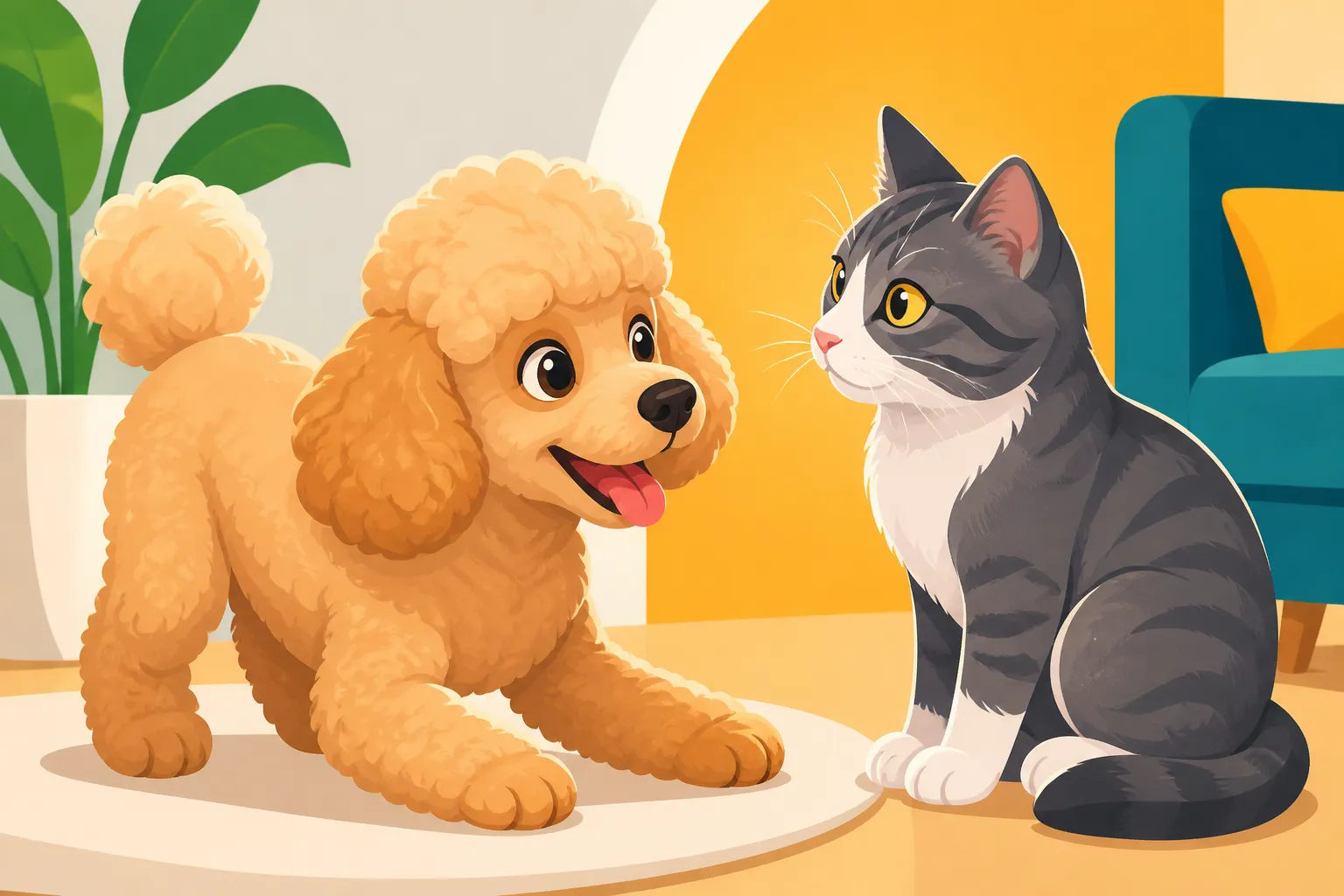
A Poodle Meeting the Household Cat
Bringing a new Poodle into a home where a feline friend already reigns supreme can feel like you're setting the stage for a dramatic confrontation. It’s a common worry: how will these two distinct species, one known for its vivacious energy and the other for its independent grace, ever learn to coexist peacefully, let alone bond? This guide is here to walk you through the process, offering empathetic, realistic advice to help your Poodle and household cat navigate their introduction, understand each other's needs, and ideally, build a harmonious life together under one roof.
Understanding Poodle and Cat Instincts
Before you even think about putting a Poodle and a cat in the same room, it's crucial to understand their fundamental natures. These aren't just two random animals; they come with millennia of ingrained behaviors and instincts that will heavily influence their initial reactions and their long-term relationship. Understanding these will help you anticipate challenges and respond with patience and wisdom, rather than frustration.
The Poodle's Prey Drive and Play Instincts
Poodles, regardless of their size, were originally bred as active, intelligent water retrievers. This means they often come with a natural inclination to chase, retrieve, and react to sudden movements. While your Poodle might be a beloved companion today, the echoes of its working past can still manifest as a strong prey drive. When a cat streaks across the room, the Poodle's instinct might be to pursue, not out of malice, but because that quick movement triggers an ancient, hardwired response. It’s the same impulse that makes them excellent at fetching a thrown ball or a duck from the water.
For a young or particularly energetic Poodle, this chasing can often be a form of play, a game of "catch me if you can." They might not intend to harm the cat, but their size, speed, and enthusiasm can be terrifying to a smaller, more delicate feline. A Standard Poodle’s boisterous play can easily overwhelm a cat, while even a Toy Poodle’s persistent pestering can be extremely stressful. The good news is that Poodles are remarkably intelligent and highly trainable. Their eagerness to please, combined with their sharp minds, means that with consistent, positive reinforcement, you can teach them to redirect their chasing instincts and to be respectful of their feline housemate. However, don't underestimate the initial instinct; it's a powerful force you'll need to gently guide and manage.
The Cat's Natural Defenses and Territories
Cats, on the other hand, are masters of their domain. They are inherently territorial creatures who thrive on routine and predictability. Any change to their environment, especially the introduction of a new, larger, and often boisterous animal, can be a huge source of stress. A cat's first reaction to a strange dog is often fear, followed by a strong desire to defend its territory or escape to safety. You'll likely see classic defensive behaviors: hissing, swatting, arched backs, puffed-up tails, and flattened ears. These aren't signs of aggression born of malice, but rather the cat communicating its discomfort and fear, trying to make itself look bigger and more intimidating to scare off the perceived threat.
Their survival strategy often involves seeking high ground, finding hiding spots, or simply fleeing the scene. It’s vital to respect these natural defenses. Forcing interaction will only escalate their stress and could lead to a negative association with the Poodle that's very hard to undo. Your cat needs to feel secure and in control of its environment, with clear escape routes and safe havens where the Poodle cannot reach. Understanding that your cat needs space and predictability will be key to making this introduction a success.
Preparing Your Home for a Poodle-Cat Introduction
The success of a Poodle-cat introduction often hinges on the preparations you make before the two animals ever see each other. This isn't about rushing the process; it's about setting up an environment where both pets feel safe, secure, and ready to slowly acclimate to the idea of a new housemate. Skipping this crucial stage can lead to unnecessary stress for everyone involved and a much longer, harder road to harmony.
Creating Safe Spaces for Both Animals
The absolute cornerstone of a successful introduction is ensuring both your Poodle and your cat have their own dedicated safe spaces, completely separate from each other, at least initially. For your cat, this means vertical space and escape routes. Cats feel much more secure when they can observe from a height. Think about sturdy cat trees that reach the ceiling, shelves mounted specifically for your cat, or even the tops of bookcases or tall cabinets that the Poodle absolutely cannot access. These provide not just observation decks but also vital escape routes when they feel threatened.
Additionally, consider using baby gates. A gate with a small cat-flap opening at the bottom allows the cat to pass freely between rooms, including its safe zone, while keeping the Poodle contained. You might need extra-tall gates for a Standard Poodle, or secure gates that a clever Miniature Poodle can't jump. Make sure the cat's food, water, and litter box are located in these cat-only zones to prevent any resource guarding or stress around vital necessities. For your Poodle, a comfortable, secure crate can serve as its primary safe space, especially during the initial phases. This is a place where your Poodle can retreat, relax, and know it won't be bothered. It's also an invaluable tool for management, helping to manage their energy and prevent unsupervised interactions. If you’re introducing a puppy, it's also a great way to help with Crate Training a Poodle That Wants Company.
Scent Swapping and Gradual Acclimation
Before any visual contact, the most powerful tool you have for a smooth introduction is scent. Animals communicate heavily through smell, and allowing them to get used to each other's scent in a non-threatening way can significantly reduce anxiety when they finally meet face-to-face. Start by gently rubbing a soft cloth or a blanket on your cat’s cheeks and body, where their scent glands are prominent, and then place it in your Poodle’s crate or sleeping area. Do the same in reverse: rub a cloth on your Poodle and place it near your cat’s favorite napping spot or feeding area.
Observe their reactions. Does your Poodle sniff curiously or try to play-bow at the cloth? Does your cat cautiously approach it, or hiss and run away? These reactions give you valuable clues about their comfort levels. Repeat this scent swapping daily for several days or even a week, gradually moving the scented items closer to their respective food bowls. Another powerful technique is to feed them on opposite sides of a closed door. This creates a positive association (mealtime!) with the presence of the other animal's scent, without the visual stress. They learn that the smell of the other means good things are happening, laying a crucial foundation for acceptance.
The First Encounters: Controlled and Positive
The first time your Poodle and cat actually see each other needs to be carefully orchestrated to ensure it's a positive, low-stress experience for both. This isn't a moment for spontaneous discovery; it's a planned event, controlled by you, designed to set them up for success. Remember, you're aiming for calm curiosity, not immediate friendship.
Leashed Introductions and Short Sessions
When you're ready for the first visual introduction, ensure your Poodle is on a leash and harness, even if they're typically well-behaved. This gives you immediate control to prevent any sudden lunges or overly boisterous behavior. Choose a neutral room that isn't primarily "the cat's room" or "the dog's room." Have an escape route or high ground readily available for the cat, should it choose to retreat. Let the cat enter the room first, giving it the choice to observe from a distance or hide. Then, bring in your leashed Poodle.
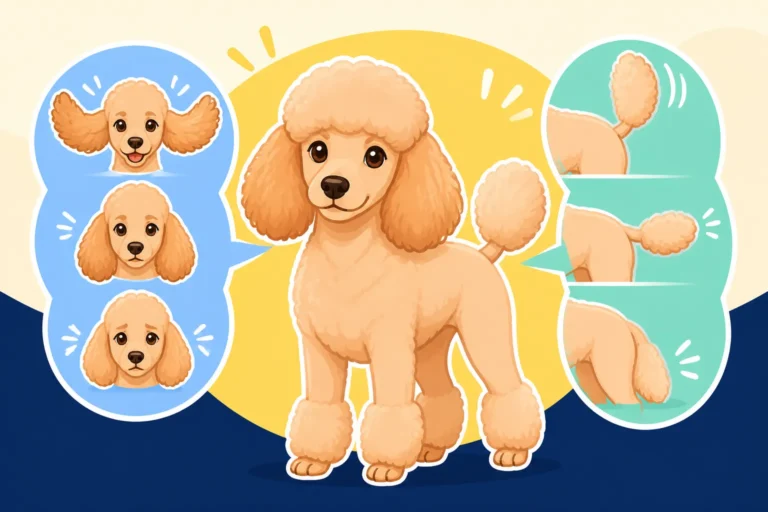
Keep these first sessions incredibly short – just a few minutes, or even less if either animal shows signs of stress. The goal is to end the interaction before any negative feelings build. During these moments, reward both animals lavishly for calm behavior. Give your Poodle high-value treats for sitting, staying, or simply ignoring the cat. Toss treats to your cat if it stays in the room, even if it's just watching from a distance. Positive reinforcement is key here. If your Poodle gets overly excited, use a cheerful, firm "leave it" command and redirect its attention to you with a treat or a favorite toy. Knowing how to read Reading a Poodle's Body Language will be essential during these sessions to understand when to pause or end the interaction.
Managing Reactions and Reinforcing Calm Behavior
It’s completely normal for there to be some initial tension. Your Poodle might whine, pull on the leash, or become very focused on the cat. Your cat might hiss, swat, or simply disappear under the sofa. Your job is not to punish these reactions, but to manage them and reinforce the calm responses you want to see. If your Poodle fixates, gently redirect its attention with a verbal cue and a treat, or physically move it a step or two away. If the cat hisses, do not scold it; this is a natural defensive response. Instead, allow it to retreat to its safe space. Never force an interaction or try to hold your cat in place if it's clearly distressed.
The key is consistency and patience. Every interaction should be positive, even if it's just a fleeting moment of calm observation. If your Poodle is getting overly aroused, it's a sign that you need to end the session immediately and try again later, perhaps with more distance between them. You can also use this time to practice commands like "sit" and "stay" with your Poodle, rewarding heavily for focus on you instead of the cat. Resources like BAXTER & Bella offer excellent online training programs that can provide structured guidance for these obedience exercises, helping you establish control and communication with your Poodle in a positive way. Remember, you're building a foundation of trust and respect, one calm moment at a time.
Establishing Harmony and Long-Term Coexistence
Once you've had several successful, calm, leashed introductions, you can begin to gradually extend their time together and introduce more freedom. This stage still requires careful supervision and consistent reinforcement of boundaries, but it's where you start to see the real potential for a peaceful, shared household.
Supervising Interactions and Extending Freedom
As both your Poodle and cat become more accustomed to each other's presence during short, leashed sessions, you can start to increase the duration of these encounters. The next logical step is to allow your Poodle to be off-leash, but only under direct and active supervision. This means you are in the room, fully present, ready to intervene instantly if needed. Don't assume that just because they've been calm on a leash, they'll be perfect off it. The leash provides a sense of control and safety for the cat too.
During these off-leash supervised times, continue to reward both animals for calm, respectful behavior. If the Poodle starts to stare too intently, make noise to break its focus, redirect it to a toy, or call it to you for a "sit" and a treat. If the cat swats at the Poodle, allow it to set its boundary, and praise the Poodle for backing off. It’s crucial to continue feeding them separately, ideally with the cat in its secure area, to prevent any competition over food, which can quickly lead to resentment or aggression. Reinforcing commands like "leave it" and Poodle Recall Training will be invaluable here, ensuring you can call your Poodle away from the cat if its curiosity becomes too intense. Remember, your presence is the safety net; don't leave them unsupervised until you're absolutely confident in their established peace.
Addressing Common Challenges and Troubleshooting
Even with the best intentions and careful introductions, challenges can arise. It's important to understand that this is a process, and there might be setbacks. One common issue is a Poodle that continues to chase the cat, perhaps not aggressively, but with an intensity that terrifies the feline. In this scenario, you need to go back to basics: more leash management, shorter sessions, and increased redirection with highly engaging toys or training exercises. Your Poodle's intelligence, while a blessing, can sometimes lead them to "invent their own shortcuts," as they say, which might include finding ways to pester the cat. Use their intelligence to your advantage by making you more interesting than the cat.
If your cat remains perpetually fearful, hiding away constantly, you might need to re-evaluate its safe spaces. Are they truly secure? Are there enough of them? You can also explore calming aids like Feliway diffusers, which release synthetic feline facial pheromones that can help reduce stress. Sometimes, despite all efforts, an introduction can stall, or even regress. If you find yourself hitting a wall, or if any aggression (from either animal) seems to be escalating, it's time to consult a certified professional dog trainer or a veterinary behaviorist. They can observe your specific situation and provide tailored advice. Remember, Poodles are highly sensitive creatures, and understanding Poodle Temperament and Sensitivity is key; harsh handling or frustrated outbursts will only make the situation worse. Gentle, consistent, positive reinforcement is always the most effective path.
| Behavior / Scenario | Poodle Reaction | Cat Reaction | Owner Response |
|---|---|---|---|
| First Scent Swap | Sniffs curiously, licks, ignores | Sniffs, rubs on item, ignores, hisses, retreats | Reward calm curiosity. Allow retreat for cat. Do not force interaction. |
| First Leashed Meeting | Intense stare, whining, soft bark, pulls on leash | Hisses, growls, swat, flattens ears, runs, hides | Keep sessions brief. Reward Poodle for looking at you. Reward cat for staying in room. Redirect Poodle with treats/toy if fixating. Allow cat to retreat. End session on a positive note. |
| Poodle Chases Cat | Playful chase, barking, nipping | Runs, hides, hisses, swatting, climbs | Immediately interrupt with a firm "Leave it!" or body block. Leash Poodle. Redirect to a highly engaging toy or training exercise. Revert to more controlled, shorter sessions. Do not punish the cat for defending itself. |
| Cat Swats Poodle | Jumps back, startled, tries to sniff | Quick, warning swat (claws in or out), hisses | Praise the cat for setting a boundary. Praise Poodle for backing off. Observe if the swat was a warning or truly aggressive. Increase cat's safe spaces. |
| Poodle Ignores Cat | Walks by, glances, continues with own activity | Ignores, grooms, naps, observes from a distance | HUGE praise and high-value rewards for both! This is the goal of coexistence. Reinforce calm, separate activities. |
| Resource Guarding (Food/Toys) | Growls, stiffens, snaps near bowl/toy | Hisses, swats, tries to steal, eats quickly | Immediately separate feeding areas. Provide multiple, distinct toys. Do not allow Poodle access to cat's food/litter. Do not allow cat to share Poodle's main meal bowl. Seek professional help if aggression persists. |
Living Together: Ongoing Management and Enrichment
Achieving peaceful coexistence isn't a one-time event; it's an ongoing commitment to management, consistent boundaries, and ensuring both your Poodle and your cat feel secure and enriched in their shared home. This sustained effort will solidify their relationship and prevent potential conflicts from arising.
Daily Routines and Consistent Boundaries
Once your Poodle and cat are reliably coexisting, establishing and maintaining consistent daily routines becomes incredibly important. Animals thrive on predictability, and routines help reduce anxiety. Stick to regular feeding times, separate playtimes, and designated quiet periods. This structure reassures both pets, letting them know what to expect from their day and from each other. Continue to feed them in separate locations, even if they seem completely fine together. This prevents competition and protects the cat’s food, which is often higher in fat and protein than dog food and not suitable for your Poodle.
Consistently reinforce boundaries for your Poodle. This means immediately redirecting any attempts to chase, stare, or pester the cat. Commands like "leave it" and "off" should be used diligently whenever your Poodle crosses a line. Equally important is ensuring both animals get individual attention from you. Your Poodle needs dedicated training sessions and play, and your cat needs quiet cuddle time and interactive play that doesn't involve the Poodle. This helps prevent jealousy and ensures each pet feels loved and valued. A well-exercised and mentally stimulated Poodle is far less likely to bother a cat out of boredom; indeed, What a Poodle Does When Its Brain Is Idle often leads to mischief, including cat-chasing. Incorporate plenty of Keeping a Poodle Mind Occupied activities into their day.
Recognizing Signs of Stress or Conflict
Even in a seemingly harmonious household, it's vital to remain vigilant for subtle signs of stress or brewing conflict. Animals are masters of non-verbal communication, and recognizing these cues early can prevent minor irritations from escalating into full-blown fights. For your Poodle, watch for lip-licking, yawning (when not tired), turning its head away, a stiff body posture, whale eye (showing the whites of its eyes), or excessive panting. These can all indicate discomfort or anxiety.
For your cat, look for flattened ears, a twitching tail, dilated pupils, a hunched posture, continuous hiding, refusing to eat, or excessive grooming. Any of these signals should prompt you to intervene. Gently separate the animals, giving them both time to decompress in their safe spaces. The goal is peaceful coexistence, not necessarily best friends who always sleep cuddled together. Some Poodles and cats will become dear companions, grooming each other and napping side-by-side. Others will simply tolerate each other, sharing space respectfully. Both outcomes are successes. Remember that Poodles are intelligent and highly attuned to their environment, and even seemingly minor changes can affect their behavior. Their sensitivity means that Why Harsh Handling Breaks a Poodle is particularly true when it comes to managing inter-species relationships; consistent, calm, and positive reinforcement will yield the best results for a truly harmonious home. To keep your Poodle's mind engaged and less likely to seek "entertainment" from the cat, consider investing in puzzle feeders and interactive toys; you can find a wide variety of these on Amazon that can keep even the cleverest Poodle occupied.
Disclaimer
This article is for general informational purposes only and does not constitute professional advice. Laws, prices and regulations vary by location and change over time. Consult a qualified professional for guidance on your specific situation.