Whether Toy Poodles Are as Smart as Standards
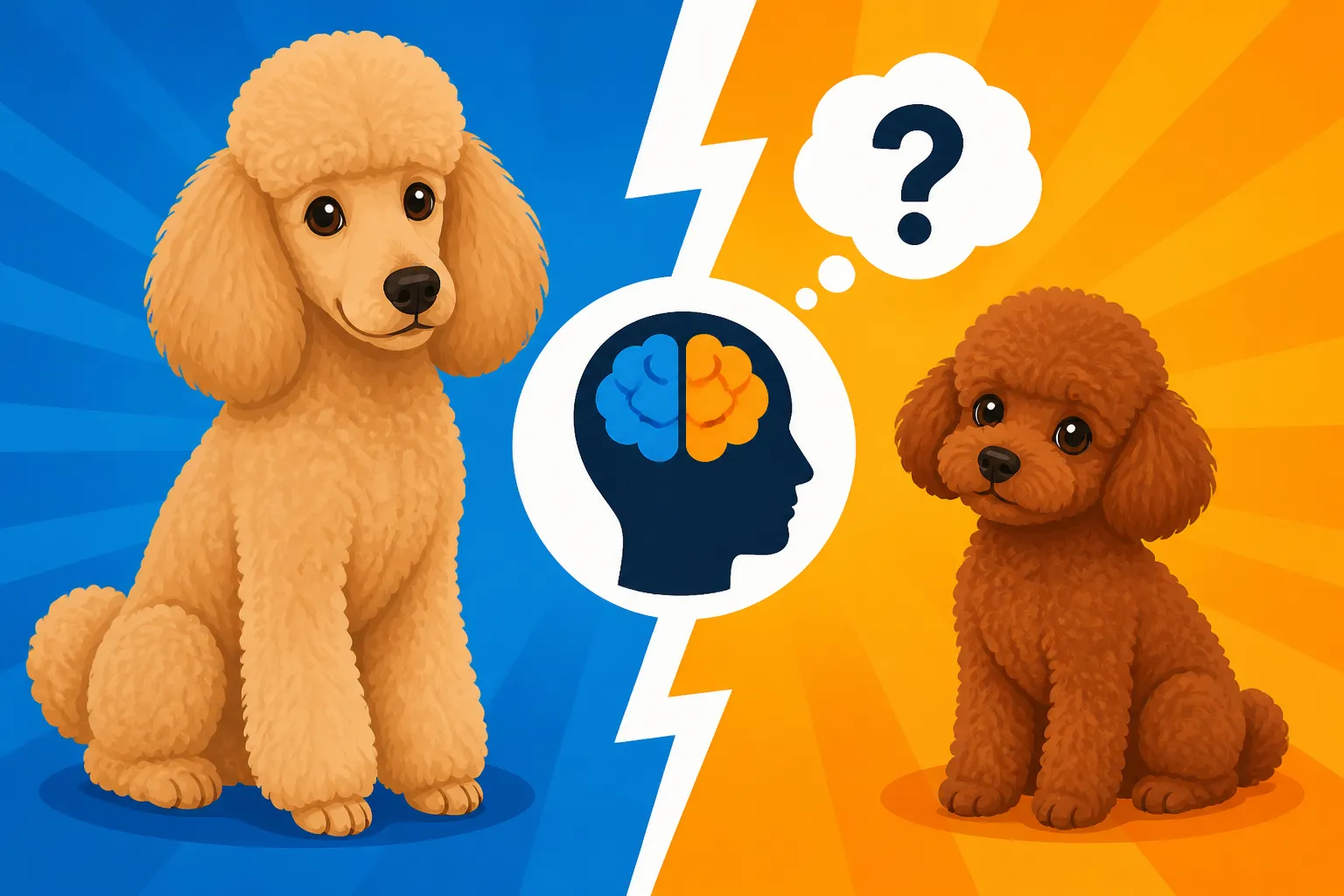
It's a question I hear so often from new Poodle families, or even those just considering adding one of these magnificent dogs to their lives: "Are Toy Poodles really as smart as Standard Poodles, or is their size linked to their brains?" It's a fair query, especially when you see the mighty Standard Poodle in serious work roles, and the diminutive Toy often cuddled in a handbag. But let me tell you, friend, the intelligence that defines the Poodle breed runs deep, permeating every single size, from the smallest Toy to the grandest Standard. This guide aims to clear up any misconceptions and celebrate the sharp minds of all Poodles, especially our tiny, clever companions.
The Poodle's Innate Brilliance Across All Sizes
The Poodle, as a breed, is consistently ranked among the most intelligent dog breeds in the world. This isn't just hearsay or proud owner bias; it's backed by research and decades of anecdotal evidence from trainers, handlers, and families. What's crucial to understand is that this intelligence is a fundamental characteristic of the Poodle breed, not something that diminishes or grows with their size.
Genetic Blueprints for Brains
Think of it like this: all Poodles, regardless of whether they are Standard, Miniature, or Toy, share the same core genetic makeup that dictates their cognitive abilities. They all descend from the same intelligent water retrieving dogs, and the selective breeding process that created the smaller varieties focused on size, not a reduction in brainpower. So, when you get a Toy Poodle, you're not getting a "mini-brain" version of a Standard; you're getting a compact package of the same Poodle brilliance. They possess the same problem-solving skills, memory, and capacity for learning complex commands. Poodle Intelligence and Coren's Ranking delves deeper into where Poodles generally sit in the intelligence hierarchy.
Their ability to grasp new concepts, often after just a few repetitions, is truly remarkable. They are quick to associate commands with actions and understand patterns, which is why Poodles often excel in various dog sports and working roles. This genetic predisposition to learn quickly is a hallmark of the breed, present in every size.
The Myth of "Smaller Dog, Smaller Brain"
The idea that smaller dogs are inherently less intelligent than larger dogs is a pervasive myth, and it often does a disservice to breeds like the Toy Poodle. This misconception likely stems from a few factors. Sometimes, owners of smaller dogs might unintentionally provide less formal training, assuming a small dog needs less discipline or is simply too cute to enforce rules strictly. Other times, the display of intelligence might be perceived differently. A Standard Poodle might retrieve a complex item from a distance, while a Toy Poodle might figure out how to open a child-proof cabinet – both demonstrating intelligence, but in different contexts.
It's vital for us, as Poodle guardians, to challenge this notion. A Toy Poodle's brain is just as active and capable of sophisticated thought as a Standard's. They crave mental stimulation and thrive on learning. Underestimating their intelligence can lead to boredom, which in turn can manifest as unwanted behaviors, simply because their clever minds aren't being adequately engaged.
Why Perception Skews Reality: Training and Lifestyle Differences
If the underlying intelligence is the same, why do people sometimes feel that Toy Poodles are less smart or harder to train? The answer often lies not in the dog's inherent ability, but in how we interact with them and the lives we expect them to lead.
The "Spoiled Small Dog" Syndrome
Let's be honest, it's easy to spoil a tiny, adorable Toy Poodle! They fit perfectly on our laps, they're easy to carry, and their little barks can sometimes be overlooked as "cute" rather than a behavioral issue. This can inadvertently lead to less consistent training. A family might rigorously train a Standard Poodle to walk on a leash, sit, stay, and come, because a large, untrained dog is a handful. But a Toy Poodle? It's much easier to just scoop them up when they pull, or tolerate a little barking because it's not as disruptive as a full-sized dog's vocalizations.
This isn't a criticism, just an observation of human nature! However, this difference in training approach can create a perception that the Toy Poodle isn't as smart, when in reality, they just haven't been given the same consistent opportunities to learn and prove their intelligence. Resources like the online puppy school BAXTER & Bella can be incredibly helpful here, offering structured lessons that encourage owners to train their small Poodles with the same diligence as a larger breed.
Different Challenges, Different Displays of Smartness
The world is a very different place for a 5-pound Toy Poodle than it is for a 50-pound Standard. A Standard Poodle might be taught to open doors, carry grocery bags, or assist with mobility tasks. These are grand displays of intelligence and training. A Toy Poodle, however, might use their intelligence in more subtle ways. They might figure out how to manipulate their owner into extra treats, learn to navigate a complex indoor environment to find a hidden toy, or signal their needs with nuanced body language.
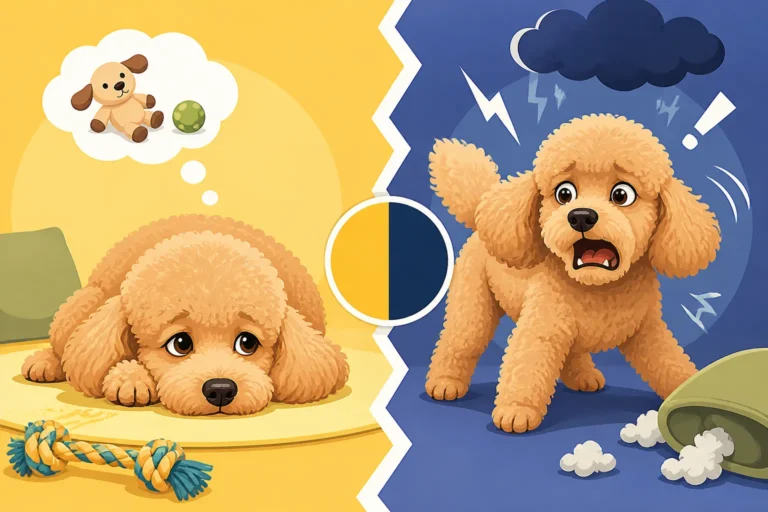
The "job" a Toy Poodle is given by their human companions might be less physically demanding, but it still requires cognitive effort. Perhaps they excel at learning elaborate trick routines, or they become masters of puzzle toys (easily found on Amazon) that require intricate manipulation. Why a Bright Poodle Gets Bored explores how this need for mental engagement is universal across Poodle sizes, and how it can manifest if not properly addressed. A bored Toy Poodle, just like a bored Standard, can become quite destructive or vocal, not because they are "bad," but because their brilliant minds are underemployed.
Physicality and Practical Applications
It’s true that certain tasks are simply better suited to a Standard Poodle's size and strength. A Standard Poodle is more likely to excel in advanced agility, retrieve large objects, or perform service dog work that requires physical support. This doesn't mean a Toy Poodle can't learn agility; they absolutely can, and many do! It just means their jumps will be lower and their retrieves smaller.
Consider a simple task like fetching slippers. A Standard Poodle might trot off, grab a full-sized slipper, and bring it back. A Toy Poodle might proudly return with a sock, or a finger puppet. Both are demonstrating the retrieving instinct and understanding the command, but the outcome looks different due to physical limitations. This difference in what they retrieve, not how well they understand the command, sometimes leads people to misjudge their intelligence. Training a Poodle That Outthinks You highlights how all Poodles, regardless of size, can be incredibly clever problem-solvers when given a challenge.
| Feature / Trait | Toy Poodle | Standard Poodle |
|---|---|---|
| Innate Intelligence | High; genetically identical to larger Poodles | High; genetically identical to smaller Poodles |
| Training Capability | Excellent, can learn complex commands | Excellent, can learn complex commands |
| Perceived "Smartness" | Often underestimated due to size/spoiling | Generally recognized as highly intelligent |
| Common Training Focus | Basic obedience, tricks, indoor games | Advanced obedience, sports, working roles |
| Physical Limitations | Cannot perform large-scale physical tasks | Few physical limitations within typical dog activities |
| Mental Stimulation Needs | High; puzzle toys, scent work, training | High; complex training, interactive play, jobs |
| Impact of Consistency | Crucial; lack of it leads to perceived issues | Highly responsive to consistent training |
Unleashing the Toy Poodle's Full Intellectual Potential
So, how do we ensure our little Toy Poodles get to fully express their amazing intelligence? It really boils down to consistent effort, understanding their specific needs, and providing the right outlets for their bright minds.
Consistent Training is Key
Just like their larger cousins, Toy Poodles thrive on consistent, positive reinforcement training. Don't skip the basic obedience commands just because they're small. "Sit," "stay," "come," and "leave it" are just as important for a Toy Poodle's safety and well-being as they are for a Standard. In fact, a reliable recall is paramount for a tiny dog that might be easily overlooked or stepped on. They learn incredibly quickly, often picking up new cues in just a handful of repetitions. Why Poodles Learn a Cue in Five Repetitions shares more about this impressive learning speed.
Consider enrolling in a local puppy class or using an online program like BAXTER & Bella. These structured environments help you build a strong foundation, and they teach you how to communicate effectively with your clever companion. Remember, a well-trained dog, regardless of size, is a happier, more confident dog.
Mental Stimulation: More Than Just Walks
Physical exercise is important for all Poodles, but for a Toy Poodle, mental exercise is arguably just as vital, if not more so, to satisfy their intelligent minds. Short, sniffy walks around the neighborhood are great, but don't forget to incorporate activities that make them think.
- Puzzle Toys: These are fantastic for Toy Poodles. Fill them with a portion of their kibble or healthy treats, and let them figure out how to get the goodies out. There's a huge variety available on Amazon, from beginner-level treat dispensers to more complex multi-step puzzles. This keeps their brains active and prevents boredom, especially on days when the weather isn't cooperating for outdoor play.
- Scent Work: Poodles have a great sense of smell. Hide treats around the house and encourage them to "find it!" Start easy and gradually make it more challenging. This taps into their natural instincts and is wonderfully tiring for their brains.
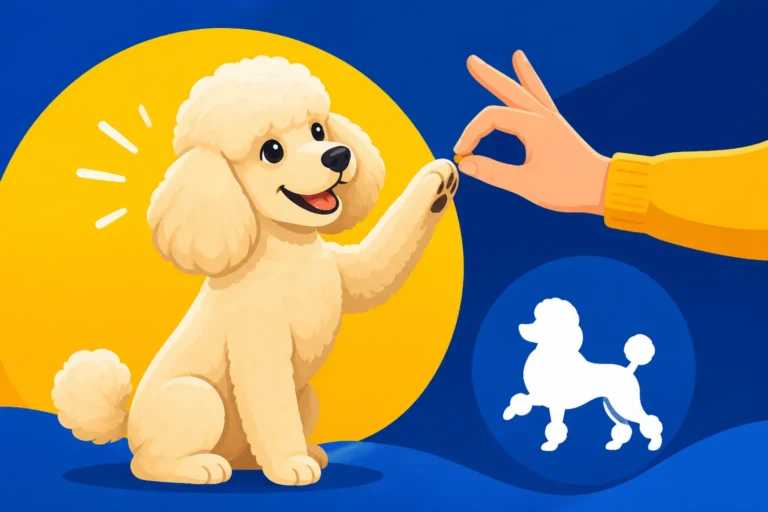
- Trick Training: Toy Poodles adore learning tricks! "Shake a paw," "spin," "bow," or even more elaborate routines can be taught with patience and positive reinforcement. This strengthens your bond and gives them a "job" to do. Trick Training a Poodle offers some great ideas to get started.
Even simply varying your walking routes, introducing new sounds, and allowing them to explore safe, novel environments can provide a surprising amount of mental enrichment. Daily Exercise for a Toy Poodle emphasizes the importance of balancing physical and mental activity.
Socialization and Exposure
A well-socialized Poodle is a confident Poodle, and confidence plays a huge role in their ability to learn and interact with the world around them. Exposing your Toy Poodle to various sights, sounds, people, and other well-behaved dogs from a young age is crucial. This helps them develop into well-adjusted adults who aren't easily frightened or reactive, which can hinder their learning process. Socializing a Poodle Before It Turns Wary gives practical advice on how to introduce your Poodle to the world effectively and safely.
A Toy Poodle who feels secure in their environment is much more likely to engage in training and problem-solving. This isn't about making them fearless; it's about giving them the tools to cope with new experiences without shutting down.
Beyond Intelligence: The Poodle Personality
While intelligence is a defining trait, it's also important to remember the unique personality that accompanies the Poodle brain, regardless of size. These traits also influence how their intelligence is perceived and how best to work with them.
Sensitivity and Empathy
All Poodles are known for their sensitive nature. They are highly attuned to their owners' emotions and the atmosphere in their home. This sensitivity means they respond best to gentle, positive training methods. Harsh corrections or shouting can cause a Poodle to shut down, become anxious, or even lose trust in their handler. Reading Pain in a Sensitive Poodle goes into detail about how these clever dogs express discomfort or fear.
This sensitivity is not a weakness; it's a testament to their deep connection with humans. It means they're eager to please and highly motivated by praise and affection, making them wonderful training partners when approached with kindness and understanding.
The Velcro Dog Tendency
Poodles are often called "Velcro dogs" because of their strong desire to be close to their human companions. This trait is evident in all sizes, including the Toy Poodle. They love to be involved in whatever you're doing, whether it's cooking dinner, watching TV, or working at your desk.
This strong bond can be a powerful asset in training. Their desire for proximity and attention means they are often highly motivated to work with you and learn commands that keep them engaged and near you. The Poodle That Follows You Everywhere explores this characteristic further. Instead of seeing this as clinginess, view it as an opportunity to build a deep, working relationship where their intelligence can truly shine.
Ultimately, whether you have a grand Standard Poodle or a delightful Toy Poodle, you have a dog of exceptional intelligence. The only difference might be the size of the feats they perform or the challenges they face, but the brilliant mind within remains unchanged. Embrace it, nurture it with consistent training and mental stimulation, and you'll be amazed at what your tiny genius can achieve.
Disclaimer
This article is for general informational purposes only and does not constitute professional advice. Laws, prices and regulations vary by location and change over time. Consult a qualified professional for guidance on your specific situation.