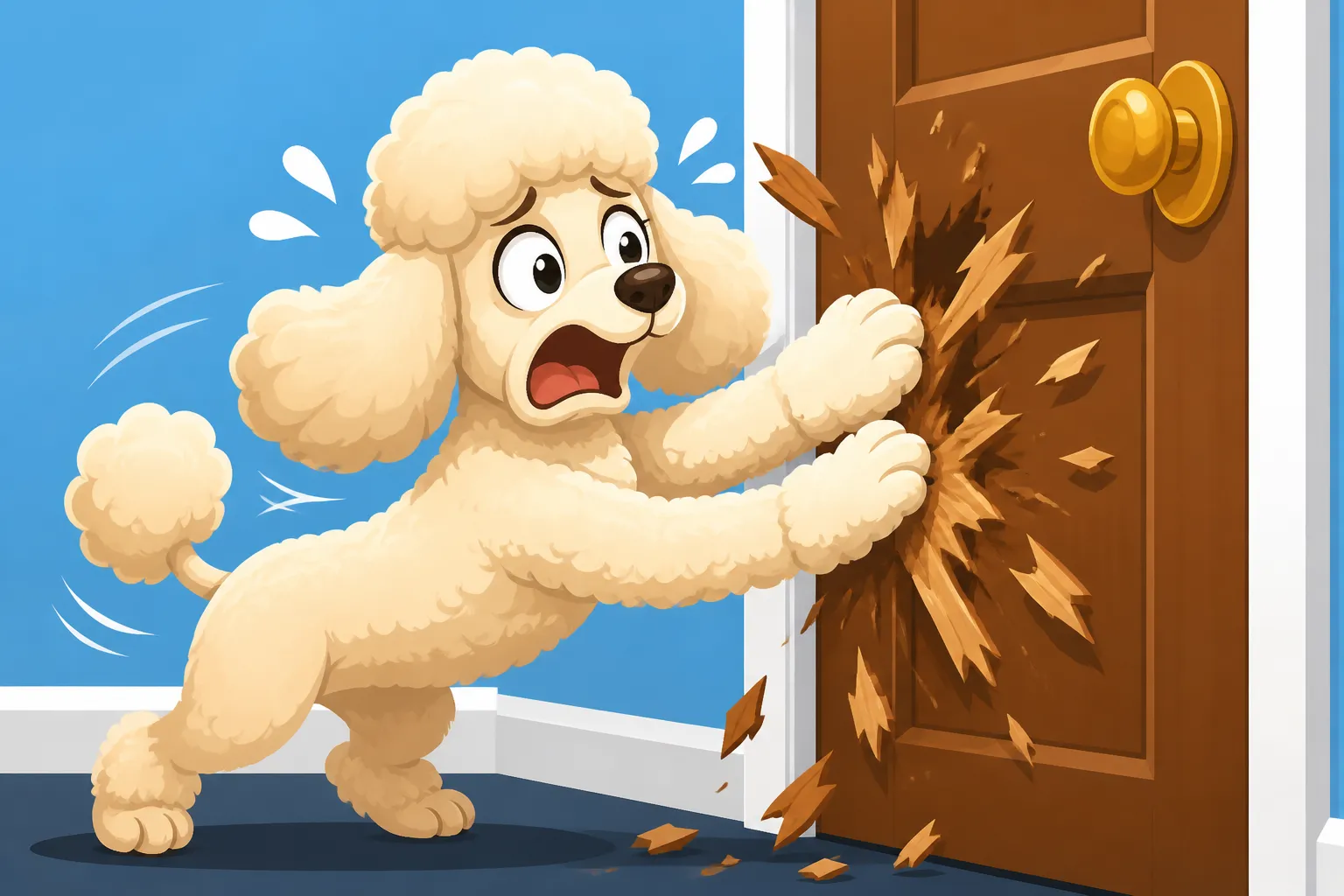
What a Panicking Poodle Does to the Door
Coming home to a door frame splintered into kindling or seeing deep gouges and claw marks on the door itself can be absolutely heartbreaking and frustrating for any Poodle owner. It's not just the immediate damage and the cost of repairs; it's the gut-wrenching realization that your sensitive Poodle was likely in a state of distress, anxiety, or profound boredom while you were away. This guide is all about understanding the roots of this destructive door-focused behavior, recognizing the signs, and, most importantly, providing practical, empathetic strategies to prevent future incidents and ensure your Poodle feels safe and secure when left alone.
Why Poodles Turn Their Anxiety on Doors and Frames
When a Poodle "attacks" a door or its frame, it's rarely out of spite or naughtiness. It's almost always a symptom of an underlying emotional state or unmet need. Poodles are incredibly intelligent and emotionally complex dogs, and their actions are usually a way to communicate their distress or to cope with overwhelming feelings. Understanding the "why" is the first critical step toward finding a solution that works for both of you.
Separation Anxiety and Poodles
One of the most common culprits behind door destruction is separation anxiety. Poodles, by nature, are often very attached to their human companions. They are bred to be intelligent and engaged, and many develop a deep bond, earning them the nickname "Velcro Poodles." For some, being left alone can trigger immense panic, much like a child experiencing a severe fear of abandonment. This isn't just a dog being "naughty"; it's a dog experiencing a genuine panic attack.
When a Poodle is gripped by separation anxiety, they might try desperately to follow you, even through a closed door. They might scratch, chew, or push at the door, hoping to open it or somehow get to you. This behavior is often accompanied by other signs of distress, such as excessive barking, howling, house-soiling, or intense pacing. It's a truly heartbreaking situation for both the dog and the owner. This behavior isn't about disrespecting your home; it's about a deep-seated fear that they've been abandoned or that they need to escape to find you. You can learn more about this by reading Separation Anxiety in a Velcro Poodle.
Boredom and Lack of Mental Stimulation
Even if your Poodle doesn't suffer from full-blown separation anxiety, extreme boredom can also lead to destructive door behavior. Poodles are famously intelligent, often ranked as the second smartest dog breed. A Poodle's mind needs to be kept occupied; a long walk isn't always enough. If they are left alone for extended periods without adequate mental stimulation, that clever brain can quickly become bored, and bored Poodles are often destructive Poodles.
A Poodle with an idle mind will seek out entertainment, and unfortunately, your door frame can become an appealing, albeit destructive, target. Chewing provides an outlet for energy, a way to pass the time, and can sometimes even be self-soothing. If your Poodle isn't getting enough daily mental exercise, perhaps through puzzle toys, training sessions, or interactive games, they might invent their own "jobs," and those jobs often involve redecorating your home with their teeth. It's not malice; it's simply a Poodle trying to use its brain and body to cope with a lack of engagement. Consider also exploring What a Poodle Does When Its Brain Is Idle for more insight.
Puppy Chewing and Exploration
For Poodle puppies, chewing is a natural part of their development. They explore the world with their mouths, and as their adult teeth come in, they need to chew to relieve discomfort. While a puppy might not be experiencing the same level of panic as an adult with separation anxiety, they can still target door frames and baseboards if they're left unsupervised with nothing appropriate to chew on.
A young Poodle, especially one not fully crate-trained or given appropriate boundaries, might simply discover the intriguing texture of a door frame and decide it's a fantastic chew toy. This phase can be managed with consistent supervision, redirection, and providing a wealth of appropriate chew toys. It’s a different beast than true anxiety, but the damage can look just as severe.
Unpacking the Different Kinds of Door Damage
The type of damage your Poodle inflicts on a door can often give clues about the underlying cause of their distress. It’s not always just a simple chew mark; there can be layers to the destruction that point towards specific anxieties or frustrations. Observing these patterns can help tailor your intervention strategy.
Chewing and Gnawing
When you see extensive chewing and gnawing, especially around the bottom edges of a door or the lower parts of the frame, it often points to an oral fixation driven by anxiety or intense boredom. A Poodle might systematically strip paint, splinter wood, or even try to eat pieces of the door or frame. This isn't just a casual nibble; it's often sustained effort.
This type of damage can be particularly frustrating because it's so visible and hard to patch up seamlessly. If the chewing is focused solely on the exit points, like the door to the outside or the door you typically leave through, it strongly suggests your Poodle is trying to follow you or escape the perceived confinement. If it's more widespread or random, it might lean more towards general stress relief or boredom. This destructive chewing might be accompanied by drooling or panting, further indicating stress.
Scratching and Claw Marks
Deep scratches and claw marks, particularly concentrated at the height of your Poodle's paws, reveal a desperate attempt to dig or claw their way through the barrier. This is a clear sign of a Poodle trying to "open" the door or break through it to reunite with you. You might see the paint stripped, wood gouged, or even drywall behind the frame exposed.
These marks are often sharper and more focused than chewing, indicating a physical effort to breach the door. They're typically found on the side of the door that faces into the room, where your Poodle was left. This kind of damage is a strong indicator of separation anxiety or confinement distress, where the dog perceives the door as the primary obstacle to their comfort or safety. They're not trying to destroy; they're trying to escape.
Pushing, Biting, and Barking-Induced Marks
Sometimes, the damage isn't just from chewing or scratching, but from a more frantic, full-body assault. You might find dents, nicks, or even bent doorstops if your Poodle has been throwing their weight against the door. This can also include teeth marks higher up on the door, indicating they might be jumping up and trying to bite or pull at the handle or knob. The door itself might be loose on its hinges from repeated attempts to push it open.
These signs, combined with reports from neighbors about relentless barking or howling, paint a picture of severe panic. This isn't just about trying to relieve boredom; it's about a full-blown meltdown. The Poodle is engaging in a multi-faceted attempt to get through the door, using all their physical resources to overcome the barrier. This level of distress requires a multi-pronged approach to address the underlying anxiety, as a purely physical deterrent might only increase their frustration.
Strategic Prevention and Management
Once you understand why your Poodle is attacking your doors, you can implement a targeted strategy to prevent future damage. This involves a combination of environmental management, training, and addressing the root cause of their distress. It’s not a quick fix, but with patience and consistency, you can teach your Poodle to cope calmly when you’re not around.
Crate Training and Safe Spaces
For many Poodles, a properly introduced and positive crate can become a den, a safe haven where they feel secure. Instead of giving them free rein of the house and access to doors, a crate can limit their opportunity for destruction while providing a sense of security. The key here is positive crate training – never use the crate as punishment, and ensure it's a comfortable, inviting space. The goal is for your Poodle to willingly choose to enter and relax in their crate, not to feel trapped.
Start with very short periods, gradually increasing the time. Offer high-value treats and toys only when they are in the crate. For Poodles who are particularly sensitive or anxious about confinement, getting them used to their Crate Size for Each Poodle Variety slowly can be a game-changer. You might even find that a crate cover helps them feel more secure, like a little cave. Some owners find excellent, sturdy crates on platforms like Amazon, along with cozy beds and chew-resistant toys to make the space appealing.
Environmental Enrichment and Mental Stimulation
A bored Poodle is a destructive Poodle. Providing ample mental stimulation before you leave can significantly reduce the likelihood of them turning to your doors for entertainment. Engage their brilliant minds with activities that tire them out mentally, not just physically.
Consider investing in puzzle feeders and interactive toys that dispense treats slowly. A stuffed Kong toy (you can find these easily on Amazon) filled with something delicious and frozen, can keep a Poodle happily occupied for a significant amount of time. Regular, structured training sessions, even short ones, before you leave can also use up mental energy. Giving your Poodle a "job" to do, like finding hidden treats, can be far more effective than just an extra walk. Remember, a Why a Bright Poodle Gets Bored is often a Poodle looking for a challenge, and your door isn't the best place for it.
Desensitization and Counter-Conditioning
If separation anxiety is the core issue, directly addressing it through desensitization and counter-conditioning is crucial. This involves gradually teaching your Poodle that your departures are not scary and that being alone can be a positive experience. This is a slow, methodical process that often requires immense patience.
Start with mock departures: grab your keys, put on your coat, walk to the door, then immediately come back in before your Poodle shows any signs of anxiety. Repeat this dozens of times a day, slowly increasing the duration you're "gone" – from seconds to minutes, always returning before panic sets in. Pair these departures with high-value treats or a special long-lasting chew toy that they only get when you leave. Online training programs, like those offered by BAXTER & Bella, often have specific modules dedicated to building confidence in puppies and adult dogs around alone time, providing structured steps and expert guidance. The goal is to change their emotional response from panic to calm anticipation or even indifference. Understanding Hours a Poodle Copes With an Empty House is vital here to set realistic expectations.
Repairing Damage and Reinforcing for the Future
Discovering damage to your doors is frustrating, but it's important to view it as a symptom, not a personal affront. Once you've started implementing behavioral strategies, you'll also need to address the physical damage and take steps to prevent it from happening again while your Poodle learns new coping mechanisms.
Temporary Barriers and Door Reinforcement
While your Poodle is learning to cope, it's wise to put physical barriers in place to protect your doors and deter further destruction. This isn't a long-term solution for anxiety, but a management tool.
Consider heavy-duty baby gates or a sturdy ex-pen to block access to the specific door your Poodle targets. For very determined Poodles, you might need to use metal door shields, kick plates, or even install temporary plywood over the lower portion of the door and frame. These can be found at hardware stores or online retailers like Amazon. While perhaps not aesthetically pleasing, they serve as a protective layer during the training period. The aim is to make the door unappealing or impossible to damage, thus breaking the destructive habit. This is especially useful if your Poodle is still in the phase of Telling Poodle Boredom From Real Panic and you're working on differentiating the two.
Addressing the Underlying Anxiety and Boredom
No amount of physical reinforcement will solve the core emotional issue. The true long-term solution lies in addressing why your Poodle feels the need to destroy the door in the first place. This means consistent training, patience, and sometimes, professional help.
If your Poodle's behavior is severe, consulting with a certified professional dog trainer or a veterinary behaviorist is highly recommended. They can assess your Poodle's specific situation, rule out any medical conditions, and develop a tailored behavior modification plan. This might involve medication in conjunction with training for severe separation anxiety. Programs like BAXTER & Bella can offer guidance through their online resources, but sometimes one-on-one professional support is indispensable for complex cases. Remember, Rebuilding Trust With a Frightened Poodle is a journey, not a destination.
Post-Departure Monitoring and Feedback
Using a pet camera can be incredibly insightful for understanding what your Poodle does after you leave. You can monitor their behavior in real-time, see precisely when the destructive tendencies begin, and understand the duration of their distress. Many pet cameras also offer two-way audio, allowing you to speak to your Poodle, which some owners find helpful for light reassurance, though it shouldn't replace actual training.
Reviewing the footage can help you pinpoint triggers and measure progress. If you see signs of escalating panic, you know you need to shorten your departure times and intensify your desensitization efforts. Platforms like Amazon offer a wide range of pet cameras with various features, from treat dispensers to night vision. This kind of monitoring, along with a commitment to addressing the root cause, offers the best chance for a happy, calm Poodle and an intact door. Cameras and Puzzle Feeders for a Lonely Poodle can offer more ideas for setting up your home for success.
Here's a comparison of common door damage and potential solutions:
| Type of Damage | Likely Cause | Common Signs | Immediate Prevention (Physical) | Long-Term Solution (Behavioral) |
|---|---|---|---|---|
| Chewing/Gnawing | Anxiety, boredom, puppy teething | Splintered wood, stripped paint, torn drywall | Bitter apple spray, metal kick plates, plywood covering | Mental enrichment, appropriate chew toys, crate training, desensitization for anxiety |
| Scratching/Claw Marks | Separation anxiety, escape attempts | Deep gouges, claw marks, paint stripped | Door shields, heavy-duty baby gates, ex-pens | Desensitization, counter-conditioning, creating a safe space, professional behavioral help |
| Pushing/Biting | Severe panic, frustration, escape attempts | Dents, nicks, bent doorstops, teeth marks higher up | Reinforced door frames, sturdy barriers, secure crating | Intensive separation anxiety protocol, vet behaviorist consultation, medication if necessary |
Disclaimer
This article is for general informational purposes only and does not constitute professional advice. Laws, prices and regulations vary by location and change over time. Consult a qualified professional for guidance on your specific situation.