Why Storms Frighten a Poodle
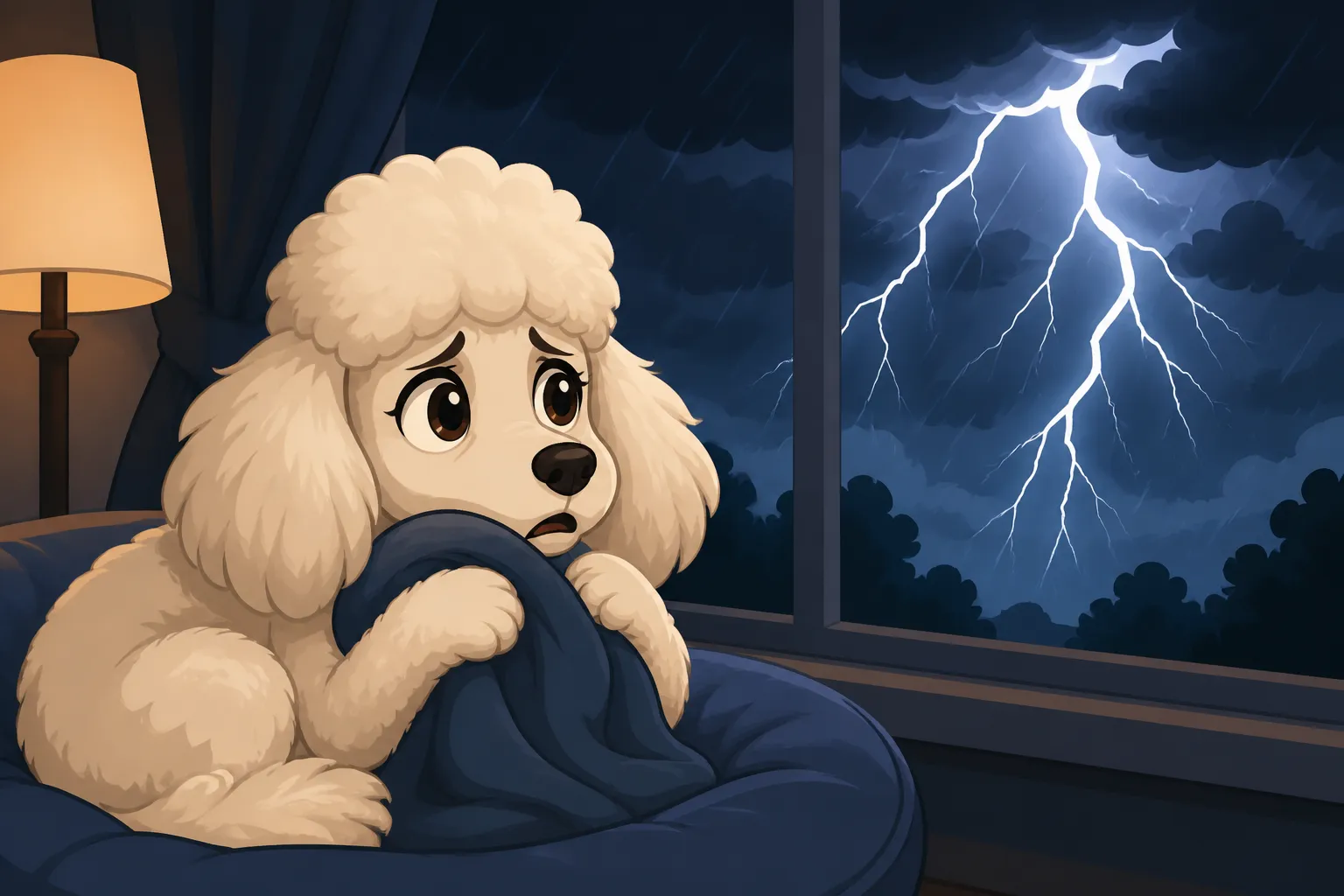
Oh, the thunder and lightning! If you're a poodle parent, you've likely seen it – that sudden shift in your usually composed, elegant companion when a storm rolls in. One moment they're lounging regally, the next they're a shaking, panting mess, trying to burrow into your armpit or hide under the smallest piece of furniture. It’s absolutely heartbreaking to watch your beloved poodle transform into a ball of anxiety, and it leaves you feeling helpless, wondering what on earth you can do to ease their distress. This guide is all about delving into why these majestic dogs can be so utterly terrified of storms and, more importantly, what practical, empathetic steps you can take to help them weather the literal storm.
Understanding Why Storms Terrify Our Poodles
It's easy to dismiss a dog's fear of storms as just "being scared," but for poodles, it's often a complex interplay of heightened senses, potential genetic predispositions, and even past experiences. They're not just being dramatic; they're genuinely overwhelmed, and understanding the root causes is the first step toward effective support.
The Sensory Overload: Thunder, Lightning, and Barometric Pressure
Imagine experiencing the world with senses far more acute than your own. That's a poodle's reality, especially when a storm is brewing. What might be a distant rumble to us is a concussive blast to them. A faint flash in the sky can be an intense, disorienting strobe.
Poodles, renowned for their intelligence and keen awareness, are often exquisitely sensitive to environmental changes. Thunder isn't just a loud noise; it’s a low-frequency vibration that they can feel in their paws and through their entire body. For a dog, this can be incredibly disorienting, even painful. Lightning, even when seen through curtains, can be a startling visual assault. Many poodles also react to the more subtle shifts in barometric pressure that precede a storm. We might not even feel the slight drop in pressure or detect the static electricity building in the air, but your poodle can. This static charge can cause uncomfortable tingling sensations, especially in their highly sensitive fur. It's like having pins and needles all over your body, but you can't make it stop. This early detection often means they start showing signs of anxiety long before the first drop of rain or clap of thunder, making it seem like they're predicting the storm – and in a way, they are, just through different channels. This heightened sensory input creates a profound sense of overwhelm and lack of control, which for a dog can be truly terrifying. Poodle Temperament and Sensitivity often means they react more intensely to such external stimuli.
Genetic Predisposition and Past Experiences
Just like humans, some dogs are simply born more prone to anxiety. While poodles, as a breed, are generally intelligent and eager to please, individual lines can carry a predisposition towards nervousness or phobias, including noise phobia. If a poodle's parents or grandparents had severe storm anxiety, there's a higher chance that puppy might inherit a similar wiring. This isn't a flaw in their character; it's a genetic lottery.
Beyond genetics, negative past experiences play a massive role. Imagine a young poodle puppy, perhaps from a less-than-ideal breeding situation or a rescue, experiencing its first severe thunderstorm while left alone and feeling vulnerable. The sheer terror of that experience can become imprinted, creating a strong association between storms and fear. Every subsequent storm, even a mild one, can then trigger that deep-seated fear response. It’s a form of classical conditioning, where the sound, smell, or feel of an approaching storm becomes a predictor of distress. It doesn't even have to be their past experience; a loud, unexpected noise during a particularly intense groom could, theoretically, contribute to noise sensitivity that then generalizes to storms. Understanding that this fear is often deeply ingrained, either genetically or experientially, helps us approach their distress with more patience and empathy rather than frustration.
Common Signs of Storm Anxiety in Poodles
Recognizing the signs of storm anxiety in your poodle is crucial for intervening effectively. Sometimes, it’s obvious, but other times, your sensitive poodle might be trying to hide its fear.
Behavioral Manifestations of Fear
When a storm hits, the signs of fear in a poodle can range from subtle unease to outright panic. The most common behaviors are often attempts to cope or escape the perceived threat. You might see your poodle shaking or trembling, even when the room temperature is comfortable. They might start panting excessively, their tongue lolling out, even if they haven't been exercising. Pacing is another tell-tale sign – an endless, restless circuit around the house, unable to settle.
Many poodles will seek comfort, often by trying to get as close to you as possible, pushing their head under your arm, or even attempting to climb into your lap, regardless of their size. Others become hide-and-seek champions, trying to squeeze themselves into unlikely spots like behind the toilet, under the bed, or even behind the couch cushions. It’s an instinctual attempt to find a safe "den." More extreme behaviors, unfortunately, can also manifest. These might include destructive chewing on furniture, door frames, or anything they can get their teeth on, driven by pure stress. Some poodles, in their panic, might lose bladder or bowel control, resulting in inappropriate urination or defecation indoors. This isn't spite or a lapse in training; it's a physiological response to extreme fear and a heartbreaking sign of their profound distress. If you see these signs, it's a clear signal that your poodle needs your help and reassurance. For more on interpreting their distress, check out Reading a Poodle's Body Language.
Recognizing Subtle Cues Before the Storm Hits
One of the most challenging aspects of storm phobia is that poodles often start reacting before we even register a storm is coming. Their heightened senses pick up on those subtle environmental changes – the drop in barometric pressure, the shift in humidity, the distant rumble of thunder that's still miles away.
This means that instead of waiting for the full onslaught, you might notice your poodle becoming restless and unsettled seemingly for no reason. They might start clinging to you more than usual, following you from room to room like a shadow. Perhaps they'll stare intently out the window, even if nothing is visibly happening, or begin to whine softly without an apparent trigger. Some poodles might begin to yawn excessively or lick their lips, which are often subtle signs of stress. They might also become hyper-vigilant, frequently checking their surroundings, or conversely, become withdrawn, retreating to a quiet corner long before the storm breaks. Learning to read these early, subtle cues is invaluable. It allows you to start your calming interventions proactively, giving your poodle a head start on coping rather than waiting until they are already in full panic mode. This proactive approach can make a significant difference in managing their anxiety.
Practical Strategies to Help Your Poodle Cope
Helping your poodle through a storm requires a multi-faceted approach, combining environmental management with behavioral techniques. The goal is to reduce their sensory overload and change their emotional association with storms from fear to something more neutral, or even positive.
Creating a Safe Haven and Sound Management
The first step in helping your frightened poodle is to create a physical space where they feel safe and secure. Think of it as their personal storm bunker. This doesn't have to be anything fancy; often, a sturdy crate covered with blankets to create a dark, den-like atmosphere works wonders. Place it in the quietest, most interior part of your home – a closet, a bathroom, or even a laundry room can work well. The goal is to block out as much external light and sound as possible. Make this space inviting with their favorite bed, a cozy blanket, and some high-value chew toys or puzzle feeders that they only get during storms. The positive association with this special place is key.
Once you have the safe haven, focus on sound management. The goal is to mask the jarring sounds of thunder and heavy rain. White noise machines are incredibly effective at creating a consistent sound barrier. You can find many affordable options on Amazon. Alternatively, playing classical music, reggae, or even specific "dog calming music" at a moderate volume can help. Some owners swear by turning on a fan or air conditioner for ambient noise. The key is to introduce these sounds before the storm hits, so they aren't associated with the onset of fear. Furthermore, consider a thunder shirt or anxiety wrap. These garments apply gentle, constant pressure, much like swaddling a baby, which can have a remarkable calming effect on many dogs. Again, these are readily available on Amazon and should be introduced before the storm, worn for short periods with positive reinforcement, so your poodle associates it with comfort, not distress. Crate Training a Poodle That Wants Company can be an excellent foundation for establishing this safe haven.
Desensitization and Counter-Conditioning Techniques
These are powerful behavioral tools that, with patience and consistency, can genuinely change your poodle's reaction to storms. Desensitization means gradually exposing your poodle to the trigger (storm sounds) at such a low level that they don't react with fear, while counter-conditioning means changing their emotional response by pairing the trigger with something positive.
Start by finding high-quality recordings of thunderstorms. You can often find these on streaming services or by searching online. Begin playing these sounds at an extremely low volume – so low that your poodle barely registers it, or perhaps just gives a curious ear twitch, but shows no signs of anxiety. While the sound is playing, engage your poodle in something they absolutely love: lavish praise, their favorite treats (and I mean really good treats, like bits of cheese or cooked chicken), or a fun game of fetch. The moment the sound stops, the treats/game stop. The idea is to teach them: "Storm sounds mean good things happen!" Over weeks and months, you can very gradually increase the volume, always staying below the threshold where they show fear. If your poodle shows any sign of anxiety, you've gone too fast; reduce the volume immediately and restart at a lower level. This isn't a quick fix; it requires immense patience, but it can be incredibly effective in rewiring their brain. It’s a bit like Sound Work for a Noise-Sensitive Poodle, but specifically tailored to storm noises.
For more severe cases, or if you're struggling to implement these techniques effectively, seeking professional guidance is always a good idea. A certified professional dog trainer or veterinary behaviorist can provide tailored protocols and hands-on support. Organizations like BAXTER & Bella offer online puppy training programs that emphasize positive reinforcement and foundational confidence-building, which can be a great starting point, even for adult dogs, in building resilience against fear responses. They focus on clear communication and reward-based methods, ensuring that Why Harsh Handling Breaks a Poodle is avoided entirely. Consistency is key, and never, ever punish your poodle for being afraid; this will only make the fear worse and damage your bond.
Holistic and Veterinary Support
Sometimes, behavioral and environmental management aren't quite enough, and that's when it's time to explore other options, from natural calming aids to professional veterinary intervention.
Calming Aids and Supplements
For poodles with moderate storm anxiety, various calming aids and supplements can offer some relief. Many of these are designed to naturally reduce anxiety without the heavier side effects of prescription medications.
Pheromone diffusers and collars release synthetic canine appeasing pheromones (CAPs), which mimic the natural calming pheromones a mother dog releases to comfort her puppies. These are scentless to humans but can create a reassuring atmosphere for dogs. Plugging in a diffuser in your poodle's safe space or having them wear a collar a few days before a predicted storm can sometimes take the edge off their anxiety. Another popular option is L-theanine, an amino acid found in green tea, often available in chewable supplements. It promotes relaxation and mental alertness without sedation. Similarly, melatonin can help regulate sleep cycles and promote a sense of calm. Herbal remedies containing ingredients like chamomile, valerian root, or passionflower are also available, though it's always wise to discuss these with your vet before introducing them, especially if your poodle is on any other medications. These supplements aren't magic bullets, but they can lower the overall stress level, making your poodle more receptive to other calming techniques. Think of them as taking the sharpest edge off their fear, allowing them to better cope with the situation.
| Strategy Type | Example Aids/Techniques | Benefits | Considerations |
|---|---|---|---|
| Environmental | Covered crate, interior room, white noise machine | Blocks sensory input, provides perceived safety | Requires preparation, may need soundproofing |
| Behavioral | Desensitization with storm sounds, counter-conditioning | Changes emotional association, long-term effectiveness | Requires significant time and patience, professional guidance may help |
| Physical Aids | ThunderShirt/Anxiety Wrap | Applies calming pressure, non-invasive | Not effective for all dogs, introduce positively |
| Natural Supplements | Pheromone diffusers, L-theanine, melatonin, calming chews | Promotes relaxation, generally low side effects | Consult vet, not a quick fix, effectiveness varies |
When to Consult Your Veterinarian
If your poodle's storm anxiety is severe, debilitating, or negatively impacting their quality of life – or yours – it's definitely time to schedule a visit with your veterinarian. Don't feel like you've failed if you reach this point; sometimes, the anxiety is simply too intense for behavioral techniques alone, and your vet can offer invaluable support.
Your vet will first want to rule out any underlying medical conditions that might be exacerbating the anxiety or causing similar symptoms. For instance, some neurological conditions can manifest with anxiety-like behaviors. Once a clean bill of health is established, they can discuss prescription medications. These aren't usually a first resort but can be life-changing for severely affected poodles. Options might include anti-anxiety medications that can be given proactively before a known storm, or daily medications to manage general anxiety levels, making them less reactive to triggers like storms. Your vet can also refer you to a veterinary behaviorist – a specialist in animal behavior who can provide comprehensive treatment plans, including advanced behavioral modification techniques combined with pharmaceutical support. Remember, professional help is there to support both you and your poodle, and there's no shame in asking for it. This isn't just about managing a few minutes of fear; chronic anxiety takes a toll on your poodle's overall health and well-being. It's about giving them the peace of mind they deserve. For similar discussions on medical interventions, you might look into Medication for an Epileptic Poodle, as managing neurological conditions sometimes overlaps with anxiety management.
Disclaimer
This article is for general informational purposes only and does not constitute professional advice. Laws, prices and regulations vary by location and change over time. Consult a qualified professional for guidance on your specific situation.