Whether a Poodle Outgrows Reactivity
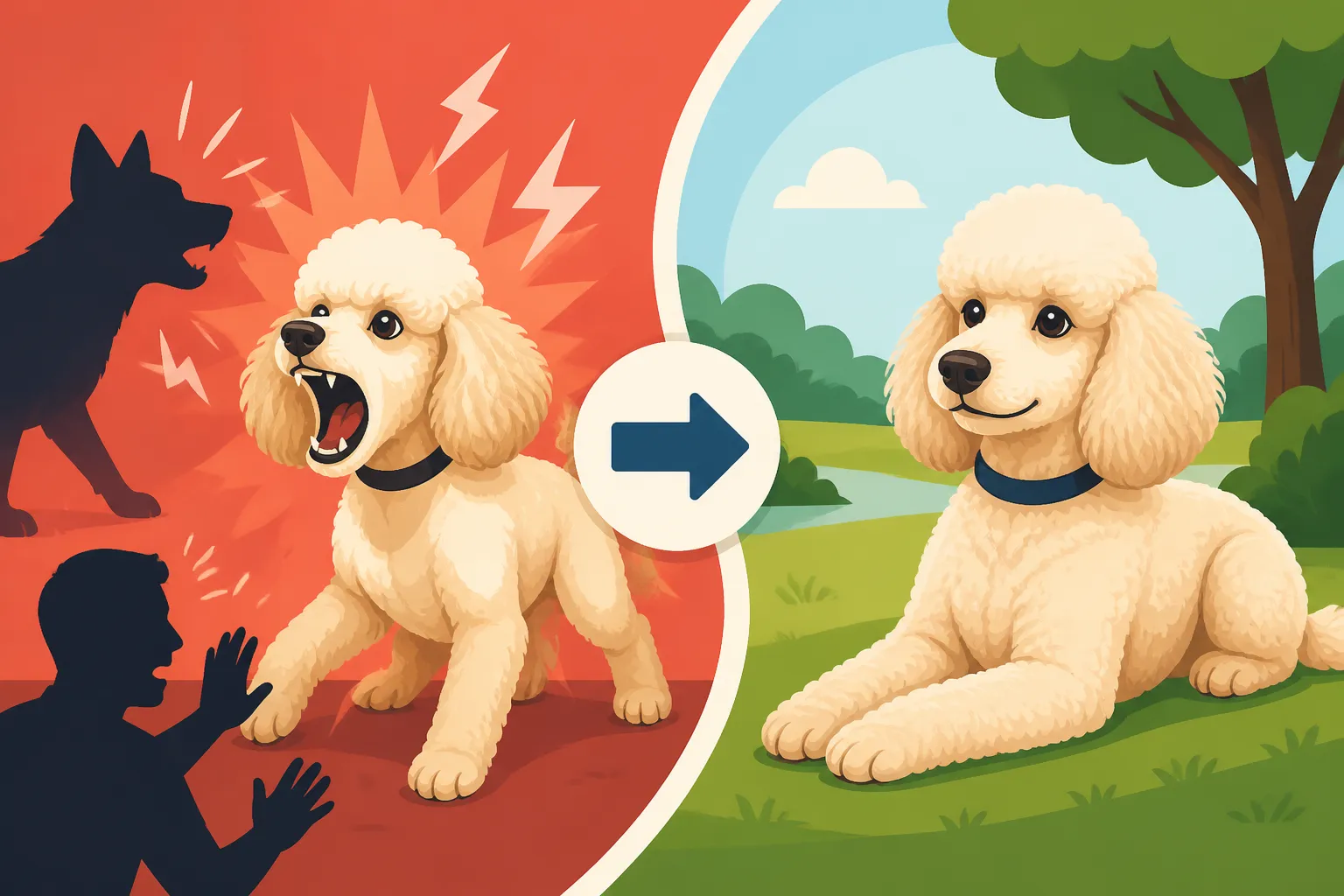
It's incredibly frustrating and often embarrassing when your elegant Poodle, usually so composed, suddenly erupts into a barking, lunging frenzy at the sight of another dog, a stranger, or even a blowing leaf. Many owners hope this challenging behavior is just a puppy phase that their intelligent companion will simply "outgrow." This guide will delve into the complexities of Poodle reactivity, explaining why it's rarely something they spontaneously outgrow, and more importantly, how you can proactively manage and train your Poodle to navigate the world with greater calm and confidence.
Understanding Poodle Reactivity: It's Not a Passing Phase
When we talk about reactivity in dogs, especially Poodles, it's crucial to understand that it's generally not a behavior they "outgrow" on their own, like a puppy might outgrow nipping or potty accidents. Reactivity is often rooted in deeper emotional states like fear, anxiety, frustration, or even over-excitement, and these feelings don't just magically disappear with age. If anything, without intervention, reactive behaviors can become more entrenched and intense over time as the dog practices them repeatedly.
Think of it this way: if your Poodle barks and lunges at another dog, and that dog then moves away (which it almost always will), your Poodle learns that its behavior was "successful" in creating distance. This self-reinforcing cycle makes the behavior stronger, not weaker. It doesn't matter if the other dog moved away because it was scared or simply walking past; to your Poodle, the outcome was favorable. This is why early intervention and consistent, positive reinforcement training are absolutely critical. Ignoring reactivity in hopes it will fade is almost always a recipe for it to escalate.
The sensitive nature of Poodles also plays a significant role here. They are highly intelligent and incredibly attuned to their environment and their people. While this makes them wonderful companions, it also means they can be more susceptible to stress, overstimulation, and negative experiences. What might be a minor annoyance for one dog could be profoundly upsetting for a Poodle, leading to a reactive display. A Poodle's reactivity is a communication, a way of saying, "I'm uncomfortable, scared, or overwhelmed, and I need this thing to go away."
The Roots of Reactivity in Poodles: Sensitivity and Genetics
Poodles, regardless of their size – Standard, Miniature, or Toy – share a common ancestry as intelligent, biddable, and sensitive dogs. While their intelligence makes them quick learners, their sensitivity can also make them prone to developing reactivity. It's often not aggression in the typical sense, but rather a strong emotional response to a perceived threat or overwhelming stimulus.
Genetic Predispositions and Early Experiences
Genetics can certainly play a part. Some Poodle lines are known to be more predisposed to nervousness, shyness, or outright fear. A puppy from such a line, even with the best socialization, might always be a bit more prone to reactive tendencies. A reputable breeder will screen for temperament and avoid breeding dogs that exhibit overt fear or aggression. However, even in well-bred lines, individual temperaments vary. Beyond genetics, early life experiences are profoundly impactful. A Poodle puppy that didn't receive adequate Socializing a Poodle Before It Turns Wary during its critical socialization period (roughly 3 to 16 weeks) may grow up to be wary of new sights, sounds, people, and dogs.
For example, a Toy Poodle puppy kept isolated in its early weeks might develop an intense fear of larger dogs or even unfamiliar people, manifesting as reactive barking and retreating when encountered. Similarly, a Standard Poodle puppy that had a frightening experience with a loud truck or an overly boisterous dog could generalize that fear, becoming reactive to all trucks or all large dogs later in life. These experiences, coupled with their inherent sensitivity, create a perfect storm for reactivity to take root. Understanding The Weeks That Set a Poodle's Nerve is vital for any Poodle owner.
Fear, Frustration, and Over-Excitement as Triggers
Reactivity often stems from one of three core emotions: fear, frustration, or over-excitement.
- Fear-based reactivity is perhaps the most common. The Poodle feels threatened or overwhelmed by something in its environment and barks, lunges, or snarls to try and make it go away. This is a "keep away" signal. They're not trying to be mean; they're trying to protect themselves. A classic example is a Poodle who suddenly sees a strange person enter their home or approach them on a walk and immediately starts barking deeply. The Poodle is trying to create distance and reduce perceived threat.
- Frustration-based reactivity occurs when a Poodle wants to get to something but can't. This is often seen on-leash, where a Poodle desperately wants to greet another dog or person but is restrained. The frustration boils over into barking and lunging. This is particularly common in Poodles who are otherwise friendly but have poor leash manners or haven't learned to manage their excitement.
- Over-excitement reactivity is less common but can happen. Some Poodles get so intensely excited by something (like seeing a favorite person or dog) that they become overstimulated and their excitement tips into an uncontrolled, reactive display. This usually looks less aggressive and more frantic or bouncy, but it's still disruptive and needs management.
Recognizing the root emotion behind your Poodle's reactivity is the first step toward effective training and management. Observing their Reading a Poodle's Body Language – tail carriage, ear position, facial tension – can offer critical clues.
| Type of Reactivity | Underlying Emotion(s) | Typical Presentation | Goal of the Poodle |
|---|---|---|---|
| Fear-Based | Fear, Anxiety, Insecurity | Barking, lunging, snarling, backing away, stiff body, tucked tail, wide eyes | Make the scary thing go away |
| Frustration-Based | Frustration, Desire, Impatience | Barking, whining, pulling hard, leaping, high tail wag, often followed by calmer behavior once allowed to approach | Get to the desired thing |
| Over-Excitement | Over-excitement, Overstimulation, Lack of impulse control | Frenetic barking, jumping, spinning, loose but frantic body, often accompanied by happy vocalizations | Engage with the exciting thing immediately |
Effective Strategies for Managing and Training a Reactive Poodle
Since reactivity isn't something a Poodle simply outgrows, proactive management and consistent training are essential. The good news is that Poodles are incredibly intelligent and biddable, which makes them excellent candidates for behavior modification. They can learn new, more appropriate responses, though it takes patience and consistency on your part.
Management: Preventing the Rehearsal of Reactive Behaviors
The first and most immediate step is to manage your Poodle's environment to prevent them from practicing reactive behaviors. Every time your Poodle reacts, the behavior is reinforced, making it harder to extinguish. This means:
- Avoiding Triggers: If your Poodle reacts to other dogs, avoid dog parks or busy walking trails during peak hours. If they react to people at the window, restrict access to the window or use privacy film. On walks, be vigilant and cross the street or turn around if you see a trigger approaching. Using a longer leash, perhaps 10-15 feet, purchased easily on Amazon, can give you more flexibility to move away from triggers without yanking your Poodle.
- Creating Distance: The closer your Poodle is to a trigger, the more likely they are to react. Find their "threshold distance" – the point at which they notice a trigger but don't react. This is where you'll start your training.
- Safe and Secure Gear: Ensure your Poodle is always secure on a leash and harness that they cannot slip out of. A front-clip harness can help reduce pulling and give you more control without causing discomfort. Avoid retractable leashes, as they offer no real control in a reactive situation.
Think of management as putting a temporary shield around your Poodle while you work on building their confidence and new skills. It's not a solution on its own, but it buys you time and prevents backsliding.
Training: Changing Emotional Responses and Behavior
Once you've got management in place, you can start the real work of changing your Poodle's emotional response and subsequent behavior. The primary techniques are desensitization and counter-conditioning.
- Desensitization: Gradually exposing your Poodle to triggers at a low intensity, below their threshold, so they don't react. This means starting far away from a trigger, where your Poodle merely notices it without stress.
- Counter-Conditioning: Changing your Poodle's negative emotional association with a trigger to a positive one. This is done by pairing the appearance of the trigger (at a safe distance) with something highly rewarding, like delicious treats. For instance, every time your Poodle sees another dog (at a distance where they are calm), they immediately get a super high-value treat. The goal is for your Poodle to eventually see another dog and think, "Yay! Where's my treat?" rather than "Oh no! Time to bark!"
This process is slow and requires immense patience. You're literally rewiring your Poodle's brain. Keep sessions short, positive, and always end on a good note. Never push your Poodle past their threshold, as this will set back your progress. Consistent positive reinforcement, as discussed in Training the Second Smartest Dog Breed, is key. If you find your Poodle is Why a Poodle Shuts Down When Scolded, you might need to re-evaluate your methods and focus even more on positive reinforcement.
Building Confidence and New Skills
Alongside desensitization and counter-conditioning, working on general obedience and confidence-building exercises can greatly help a reactive Poodle. A Poodle with a strong "watch me" cue, a reliable "leave it," and good leash manners will be much easier to manage in challenging situations. Teaching your Poodle alternative behaviors, such as looking at you for guidance instead of reacting, gives them something constructive to do.
- Relaxation Protocols: Teaching your Poodle to relax on a mat or bed in various environments can be incredibly beneficial.
- Mental Stimulation: Poodles are highly intelligent and need mental outlets. Puzzle toys, scent work, and trick training can tire them out mentally, reducing overall stress and reactivity. What a Poodle Does When Its Brain Is Idle can often lead to undesirable behaviors.
- Controlled Exposure: If your Poodle is reactive to other dogs, consider carefully arranged "parallel walks" with a calm, known dog and owner, maintaining a safe distance.
Remember, the aim isn't necessarily to make your Poodle love every other dog or person, but to teach them to tolerate their presence calmly and without reaction. This journey demands commitment, but the reward is a happier, more confident Poodle and a more peaceful life for both of you.
When to Seek Professional Help and Resources
While you can do a lot on your own to manage and train a reactive Poodle, there comes a point where professional guidance is invaluable. Reactivity can be complex, and a certified professional dog trainer or veterinary behaviorist can provide tailored strategies, identify subtle triggers you might miss, and ensure your training is effective and humane.
The Value of a Qualified Professional
A qualified professional brings an objective eye and deep understanding of canine behavior. They can help you:
- Accurately Assess the Root Cause: Is it truly fear? Is there an underlying medical issue contributing to the reactivity? A vet behaviorist, in particular, can rule out pain or other health problems that might be exacerbating the behavior. For some Poodles, particularly those from unknown backgrounds or rescue situations, Fearful and Reactive Poodles may have deeper trauma that requires expert handling.
- Develop a Tailored Training Plan: What works for one reactive Poodle might not work for another. A professional can create a step-by-step plan that addresses your Poodle's specific triggers and emotional responses. They can also troubleshoot issues you encounter. Finding a trainer who understands the Poodle's sensitive nature is crucial; you want Finding a Trainer a Poodle Will Not Shut Down For.
- Teach Proper Mechanics: Timing and technique are crucial in behavior modification. A professional can coach you on how to deliver treats, manage your leash, and read your Poodle's subtle body language cues effectively. They can also guide you in Rebuilding Trust With a Frightened Poodle if past interactions have caused setbacks.
When choosing a professional, look for certifications (like CPDT-KA, KPA-CTP for trainers or DACVB for veterinary behaviorists) and ensure they use positive, force-free training methods. Avoid anyone who suggests harsh corrections, punitive tools (like prong collars or shock collars), or promises quick fixes.
Online Resources and Tools
There are many excellent online resources available, though they should complement, not replace, in-person professional guidance for severe cases. Platforms like BAXTER & Bella offer comprehensive online puppy and dog training programs that include segments on reactivity, using positive reinforcement methods. These can be particularly helpful for understanding the foundational skills needed.
Additionally, online communities, forums, and educational webinars by reputable trainers can offer support and additional insights. Remember to always vet your sources carefully to ensure they align with positive, science-based training principles. For hands-on help, consider:
- Virtual Consultations: Many behaviorists and trainers now offer virtual consultations, which can be a great starting point for assessment and initial strategy development, especially if local resources are limited.
- Specific Training Aids: Various tools can assist, such as treat pouches, high-quality long lines (available on Amazon), head halters or front-clip harnesses (always introduce these carefully with positive association), and enrichment toys.
In conclusion, while your Poodle won't simply "outgrow" reactivity, with consistent effort, appropriate management, and potentially professional guidance, they absolutely can learn to be more comfortable and less reactive in the world. It’s a journey of understanding, patience, and positive reinforcement, but one that is incredibly rewarding for both you and your beloved Poodle.
Disclaimer
This article is for general informational purposes only and does not constitute professional advice. Laws, prices and regulations vary by location and change over time. Consult a qualified professional for guidance on your specific situation.