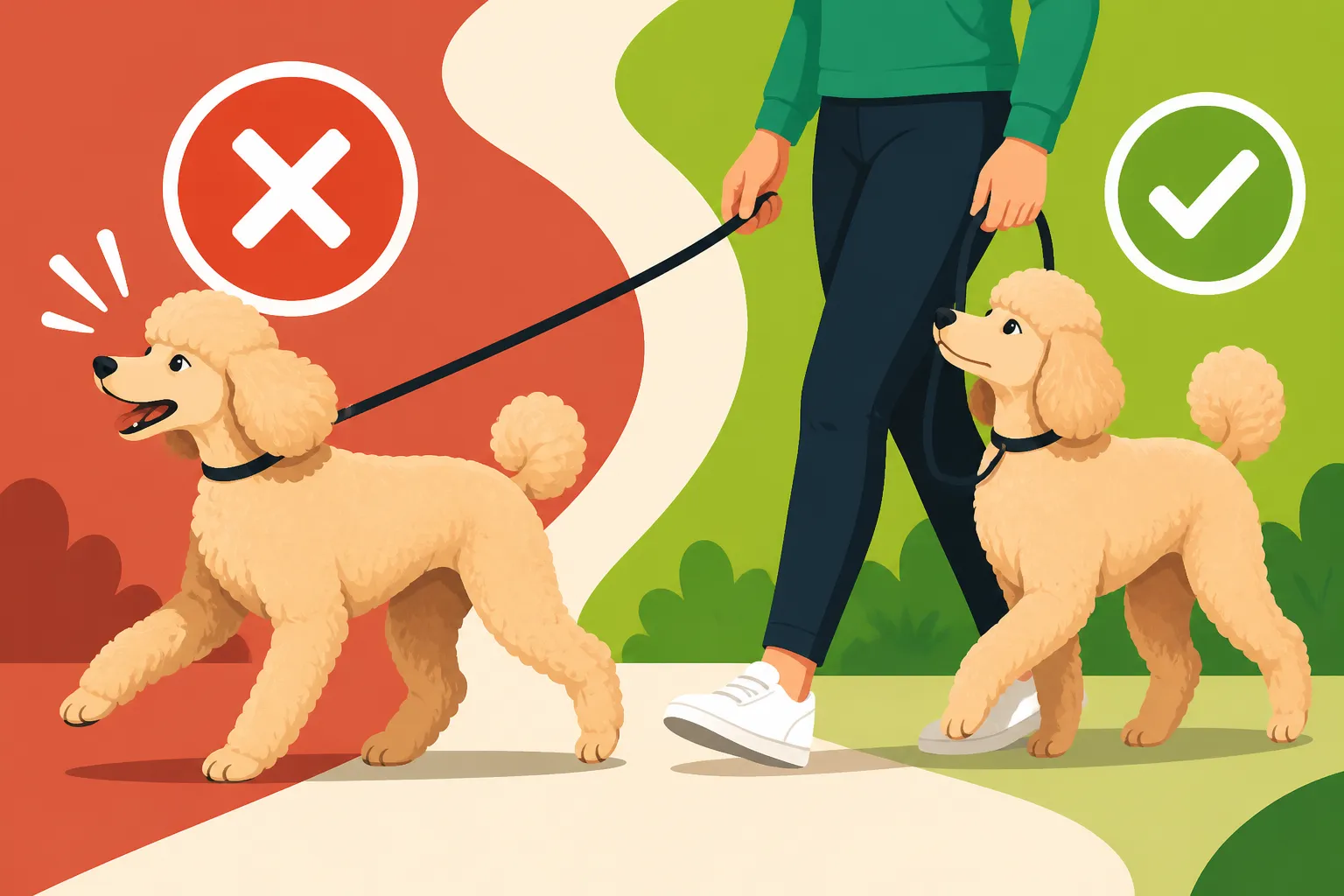
Heelwork With a Poodle That Wants to Lead
It's incredibly frustrating when you're trying to enjoy a peaceful stroll with your beloved Poodle, only to find yourself being dragged down the street or constantly correcting their urge to lead the way. You envisioned elegant walks, a Poodle trotting politely by your side, not a constant tug-of-war. This guide is here to help you understand why your intelligent Poodle might have a strong inclination to pull and how to master the art of heelwork, transforming those walks into the calm, connected experiences you've always dreamed of.
Understanding Your Poodle's Natural Drive to Lead
Poodles are not just pretty faces; they are highly intelligent, active, and often opinionated dogs with a rich history as working retrievers. This means they have an innate drive that can sometimes manifest as a desire to be at the forefront, exploring the world on their own terms, rather than politely following your lead. It’s not necessarily defiance, but often pure Poodle enthusiasm and curiosity!
Why Poodles Take the Lead
Your Poodle's brain is constantly whirring, taking in every scent, sight, and sound. For a breed that ranks so high in intelligence, they're always eager to investigate what's around the next corner. Their natural intelligence means they learn quickly, including that pulling often gets them where they want to go faster. If pulling has ever resulted in them reaching an exciting lamppost, greeting another dog, or getting to that tempting patch of grass, then they've learned it's an effective strategy. It's a classic case of what works, gets repeated, and your Poodle is a master of cause and effect. They aren't trying to be "dominant"; they're just being Poodles—smart, curious, and effective problem-solvers.
Another factor is their history. Originally bred as waterfowl retrievers, Poodles were expected to range out, find game, and bring it back. This isn't a breed that was typically bred to stay glued to a handler's side in a heel position for hours on end, unlike some herding or protection breeds. They have an independent streak that, while charming in other contexts, can make heelwork a bit more of a negotiation. Recognizing this intrinsic drive helps you approach training with empathy and realistic expectations.
Reading Poodle Body Language on Leash
Before you even begin to correct, it’s crucial to understand what your Poodle is telling you. A Poodle that wants to lead will often exhibit a forward-leaning posture, with their nose to the ground or pointed towards an interesting smell. Their tail might be wagging high, or their ears perked up, indicating high arousal and keen interest in their surroundings. They might even try to dart ahead suddenly when something catches their eye, putting tension on the leash. Learning to read these subtle cues is paramount. If you notice your Poodle's head drop and their nose start working the ground with increasing intensity, you know they're about to put some muscle into pulling towards that fascinating scent.
Conversely, a Poodle who is confused or uncomfortable might have their ears flattened, tail tucked, or be trying to check in with you more frequently. Knowing the difference between an excited, investigative pull and a nervous, uncertain one will guide your training approach. Are they pulling out of sheer joy and curiosity, or are they trying to escape an uncomfortable situation? For a sensitive breed like the Poodle, understanding their internal state is key to effective communication. You might find some good insights by exploring Reading a Poodle's Body Language.
Laying the Foundations for Effective Heelwork Training
Building reliable heelwork with a Poodle isn't about brute force or constant tugging. It's about clear communication, consistency, and making the desired behavior more rewarding than the alternative. Poodles are incredibly intelligent and respond best to positive reinforcement, quickly understanding what you want if you make it worthwhile for them.
The Right Equipment for Poodle Heelwork
The equipment you use can make a huge difference in your success. While a standard flat collar and leash are often sufficient for dogs who already understand heelwork, for a Poodle with a strong pulling habit, you might need something that offers a bit more control without causing pain. Front-clip harnesses are often excellent choices, as they redirect your Poodle's forward momentum back towards you when they pull, rather than allowing them to pull straight ahead with their chest. This makes it physically harder for them to drag you. A high-quality front-clip harness, available on platforms like Amazon, can be a game-changer.
Head halters are another option, giving you direct control over your Poodle's head, which in turn directs their body. However, these require careful introduction to ensure your Poodle accepts them comfortably. Avoid choke chains or prong collars, especially with sensitive Poodles, as these can easily shut them down and damage your relationship, making training much harder in the long run. Remember, the goal is to guide, not to punish. To better understand equipment choices for smaller Poodles, you might read Harness or Collar for a Toy Poodle.
| Equipment Type | Pros | Cons | Best For |
|---|---|---|---|
| Flat Collar | Simple, lightweight, good for well-trained dogs | Offers little control for pullers, can injure trachea if Poodle pulls hard | Dogs who already have good leash manners or for ID tags |
| Martingale Collar | Prevents slipping off, provides gentle correction without choking | Still allows some pulling, must be fitted correctly | Dogs with narrow heads (like some Poodles) who might slip out of flat collars |
| Front-Clip Harness | Redirects pulling force, reduces strain on neck, comfortable | Can sometimes tangle legs, Poodle might chew it if left on | Poodles who pull, offering good control without discomfort |
| Head Halter | Excellent control over the head, no pressure on the neck | Requires desensitization for Poodle acceptance, some Poodles dislike it | Strong pullers, Poodles who need precise directional control |
Starting With Positive Reinforcement
Positive reinforcement is the cornerstone of Poodle training. Your Poodle wants to please you, especially if there's a tasty reward involved! Start your heelwork training in a quiet, low-distraction environment, like your living room or backyard. Hold a treat at your side, level with your Poodle's nose, to encourage them to stay in the desired position. As soon as they take a step or two in the heel position, mark the behavior with a verbal "yes!" or a clicker, and immediately reward them. Repeat this often, keeping sessions short and fun. Why Poodles Learn a Cue in Five Repetitions highlights just how quickly they can pick up new commands.
Gradually increase the number of steps they take before receiving a reward. The key is to reward before they even think about pulling. If they start to forge ahead, simply stop walking. Wait for them to look back at you, or for the leash to slacken, then reward that moment of attentiveness and resume walking. This teaches them that pulling makes the walk stop, while loose-leash walking keeps the fun going. Consistency is your best friend here.
Building Duration and Distraction Resistance
Once your Poodle understands the basic concept of walking nicely on a loose leash in a low-distraction setting, it’s time to gradually introduce more challenges. This is where many owners get frustrated because their Poodle seems to "forget" everything once outside. It's not forgetting; it's simply that the outside world is infinitely more interesting! Start by moving to a slightly more distracting area, like your quiet street, but keep sessions short. As your Poodle succeeds, slowly introduce more stimulating environments and longer durations.
A powerful tool is to change directions frequently. If your Poodle starts to pull, unexpectedly turn around and walk the other way. They'll have to pay attention to you to avoid being pulled off balance. You can also vary your pace – slow down, speed up, stop completely – forcing your Poodle to be mindful of your movements. Remember to continue rewarding heavily for successful heelwork in these new environments. The treats you use should be high-value – something they absolutely love – to compete with the distractions of the outside world. This gradual increase in difficulty helps solidify their understanding and builds their focus on you, even when there's a squirrel taunting them from a tree. For a Poodle, staying focused in exciting environments requires a lot of mental effort, so be patient and celebrate small victories.
Common Challenges and Troubleshooting Heelwork with a Poodle
Even with the best intentions and equipment, training a smart, active Poodle for perfect heelwork comes with its hurdles. Their clever minds can work against you if you're not prepared, and their sensitive nature means your approach needs to be just right.
When Your Poodle Pulls Ahead
The moment your Poodle pulls ahead, the goal is to immediately break the pattern of "pulling gets me forward." As mentioned, simply stopping can be very effective. The instant your Poodle feels tension, you become a statue. Don't move until the leash is loose again, and your Poodle offers you some attention, even just a glance. Then, praise and reward, and continue walking. This might mean standing still for a while, especially in the beginning, but patience is key. Over time, your Poodle will connect the act of pulling with the walk stopping.
Another technique is the "U-turn." When your Poodle surges forward, pivot sharply and walk in the opposite direction. This forces them to pay attention to where you are going and prevents them from simply continuing on their merry way. This can be especially effective for Standard Poodles with a bit more power. This exercise, often done with a long line in a safe, open area, can also help reinforce recall and general attentiveness. You can find more specific strategies in Stopping a Standard Poodle Pulling on Leash or Long Line Work With a Poodle.
Dealing with Leash Reactivity
Sometimes pulling isn't just about wanting to lead, but about reacting to the environment – barking at other dogs, lunging at bicycles, or being overly excited. This is called leash reactivity, and it requires a slightly different approach. First, identify your Poodle's "trigger stack" – what makes them react? Is it other dogs, people, cars, or certain sounds? Once you know their triggers, the goal is to work below their reaction threshold. This means staying far enough away from the trigger that your Poodle notices it but doesn't react negatively.
At this safe distance, practice your heelwork and reward calm behavior in the presence of the trigger. Slowly, gradually, decrease the distance as your Poodle's confidence and focus on you grow. If they do react, increase the distance again. Avoid punishing reactivity, as this can often make it worse by increasing their anxiety. Instead, focus on redirecting their attention to you with high-value treats and praise. Professional trainers or online resources, like those offered by BAXTER & Bella, can provide structured programs specifically for managing leash reactivity, guiding you through the nuanced steps of desensitization and counter-conditioning.
Maintaining Motivation for a Smart Poodle
Poodles are incredibly smart, which is a blessing and a curse in training. They can learn very quickly, but they also get bored easily and may start to "invent their own shortcuts" if the training isn't engaging enough. To keep your Poodle motivated, vary your rewards. Don't just stick to one type of treat; use different high-value treats, toy rewards, or enthusiastic praise. Keep training sessions short, perhaps 5-10 minutes, multiple times a day, rather than one long, tedious session. This keeps their brain engaged and prevents burnout.
Incorporate fun games into your walks, like sudden changes of pace, weaving between your legs, or short bursts of trick training. This transforms the "boring" act of walking into an interactive game where you are the most interesting thing on the walk. Remember that a Poodle's brain needs as much exercise as their body, if not more. If they're bored, they're more likely to seek their own entertainment, which often involves pulling or ignoring your cues. If you're finding that your Poodle is easily distracted or seems to ignore you in new environments, it might be worth reviewing Why a Poodle Ignores You in an Open Field or Why a Bright Poodle Gets Bored.
Advancing Your Poodle's Heelwork Skills
Once your Poodle has mastered basic loose-leash walking in various environments, you can start to refine their heelwork, moving towards a more precise and polished performance. This is where the true elegance of Poodle obedience shines, whether for competitive sports or simply for the sheer joy of a perfectly synchronized walk.
Introducing Advanced Heelwork Positions
Beyond just walking nicely on a loose leash, "heel" in competitive obedience often means a specific position: your Poodle's shoulder precisely aligned with your leg, maintaining focus and attention regardless of distractions. To teach this, you'll want to use a lure (a treat in your hand) to guide your Poodle into the exact spot you want them. Once they are there, mark and reward. Practice starting and stopping, making sharp turns, and moving backward. The goal is for your Poodle to anticipate your movements and adjust their position accordingly, almost like an extension of your body.
Many Poodle owners enjoy competitive dog sports, and heelwork is a fundamental component of disciplines like obedience and rally. If you're considering this path, you might look for classes that focus on precision heelwork. Organizations like the AKC or UKC offer titles in these areas, and the process of working towards them can be incredibly rewarding for both you and your intelligent Poodle. Poodle Obedience and Rally Titles can give you a good idea of what's involved.
Practicing in Varied Environments
The true test of advanced heelwork is its reliability in any given situation. This means practicing in increasingly challenging environments. Take your Poodle to busy parks, outdoor shopping centers, or even pet-friendly stores. The key is to gradually expose them to these places, always setting them up for success by starting at a distance where they can still focus, and slowly moving closer as they demonstrate competence.
Don't forget about different surfaces and weather conditions. Walking on grass, pavement, gravel, or even through light puddles should all be part of your practice. The more varied the experiences, the more resilient and adaptable your Poodle's heelwork will become. Remember to keep it positive and fun, even in challenging spots. Your enthusiasm is contagious, and your Poodle will thrive on the shared experience of mastering these skills together. Consistent, varied practice is what transforms a Poodle who can heel into a Poodle who always heels.
Disclaimer
This article is for general informational purposes only and does not constitute professional advice. Laws, prices and regulations vary by location and change over time. Consult a qualified professional for guidance on your specific situation.