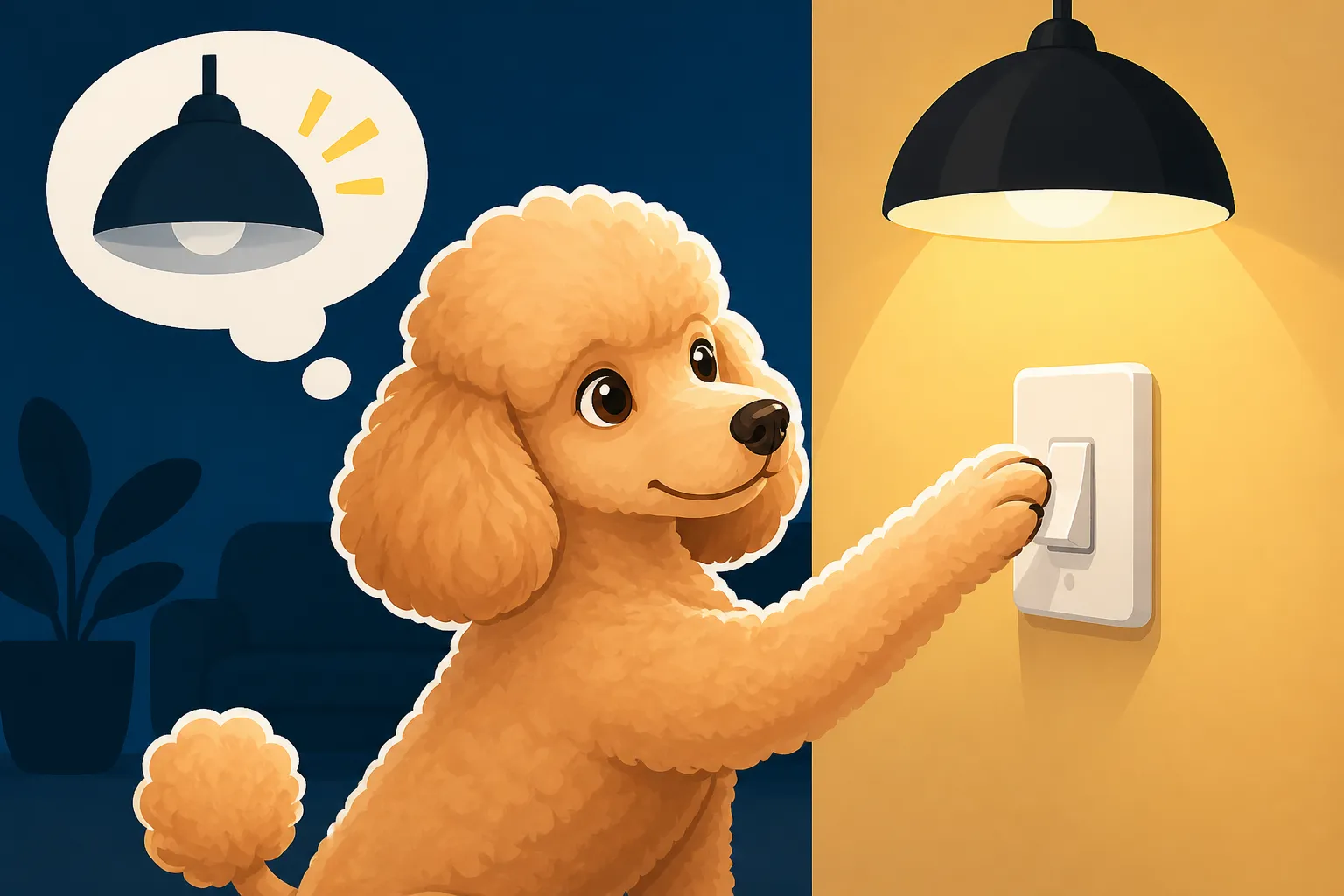
Whether a Poodle Can Learn to Turn Off Lights
Oh, the sheer brilliance of Poodles! If you've ever owned one, you know that they're not just beautiful faces with fantastic hair; they've got brains for days. Many Poodle parents find themselves wondering just how far those smarts can go, often asking if their furry genius can learn complex tasks, like, say, turning off the lights. It's not just a funny thought; it's a genuine question about their potential. This guide is all about diving into the fascinating world of Poodle intelligence and exploring the very real possibility of teaching your Poodle to help out with a chore as seemingly human as flipping a light switch.
The Poodle's Unmatched Cognitive Abilities
If you've spent any time with a Poodle, you know you're not dealing with an average dog. They possess a remarkable intellect that often surprises those unfamiliar with the breed. This isn't just anecdotal; it's a recognized trait that makes them exceptional students and problem-solvers. Their minds are constantly whirring, seeking engagement and understanding, which is precisely why they can tackle tasks that might seem impossible for other breeds.
Why Poodles Consistently Rank High in Intelligence
Poodles consistently rank among the most intelligent dog breeds, often placing right behind the Border Collie in studies measuring canine working and obedience intelligence. This isn't just about being able to fetch a ball; it's about their capacity for understanding, their quick learning curve, and their ability to interpret human cues. Their intelligence isn't a modern development either; Poodles were originally bred as working water retrievers, a role that demanded quick thinking, problem-solving, and close cooperation with their human handlers. This historical context shows us that their smarts are deeply ingrained, honed over generations to be highly attentive and capable.
This inherent intelligence means that Poodles often pick up new commands with astonishing speed. They are known to learn a new cue in as few as five repetitions, which is incredibly fast compared to many other breeds. Why Poodles Learn a Cue in Five Repetitions This rapid acquisition of knowledge is a huge advantage when you're trying to teach them something as specific and multi-faceted as turning off a light switch. They don't just memorize; they understand the connection between a command, an action, and a desired outcome, which is crucial for advanced training.
Beyond Simple Commands: How Poodles Grasp Complex Sequences
What truly sets a Poodle apart is their ability to grasp complex sequences of actions and abstract concepts. They're not just repeating rote behaviors; they're often anticipating steps, making connections, and even inferring what you want from subtle cues. This is where the notion of teaching a Poodle to turn off lights moves from fantasy to a realistic goal. The task itself involves more than one simple action: it requires identifying the switch, performing a specific physical action (like nudging or pressing), and understanding that this action leads to the light going off.
This capacity for sequential learning is what allows Poodles to excel in various dog sports like agility, obedience, and even service dog work, where multi-step commands are the norm. They can follow a series of instructions, remember the order, and execute them reliably. Sometimes, their intelligence can even be a double-edged sword, as they might Why Intelligence Makes a Poodle Harder to Live With if they're not sufficiently challenged, leading to them finding their own (often mischievous) ways to entertain themselves. By engaging their minds with complex tasks, like assisting with household chores, we not only avoid boredom but also tap into their full potential.
Deconstructing "Turning Off Lights" for Your Poodle
Teaching a dog to turn off lights isn't about magic; it's about breaking down a complex action into smaller, manageable steps. The key is to understand how your Poodle perceives the world and to adapt the task to their physical capabilities and cognitive strengths. The exact approach will depend heavily on your home environment and the type of light switches you have.
Identifying the Right Kind of "Light Switch"
Not all light switches are created equal, especially when it comes to dog-friendly operation. A traditional toggle switch can be tricky for a dog, requiring a precise paw swipe or mouth grip that might be uncomfortable or even dangerous. Rocker switches are a bit easier, as they often just require a firm push. However, the most accessible options for a Poodle, particularly smaller varieties like Toys and Miniatures, often involve modern technology.
Consider smart home devices that use buttons or touch panels. A large, easily depressible button, perhaps one linked to an Amazon Alexa or Google Home system, could be ideal. You can even find smart plugs that turn lamps on and off with a physical button, making it a very direct and clear action for your dog. For those with a Standard Poodle, a sturdy rocker switch positioned lower on the wall might be perfectly manageable with a nose nudge or paw. The goal here is to select a "switch" that your Poodle can reliably and safely interact with, without straining themselves or causing damage to your home. This might mean getting creative with your existing setup or investing in a simple smart home button for dedicated training.
Foundational Training: Target Training and Pressure Application
Before your Poodle can turn off a light, they first need to learn how to interact with an object on cue. This is where target training comes in, teaching them to touch a specific item with their nose or paw. You can start with a simple sticky note or a designated target stick. Hold it out, and when your Poodle investigates it with their nose, immediately mark the behavior (with a clicker or a verbal "yes!") and reward them. Repeat this until they are confidently touching the target every time you present it. Then, slowly introduce the verbal cue, "Touch," as they perform the action.
Once your Poodle understands "touch," you'll move to applying pressure. If your chosen light switch is a push-button or rocker, you'll want them to press it with enough force to activate it. Start by placing the target on the switch. When they touch the target, encourage a slightly firmer press. If using their paw, you might need to teach a "push" command. This involves luring their paw onto the target, rewarding for any pressure, and gradually increasing the expectation for a stronger push. Consistency and high-value treats are your best friends here. A Poodle's desire to please, coupled with tasty rewards, will make this stage fly by.
The Step-by-Step Process of Teaching the Light-Off Command
Now that your Poodle has the foundational skills of targeting and applying pressure, it's time to put it all together. This stage requires patience, clear communication, and breaking the process into tiny, achievable victories. Remember, your Poodle is eager to learn, but they need you to show them the way in a language they understand.
From Touch to Task: Guiding Your Poodle to the Switch
With your Poodle confidently touching or pushing a target, the next step is to transfer that skill to the actual light switch. Begin by holding the target directly on the light switch. Give your "Touch" or "Push" command. When your Poodle interacts with the target on the switch, reward them enthusiastically. Once they are consistent with this, you can start to fade the target. Gradually make the target smaller, or move it slightly away from the switch, encouraging them to interact directly with the switch itself.
This might take several short training sessions. If your Poodle is struggling, go back a step. Make it easier. Maybe smear a tiny bit of peanut butter on the switch to encourage them to interact with it, then reward them when they make contact. The key is to reward any interaction with the switch that moves towards the desired outcome. For a physical wall switch, you might need to help guide their paw or nose initially, then slowly reduce your physical assistance as they understand the action. This shaping process, where you reward successive approximations of the desired behavior, is incredibly effective with intelligent breeds like Poodles. Training a Poodle That Outthinks You
Adding the Verbal Cue and Generalization
Once your Poodle is consistently touching or pushing the light switch (or smart button) and the light is turning off, it's time to introduce the verbal cue. Just before they perform the action, say your chosen command clearly – something like "Lights out!" or "Off!" As soon as the light goes off, mark and reward them. Repetition is key here. Your Poodle will quickly associate your words with the action and the result.
After they've mastered this in one location, you'll need to generalize the behavior. This means practicing in different rooms, with different lights, and even at different times of day. Start simple: maybe move to a lamp with a push-button if your first success was a wall switch. Always begin with a high success rate, gradually increasing the difficulty. Some Poodles, especially Toy Poodles, might not be able to reach certain wall switches, so having various options or using smart home tech is beneficial. The more consistent you are with the command and the reward, the more reliable your Poodle will become.
Real-World Considerations and Advanced Concepts
While teaching your Poodle to turn off lights is a fun and impressive trick, integrating it into daily life requires a bit more thought. You want the behavior to be reliable, safe, and beneficial, not just a one-off party trick. Addressing potential issues and continuing to challenge your Poodle will ensure long-term success.
Maintaining Motivation and Preventing Accidental Activations
Poodles thrive on engagement and positive reinforcement. To keep the "lights out" command reliable, you need to maintain your Poodle's motivation. Continue to reward them, even if it's not every single time once the behavior is solid. Vary your rewards – sometimes a treat, sometimes praise, sometimes a quick game of fetch. Remember that Poodles are highly sensitive, and harsh handling can cause them to shut down. Rebuilding Trust With a Frightened Poodle Keep it fun and positive.
Preventing accidental activations is another crucial aspect. You don't want your Poodle turning off lights whenever they feel like it, especially in the middle of a movie or during an important task. This is where the verbal cue becomes paramount. Only reward them when they perform the action after you give the command. If they try to turn off the lights without a cue, gently redirect them to another activity. You can also teach a "wait" or "leave it" command near the switch. If you're using smart home buttons, you might even consider placing them out of reach when you don't want the Poodle to interact with them unsupervised.
Expanding the Skillset: Beyond Just Lights
Teaching your Poodle to turn off lights is just the beginning! This process lays a fantastic foundation for other assistance tasks. Imagine your Poodle learning to retrieve specific items, close doors, or even help with laundry by putting clothes in a basket. Their intelligence and desire to work make them prime candidates for learning a wide array of useful behaviors.
If you're interested in expanding your Poodle's repertoire, online training platforms can be incredibly helpful. Resources like BAXTER & Bella offer structured programs and support that can guide you through teaching advanced tricks and even service-dog-like tasks. They provide step-by-step videos and a community, which can be invaluable when you're working on something complex. Remember, for a Poodle, learning isn't just a pastime; it's a fundamental need. What a Poodle Does When Its Brain Is Idle Engaging them in productive and mentally stimulating activities will lead to a happier, better-behaved companion.
| Training Phase | Key Actions | Primary Goal | Tools/Rewards |
|---|---|---|---|
| Foundation | Target touch (nose/paw) | Reliable interaction with a specific point | Target stick, sticky notes, high-value treats, clicker |
| Application | Transfer target to switch, encourage pressure | Poodle pushes/touches the switch effectively | Light switch (physical or smart button), treats, verbal praise |
| Cue Association | Introduce verbal command ("Lights Out") | Poodle links command to action and outcome | Verbal cue, treats, consistent environment |
| Generalization | Practice in various locations/lights | Poodle performs task reliably in new settings | Different rooms, various light types, varied rewards |
| Refinement | Fade rewards, maintain motivation, prevent self-cue | Consistent, cued behavior | Varied rewards, praise, redirection, continued mental enrichment |
The Broader Benefits of Challenging Your Poodle's Mind
Beyond the "cool factor" of a Poodle turning off lights, engaging them in such sophisticated training offers profound benefits for their overall well-being and your relationship with them. It’s an investment in their happiness and a testament to their incredible potential.
Combating Boredom and Channeling Energy
A Poodle with an idle mind is often a Poodle looking for trouble. Their high intelligence means they need significant mental stimulation, not just physical exercise. While a good walk or romp in the park is essential, it won't fully satisfy their need to think. Teaching them complex tasks like turning off lights, or other Trick Training a Poodle initiatives, provides an outlet for that mental energy. It gives them a "job," which is something Poodles, with their working dog heritage, truly thrive on.
When a Poodle is mentally engaged, they are less likely to develop undesirable behaviors stemming from boredom, such as excessive barking, destructive chewing, or counter-surfing. Channeling their natural curiosity and problem-solving skills into constructive activities creates a well-adjusted and content companion. For these highly intelligent dogs, Why a Poodle Needs a Job Rather Than a Walk is a truism; while walks are important, mental puzzles and learning tasks are equally vital for their fulfillment.
Strengthening the Bond and Building Confidence
Working on complex tasks together isn't just about training; it's a powerful way to strengthen the bond you share with your Poodle. The process fosters communication, builds trust, and deepens your mutual understanding. As you guide them through new challenges, your Poodle learns to rely on you, and you learn to better read their signals and motivations. This shared journey of discovery and achievement is incredibly rewarding for both of you.
Successfully mastering a challenging task also does wonders for your Poodle's confidence. Every time they succeed, they gain a sense of accomplishment. This increased self-assurance can translate into other areas of their life, making them more resilient, adaptable, and less prone to anxiety in new situations. When you see your Poodle confidently approaching a light switch, executing the command, and looking to you for praise, you'll know you've nurtured not just a smart dog, but a truly happy and confident member of your family. Training the Second Smartest Dog Breed is an ongoing adventure, and every new skill, no matter how small, contributes to their rich and fulfilling life.
Disclaimer
This article is for general informational purposes only and does not constitute professional advice. Laws, prices and regulations vary by location and change over time. Consult a qualified professional for guidance on your specific situation.