Feeding a Poodle by Size
One of the most common worries I hear from fellow Poodle parents, whether they have a tiny Toy or a magnificent Standard, is about feeding. It's not just about pouring kibble into a bowl; it's about understanding that each Poodle size has unique nutritional needs and potential health concerns that diet can profoundly impact. Getting it wrong can lead to anything from a missed growth spurt to serious health crises like bloat or hypoglycemia. This comprehensive guide is here to demystify Poodle nutrition, breaking down exactly how to feed your Poodle optimally, no matter their size or stage of life, ensuring they thrive from puppyhood through their golden years.
Why Poodle Size Matters for Feeding
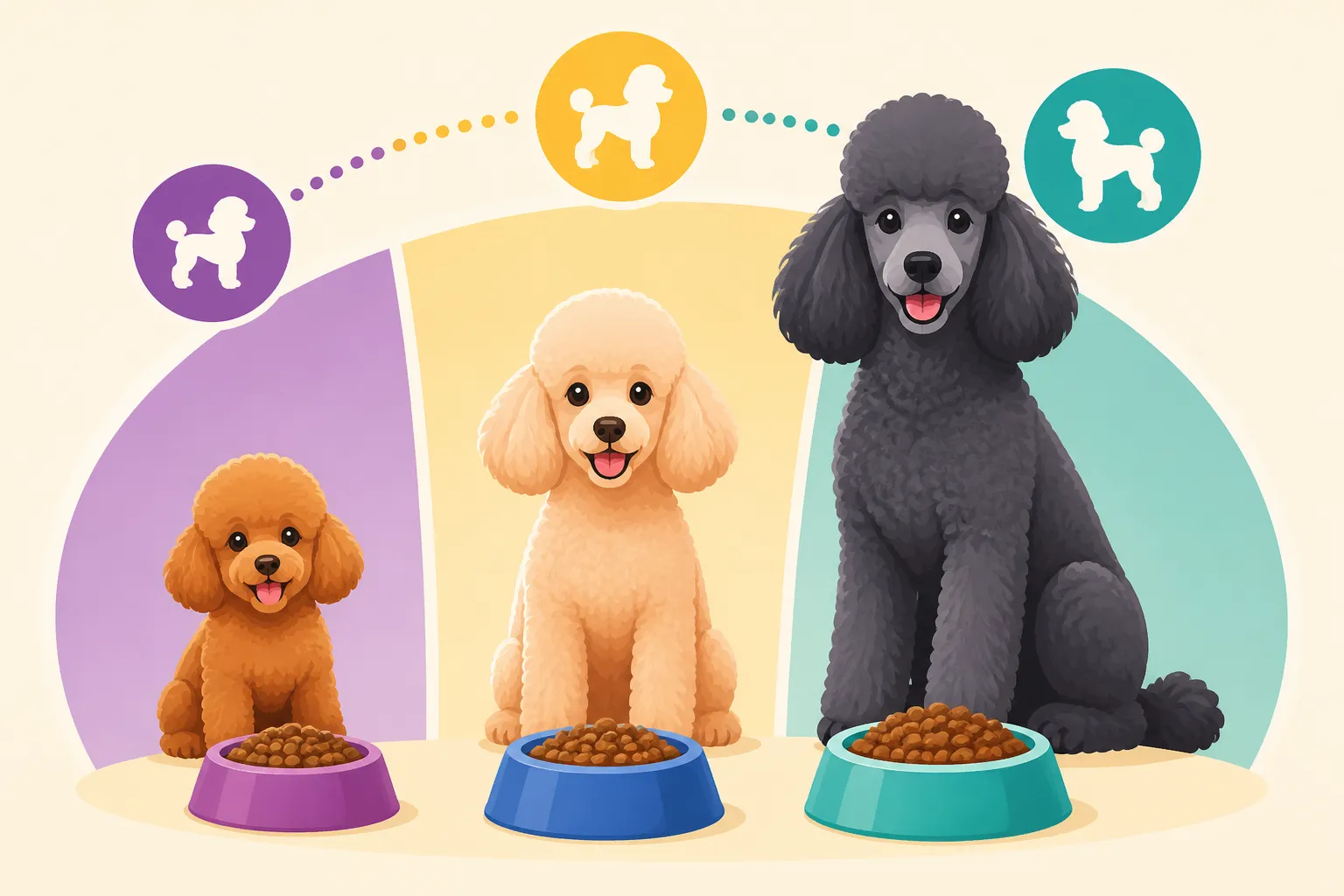
It's tempting to think "dog food is dog food," but when you live with a Poodle, you quickly learn that couldn't be further from the truth. The vast difference in size between a two-pound Toy Poodle and a seventy-pound Standard Poodle isn't just about how much they eat; it dictates everything from their metabolic rate to their bone development and even their predisposition to certain health conditions. Understanding these fundamental differences is the first step to becoming a truly informed Poodle feeder.
Metabolic Differences
Imagine the difference in energy output between a tiny hummingbird and a large eagle. While not quite that extreme, a similar principle applies to our Poodles. Smaller dogs, like Toy Poodles, generally have a much higher metabolic rate than their larger counterparts. This means they burn through calories more quickly and need food that's more calorie-dense to sustain their energy levels. They also need to eat more frequently to keep their blood sugar stable, especially as puppies. A Standard Poodle, on the other hand, while energetic, has a lower metabolic rate relative to its body mass. Overfeeding a Standard Poodle with high-calorie food meant for a Toy could quickly lead to unhealthy weight gain, putting strain on their joints and organs.
It’s crucial to select a food formulated for the size of your dog. Many premium dog food brands offer formulas specifically for small breeds, medium breeds, and large breeds. These aren't just marketing ploys; they're designed with these metabolic differences in mind. For instance, small breed formulas often have smaller kibble sizes for tiny mouths and higher calorie counts per cup, whereas large breed formulas might have lower fat content and added joint support to manage slower growth and protect developing bones.
Growth Plate Considerations
Puppyhood is a critical time for bone and joint development, and diet plays an enormous role, especially for Standard Poodles. Large breed puppies, including Standard Poodles, grow very rapidly, and if their diet is too high in calories, particularly calcium and phosphorus, it can lead to overly fast growth. This rapid growth can put undue stress on their developing growth plates and joints, increasing the risk of orthopedic issues like hip or elbow dysplasia later in life. Poodle Hip Dysplasia by Size is a concern for Standard Poodles.
For this reason, Standard Poodle puppies absolutely need a diet specifically formulated for large breed puppies. These foods are carefully balanced to promote slow, steady growth, allowing bones and joints to mature properly without being overloaded. Toy and Miniature Poodles, while still needing complete and balanced puppy food, don't face the same rapid growth challenges and thus don't require the same specific large-breed puppy formulas. Their concern is often more about getting enough energy and avoiding Hypoglycemia in a Toy Poodle Puppy.
Risk Factors Unique to Size
Each Poodle size comes with its own set of potential health vulnerabilities that can be influenced by diet. Standard Poodles, with their deep chests, are unfortunately predisposed to Gastric Dilatation-Volvulus (GDV), commonly known as bloat. Bloat and the Deep Standard Poodle Chest is a terrifying emergency where the stomach twists. While diet isn't the sole cause, feeding habits like eating too quickly, eating one large meal, or exercising vigorously around meal times can increase the risk. Diet choices like fermented foods or those with certain ingredients might also play a role, though research is ongoing.
Toy Poodles, by contrast, are more prone to issues related to their tiny stature. Their high metabolism, especially as puppies, makes them susceptible to hypoglycemia (low blood sugar), which can be life-threatening. Consistent, frequent meals of appropriate caloric density are vital for them. They can also be prone to dental issues, so dental-friendly kibble or regular dental care is paramount. Dental Care for a Small Poodle is something to proactively manage. Miniature Poodles generally sit in the middle, less prone to bloat than Standards and less prone to severe hypoglycemia than Toys, but still benefiting from thoughtful dietary management to maintain their robust health.
Feeding the Mighty Standard Poodle
The Standard Poodle is an elegant, athletic, and intelligent companion, and their diet needs to support that vibrant energy and sturdy build. Balancing their growth as puppies, maintaining their musculature as adults, and supporting their larger frame into old age requires a targeted approach. Many of us fall in love with their majestic presence, but often underestimate the nutritional responsibilities that come with it.
Puppyhood: Building a Strong Foundation
Standard Poodle puppies grow at an astonishing rate, sometimes gaining several pounds in a single week. This rapid growth, while exciting, needs careful management through diet to prevent future orthopedic problems. As I mentioned, choosing a large breed puppy formula is non-negotiable. These specialized foods have a balanced calcium-to-phosphorus ratio and a slightly lower caloric density to ensure steady, controlled growth rather than an explosive surge. Resist the urge to supplement with extra vitamins, minerals, or joint aids unless specifically directed by your vet, as too much of a good thing can actually be detrimental to developing bones.
Typically, a Standard Poodle puppy will need to eat three times a day, sometimes four for very young pups (8-12 weeks). Always follow the feeding guidelines on the bag of your chosen large breed puppy food, but remember these are just starting points. Your puppy's individual metabolism, activity level, and growth rate will dictate whether you need to adjust portions slightly. The goal is to see a healthy, athletic puppy, not an overweight one. You should be able to easily feel their ribs, but not see them prominently. Overfeeding a puppy is one of the biggest mistakes new owners make, thinking a chunky puppy is a healthy one. No, a lean puppy is a healthy one! Feeding a Standard Poodle Puppy correctly is critical.
Adult Standards: Maintaining Peak Condition
Once your Standard Poodle reaches maturity, typically between 12-18 months of age, you'll transition them to an adult large breed formula. This transition should be gradual, over 7-10 days, mixing increasing amounts of the new food with decreasing amounts of the old. Adult Standard Poodles are active dogs, and their diet needs to fuel their playful nature, intelligence, and often, their participation in dog sports. A high-quality adult formula will provide a balanced protein and fat content to maintain lean muscle mass and healthy energy levels without contributing to excess weight.
Most adult Standard Poodles do well on two meals a day, morning and evening. This split helps prevent them from eating too much at once, which can be a factor in bloat risk. Avoid feeding immediately before or after strenuous exercise. Give them an hour or so to digest before a run, and at least an hour to cool down afterward. Monitor their weight regularly by feeling their ribs; their luxurious coat can hide a multitude of sins, and a few extra pounds can quickly become problematic for their joints. Brands like Purina Pro Plan, Royal Canin, and Eukanuba often have excellent large breed adult formulas that many Standard Poodle owners find successful.
Senior Standards: Adapting to Slower Living
As your Standard Poodle enters their golden years, typically around 7-8 years old, their nutritional needs will shift again. Their metabolism may slow down, they might be less active, and they could develop age-related conditions like arthritis. At this point, switching to a senior dog food formula can be beneficial. These foods usually have fewer calories to prevent weight gain, adjusted protein levels to support muscle mass without overtaxing kidneys, and often include joint-supporting ingredients like glucosamine and chondroitin. Calorie Needs of a Senior Poodle definitely change.
It's also a good time to become extra vigilant about their overall health. If you notice any changes in appetite, energy levels, or bowel habits, consult your veterinarian. Senior Poodles might also benefit from softer food options if dental problems arise, or you might need to adjust meal frequency if they struggle with digestion. Even if your senior Poodle still acts like a puppy, their body is aging, and their diet needs to reflect that to ensure their comfort and longevity. Caring for an Aging Poodle involves many aspects, and diet is a big one.
Nourishing the Versatile Miniature Poodle
Miniature Poodles strike a wonderful balance: they're small enough to be portable yet sturdy enough for active families. Their feeding requirements bridge the gap between their Toy and Standard cousins, requiring attention to both energy levels and preventing a tendency toward chubbiness. They have a fantastic zest for life, and their diet should reflect that spirited nature.
Miniature Puppies: Balanced Growth
Miniature Poodle puppies, while not as prone to the rapid growth issues of Standards or the hypoglycemia of Toys, still need careful nutritional management during their formative months. They thrive on high-quality puppy food formulated for small to medium breeds. These foods provide the necessary energy for their playful antics and support healthy development of their bones and muscles. Avoid generic "all life stages" foods if you can, as they may not be ideally balanced for a growing puppy.
Similar to other puppies, Miniature Poodle pups should eat three times a day initially, moving to two meals as they approach six months of age. Pay close attention to the feeding guidelines on the food bag, but always observe your puppy's body condition. A lean, energetic Miniature Poodle is what you're aiming for. If you can't feel their ribs easily, or if they start looking a bit barrel-chested, it's time to slightly reduce portion sizes or increase their playtime.
Adult Miniatures: Energy and Health
Once your Miniature Poodle reaches their adult weight and height, usually around 10-12 months, you'll transition them to an adult small to medium breed formula. These dogs are intelligent and often very active, excelling in obedience, agility, and simply being fantastic companions on walks and adventures. Their diet needs to support their moderate energy levels without packing on extra pounds, as even a small amount of excess weight can strain their joints, especially their knees (luxating patellas are a known issue in smaller Poodles).
Two meals a day is ideal for adult Miniature Poodles. Again, portion control is key. A high-quality adult dog food with moderate protein and fat will serve them well. Look for brands that prioritize whole ingredients and avoid excessive fillers. Regular exercise, combined with a proper diet, will keep your Miniature Poodle at their ideal weight and prevent common health issues. They are smart, so don't be surprised if they try to convince you they need extra snacks!
Senior Miniatures: Keeping Them Spry
As Miniature Poodles age, typically around 8-9 years old, they may experience a decrease in activity and a slower metabolism. This is the time to consider a senior-specific formula or a "less active" adult formula to manage their weight. Maintaining a healthy weight is paramount for senior Miniature Poodles, as it helps alleviate stress on aging joints and organs.
Look for senior formulas that include joint support, antioxidants, and easily digestible ingredients. Many older Miniature Poodles can also develop dental problems, so dental chews or dental-friendly kibble can be beneficial, in addition to regular professional dental cleanings. If your senior Poodle starts refusing food or seems to have difficulty eating, a vet visit is in order to rule out any underlying issues. Adapting their diet to their changing needs will help them enjoy their golden years with comfort and vitality.
Caring for the Petite Toy Poodle
The Toy Poodle is a marvel of miniaturization, but their small size comes with unique dietary considerations. Owners of these tiny dynamos must be particularly diligent about feeding frequency, calorie density, and preventing certain health emergencies. Their delicate systems require a precise and consistent approach to nutrition.
Toy Puppies: Preventing Blood Sugar Crashes
Toy Poodle puppies are particularly susceptible to hypoglycemia, or dangerously low blood sugar. Because their tiny bodies don't have large glycogen reserves (stored sugar), missing a meal or expending too much energy without refueling can cause their blood sugar to plummet. This is a serious, life-threatening condition. Hypoglycemia in a Toy Poodle Puppy is a real danger.
For this reason, Toy Poodle puppies, especially under six months, need to eat very frequently – typically 4-5 small meals a day. Some very tiny puppies might even benefit from a small snack right before bed. Their food should be a high-quality puppy formula specifically designed for small breeds, which tends to be more calorie-dense with smaller kibble. Always keep a tube of Nutri-Cal or a similar glucose gel on hand for emergencies. If your Toy Poodle puppy becomes lethargic, weak, disoriented, or starts trembling, rub some of the gel on their gums immediately and contact your vet. It's truly a matter of life or death. Emergency Sugar for a Crashing Toy Poodle is something every Toy Poodle owner should know about.
Adult Toys: Sustaining Tiny Energy Levels
Once your Toy Poodle reaches maturity, usually around 8-10 months, you can transition them to a high-quality adult small breed formula. While the risk of hypoglycemia decreases significantly, their higher metabolic rate compared to larger Poodles means they still benefit from calorie-dense food. Most adult Toy Poodles do well on two meals a day, but some might still prefer three smaller meals spread throughout the day to maintain consistent energy levels.
Despite their size, Toy Poodles are often active and surprisingly energetic. Their diet needs to support this without leading to obesity, which can quickly happen if portions aren't carefully controlled. Even a pound or two of extra weight on a Toy Poodle is equivalent to many pounds on a Standard and can severely impact their joints and overall health. They also have tiny mouths and can be prone to dental disease, so choosing a kibble that helps clean teeth or offering dental chews designed for tiny breeds can be very helpful. Why Small Poodles Lose Teeth Early is a common issue.
Senior Toys: Protecting Delicate Systems
As Toy Poodles age, typically around 9-10 years old, their dietary needs will shift. While their metabolism might remain relatively high compared to larger dogs, their activity levels may decrease, making them susceptible to weight gain. A senior-specific diet or a "less active" formula designed for small breeds can help manage their calorie intake while providing essential nutrients.
Senior Toy Poodles are also prone to developing various health conditions, and their diet can play a supportive role. Dental disease is a major concern, potentially leading to tooth loss and making eating painful. Softer foods or rehydrated kibble might be necessary. Issues like kidney disease or heart murmurs can also emerge. If your vet diagnoses any new health concerns, they may recommend a prescription diet to help manage the condition. Always consult your vet about any dietary changes for a senior Toy Poodle, as their small size means even minor imbalances can have significant effects.
Choosing the Right Food for Your Poodle
With a dizzying array of dog food options available today, it's easy to feel overwhelmed. From kibble to fresh food subscriptions, how do you decide what's best for your beloved Poodle? The key is to look beyond the marketing hype and focus on quality ingredients, nutritional balance, and what truly suits your Poodle's individual needs.
Dry Kibble: Pros, Cons, and How to Select
Dry kibble remains the most popular and often most convenient feeding option for many Poodle owners. Its benefits include ease of storage, cost-effectiveness, and often, a texture that helps clean teeth. However, not all kibble is created equal. The quality can vary dramatically, and it's essential to know what to look for on a label.
What to Look For:
- Named Meat as First Ingredient: The first ingredient should be a named meat source (e.g., "chicken meal," "lamb," "beef") rather than generic "meat meal" or a grain.
- Whole Grains/Complex Carbohydrates: Unless your vet recommends otherwise, whole grains (like brown rice, barley, oats) or complex carbohydrates (like sweet potatoes, peas, lentils) are excellent energy sources. Be wary of marketing trends around "grain-free" diets; current research suggests a potential link between some grain-free diets and certain heart conditions in dogs. Always discuss this with your vet.
- Healthy Fats: Look for sources like chicken fat, salmon oil, or flaxseed, which provide essential fatty acids for a healthy coat and skin.
- A.A.F.C.O. Statement: Ensure the food has an A.A.F.C.O. (Association of American Feed Control Officials) statement confirming it's "complete and balanced" for your Poodle's life stage (e.g., "for growth," "for maintenance," or "all life stages").
What to Avoid:
- By-products, especially unnamed ones: While some by-products can be nutritious, generic "meat by-products" are best avoided.
- Excessive Fillers: Ingredients like corn gluten meal, wheat middlings, and soy are often used as cheap fillers and offer little nutritional value.
- Artificial Colors, Flavors, and Preservatives: These are unnecessary and can sometimes cause sensitivities.
Brands widely trusted by Poodle owners and veterinarians often include Royal Canin, Purina Pro Plan, Hill's Science Diet, and Eukanuba. You can find many of these options easily through online retailers like Chewy or Amazon.
Wet, Fresh, and Raw Diets: Exploring Alternatives
Beyond kibble, there's a growing interest in wet, fresh, and raw food diets for Poodles. Each comes with its own set of pros and cons, and often a higher price tag.
- Wet Food: Canned wet food is highly palatable and can be a good option for picky eaters, senior Poodles with dental issues, or simply to add variety and moisture to a diet. It's often less calorie-dense than kibble, so you might need to feed larger quantities. It's typically more expensive per serving.
- Fresh Food (Cooked): Services like Ollie deliver freshly prepared, human-grade meals that are cooked to vet-approved recipes. These diets offer excellent palatability and digestibility, often leading to improved coat health and smaller, firmer stools. They can be particularly appealing for Poodles with sensitivities or those who turn up their noses at kibble. The main drawbacks are cost and the need for refrigeration. Many owners find the peace of mind of feeding transparent, high-quality ingredients worth the investment.
- Raw Food (BARF – Biologically Appropriate Raw Food): Raw feeding involves giving dogs uncooked meat, bones, and organs, sometimes with vegetables and fruits. Proponents claim it mirrors a dog's ancestral diet, leading to superior health. However, raw feeding comes with significant risks, including bacterial contamination (to both dog and humans), nutritional imbalances if not prepared correctly, and the potential for choking or internal injury from bones. If you're considering a raw diet, it is essential to work with a board-certified veterinary nutritionist to ensure it's balanced and safe. This isn't something to undertake without expert guidance.
Supplements and Treats: When and What to Offer
Supplements are often marketed as a way to boost your Poodle's health, but for a dog on a complete and balanced diet, they are usually unnecessary. In some cases, too many supplements can even cause an imbalance. Always discuss any potential supplements with your veterinarian first. They might recommend specific supplements for conditions like arthritis (glucosamine/chondroitin), allergies (omega-3 fatty acids), or digestive issues (probiotics).
Treats are an undeniable part of having a Poodle – they're smart and highly motivated by food! However, treats should make up no more than 10% of your Poodle's daily caloric intake to prevent Poodle Obesity and Its Consequences. Choose high-quality, healthy treats.
- Training Treats: For training, small, soft, easily digestible treats are best. Something your Poodle can gobble quickly without losing focus.
- Dental Chews: Dental chews can help keep teeth clean, but make sure they are size-appropriate and digestible.
- Vegetables/Fruits: Many Poodles love raw carrots, green beans, apple slices (no seeds!), or blueberries as healthy, low-calorie options. Always check which human foods are safe for dogs.
- Interactive Toys: Puzzle feeders filled with kibble or healthy treats from Amazon or Chewy are excellent for mental stimulation and slow down eating.
Remember, treats are a tool for bonding and training, not a main food source. Moderation is key to keeping your Poodle healthy and lean.
Feeding Habits, Bowls, and Portions
Beyond what you feed, how you feed your Poodle is just as important. From the type of bowl to the frequency of meals, these daily habits can significantly impact digestion, health, and overall well-being. Getting these details right can prevent common issues and create a positive feeding experience for your Poodle.
Meal Frequency and Scheduling
The ideal meal frequency for your Poodle largely depends on their size and age.
- Puppies: As discussed, Toy Poodle puppies need 4-5 small meals a day to prevent hypoglycemia. Standard Poodle puppies generally do well on 3 meals a day. Miniature Poodle puppies typically fall in between, needing 3 meals a day. As they grow older (around 6 months for smaller Poodles, 12 months for Standards), they can usually transition to fewer meals.
- Adults: Most adult Poodles of all sizes thrive on two meals a day – once in the morning and once in the evening. This helps regulate their metabolism, prevents them from getting too hungry, and can reduce the risk of bloat in Standard Poodles. For Standard Poodles, it's particularly important to avoid feeding just one large meal.
- Seniors: Some senior Poodles, especially those with sensitive stomachs or specific health conditions, might benefit from 3 smaller meals again, mimicking puppy feeding patterns. This can aid digestion and ensure they get adequate nutrition if their appetite is waning.
Consistency is key. Try to feed your Poodle at roughly the same times each day. Dogs are creatures of habit, and a predictable schedule can help with digestion and house training.
Bowl Choices and Placement
The type of bowl you choose and where you place it might seem trivial, but it can make a difference.
- Material: Stainless steel bowls are generally recommended because they are durable, easy to clean, and non-porous, meaning they won't harbor bacteria like scratched plastic bowls can. Ceramic bowls are also an option, but can break easily.
- Size and Depth: A Toy Poodle will obviously need a much smaller, shallower bowl than a Standard Poodle. Choose a bowl appropriate for their muzzle and size to make eating comfortable.
- Elevated Bowls: For many years, elevated bowls were recommended for large, deep-chested breeds like Standard Poodles to prevent bloat. However, recent research suggests that elevated bowls may actually increase the risk of bloat in some dogs. It's a contentious topic, and the science is not definitive. My recommendation is to discuss this with your vet. Many Standard Poodle owners choose to feed on the floor or with only slightly raised bowls, and focus more on slow eating techniques.
- Slow Feeders: For Poodles (especially Standards) who tend to gulp down their food too quickly, a slow feeder bowl is a fantastic investment. These bowls have ridges or obstacles that force your dog to eat around them, significantly slowing down mealtime. This can aid digestion and reduce the risk of bloat. You can find excellent slow feeder options on Amazon or Chewy. Bowl Height and Standard Poodle Bloat Risk is a consideration, but eating speed is likely a bigger one.
Portion Control and Preventing Obesity
This is where many Poodle parents struggle, often out of love. It’s so easy to give in to those intelligent, pleading eyes! However, obesity is a serious health threat for Poodles of all sizes, leading to joint problems, heart disease, diabetes, and a reduced lifespan. Portion Control for a Poodle is crucial.
- Follow Guidelines (Initially): Start with the feeding guidelines on your dog food bag, but treat them as a starting point. These are averages, and your Poodle's metabolism and activity level are unique.
- Body Condition Scoring: Learn to assess your Poodle's body condition. You should be able to easily feel their ribs without pressing hard, but not see them. They should have an hourglass figure when viewed from above, with a visible tuck-up at their waist. If you can't feel ribs or they look like a furry barrel, they're likely overweight.
- Measure Meals: Don't eyeball it. Use a standard measuring cup or, even better, a kitchen scale to accurately weigh out your Poodle's kibble. The difference between a slightly overfilled cup and an accurately measured one can add up to significant extra calories over weeks and months.
- Factor in Treats: Remember the 10% rule for treats. If you're giving a lot of training treats, reduce the amount of kibble at meal times to compensate.
- Regular Weight Checks: Especially for Toy and Miniature Poodles, regular weigh-ins at home or at the vet can catch weight gain early. For Standard Poodles, a trip to the vet's scale or a professional groomer can help.
A lean Poodle is a healthy Poodle. It's tough love, but controlling portions and preventing obesity is one of the kindest things you can do for your companion.
Troubleshooting Common Poodle Feeding Challenges
Even with the best intentions and the highest quality food, Poodle owners sometimes face frustrating feeding challenges. From a finicky eater to digestive upsets, these issues can be worrisome. Having a few strategies up your sleeve can make all the difference, but always remember to consult your vet if concerns persist.
Picky Eaters and Food Refusal
Poodles are highly intelligent and can sometimes be quite discerning about their food. Some are truly picky, while others might be holding out for something better. If your Poodle suddenly refuses food, the first step is always a vet check to rule out any underlying medical issues. Pain, dental problems, or illness can all cause a loss of appetite.
If health issues are ruled out, here are some strategies:
- Stick to a Schedule: Don't leave food down all day. Offer food for 15-20 minutes, then pick it up, even if it's untouched. Your Poodle will quickly learn that mealtime is a finite window.
- Avoid Constant Switching: Don't fall into the trap of constantly changing foods to please a picky eater. This can lead to digestive upset and create a more finicky dog. Find a high-quality food they tolerate and stick with it for a while.
- Enhance Palatability: Sometimes a little extra something can make a difference. Try adding a spoonful of warm water, plain chicken broth (low sodium!), or a tiny bit of canned pumpkin to kibble. You could also try toppers like a sprinkle of freeze-dried raw food, or a bit of a fresh food option like Ollie (conveniently delivered to your door) mixed in.
- Exercise First: A good walk or play session before meals can stimulate appetite.
- No Free-Feeding: If you're currently free-feeding, switch to scheduled meals. This creates a bit of hunger before mealtime.
Remember, a healthy dog will not starve itself if good food is consistently offered. Patience and consistency are key when dealing with a picky Poodle.
Digestive Upsets and Sensitivities
Diarrhea, vomiting, excessive gas, or an itchy coat can all be signs of a digestive upset or food sensitivity in your Poodle. These can be particularly concerning for Toy Poodles due to their delicate systems.
- Identify Triggers: Think about any recent changes: new food, new treats, table scraps, or stress. Often, simply removing the trigger resolves the issue.
- Bland Diet (Temporary): For acute episodes of mild diarrhea or vomiting, a temporary bland diet of plain boiled chicken (no skin, no bones) and white rice can help settle the stomach. Feed small, frequent meals for a day or two, then gradually reintroduce their regular food.
- Probiotics: Probiotic supplements formulated for dogs can help restore healthy gut flora after an upset or for Poodles with chronic mild sensitivities.
- Limited Ingredient Diets (LID): If your Poodle has persistent digestive issues or skin allergies, your vet might recommend a Limited Ingredient Diet. These foods contain a single source of protein and carbohydrate, making it easier to identify and avoid potential allergens. Brands like Royal Canin or Hill's often have prescription LIDs available.
- Food Trials: For suspected food allergies, a strict elimination diet, guided by your vet, is the gold standard. This involves feeding a novel protein and carbohydrate source (one your Poodle has never eaten before) for 8-12 weeks, with absolutely no other foods, treats, or flavored medications. It requires extreme diligence but can definitively identify food allergens. Poodle Allergies and Skin Reactions can often be linked to food.
Always consult your vet if digestive issues are severe, persistent, or accompanied by other symptoms like lethargy, fever, or pain.
Managing Weight: Too Thin or Too Heavy
Maintaining an ideal weight is critical for a Poodle's health and lifespan. Being too thin can be as problematic as being too heavy, often indicating underlying health issues.
If Your Poodle is Too Thin:
- Vet Check First: This is paramount. Unexplained weight loss is often a symptom of serious medical conditions, from dental pain to parasites, diabetes, Addison's disease, or even cancer. Rule out medical causes before trying to add weight.
- Increase Caloric Density: If medically cleared, you might need to switch to a higher-calorie food or add a calorie booster. Puppy food is often more calorie-dense and can be used for adult dogs needing to gain weight.
- Increase Meal Frequency: Offering more frequent, smaller meals can help if your Poodle struggles to eat larger portions.
- Enhance Palatability: Sometimes, a bit of wet food mixed into kibble or a fresh food option can entice a dog with a poor appetite.
If Your Poodle is Too Heavy:
- Accurate Measurement: As discussed, measure all food, including treats, precisely.
- Switch to Weight Management Food: Many reputable brands offer "light" or "weight management" formulas that are lower in calories but still provide complete nutrition.
- Increase Exercise: While diet is crucial, increasing your Poodle's daily exercise is also vital. More walks, play sessions, or mental enrichment activities that get them moving can burn extra calories. Poodle Obesity and Its Consequences are severe.
- Healthy Treats: Swap high-calorie treats for low-calorie options like raw vegetables (carrots, green beans) or small pieces of cooked chicken.
- Vet Guidance: Your vet can help you calculate your Poodle's ideal weight and daily calorie needs, and monitor their progress. They can also rule out medical causes for weight gain, such as thyroid issues.
Consistency, patience, and realistic goals are key to successful weight management for any Poodle.
The Lifelong Journey of Poodle Nutrition
Feeding your Poodle isn't a "set it and forget it" task. Just like our own dietary needs evolve over a lifetime, so do theirs. From their first excited puppy meal to the gentle sustenance of their senior years, understanding and adapting to these changes is a fundamental part of responsible Poodle ownership. It's a journey that strengthens the bond you share.
Regular Vet Consultations
Your veterinarian is your most important partner in your Poodle's nutritional journey. They can offer personalized advice based on your Poodle's specific breed size, age, activity level, and any pre-existing health conditions.
- Annual Check-ups: These are crucial. During yearly exams, your vet will assess your Poodle's body condition, discuss their diet, and recommend any necessary adjustments. They can catch subtle weight changes or emerging health concerns that might impact their nutritional needs.
- Life Stage Transitions: Consult your vet when transitioning your Poodle from puppy to adult food, and again when considering a senior formula. They can guide you on the best timing and specific products.
- Health Concerns: If your Poodle develops any health issues, from allergies to diabetes or kidney disease, your vet will likely recommend specific dietary changes or prescription foods to help manage the condition. Never try to self-diagnose or treat serious health issues with diet alone without professional guidance.
Remember, your vet sees many Poodles, and they have the medical expertise to advise on what's truly best for your individual companion.
Adapting to Health Changes
A Poodle's health can change over time, and their diet needs to adapt accordingly. Whether it's a new diagnosis, recovery from surgery, or simply the natural process of aging, nutrition plays a vital role in recovery and management.
- Allergies and Sensitivities: If your Poodle develops food allergies or sensitivities, a vet-guided elimination diet or a specialized limited ingredient diet will be necessary to manage symptoms like itching, ear infections, or digestive upset.
- Diabetes: For diabetic Poodles, a diet rich in complex carbohydrates and controlled fat, often with consistent meal times, is crucial to help manage blood sugar levels. Your vet will provide specific recommendations.
- Kidney Disease: Poodles with kidney disease typically require a diet with controlled protein and phosphorus levels to reduce the workload on their kidneys. Prescription kidney diets are often necessary.
- Addison's Disease: While Lifelong Treatment for an Addisonian Poodle primarily involves medication, ensuring a consistent, easily digestible diet can support overall well-being, especially during times of stress.
- Post-Surgery or Illness: During recovery, your vet might recommend a highly digestible, calorie-dense food to aid healing and regain strength. Sometimes, appetite stimulants or hand-feeding are needed.
Being proactive and responsive to your Poodle's health changes, and working closely with your vet, will ensure their diet always supports their optimal well-being.
The Joy of a Well-Fed Poodle
There's immense satisfaction in seeing your Poodle thrive – their coat gleaming, their eyes bright, their energy boundless, all thanks to proper nutrition. A well-fed Poodle isn't just physically healthy; they are happier, more engaged, and less prone to behavioral issues stemming from discomfort or lack of energy.
The journey of feeding your Poodle is a continuous learning experience. It requires paying attention to their individual cues, understanding the science behind nutrition, and always being ready to adapt. It's about more than just food; it's about providing the building blocks for a long, vibrant, and joyful life together. So, measure carefully, choose wisely, and enjoy every shared mealtime with your incredible Poodle.
| Poodle Size | Typical Adult Weight | Typical Daily Meals (Adult) | Key Nutritional Concerns | Recommended Food Type | Example Treat |
|---|---|---|---|---|---|
| Toy | 4-6 pounds | 2-3 small meals | Hypoglycemia (puppies), dental disease, obesity | Small breed adult formula, high calorie density | Tiny piece of cooked chicken |
| Miniature | 10-15 pounds | 2 meals | Obesity, luxating patellas | Small to medium breed adult formula | Small dog biscuit |
| Standard | 40-70 pounds | 2 meals | Bloat, hip/elbow dysplasia (puppies), obesity | Large breed adult formula, moderate calorie density | Carrot stick |
Disclaimer
This article is for general informational purposes only and does not constitute professional advice. Laws, prices and regulations vary by location and change over time. Consult a qualified professional for guidance on your specific situation.