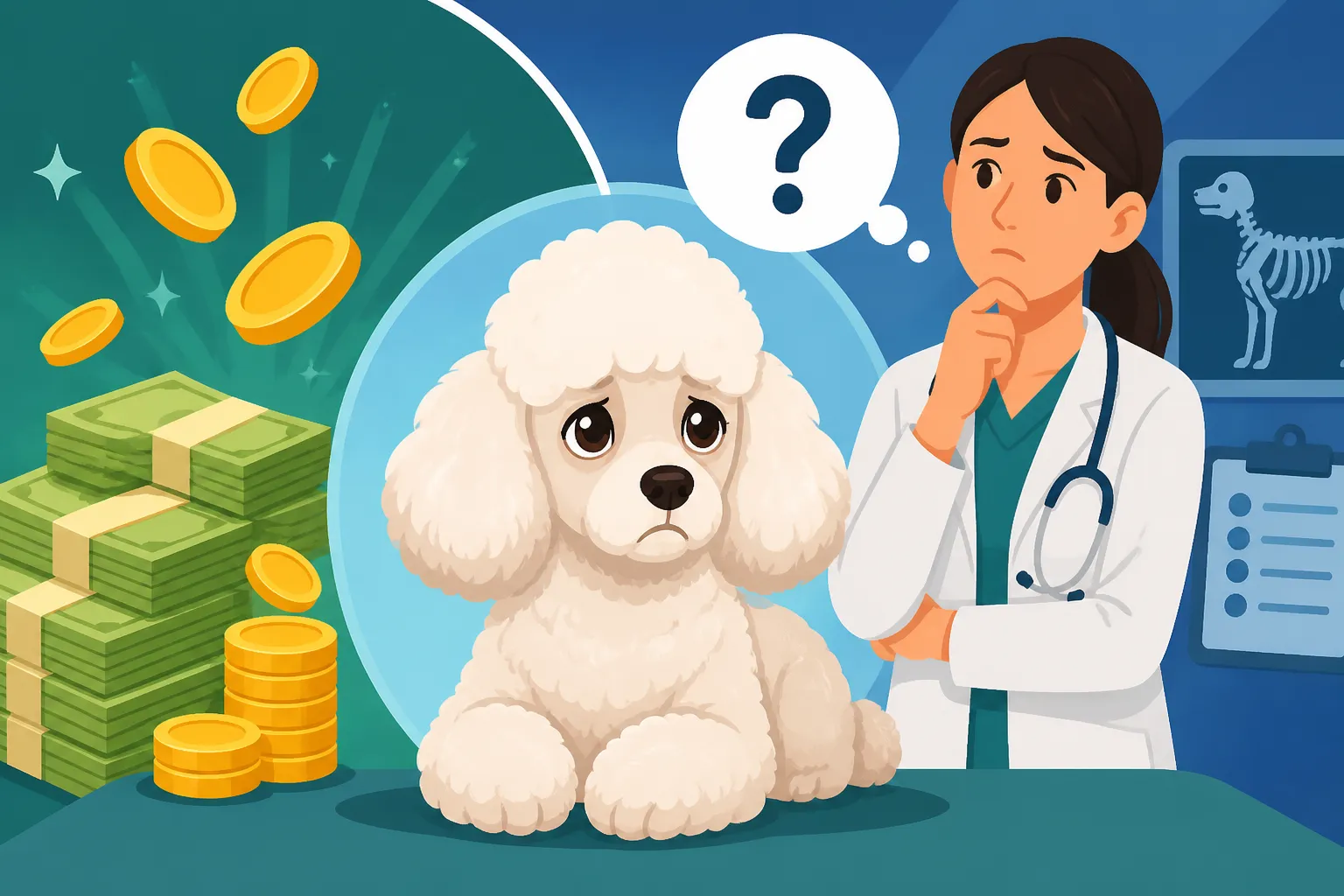
Vet Spend on a Poodle With No Diagnosis
There's nothing quite as gut-wrenching as knowing your beloved Poodle isn't feeling well, seeing symptoms, but hitting a brick wall when it comes to getting a clear diagnosis from the vet. You're spending money, seeing specialists, running tests, and yet the answer remains elusive. This guide is here to walk you through the frustrating, often costly, journey of navigating a Poodle's health issues when a definitive diagnosis seems just out of reach.
The Frustration of the Unknown: Why "No Diagnosis" is So Draining
When your Poodle is sick, but no test provides a clear answer, it's not just a medical mystery; it’s an emotional and financial marathon. You're left feeling helpless, watching your beloved companion suffer without a name for their ailment, and the clock keeps ticking, along with the veterinary bills. This limbo state is one of the hardest parts of pet ownership, hitting deeply for Poodle parents who know how sensitive and intelligent their dogs are.
Emotional Toll on Poodle Owners
Poodles, regardless of their size – from the smallest Toy to the stately Standard – are known for their deep connection with their human families. They are incredibly intuitive, often mirroring our emotions, and when they are unwell, that bond intensifies the worry. You might find yourself losing sleep, constantly observing every twitch or sigh, and questioning if you're doing enough. The guilt can be immense, especially when you can't relieve their discomfort because you don't know the root cause. This prolonged stress can take a significant toll on your mental and emotional well-being, on top of managing your Poodle's daily needs. It's a heavy burden, made heavier by the silent questions: "What is it?" and "Will we ever find out?" This worry is magnified for a breed that often hides discomfort, making it even harder to understand what's truly going on, as discussed in Reading Pain in a Sensitive Poodle.
The Endless Cycle of Appointment and Expense
The journey often begins with a routine vet visit, which then spirals into a series of appointments, each with its own set of diagnostics. You might go from your primary vet to an internal medicine specialist, then maybe a dermatologist if skin issues are a factor, or even a neurologist. Each referral means a new consultation fee, new tests, and more waiting. You find yourself trapped in a treadmill of trying to piece together a puzzle where half the pieces seem to be missing. The costs accumulate rapidly—initial exams, blood work, imaging, specialized tests—and without a diagnosis, it feels like money is being spent on dead ends rather than solutions. This can be profoundly disheartening and financially draining, making you wonder if there's an end in sight or if you're just throwing good money after bad.
The Initial Vet Visit: What Happens When Symptoms Emerge
Most journeys into the "no diagnosis" realm begin with a seemingly straightforward visit to your family veterinarian. Your Poodle starts showing a new, concerning symptom—a persistent cough, lethargy, intermittent lameness, or digestive upset. These initial steps are crucial for ruling out common issues, but they are also where the frustration can begin if answers aren't immediate.
The First Consult and Basic Bloodwork
When you first bring your Poodle in with concerning symptoms, your veterinarian will start with a thorough physical examination. They’ll check everything from nose to tail, listening to their heart and lungs, palpating their abdomen, checking their teeth and gums, and assessing their gait. They’ll ask you a battery of questions about your Poodle's history, diet, exercise, and the specific symptoms you've observed—when they started, how often they occur, and if anything seems to make them better or worse. This detailed history is often the first, best clue.
Following the physical exam, your vet will usually recommend basic diagnostic tests to get a broader picture of your Poodle’s internal health. This commonly includes a complete blood count (CBC) to check for infection, inflammation, or anemia, and a chemistry panel to assess organ function, electrolytes, and blood sugar levels. A urinalysis might also be requested to look for urinary tract infections, kidney issues, or diabetes. These tests are the bedrock of veterinary diagnostics, providing a general overview. However, sometimes these initial results come back surprisingly "normal," despite your Poodle clearly being unwell, which is often the first indicator that you're heading down the path of an elusive diagnosis.
Imaging and Specialist Referrals
If the initial physical exam and basic bloodwork don't provide a clear answer, your vet will likely suggest further imaging to look inside your Poodle's body. X-rays are a common next step, useful for identifying issues with bones, assessing organ size and position, or detecting foreign objects. However, X-rays offer limited detail for soft tissues. An abdominal ultrasound, on the other hand, provides a much more detailed, real-time view of internal organs like the liver, kidneys, pancreas, and gastrointestinal tract, allowing the vet to see internal structures, fluid accumulation, or masses.
For more complex or localized issues, especially those affecting the brain, spinal cord, or certain joints, an MRI or CT scan might be recommended. These advanced imaging techniques offer incredibly detailed cross-sectional views. However, they are expensive and often require referral to a specialty veterinary hospital. At this point, your general practitioner might also suggest a consultation with a board-certified specialist—an internal medicine expert for complex systemic issues, a dermatologist for persistent skin problems like those related to Poodle Allergies and Skin Reactions, or a neurologist for any neurological symptoms. These specialists have advanced training and equipment, but each step adds to the growing financial and emotional investment without a guaranteed diagnosis.
Diagnostic Rabbit Holes: When Tests Don't Give Answers
This is where the true frustration and financial strain often set in. You’ve followed all the recommendations, invested in diagnostics, and still, you’re left with more questions than answers. The feeling of being stuck in a "diagnostic rabbit hole" is all too common for pet owners.
When Standard Tests Come Back Normal
Imagine your relief when your Poodle's CBC, chemistry, and urinalysis all come back pristine. Then imagine your confusion when your vet says, "Everything looks normal," even though your Poodle is still clearly symptomatic. This is a common and incredibly exasperating scenario. Normal test results don't mean your Poodle is fine; it simply means the problem isn't detectable by those specific tests, or it's not severe enough to cause overt changes in blood values yet.
It could be an intermittent condition that isn't active during the blood draw, a very early stage of a disease, or a condition that doesn't manifest in standard lab work. For instance, some autoimmune diseases can be tricky, or subtle neurological issues might not show up on basic screens. This is often the point where owners feel helpless, as the obvious avenues have been explored, but the mystery persists. Your vet might suggest retesting in a few weeks or looking for more subtle signs, adding to the uncertainty.
Exploring Rarer Conditions
Once common conditions are ruled out, your vet or specialist may begin to consider rarer, more obscure diseases. This can involve highly specialized and often costly tests. For example, if your Standard Poodle is showing vague symptoms like lethargy, vomiting, or muscle weakness, the vet might suspect Thyroid Disease in Poodles or Diagnosing Addison's in a Standard Poodle and recommend specific endocrine testing, such as an ACTH stimulation test for Addison's disease. These tests are not part of routine blood panels and can be quite specific and expensive.
Other possibilities include advanced genetic testing for inherited conditions, especially relevant for Poodles known to carry certain genetic predispositions. Genetic Panels for the Three Poodle Sizes can screen for various inherited disorders, but these tests can be time-consuming and also add to the overall expense, often providing only a probability rather than a definitive diagnosis of a current illness. In some cases, exploratory surgery might even be considered to visually examine internal organs and obtain biopsies for definitive diagnosis, a major invasive and costly step. The deeper you go into this rabbit hole, the more resources are expended, and the more complex the potential answers become.
The "Wait and See" Approach
Sometimes, after extensive diagnostics have been exhausted and no clear diagnosis has been made, your vet might recommend a "wait and see" approach. This can be incredibly difficult for owners who desperately want an immediate answer and solution. However, it's often a practical decision when further invasive or expensive tests are not warranted, or when the symptoms are mild and non-progressive.
During this period, your vet will typically advise you to monitor your Poodle very closely, keeping a detailed log of symptoms, their frequency, severity, and any potential triggers. This detailed record can be invaluable. What seems like an insignificant detail might become a critical clue if new symptoms develop or existing ones change. While agonizing, this approach allows time for subtle conditions to become more apparent or for your Poodle's body to heal naturally if the issue was self-limiting. It also prevents unnecessary, potentially stressful, and costly procedures when the diagnostic path is truly unclear.
Managing Symptoms While Seeking Clarity
When a definitive diagnosis remains elusive, the focus often shifts from identifying the cause to managing your Poodle's discomfort and improving their quality of life. This phase can involve a lot of trial and error, working closely with your vet to find what works best for your individual Poodle.
Supportive Care and Medication Trials
Since you don't have a clear diagnosis, the goal becomes alleviating the most troubling symptoms. This might involve a variety of supportive care measures and medication trials. For instance, if your Poodle is experiencing chronic pain, your vet might prescribe anti-inflammatory drugs or pain relievers. If nausea and vomiting are prominent, anti-emetics can help. Sometimes, a short course of antibiotics might be tried if an infection is suspected but not confirmed, or steroids to reduce inflammation, though these come with potential side effects.
The key here is observation. You'll need to pay close attention to how your Poodle responds to each treatment. Does the medication reduce the symptoms? Are there any adverse reactions? This feedback loop is vital for your vet to adjust the treatment plan. It can be a slow, incremental process, and it's essential to be patient and communicate openly with your veterinary team about both improvements and concerns. The aim is to make your Poodle as comfortable as possible while you continue to seek or await further diagnostic insights.
Dietary Changes and Alternative Approaches
For many undiagnosed conditions, especially those involving the digestive system or generalized inflammation, dietary changes can play a significant role. Your vet might recommend a novel protein diet, a limited ingredient diet, or a hydrolyzed protein diet to rule out food allergies or intolerances. Sometimes, a highly digestible, gentle diet can soothe an irritated gut. Brands like Ollie, which offer fresh, human-grade food, can be an excellent option for Poodles with sensitive stomachs or specific dietary needs, as their recipes are often less processed and contain fewer potential allergens.
Beyond prescription or specialized commercial diets, some owners explore alternative or complementary therapies. This could include adding probiotics to support gut health, specific nutritional supplements, or even therapies like acupuncture, hydrotherapy, or chiropractic adjustments. It’s crucial to discuss any alternative treatments with your primary veterinarian to ensure they are safe and won't interfere with conventional medications or exacerbate existing conditions. While these approaches may not provide a diagnosis, they can sometimes offer significant symptomatic relief and improve your Poodle's overall well-being.
Environmental Adjustments for Comfort
Sometimes, even without a specific medical diagnosis, simple changes in your Poodle's environment can make a world of difference. For a Poodle suffering from vague joint discomfort, providing orthopedic bedding can offer significant relief. If anxiety is a component of their symptoms, creating a calm, predictable routine, providing safe spaces, and reducing household stressors can be beneficial. For a Poodle sensitive to noise, reducing sudden loud sounds or providing white noise can help.
For a Poodle with skin irritations or chronic itching that hasn't been definitively diagnosed as an allergy, ensuring their bedding is clean, using hypoallergenic detergents, and maintaining appropriate humidity levels might help. Even simple things like ensuring they have access to fresh, clean water at all times, or providing gentle mental stimulation through puzzle toys, can contribute to their comfort and sense of security. These non-medical interventions are often overlooked but can be powerful tools in enhancing your Poodle's quality of life during a period of diagnostic uncertainty.
Financial Strain and How to Cope
The financial burden of a Poodle with an undiagnosed condition can be immense, often catching owners off guard. It's not just the cost of diagnosis, but the ongoing management of symptoms that adds up. Understanding these costs and planning for them is crucial.
Understanding the Cost of Diagnostics
When your Poodle is unwell and a diagnosis is elusive, the veterinary bills can quickly escalate. Initial consultations and basic blood work are just the beginning. As you delve deeper, each diagnostic step adds a significant amount. A round of X-rays can cost several hundred dollars, while an abdominal ultrasound can run from $400 to $800 or more, depending on your location and the clinic. Advanced imaging like an MRI or CT scan can easily push into the thousands, ranging from $1,500 to $3,000 or even higher, often requiring specialist referral and general anesthesia. Specialized lab tests for specific diseases, like the ACTH stimulation test for Addison's or various genetic panels, also contribute substantially. Even simple recheck appointments and medication trials add up over time. It’s a cascading expense, and without a clear answer, it can feel like you're pouring money into a bottomless pit. Here’s a general idea of how quickly costs can accumulate:
| Diagnostic Test | Purpose | Average Cost Range | Potential for "No Diagnosis" |
|---|---|---|---|
| Physical Exam | General health check, initial assessment | $50 – $150 | High |
| CBC & Chemistry Panel | Organ function, infection, anemia | $150 – $300 | Medium |
| Urinalysis | Kidney function, UTI, diabetes | $50 – $100 | Medium |
| X-rays (2 views) | Bone, organ size, foreign bodies | $200 – $400 | High (soft tissue often unclear) |
| Abdominal Ultrasound | Soft tissue organs, detailed view | $400 – $800 | Medium (can miss functional issues) |
| MRI/CT Scan | Brain, spinal cord, complex soft tissue | $1,500 – $3,000+ | Low (but very expensive) |
| Endocrine Tests (e.g., ACTH stim) | Hormonal imbalances (Addison's, Thyroid) | $300 – $600 | Low if specific, high if general screening |
| Biopsy (various types) | Tissue analysis for cancer, inflammation | $300 – $800+ | Low (provides definitive tissue diagnosis) |
| Consult w/ Specialist | Expert opinion, advanced diagnostics | $150 – $400 (initial) | Varies |
These figures are averages and can vary significantly based on your geographic location, the specific veterinary practice, and the complexity of the case. The total spend quickly exceeds the Yearly Routine Vet Spend for a Poodle most owners budget for.
Insurance, Savings, and Financial Aid
Navigating these substantial costs requires a proactive approach. Pet insurance can be a true lifesaver, provided you enroll your Poodle before any symptoms emerge. Companies like Healthy Paws offer comprehensive coverage that can significantly offset the financial impact of extensive diagnostics and ongoing treatment. However, be aware that pre-existing conditions are almost always excluded, so timing is everything when it comes to insurance. To learn more, research Poodle Insurance Premiums by Size and Age.
Beyond insurance, establishing an emergency fund specifically for your Poodle's health needs is highly recommended. Even putting aside a small amount regularly can make a huge difference when unexpected vet bills arise. This practice, known as Saving Ahead for a Poodle Emergency, can alleviate much of the stress. If you find yourself facing large, unexpected bills without insurance or savings, explore options like veterinary payment plans, applying for veterinary credit cards (like CareCredit), or looking into non-profit organizations that offer financial assistance for pet owners in need. Don't be afraid to discuss your financial concerns openly with your vet; many clinics can provide options or resources.
Making Difficult Decisions
The heartbreaking reality of undiagnosed health issues, compounded by mounting veterinary costs, is that sometimes difficult decisions have to be made. Despite your best efforts and financial investment, a clear diagnosis might remain elusive, or the cost of continuing the diagnostic chase becomes unsustainable. It's a conversation no pet owner ever wants to have, but understanding your Poodle's quality of life and your financial limits is crucial.
This might mean choosing to pursue palliative or symptomatic care rather than further diagnostics, focusing solely on making your Poodle comfortable. In the most challenging scenarios, it might even lead to considering euthanasia to prevent prolonged suffering, a decision made with immense love and care. These choices are agonizing, and it’s important to give yourself grace and seek support from your vet and loved ones. Remember, your Poodle relies on you to make decisions in their best interest, even when those decisions are profoundly painful.
Preventive Measures to Minimize Future Unknowns
While some health issues are unavoidable, there are steps you can take to minimize the likelihood of your Poodle developing complex, undiagnosed conditions and to prepare for them should they arise. Prevention and preparation are your best allies.
Thorough Breeder Research
The foundation of a healthy Poodle often starts with responsible breeding practices. Before bringing a Poodle into your home, it's absolutely paramount to do extensive research into the breeder. A reputable breeder will be transparent about the health history of their breeding dogs, including the sire and dam, and will be able to provide clear documentation of health clearances for conditions prevalent in Poodles, such as hip dysplasia (especially important for Standards—see Hip Scores Standard Poodle Breeders Publish), eye diseases, and certain genetic disorders. They should be testing for these issues. For example, a good breeder will conduct the tests outlined in What a Poodle Breeder Must Test For.
They should be open to answering all your questions, letting you meet the puppy's parents, and providing references. Avoid breeders who rush the process, offer puppies at suspiciously low prices, or cannot provide health clearances. While even the best breeding can't guarantee a lifetime free of illness, choosing a Poodle from health-tested lines significantly reduces the risk of inheriting complex conditions that are difficult and expensive to diagnose and treat later in life.
Maintaining a Detailed Health Journal
One of the most powerful tools you possess as a Poodle owner is diligent observation and record-keeping. Start a detailed health journal from the moment you bring your Poodle home. Document everything: vaccination dates, deworming, diet changes, new treats, exercise routines, and especially any subtle changes in behavior, appetite, energy levels, or physical symptoms. Note when symptoms appear, how long they last, and what, if anything, seemed to trigger or alleviate them.
This journal can be an invaluable resource for your veterinarian when your Poodle starts exhibiting puzzling symptoms. Instead of relying on memory, you can provide precise dates, frequencies, and details that might otherwise be forgotten. This detailed information can help your vet connect dots, identify patterns, and narrow down potential causes much more efficiently, potentially saving time, money, and emotional stress on the diagnostic journey. For instance, if you're concerned about potential Emergency Signs of Poodle Bloat, having a log of meal times and activities can be critical.
Regular Wellness Checks and Early Detection
Routine veterinary care is not just for vaccinations; it's fundamental for early detection of potential health problems. Regular wellness checks, usually annually for adult Poodles and bi-annually for senior Poodles, allow your vet to establish a baseline for your Poodle’s health. During these visits, your vet performs a thorough physical exam, often including blood and urine tests, to monitor for subtle changes that might indicate an underlying issue before it becomes overt. This is especially important as Poodles age; understanding how to care for them is detailed in Caring for an Aging Poodle.
Catching issues early can be critical. A slight change in blood values could signal the beginning of kidney disease or Thyroid Disease in Poodles, for example, allowing for intervention before symptoms become severe and harder to manage. Early diagnosis often means less invasive and less costly treatment options, and a much better prognosis for your Poodle. Don't skip these routine visits, even if your Poodle seems perfectly healthy; they are a vital investment in their long-term well-being and a guard against falling into the "no diagnosis" trap later on. Even managing basic supplies from retailers like Chewy and keeping track of their routine products (like What a Poodle Owner Spends on Blades and Shampoo) can help you stay attuned to their general health.
Disclaimer
This article is for general informational purposes only and does not constitute professional advice. Laws, prices and regulations vary by location and change over time. Consult a qualified professional for guidance on your specific situation.