Whether Salt Water Damages a Poodle Coat
There's nothing quite like watching your beloved Poodle bound across a sandy beach, ears flying, perhaps even taking a joyful dip in the ocean. The sheer delight on their face is infectious, and it's a memory many Poodle owners cherish. However, that moment of bliss often comes with a nagging worry: Is all this salt water going to damage that gorgeous, high-maintenance coat? It's a valid concern, as our Poodles don't have the typical double coats of many other breeds designed for rough outdoor conditions. This guide will walk you through exactly what salt water does to a Poodle's unique hair and, more importantly, how to ensure those beach days remain fun and fabulous without costing your Poodle their healthy, lustrous coat.
Understanding the Poodle Coat's Unique Structure
Before we dive into the nitty-gritty of salt water damage, it's crucial to understand why a Poodle's coat reacts differently to the elements compared to, say, a Labrador's or a German Shepherd's. Your Poodle's coat isn't just "curly"; it's a marvel of genetics that requires specific care. It's this unique structure that makes it so prone to tangling and drying out when exposed to harsh conditions like salt water.
Imagine a tightly wound spring – that's essentially how each strand of a Poodle's hair is formed. Unlike breeds with fur, which typically has a defined growth cycle and sheds, a Poodle's hair grows continuously. This continuous growth is why they are often touted as being "non-shedding" and suitable for some allergy sufferers, but it also means their coat needs constant management to prevent mats and maintain health. The Poodle Coat and Why It Never Stops Growing goes into more detail about this.
The Poodle's Hair vs. Fur – What's the Difference?
The distinction between hair and fur might seem subtle, but it's paramount when considering environmental factors. Most dogs have fur, characterized by a shorter growth cycle and a tendency to shed. Their fur often consists of a dense undercoat for insulation and a coarser topcoat for protection against the elements. When these dogs get wet, their fur is designed to dry relatively quickly, and the natural oils in their skin provide a degree of waterproofing.
Poodles, on the other hand, have hair. It's more akin to human hair, growing long and continuously, with a single layer. This hair lacks the protective undercoat and the same natural oils that help other breeds repel water and dirt. Because it's so fine and curly, it's incredibly absorbent, soaking up moisture like a sponge. This characteristic is fantastic for trapping allergens, but it makes it incredibly vulnerable to the drying effects of salt. When that fine, curly hair absorbs salt water, it's not just getting wet; it's being infused with a dehydrating agent that can quickly strip away any natural moisture and oils.
How Salt Water Interacts with Hair Follicles
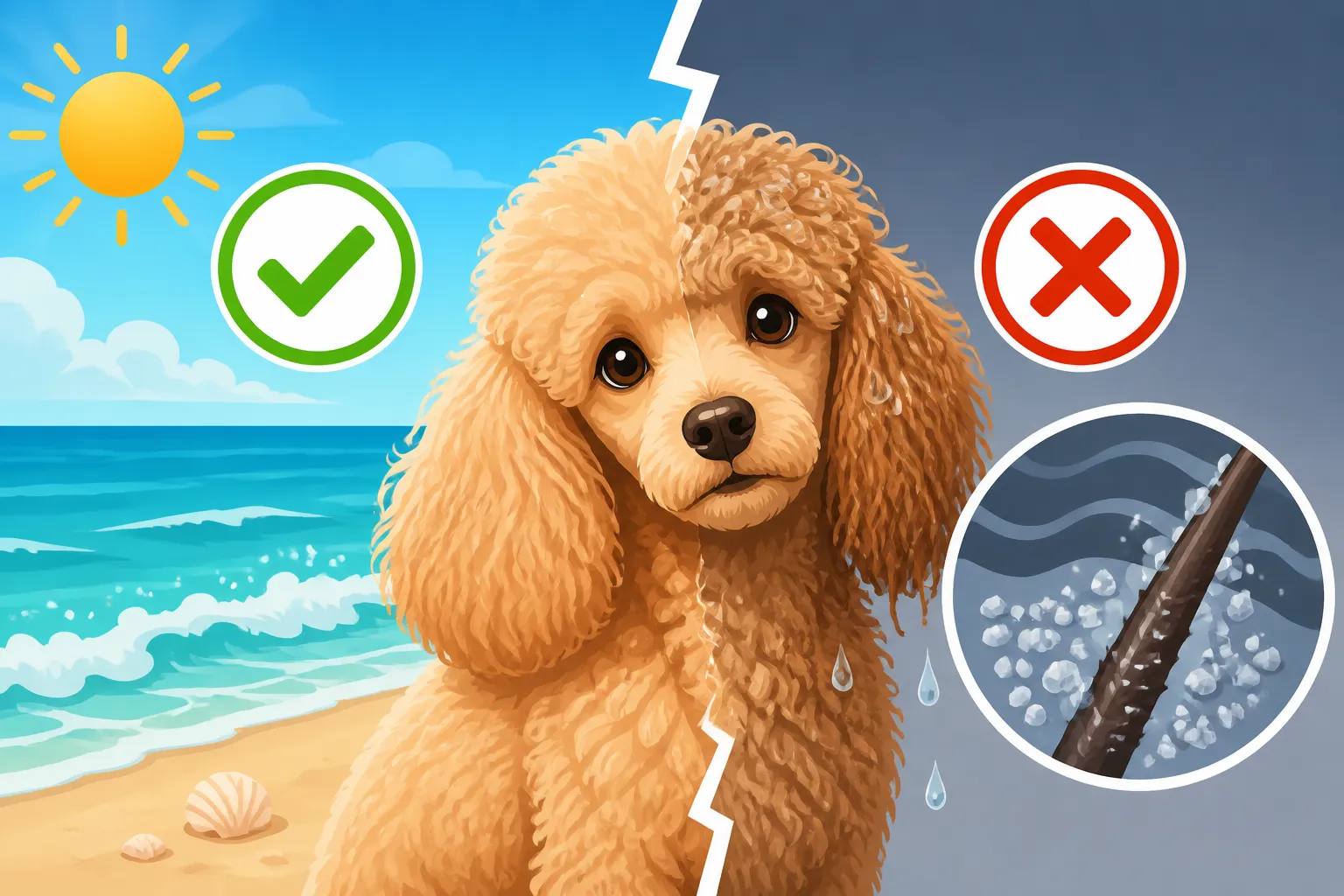
At a microscopic level, salt water is a formidable opponent for a Poodle's delicate hair. Each strand of your Poodle's hair is protected by a cuticle, an outer layer of overlapping scales, much like shingles on a roof. When the hair is healthy, these cuticles lie flat, reflecting light and making the coat appear shiny and smooth. They also help to lock in moisture.
Salt water, with its high concentration of minerals and electrolytes, acts as a dehydrating agent. When Poodle hair is submerged in salty water, the salt crystals can actually penetrate and lift these cuticles. This lifting action not only makes the hair feel rougher and appear dull, but it also allows the precious moisture inside the hair shaft to escape. Over time, this process can severely compromise the integrity of the hair, leading to a cascade of problems. It's like leaving a delicate silk garment in salt water – it's going to come out feeling stiff and potentially damaged, not soft and flowing.
The Specific Damage Salt Water Can Inflict
It's not just a minor inconvenience; salt water can genuinely wreak havoc on a Poodle's coat if not managed properly. The effects can range from purely cosmetic issues to more severe problems that impact your Poodle's comfort and health. Understanding these specific damages can help you appreciate why post-beach care is so critical.
Drying and Brittleness
The most immediate and noticeable effect of salt water on a Poodle's coat is extreme dryness. Salt is hygroscopic, meaning it loves to attract and hold onto water. When salt water dries on your Poodle's coat, it essentially sucks the moisture out of each hair strand, leaving it parched and brittle. Imagine how your own hair feels after a swim in the ocean if you don't rinse it immediately – it's rough, stiff, and prone to breaking. The same goes for your Poodle, but amplified due to their hair type.
This dryness compromises the hair's elasticity, making it more rigid and far more susceptible to breakage. Every brush stroke, every playful shake, every rub against furniture can snap these brittle strands. Not only does this lead to a thinner, less luxurious coat over time, but it also creates more loose hair that can easily tangle and mat. It's a vicious cycle where dryness leads to damage, which in turn makes the coat even harder to maintain.
Matting and Tangling
Brittle, dry hair is a magnet for mats. When the hair strands lose their natural slipperiness and become rough, they hook onto each other, forming knots and tangles with alarming speed. The natural curl of a Poodle's coat already makes it prone to matting, even with diligent daily brushing. Add in the stiff, sticky residue from dried salt water, and you've got a recipe for disaster.
Mats aren't just unsightly; they're incredibly painful for your Poodle. They pull on the skin, restrict movement, and can hide skin irritations. Small mats can quickly grow into large, dense felted patches that are almost impossible to brush out without causing significant discomfort or even injury. In severe cases, a matted coat from salt water exposure might require a complete shave-down by a professional groomer, which is not only stressful for your Poodle but also means losing that beautiful coat you work so hard to maintain. Finding Poodle Mats Before the Groomer Does is a great resource for spotting these early.
Skin Irritation and Secondary Issues
It's easy to focus solely on the hair, but don't forget the skin beneath! Salt water can be incredibly irritating to a Poodle's sensitive skin, especially if your dog has any pre-existing skin conditions or allergies. The salt residue can dry out the skin, leading to itchiness, flakiness, and redness. Constant scratching by your Poodle to relieve this irritation can break the skin barrier, creating small abrasions or hot spots that are ripe for bacterial or fungal infections.
These secondary skin issues can be far more serious than just a dry coat. A Poodle's drop ears, for example, are already prone to trapping moisture and developing infections. Add salt water irritation, and you're inviting trouble. Ear Infections Under a Poodle's Drop Ears highlights this common problem. Moreover, the dried salt can crystallize against the skin, creating a gritty feeling that compounds the irritation. Your Poodle might feel generally uncomfortable, restless, and more prone to licking and chewing at their paws or body in an attempt to alleviate the irritation.
Preventative Measures Before and After Beach Trips
Okay, so salt water can be tough on a Poodle's coat. Does that mean beach days are off-limits? Absolutely not! It just means you need to be prepared and diligent with your care routine. With a few proactive steps, you can minimize the risks and ensure your Poodle can enjoy the sand and surf without suffering the consequences. Think of it as a small investment of time for big rewards in coat health and comfort.
Pre-Swim Prep
Before your Poodle even dips a paw in the ocean, there are a couple of things you can do to give their coat a fighting chance. These steps essentially create a protective barrier, making it harder for salt to penetrate and cause damage. It's like putting on sunscreen before heading out into the sun – a simple, effective preventative.
First, give your Poodle a thorough brush-out before you leave for the beach. Make sure there are absolutely no tangles or mats. Even a small knot can act as a starting point for a larger, more stubborn mat once wet and exposed to salt. Brushing through the coat also helps to distribute any natural oils, providing a slight protective layer. Second, consider applying a leave-in conditioner or a light conditioning spray, especially to longer coats. This creates a barrier, somewhat sealing the hair cuticle and making it harder for salt to strip away moisture. You can find excellent leave-in conditioning sprays at pet retailers like Chewy or on Amazon. This pre-treatment essentially "fills" the hair shaft with beneficial moisture, so the salt has less of a chance to draw it out. Think of it as a preemptive strike against dryness.
Immediate Post-Swim Rinse
This is, hands down, the most critical step. As soon as your Poodle is done playing in the salt water, you need to rinse them thoroughly with fresh water. Do not wait until you get home. Do not let the salt water dry on their coat. The longer the salt sits, the more damage it can inflict. Many beaches have dog-friendly showers or rinse stations, or you can bring a large jug of fresh water and a small towel yourself.
Get all that salt off their entire body, paying special attention to their legs, belly, and any areas where the coat is longer or denser. If you're using a portable water source, saturate the coat completely, working the water through with your fingers. The goal is to dilute and wash away as much salt as possible before it has a chance to crystallize and wreak havoc. A quick, thorough rinse will prevent the vast majority of potential problems and make the full bath later much easier.
Thorough Bathing and Conditioning
Once you're home, the immediate rinse needs to be followed by a proper bath. This isn't just a splash; it's a full-on spa treatment for your Poodle's coat to restore moisture and remove any lingering salt. Use a high-quality, moisturizing dog shampoo, specifically formulated for dry or damaged coats. Apply it generously, working it deeply into the coat and down to the skin. You might even want to do two lathers to ensure all salt residue is gone.
After shampooing, follow up with an equally rich, hydrating conditioner. This step is non-negotiable. Let the conditioner sit for a few minutes to truly penetrate and replenish the hair shafts. Rinse thoroughly until the water runs clear and the coat feels squeaky clean but soft. Once rinsed, gently towel dry, then use your high-velocity dryer and line brush the coat until it's completely dry. Never let a Poodle air-dry after a swim, especially in salt water, as this will lead to matting faster than you can say "Poodle!" Drying a Poodle Straight offers excellent tips for this process.
Here's a quick reference for your beach day routine:
| Action | Before the Beach | Immediately After the Ocean | At Home, Soon After |
|---|---|---|---|
| Coat Prep | Thoroughly brush, remove all tangles. Apply leave-in conditioner. | Rinse completely with fresh water (beach shower, jug, hose). | Full bath with moisturizing shampoo and rich conditioner. |
| Focus Area | Entire coat, especially longer sections. | Entire body, legs, belly, ears. | Deep clean scalp to ends. |
| Key Goal | Create a protective barrier, prevent initial tangles. | Remove all salt residue before it dries and damages. | Restore moisture, remove all impurities, prevent long-term damage. |
| Drying | N/A | Towel dry as much as possible. | High-velocity dryer and line brush to fully dry, no air drying. |
Choosing the Right Products for Post-Salt Care
The right tools and products make all the difference in rescuing your Poodle's coat from the ravages of salt water. Just like an artist needs quality brushes, a Poodle owner needs the right grooming arsenal to maintain that magnificent hair. Don't skimp on these essentials; they're an investment in your Poodle's comfort and coat health.
Shampoos and Conditioners
For post-salt water care, your regular shampoo and conditioner might not cut it. You need products specifically designed for intense hydration and damage repair. Look for ingredients like shea butter, argan oil, coconut oil, or oatmeal, which are known for their moisturizing and soothing properties. These ingredients help to replenish the natural oils stripped away by salt and restore the hair's elasticity.
Many reputable pet brands offer excellent moisturizing lines. Read reviews and look for products that emphasize "deep hydration" or "repair." Avoid anything with harsh sulfates or excessive fragrances, which can further irritate sensitive skin. You can easily find a wide selection of these specialized shampoos and conditioners on Chewy, often with detailed ingredient lists and customer feedback. Remember, the goal isn't just to clean, but to infuse moisture back into every strand.
Detangling Sprays and Leave-Ins
Even with the best bathing routine, some residual dryness or tangles might persist, especially if your Poodle has a longer clip. This is where detangling sprays and leave-in conditioners become your best friends. A good detangling spray, applied to a damp or dry coat, can help you gently work out any remaining knots without causing pain or breakage. Look for sprays that offer slip and shine without leaving a greasy residue.
Leave-in conditioners continue to hydrate the coat between baths and can be particularly helpful if your Poodle is prone to dry skin or a very fine, fragile coat. They act as an ongoing barrier, protecting against environmental stressors and keeping the hair soft and pliable. Brands available on Amazon often include options with aloe vera or silk proteins, which are excellent for maintaining coat health. Applying a small amount of leave-in after drying, or even daily, can make a significant difference in preventing future mats and keeping the coat supple.
Grooming Tools to Combat Mats
No matter how diligent you are, a Poodle's coat will sometimes throw you a curveball. Having the right grooming tools on hand is essential for dealing with potential mats or tangles effectively and gently. Your primary tools will be a high-quality slicker brush and a metal greyhound comb. The slicker brush is for general brushing and working through larger sections, while the comb is for checking for mats down to the skin. Brushing a Poodle to the Skin explains how to use these tools properly.
For those stubborn tangles, a mat splitter or a dematting comb can be invaluable, but use them with extreme caution. These tools have sharp blades and should only be used by someone experienced to avoid cutting the skin. A pair of blunt-nosed scissors can also be used to carefully cut into a mat (never across it, or parallel to the skin) to break it up, making it easier to brush out. Having a variety of grooming tools readily available, from brushes to nail clippers and ear cleaners (as discussed in Poodle Ears, Eyes and Nails), ensures you’re prepared for all aspects of Poodle care. Remember, the key is consistency and patience. Regular grooming, especially after a salt water excursion, will keep your Poodle's coat looking its best and prevent painful problems.
Disclaimer
This article is for general informational purposes only and does not constitute professional advice. Laws, prices and regulations vary by location and change over time. Consult a qualified professional for guidance on your specific situation.