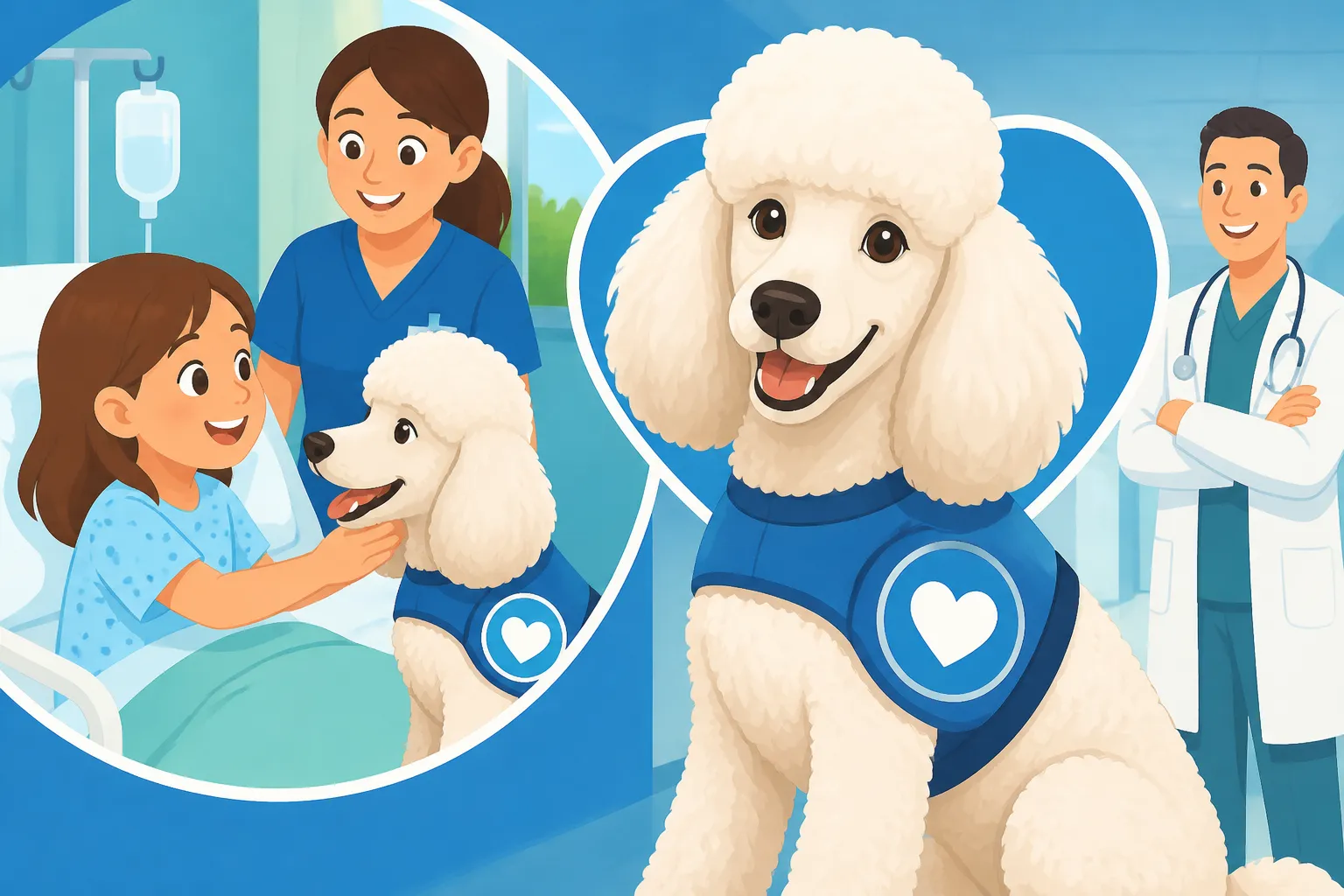
Why Hospitals Choose Poodles
It's often a bit of a surprise to people, isn't it? When you picture a therapy dog visiting a hospital, bringing smiles to patients and comfort to stressed staff, many minds immediately go to Golden Retrievers or Labradors. But behind the scenes, Poodles, with their elegant gait and sometimes elaborate haircuts, are quietly making a huge difference in healthcare settings. There's a very good reason why these intelligent and sensitive dogs are increasingly chosen for such vital work, and it goes far beyond their sophisticated appearance. This guide will delve into the specific traits that make Poodles not just suitable, but exceptional, candidates for hospital therapy roles, exploring their temperament, unique coat, and remarkable adaptability.
The Poodle's Ideal Temperament for Patient Care
Anyone who has spent time with a Poodle knows they are far more than just a pretty face. Their temperament is a carefully cultivated blend of intelligence, sensitivity, and calm focus that makes them uniquely suited to the often-demanding environment of a hospital. They aren't just there to look cute; they're there to connect, to comfort, and to bring a sense of peace.
Empathy and Sensitivity Towards Patients
Poodles possess an almost uncanny ability to read human emotions. They are incredibly empathetic dogs, often sensing when someone is distressed, sad, or in pain, and adjusting their demeanor accordingly. This isn't just wishful thinking on the part of their handlers; it's a trait deeply ingrained in the breed. Imagine a patient, perhaps feeling isolated and overwhelmed by their illness, having a Poodle gently lean into their hand for a pat, or softly resting its head on the edge of the bed. This sensitivity allows them to offer quiet companionship to those who need gentle comfort, or to engage playfully with someone who is ready for a bit more interaction.
This profound connection can be incredibly therapeutic. I've heard countless stories from handlers whose Poodles have intuitively known just how to approach a hesitant child, or how to offer solace to an elderly person struggling with loneliness. They don't just "do" therapy; they feel it. This is a big part of Why Poodles Read People So Well and it’s invaluable in an environment where emotional fragility is common. A Poodle won't bound up to a patient in distress or demand attention from someone too weak to give it; they will offer their presence, a soft gaze, and wait for an invitation to interact, which makes all the difference.
Calm Demeanor in Stimulating Environments
Hospitals are, by their very nature, bustling and sometimes noisy places. There are strange smells, new people coming and going, alarms, and sudden movements. For many dogs, this would be a recipe for anxiety, but a well-socialized Poodle often takes it all in stride. Their inherent intelligence allows them to process these various stimuli without becoming overstimulated or reactive. They can maintain a calm, focused presence even when a wheelchair rolls by, a cart clatters down the hall, or an intercom makes a sudden announcement.
This calm demeanor is paramount for patient safety and comfort. A therapy dog that startles easily or barks at every new sound would be disruptive and counterproductive. Poodles, with proper training and early exposure, learn to differentiate between normal hospital sounds and actual threats, allowing them to remain a steady, reassuring presence. They understand their job and commit to it, which is why you’ll often see them navigating crowded corridors with grace, seemingly unfazed by the activity around them. Their quiet confidence is a powerful tool in creating a tranquil atmosphere for patients and staff alike.
The Poodle's Allergy-Friendly Coat in Healthcare Settings
One of the most significant, and often touted, advantages of the Poodle is their unique coat. Unlike many other breeds, Poodles have hair rather than fur, which is a game-changer when working in environments where allergies are a serious concern. This characteristic isn't just about personal preference; it's a medical necessity that opens doors for Poodles in settings where other breeds simply couldn't be present.
Low Shedding and Hypoallergenic Qualities
Poodles are famous for being "non-shedding," though it's more accurate to say they are low-shedding. All dogs shed some hair, but Poodles shed minimally compared to other breeds. Their curly, dense coat traps loose hairs, preventing them from falling out into the environment, onto hospital beds, or onto sensitive equipment. This significantly reduces the amount of dander, saliva, and loose hair that can trigger allergic reactions in patients and staff. For someone with asthma or severe pet allergies, contact with a typical dog could mean a trip to the emergency room, but a Poodle often poses a much lower risk.
This "hypoallergenic" quality is a primary reason hospitals and other medical facilities specifically seek out Poodles for therapy programs. It allows even those with mild to moderate allergies to experience the undeniable benefits of animal-assisted therapy. Imagine a child, confined to a hospital bed, who has always dreamed of petting a dog but couldn't due to allergies. A Poodle makes that dream a reality, providing a moment of joy and connection that might otherwise be impossible. Understanding Why Poodles Are Called Non-Shedding helps explain why they're such a good fit for places where cleanliness and allergen control are critical.
The Ease of Maintaining a Clean and Sanitary Coat
Beyond just shedding, the Poodle's coat is also surprisingly practical for maintaining hygiene standards. While it requires regular grooming to prevent matting – truly, the coat never stops growing – it also means that dirt, debris, and potential contaminants can be washed out relatively easily. Therapy dogs in hospitals need to be impeccably clean and regularly bathed. Their coats are frequently brushed and shampooed to ensure they are fresh and free of any outdoor allergens or particles.
The texture of their hair means it doesn't hold onto odors as much as some fur types, and it dries relatively quickly. Handlers can give their Poodles a thorough bath, paying attention to areas like paws and ears, and have them ready for duty in a shorter amount of time. Grooming tools available from places like Chewy are invaluable for keeping that coat in top condition. This combination of low shedding and maintainability ensures that the Poodle remains a sanitary and safe visitor, adhering to the strict cleanliness protocols required in medical environments.
Poodle Intelligence and Trainability for Specialized Roles
It's no secret that Poodles are considered one of the smartest dog breeds on the planet. This extraordinary intelligence, coupled with their eagerness to please, makes them incredibly adaptable and trainable for the complex tasks required of therapy dogs in a hospital setting. They don't just learn commands; they understand concepts, anticipate needs, and adapt to changing situations with remarkable ease.
Quick Learners and Excellent Retention
Poodles are renowned for their ability to pick up new commands and routines with incredible speed. They often grasp new concepts in just a few repetitions, which means their training can be extensive and highly specialized. This isn't just about basic obedience; it's about learning nuanced behaviors specific to a therapy environment. For instance, a Poodle can be trained to gently place their head on a patient's lap, to walk slowly alongside a IV pole without tangling, or to remain still and calm during a delicate interaction. Poodle Intelligence and Coren's Ranking highlights just how quickly they can master new skills.
Their excellent retention means that once they've learned a task, they remember it. This consistency is crucial in a hospital, where reliability is key. A therapy dog handler needs to trust that their Poodle will perform as expected, every single time, whether it's navigating a busy corridor or providing comfort during a difficult moment. This unwavering predictability allows healthcare professionals to integrate therapy dogs seamlessly into patient care plans, confident that the dog will contribute positively to the environment without adding any unexpected challenges.
Versatility in Different Therapy Modalities
The Poodle's sharp mind and biddable nature allow them to excel in a wide variety of therapy modalities. They aren't limited to just bedside visits; their capabilities extend to rehabilitation, emotional support, and even assisting with mobility. A Standard Poodle, with its sturdy build, might be trained to provide gentle bracing for a patient learning to walk again, while a Toy Poodle could be perfectly suited for snuggling in a patient's lap to reduce anxiety. This versatility means they can be tailored to meet diverse patient needs.
Many Poodles thrive on having a "job" to do, and therapy work offers them plenty of mental stimulation. Training the Second Smartest Dog Breed often involves engaging their minds, and hospital therapy provides a constant stream of new people and situations to navigate. They might participate in physical therapy sessions, encouraging patients to reach, throw, or walk. They can also provide emotional grounding for patients dealing with trauma or fear. Their ability to learn complex sequences and respond to subtle cues makes them truly invaluable partners in healing. Finding durable enrichment toys from a place like Chewy can even help therapy Poodles decompress after a busy day, keeping their minds sharp and engaged.
How Poodle Size Influences Their Hospital Roles
One of the fascinating aspects of the Poodle breed is its range in size, from the dainty Toy to the imposing Standard. While all Poodles share core characteristics that make them excellent therapy dogs, their size often dictates the specific roles they might fill within a hospital or care setting. This adaptability across sizes allows for a broader spectrum of therapeutic applications, ensuring that the right Poodle can be matched to the right patient and environment.
Toy Poodles for Bedside and Lap Comfort
The smallest of the Poodle varieties, the Toy Poodle, typically weighing under ten pounds and standing no more than ten inches tall, is perfectly suited for intimate bedside visits. Their compact size makes them ideal for patients who are confined to bed or have limited mobility. They can be easily lifted onto a lap or carefully placed beside a patient, offering gentle contact and warmth without being cumbersome or intimidating.
Their presence can be incredibly calming, especially for children or elderly patients who might be intimidated by larger dogs. A Toy Poodle's soft fur and delicate build encourage gentle interaction, promoting fine motor skills in rehabilitation settings as patients reach out to pet them. For patients struggling with anxiety or loneliness, a small, warm body nestled close can provide profound emotional comfort. Daily Exercise for a Toy Poodle is typically less strenuous, making them less prone to restlessness during long quiet visits.
Miniature Poodles for Diverse Interactions
Miniature Poodles, falling between ten and fifteen inches in height and typically weighing between 10 and 15 pounds, strike a wonderful balance. They are small enough to be portable and non-threatening, yet robust enough for more active interactions. This makes them incredibly versatile for various hospital roles. They can comfortably sit on a chair next to a patient's bed, or engage with patients in a common room or therapy gym.
Their medium size allows them to interact with a wider range of patients, including those in wheelchairs or those participating in occupational therapy. They are often chosen for children's wards, as they are sturdy enough to handle enthusiastic (but supervised) play, yet still petite enough not to overwhelm young patients. The Miniature Poodle’s balanced size also means they can easily navigate busy hospital corridors and elevators without taking up too much space. They offer a flexible option that can adapt to many different patient needs and hospital environments.
Standard Poodles for Mobility and Activity
Standard Poodles, standing over fifteen inches tall and often weighing 40 to 70 pounds or more, bring a different set of strengths to hospital therapy. Their larger, more athletic build makes them ideal for physical rehabilitation and providing a sense of grounding and security. They can walk confidently alongside patients who are regaining their mobility, offering a steady presence and motivation.
For patients working on balance or strength, a Standard Poodle can be a fantastic, non-judgmental partner. They might motivate a patient to take more steps during a walk down the hall, or provide a gentle anchor for someone learning to stand. Their imposing yet gentle presence can also be incredibly reassuring for patients who feel vulnerable or anxious. A big, soft Poodle offers a comforting, solid presence that many find incredibly soothing. Just like their smaller counterparts, they can often get their regular Daily Work for a Poodle's Body and Mind within the hospital environment, engaging with patients as they go.
Here's a quick look at how Poodle sizes often align with different hospital roles:
| Poodle Size | Typical Weight (lbs) | Typical Height (inches) | Best Suited Hospital Roles | Key Benefits |
|---|---|---|---|---|
| Toy Poodle | < 10 | < 10 | Bedside visits, lap comfort, small child interaction | Portable, non-intimidating, offers close, gentle contact |
| Miniature Poodle | 10-15 | 10-15 | General patient interaction, children's wards, common areas | Versatile, manageable size, good for active and passive therapy |
| Standard Poodle | 40-70+ | > 15 | Physical rehabilitation, mobility assistance, emotional grounding | Sturdy, provides stable presence, motivates movement, offers security |
Regardless of their size, Poodles consistently bring their unique blend of intelligence, empathy, and an allergy-friendly coat to the crucial work of therapy dogs, proving why hospitals increasingly choose these remarkable animals to aid in healing and comfort. The sheer number of tasks and environments Poodles can adapt to is a testament to The Poodle as a Breed and its diverse capabilities.
Disclaimer
This article is for general informational purposes only and does not constitute professional advice. Laws, prices and regulations vary by location and change over time. Consult a qualified professional for guidance on your specific situation.