Training Treats and a Poodle’s Daily Calories
We all love to reward our brilliant Poodles, especially when they've just aced a new trick or performed beautifully during a training session. It’s hard to resist those intelligent, eager eyes, and before you know it, you've gone through half a bag of those tiny, tasty training treats. What often slips under the radar, however, is the silent creep of calories that these treats contribute to your Poodle's daily intake, potentially leading to unwanted weight gain and health issues. This guide is here to help you navigate the world of training treats, showing you how to incorporate them smartly and sustainably into your Poodle's diet without compromising their health or hindering their training progress.
The Sneaky Calories in Training Treats
It's a common scenario in many Poodle-owning households, isn't it? You're enthusiastically practicing "recall" in the park, or perhaps perfecting "leave it" at home, and with every successful repetition, out comes a delightful little treat. These small gestures of affirmation add up faster than you might realize. The very nature of training, which involves frequent rewards, means that those tiny morsels, designed to be high-value and motivating, are being consumed regularly throughout the day.
Why Treats Add Up So Quickly for Poodles
Poodles are renowned for their exceptional intelligence, often ranking among the smartest dog breeds. This means that many Poodle owners engage in extensive training, from foundational obedience to advanced dog sports like agility or rally. Their quick grasp of new concepts, as detailed in Why Poodles Learn a Cue in Five Repetitions, often translates into more repetitions and, consequently, more treats during a session. A Standard Poodle might get a slightly larger piece, but for a Toy Poodle, even a fraction of a treat can be a significant caloric contribution given their petite size. It's not uncommon for an owner to hand out dozens of small treats during a single 20-minute training block without truly accounting for their cumulative effect.
Compounding this issue is the composition of many commercial training treats. To make them irresistible and highly motivating, manufacturers often pack them with fats, sugars, and palatable proteins. While delicious, these ingredients also make them calorically dense. Picture those soft, chewy training bits; they might be small, but they often carry a surprising amount of energy. The sheer convenience of pre-packaged treats means we grab them without always checking the nutritional label, leading to an underestimation of their caloric impact. This frequent, high-value, and often dense caloric intake is precisely why treats can quickly become problematic if not managed.
The Impact on Your Poodle's Waistline and Health
Allowing those "just a few" treats to accumulate can have serious, long-term implications for your Poodle's health, impacting far more than just their appearance. Excess weight places unnecessary strain on their entire system, predisposing them to a range of ailments that can significantly reduce their quality of life and even shorten their lifespan. This is particularly concerning for a breed that can already be prone to certain orthopedic issues.
For instance, Standard Poodles can be susceptible to Poodle Hip Dysplasia by Size, and Toy Poodles often face challenges like Luxating Patella in Toy and Miniature Poodles. Carrying extra pounds will exacerbate these conditions, leading to increased pain, inflammation, and earlier onset of degenerative joint disease. An overweight Poodle will likely experience reduced mobility, struggling with activities they once enjoyed, such as long walks, energetic play, or even simply jumping onto the sofa. The grace and athleticism inherent in the Poodle breed can be diminished by the burden of excess weight. Furthermore, beyond orthopedic concerns, obesity significantly increases a Poodle's risk of developing other serious conditions, including diabetes, heart disease, certain types of cancer, and respiratory problems. It can also lead to decreased energy levels and a general lethargy that belies their naturally spirited nature. It's a cruel irony that the treats given with love to enhance training can, if overdone, detract from a Poodle's overall health and happiness. Regularly checking your Poodle's body condition, ensuring you can easily feel their ribs without pressing hard, as described in Feeling Ribs Under a Thick Poodle Coat, is a vital preventative measure.
How to Account for Training Treats in Daily Calories
The good news is that you don't have to give up training with treats entirely. The key lies in mindful management and integration. By understanding your Poodle's caloric needs and making smart choices, you can continue to use treats effectively while safeguarding their health. It requires a bit of knowledge and a touch of discipline, but it’s a commitment that pays dividends in your Poodle’s vitality.
Calculating Your Poodle's Basal Metabolic Rate
The foundation of smart caloric management begins with understanding your individual Poodle's daily energy requirements. This isn't a static number; it's a dynamic calculation influenced by several factors: your Poodle's size (Standard, Miniature, or Toy), their age, activity level, whether they are spayed or neutered, and their current body condition. A rambunctious young Standard Poodle will naturally burn far more calories than a sedentary senior Toy Poodle. Generic feeding guides on kibble bags are just that—guides—and may not be accurate for your specific Poodle, especially if they are heavily involved in training.
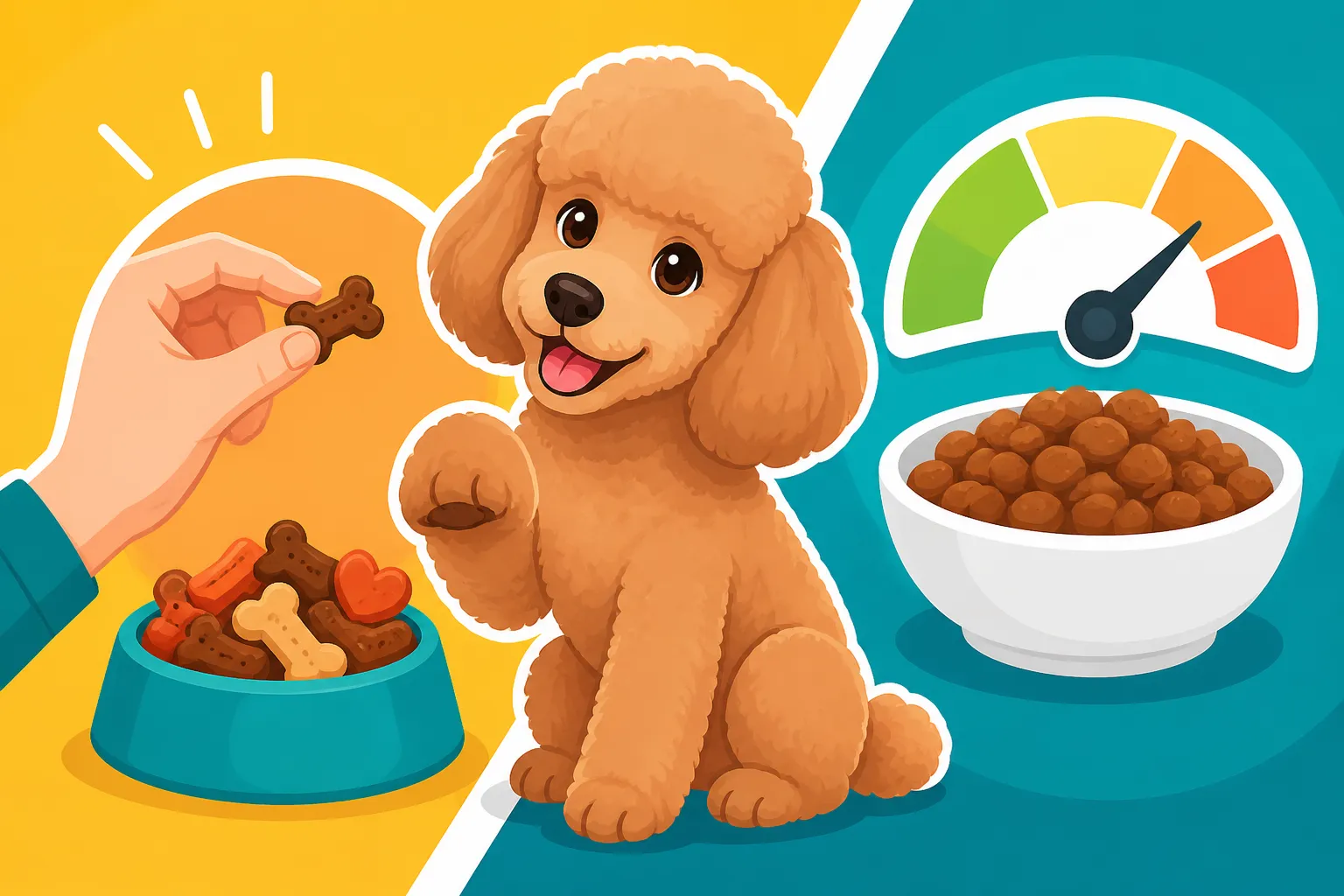
Your veterinarian is the absolute best resource for determining your Poodle's ideal daily caloric intake, often referred to as their Resting Energy Requirement (RER) or Daily Energy Requirement (DER). These calculations take into account lean body mass and an activity multiplier that is tailored to your Poodle’s lifestyle. Once you have this precise number, you can then allocate a sensible portion for training treats. A general rule of thumb, widely endorsed by veterinary nutritionists, is that treats should constitute no more than 10% of your Poodle's total daily caloric intake. This 10% serves as a flexible budget for all those training rewards, allowing you to motivate your Poodle without pushing them over their caloric limit. This figure is especially important when you consider Calorie Needs of a Senior Poodle or Feeding a Toy Poodle Puppy.
Adjusting Main Meals to Compensate for Treats
Once you've established your Poodle's total daily calorie budget and determined the appropriate 10% allowance for treats, the crucial next step is to adjust their main meals accordingly. This is where many well-meaning owners inadvertently go wrong. If you allocate, say, 100 calories for training treats throughout the day, those 100 calories must be subtracted from the calories provided by their regular breakfast and dinner portions. It sounds straightforward, but it's a step often overlooked, leading to that gradual caloric surplus.
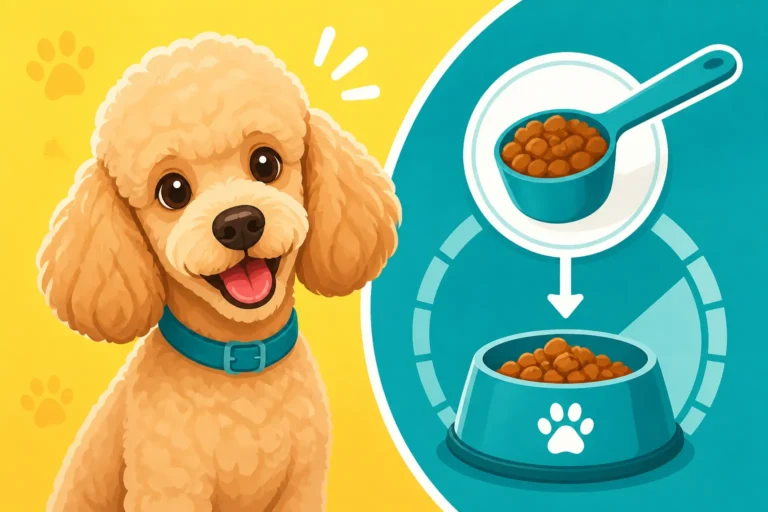
For example, if your vet calculates that your Standard Poodle requires 1000 calories per day to maintain their ideal weight, and you're planning to use 100 calories for training rewards, then their actual kibble or fresh food meals should only provide 900 calories. This means carefully measuring their food. Eyeballing with a standard scoop can lead to significant discrepancies. Investing in a digital kitchen scale is highly recommended for accuracy; you can find reliable and affordable options on Amazon that will make precise portioning much easier. This attention to detail ensures that their total caloric intake remains within healthy limits. This careful adjustment is fundamental to Portion Control for a Poodle and prevents those treat calories from becoming extra calories.
To illustrate, consider this sample daily calorie breakdown for an adult Poodle:
| Meal/Treat Type | Example Calories | % of Total Daily Calories | Important Considerations |
|---|---|---|---|
| Morning Meal | 400 | 40% | Adjusted to account for treats. |
| Evening Meal | 400 | 40% | Adjusted to account for treats. |
| Training Treats | 100 | 10% | Maximum 10% of daily total. Focus on low-calorie, high-value options. |
| Occasional Chews | 100 | 10% | Must be included in daily total or reserved for rare occasions. |
| Total Daily | 1000 | 100% | Always consult your veterinarian for your Poodle's specific caloric needs. |
Choosing the Right Treats: Size and Calorie Density
The treats you choose play a huge role in successful calorie management. When you're standing in the pet store aisle or browsing online, focus on two critical attributes: the physical size of the treat and its caloric density. For Poodles, particularly the smaller Toy and Miniature varieties, even what seems like a "small" treat can be proportionally quite large and calorically significant for their tiny bodies. Look for treats that are inherently small or, better yet, easily breakable into pea-sized (or even smaller) pieces. Many commercial training treats are designed to be miniature, but you'd be surprised how often you can get two or three training rewards out of one intended piece. Websites like Chewy often allow you to filter for low-calorie or small-size training treats, making your selection process much easier.
Beyond physical size, scrutinize the calorie density. Treats that are heavily processed, high in grains, or contain a lot of fat will be more calorically dense. Instead, prioritize treats with simple ingredients, ideally single-protein sources, and a lower fat content. Dehydrated meats, such as tiny pieces of chicken breast, turkey, or liver, are excellent choices because they are often high-value and you have complete control over the portion size. Many Poodles also love small pieces of certain vegetables, like steamed green beans or carrots, which are naturally very low in calories, although their "value" might be lower for high-distraction training. Remember, the 10% rule isn't just about quantity, but about making those calories count. If you use a denser treat for a high-value reward, simply use fewer or smaller pieces. Even things like dental chews, which are often forgotten, contribute to the daily caloric budget. For more ideas on healthier options, check out Low Calorie Treats for a Poodle.
Smart Strategies for Guilt-Free Training
Training your Poodle should be a joyous and enriching experience for both of you, not a source of worry about their waistline. Fortunately, there are many ingenious ways to keep your Poodle motivated, engaged, and learning without overfeeding them. It's all about diversifying your reward system and making mindful choices.
Using Your Poodle's Kibble as Treats
This strategy is perhaps the most straightforward and effective way to manage treat calories: simply use a portion of your Poodle's daily kibble ration as their training rewards. This genius move ensures that every single calorie consumed during training is already accounted for within their predetermined daily food allowance. There's no extra calculation, no hidden calories—just pure, effective training.
To implement this, measure out your Poodle's total daily kibble portion. Then, set aside a certain amount (perhaps a quarter to a third) into a training pouch or container for use throughout the day's training sessions. The remainder can be fed in their bowl for their regular meals. Most Poodles, especially if they are food-motivated and you train before meals when they are a little hungry, are perfectly content to work for their regular kibble. If your Poodle seems less enthusiastic about their everyday kibble, you can try making it more appealing by slightly moistening it, warming it gently, or mixing in a minuscule amount of something extra fragrant, like a dash of bone broth or a tiny sprinkle of nutritional yeast, without significantly altering the caloric value. For Poodles on fresh food diets, like those from Ollie, you can easily portion out small, bite-sized pieces of their customized meals for training, maintaining dietary consistency and cutting out extra calories.
Low-Calorie, High-Value Alternatives
While kibble is excellent for routine training, there are times—especially during challenging new behaviors or in distracting environments—when you need a reward with a bit more "wow" factor. This is where truly low-calorie, yet highly palatable, alternatives come into play.
- Steamed or Raw Vegetables: Many Poodles adore tiny pieces of cooked green beans, carrots, cucumber, or bell peppers. They offer a satisfying crunch and are virtually guilt-free in terms of calories. Introduce them slowly to avoid digestive upset.
- Small Fruit Bits: Blueberries, raspberries, or tiny pieces of apple (without seeds, which contain cyanide) can be a sweet, occasional treat. Just remember fruit contains natural sugars, so moderation is key.
- Plain Air-Popped Popcorn: Surprisingly, plain, unsalted, unbuttered air-popped popcorn can be a novel and extremely low-calorie treat. Its light, airy texture can be quite appealing to some Poodles.
- Frozen Purees: Small dollops of plain, unsweetened yogurt or pumpkin puree, frozen in tiny ice cube trays, make long-lasting, cooling, and low-calorie rewards, especially on hot days. They also take longer for your Poodle to consume, extending the reward experience.
- Homemade Dehydrated Meats: If you have a food dehydrator, you can create your own single-ingredient jerky from very lean meats like chicken breast or turkey. Cut them into paper-thin, pea-sized pieces. This allows you to control the ingredients and avoid additives.
The trick is to discover what your Poodle considers high-value without being high-calorie. Every Poodle has their own preferences, so a little experimentation can go a long way in finding their personal favorite "healthy" reward. This approach also helps manage Feeding a Poodle by Size considerations, as even a small portion is appropriate.
Making Training Rewarding Without Food
Food-based rewards are incredibly powerful, but they aren't the only way to motivate a Poodle. Poodles are highly intelligent, people-oriented dogs who thrive on interaction and engagement with their humans. Incorporating non-food rewards into your training regimen not only reduces caloric intake but also strengthens your bond and teaches your Poodle to work for different types of reinforcement.
- Praise and Affection: A genuinely enthusiastic "YES!" or "Good boy/girl!" delivered with a happy tone, followed by a vigorous scratch behind the ears, a gentle chest rub, or a quick game of "happy hands" (gentle, playful petting) can be incredibly rewarding. Poodles adore positive attention from their favorite people.
- Play and Toys: For Poodles with a strong play drive, a quick toss of their favorite squeaky toy, a short game of tug, or a chase can be a fantastic reward, particularly for more active commands or recall. The Poodle's natural retrieving instinct, highlighted in The Poodle's Retrieving Instinct, makes toy play an especially potent motivator.
- Life Rewards: This concept leverages things your Poodle naturally desires. For example, if your Poodle loves going for walks, ask for a "sit" and "stay" before opening the door and stepping out. If they enjoy greeting visitors, ask for a "down" or "place" command before allowing them to approach. Access to a desired activity becomes the reward for performing the preceding command.
- Verbal Markers and Clickers: Using a clear, consistent verbal marker like "Yes!" or the distinct sound of a clicker helps to precisely pinpoint the exact moment your Poodle performs the desired behavior. Over time, because the marker always predicts a reward, the marker itself becomes a powerful secondary reinforcer, making your Poodle happy even before the primary reward is delivered.
By consciously varying your rewards, you keep training fresh and exciting, teach your Poodle flexibility, and foster a deeper connection built on mutual understanding and enjoyment, rather than solely on food. This ensures your Poodle is eager to engage with you for the sheer joy of it, not just for the next bite.
When to Consult Your Vet or a Nutritionist
Despite our best efforts and diligent planning, there are times when a Poodle's weight management becomes challenging. It's easy to miss subtle cues, or perhaps there are underlying factors at play. Never hesitate to seek professional guidance from your veterinarian or a certified veterinary nutritionist when you have concerns about your Poodle's weight or dietary needs.
Signs Your Poodle is Gaining Too Much Weight
Because of their magnificent, dense, and curly coats, it can be notoriously difficult to visually assess a Poodle's body condition. Their plush fur can cleverly hide a few extra pounds, making it challenging to spot weight gain until it's become significant. However, there are physical indicators you can look for and feel for:
- Rib Check: You should be able to easily feel your Poodle's ribs when you gently run your hands along their side, much like feeling the knuckles on the back of your hand. If you have to press firmly to detect them, or if they feel padded and squishy, your Poodle is likely overweight.
- Loss of a Visible Waist: When looking down at your Poodle from above, they should have a discernible "tuck" or hourglass shape behind their rib cage. From the side, their abdomen should subtly rise towards their hind legs. If they appear more rectangular or have a sagging belly line, it's a red flag.
- Reduced Activity and Stamina: An overweight Poodle may show a decrease in their usual enthusiasm for play, tire more quickly during walks, seem reluctant to jump or climb stairs, or pant excessively with minimal exertion. This can also manifest as behavioral changes, such as reduced engagement in training or a general sluggishness.
- Grooming Difficulties: Owners or professional groomers might notice increased matting in harder-to-reach areas, or express difficulty maneuvering around their body, which can sometimes be an indirect sign of added girth.
If you observe any of these signs, it's crucial to schedule a visit with your veterinarian. They can conduct a thorough examination, accurately assess your Poodle's body condition score, rule out any underlying medical conditions (like thyroid issues) that might be contributing to weight gain, and help you formulate a precise, safe weight management plan. Early intervention is paramount to preventing the serious health complications that accompany obesity, as discussed in Poodle Obesity and Its Consequences.
Tailoring Nutrition for Special Poodle Needs
Poodles, throughout their different sizes and life stages, often have specific nutritional requirements that go beyond a general diet. A "one-size-fits-all" approach to feeding treats and meals simply won't work for every Poodle. Puppies, for instance, have intense caloric needs for rapid growth, while senior Poodles might require fewer calories but increased support for joints and cognitive function. Caring for an Aging Poodle highlights these important shifts in dietary needs.
Furthermore, Poodles with specific health conditions will necessitate tailored dietary management. A Toy Poodle puppy prone to Hypoglycemia in a Toy Poodle Puppy will require small, frequent meals and a careful balance of calories to prevent blood sugar crashes. An adult Poodle diagnosed with a condition like Addison's Disease, as explored in Addison's Disease in Standard Poodles, may experience appetite fluctuations or require specific dietary considerations alongside their medication. Similarly, Poodles with diabetes, kidney disease, or certain allergies might benefit immensely from prescription diets designed to manage their specific health challenges, which will inherently impact what kind of treats are appropriate. Your vet can advise on suitable food formulations, appropriate treat allowances, and any necessary supplements to ensure your Poodle's unique health needs are met without contributing to weight issues. Services like Ollie offer customized meal plans based on individual dog profiles, which can be invaluable for owners seeking precision nutrition for their Poodle's specific age, size, and activity level. This holistic approach ensures that every aspect of your Poodle's diet, from main meals to training treats, contributes positively to their overall well-being.
Disclaimer
This article is for general informational purposes only and does not constitute professional advice. Laws, prices and regulations vary by location and change over time. Consult a qualified professional for guidance on your specific situation.