The Colors a Poodle Comes In
One of the most exciting, and sometimes surprisingly complex, aspects of welcoming a Poodle into your life is discovering the incredible palette of colors these intelligent dogs come in. Far from being just solid white or black, the Poodle breed boasts a rich tapestry of hues and patterns, each with its own nuances and fascinating genetic story. This guide is dedicated to exploring the full spectrum of Poodle colors, delving into their origins, how they develop, and what you should know when choosing your next curly-coated companion.
The Spectrum of Solid Poodle Colors
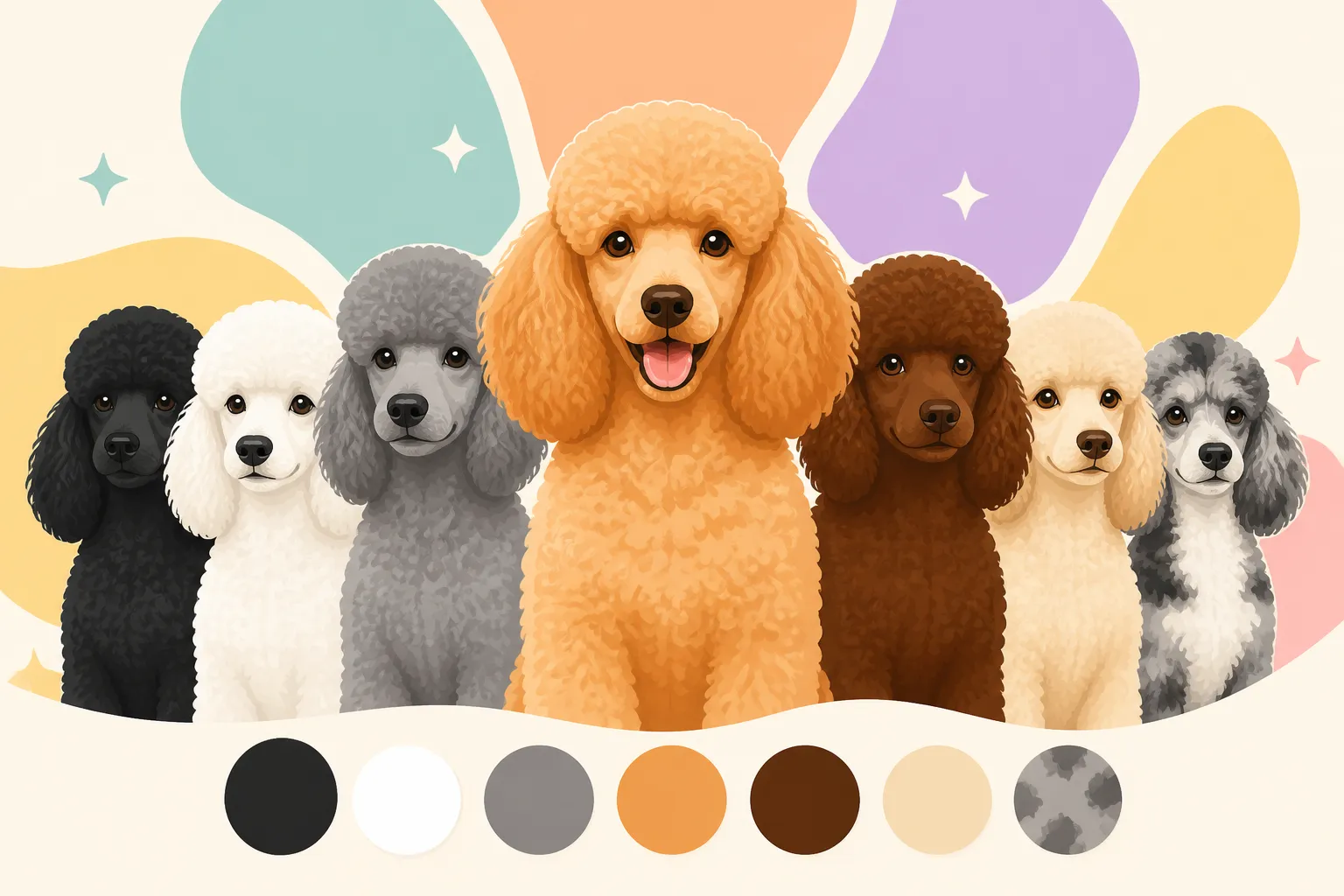
When most people think of Poodles, they often picture a solid-colored dog, perhaps a pristine white or a glossy black. While these classic colors are indeed prominent and stunning, the world of solid Poodle coats is far more expansive and intriguing than many realize. These uniform coats, devoid of distinct patches or patterns, still hold a genetic complexity that can lead to subtle variations and changes over a Poodle's lifetime.
Classic Black, White, and Silver
Black Poodles are a vision of elegance, with coats that should be a deep, true black, without any reddish or brownish undertones. A good black Poodle's coat should be uniform from root to tip. However, it’s not uncommon for some black Poodles, especially as they age or if they carry certain fading genes, to "blue" or "silver" out, meaning their black coat can soften to a charcoal grey or even silver over time. This isn't a fault, but rather a genetic characteristic that adds to their unique charm. On the other end of the spectrum, white Poodles are often seen as the epitome of Poodle grace. Their coats should be a pure, chalky white, though some might have creamier undertones. The Poodle the Standard Describes often calls for this purity of color. White coats, while beautiful, do require diligent grooming to prevent staining, particularly around the mouth and eyes, which can be addressed with careful cleaning and diet. Then there are the silvers, a truly enchanting color. Silver Poodles are not born silver; they are born black and gradually "clear" to silver over their first two years of life. This clearing process is a sight to behold, as the puppy coat gradually gives way to a shimmering, uniform silver. The shade can range from a very pale, almost platinum silver to a darker, steely tone.
Rich Browns, Cafe, and Creams
Beyond the classics, Poodles also come in a stunning array of browns and creams. Brown Poodles, sometimes referred to as chocolate, possess a rich, deep hue reminiscent of dark cocoa. Like black coats, true brown Poodles should have a solid, even color without any lighter or reddish patches. However, brown coats are also susceptible to fading, often turning into what's known as "cafe au lait" (coffee with milk) as they mature. A café au lait Poodle is a lighter, softer shade of brown, a lovely caramel or milky coffee color that often develops from a darker brown puppy coat. This clearing process is another example of the genetic artistry within the breed. Creams can range from a very pale, almost off-white, to a richer biscuit or light tan shade. Often, cream Poodles are born a darker apricot or even a light red and clear to cream. It’s a beautiful, soft color that provides a lovely contrast to the darker shades. How a Poodle Puppy's Color Fades is a common topic among new owners wondering why their dark puppy is lightening.
Vibrant Reds and Apricots
The reds and apricots have surged in popularity over recent decades, and it's easy to see why. These warm, fiery hues are simply captivating. Red Poodles are meant to be a deep, rich auburn, a vibrant, true red that stands out. However, achieving and maintaining a true red can be a challenge. Many red Poodles will fade to apricot, or even a pale cream, over time, especially with sun exposure. The intensity of their red pigment can be quite variable. Apricot Poodles, on the other hand, are a softer, lighter orange-gold color. They can range from a pale, almost creamy apricot to a deeper, richer shade. Like reds, apricots can also fade with age or sun, sometimes becoming a very light cream. For those who adore these warm tones, it’s important to understand that some degree of fading is common and part of the Poodle's unique genetic makeup. When selecting a red or apricot Poodle, especially for show, breeders will often prioritize deep, non-fading lines, though even then, slight shifts are not unusual.
Blue and Gray: The Dilute Colors
Blue and gray Poodles are often confused with black and silver, respectively, but they are distinct colors resulting from a dilute gene. A blue Poodle is essentially a diluted black. Instead of a dense, true black, their coat appears as a softened, steely dark gray with a subtle blue cast, particularly noticeable in natural light. Like silvers, blue Poodles are born black or very dark, and their true blue color gradually "clears" over their first few years, sometimes taking up to two or three years for the full color to emerge. This slow clearing is a hallmark of the blue gene. Gray Poodles are a diluted brown, though sometimes the term is used interchangeably with a dark silver. A true gray Poodle, like a blue, will be born darker and slowly clear to a lighter, smoky gray. These dilute colors offer a sophisticated and somewhat ethereal appearance, prized by many Poodle enthusiasts. Understanding the difference between a fading black and a true blue, or a clearing silver and a true gray, often comes down to genetics and the specific shade of the cleared coat. These dilute colors can sometimes be harder to identify in very young puppies, as the clearing process needs time to reveal their true splendor.
Understanding Parti Poodles: The Spotted Beauties
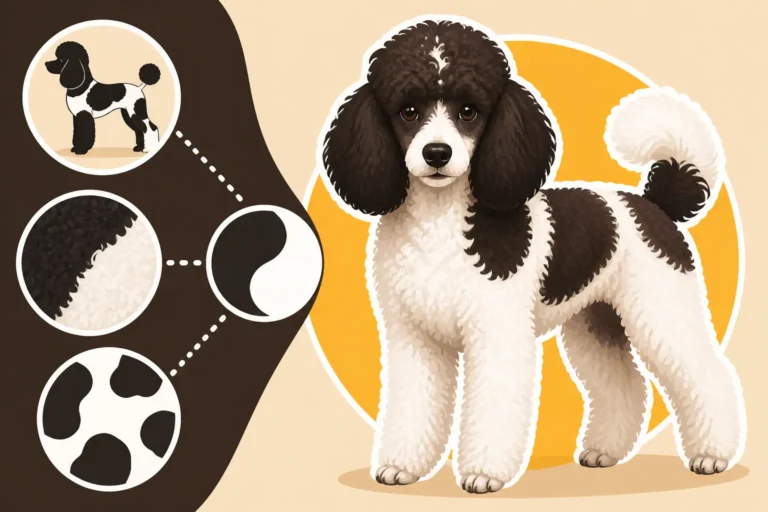
While solid colors are beautiful, the world of Poodles also embraces stunning patterns, with the Parti Poodle being one of the most eye-catching. A Parti Poodle is characterized by a coat that is at least 50% white, with distinct, irregular patches of another solid color. These aren't just random spots; they are a genetic expression that adds tremendous flair and individuality to each dog.
What Defines a Parti Poodle?
A Parti Poodle stands out with its distinct two-tone coat. The base color is typically white, overlaid with clearly defined patches of any of the solid Poodle colors: black, brown, silver, red, apricot, or cream. The patches should be well-distributed and irregular, creating a unique pattern on each dog. This isn't just a slight variation; the Parti gene actively suppresses pigment in certain areas, allowing the white base to show through. Imagine a canvas of crisp white with bold splashes of color strategically placed – that's the essence of a Parti Poodle. Historically, Parti Poodles were quite common and even featured in early Poodle artwork, suggesting their long-standing presence in the breed. However, in certain periods, breed standards shifted to favor solid colors, leading to a temporary decline in their popularity within the show ring, though they always remained cherished pets.
Common Parti Combinations
The beauty of Parti Poodles lies in the diversity of their color combinations. The most classic and perhaps most striking is the black and white Parti, with its stark contrast and elegant appearance. You might see large black patches across the back, ears, and around the eyes, with the rest of the body a pristine white. Brown and white Parti Poodles offer a softer, warmer look, with rich chocolate or café au lait patches against the white. Red and white Partis are incredibly vibrant, combining the fiery red with the clean white, creating a truly eye-catching dog. Silver and white Partis are also quite popular, especially because the silver patches, like their solid counterparts, will typically be born black and gradually clear to silver, making the color transition an interesting journey for the owner. Apricot and white, and cream and white, complete the rainbow of possibilities, each offering a distinct aesthetic. The placement and size of these patches are entirely individual, making every Parti Poodle a truly unique work of art.
Parti Poodles in the Show Ring and Registration
For many years, Parti Poodles faced an uphill battle in the American Kennel Club (AKC) show ring due to a historical preference for solid colors. However, this has thankfully changed! The AKC now recognizes Parti Poodles and allows them to compete in all performance events, such as agility, obedience, and rally. While they are fully registered and can compete in these areas, their participation in the conformation show ring (where dogs are judged on their physical appearance against the breed standard) often comes with specific stipulations. Many national Poodle clubs still heavily favor solid colors for conformation, and while Parti Poodles can be registered, they may receive "limited registration." Limited registration means the dog cannot be shown in conformation events and any offspring cannot be registered, although it still recognizes the dog as a purebred Poodle. This is important for prospective owners to understand, especially if they have aspirations of showing their dog in conformation. Despite these nuances, Parti Poodles are purebred Poodles and are just as intelligent, loyal, and healthy as their solid-colored counterparts. Breeders committed to preserving these beautiful patterns ensure Parti Poodles and the Show Ring is an increasingly common sight.
The Enigmatic Phantom Poodle
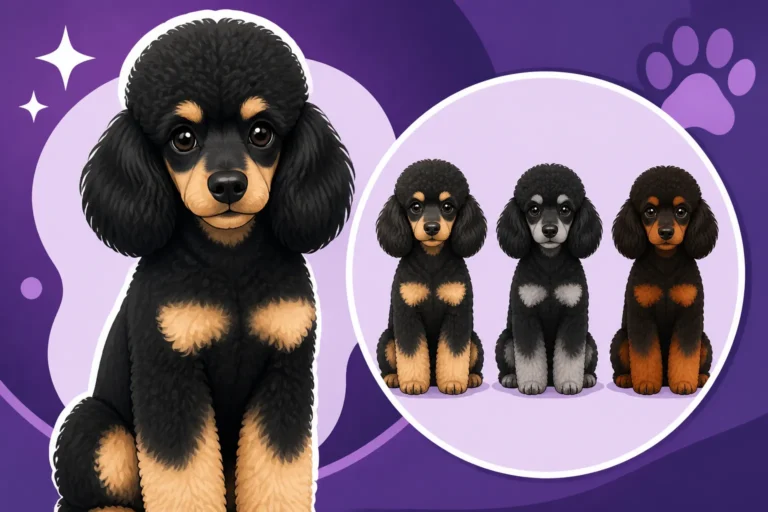
Another fascinating Poodle pattern that often sparks curiosity is the Phantom. Unlike the bold patches of a Parti, a Phantom Poodle showcases specific, clearly defined markings of a secondary color on a solid base coat, creating a striking and elegant appearance that looks almost like a Doberman's markings. These dogs are truly a sight to behold, combining the classic Poodle elegance with a unique, sophisticated pattern.
Unpacking Phantom Markings
The hallmark of a Phantom Poodle is its specific pattern of markings. These distinct markings appear on a solid base coat in certain areas: above each eye (like eyebrows), on the sides of the muzzle, across the chest, on all four legs and feet, and underneath the tail. The contrast between the base color and the marking color should be clear and well-defined. Think of it as a solid-colored Poodle with perfectly placed "points" of a lighter color. The base color can be black, brown, silver, blue, or even apricot or red, and the secondary markings will typically be cream, tan, silver, or apricot. These markings aren't random splashes but follow a very precise genetic blueprint, giving the Phantom its signature look. It's a pattern that has a long history, appearing in many other breeds, and when seen on a Poodle, it truly highlights their elegant structure. Looking at Phantom Poodle Markings closely reveals the meticulous detail of these patterns.
Popular Phantom Color Pairings
The beauty of Phantom Poodles lies in the striking contrast created by their two colors. One of the most classic and widely recognized combinations is black and tan. Here, a deep black base is accented by crisp, golden-tan markings in all the specified areas, creating a very regal and sharp look. Brown and apricot Phantoms are also incredibly popular, with the warm brown coat complemented by soft apricot points, offering a less stark but equally beautiful contrast. Silver and cream Phantoms present a sophisticated palette, with a shimmering silver base and delicate cream markings. You might also encounter blue Phantoms with cream or silver points, or even red Phantoms with apricot points, though these can be harder to distinguish if the contrast is not strong enough. Each combination offers a unique aesthetic, making every Phantom Poodle a truly individual work of art. The clarity and richness of both the base and the marking color are crucial for a truly stunning Phantom pattern.
Phantom Poodles and Breed Standards
Similar to Parti Poodles, Phantom Poodles have experienced varying degrees of acceptance within formal breed standards over time. In many kennel clubs, including the AKC, a Poodle with phantom markings is considered a purebred Poodle. However, historically, and even in some modern show circuits, the conformation ring heavily emphasized solid colors. This often meant that while a Phantom Poodle was recognized as a purebred, it might not be favored for success in conformation competition. This doesn't detract from their purebred status or their incredible genetics; it's simply a reflection of specific historical preferences in judging. Owners interested in showing their Phantom Poodle should research the specific rules and preferences of the clubs they wish to participate in. For companion animals, a Phantom Poodle is just as wonderful as any solid-colored Poodle, possessing the same intelligence, temperament, and health characteristics. The demand for these uniquely patterned Poodles, both for companionship and performance events, remains very high, proving their enduring appeal.
Sable, Brindle, and Other Unique Poodle Patterns
Beyond the more common solid, parti, and phantom patterns, Poodles can occasionally surprise us with even more unique and intricate coat designs. These patterns, while perhaps less common or sometimes not officially recognized for conformation showing by all clubs, add another layer of diversity and fascination to the breed's genetic tapestry. They highlight the incredible range of expression hidden within the Poodle's genes.
The Shifting Sands of Sable Poodles
Sable is a pattern characterized by hair shafts that are tipped with black, giving the coat a shaded, often smoky appearance. A sable Poodle typically has a lighter base color, such as cream, apricot, or red, with black or dark brown tipping on the individual hairs. This creates a beautiful depth and shimmer to the coat. What makes sable particularly interesting is its tendency to change over time. Many sable puppies are born quite dark, sometimes appearing almost black, and then gradually "clear" to reveal their lighter base color with the distinct dark tipping. This clearing process can be a dramatic transformation, and the final adult coat often looks significantly different from the puppy coat. The intensity and distribution of the dark tipping can vary, from a subtle shading to a more pronounced, almost striped effect. While historically less common in Poodles, dedicated breeders have been working to establish stable sable lines, admiring their unique and dynamic beauty.
Brindle and Abstract Poodles
Brindle Poodles are a rare and truly distinctive sight. A brindle pattern features stripes of darker pigment (typically black or brown) over a lighter base color (often red, apricot, or cream). These stripes can vary in intensity and width, creating a tiger-striped effect that is quite striking on a Poodle's curly coat. Brindle is a complex genetic pattern that is not traditionally recognized in the AKC Poodle breed standard for conformation, making these dogs truly unique finds. Similarly, "abstract" Poodles are dogs that are predominantly one solid color but have small, incidental patches of white, often on the chest, toes, or chin, that are too small to qualify as a parti pattern. These tiny splashes of white are often called "abstract markings" or "Irish spotting" and are quite common even in solid-colored lines. While an abstract Poodle wouldn't compete in conformation as a parti, these small white markings add a touch of individuality without breaking the overall solid impression. Both brindle and abstract patterns, while not always show-ring favorites, are beloved by owners who appreciate their distinct appearance.
Ticking and Multi-Patterned Poodles
Sometimes, a Poodle can exhibit even more complex patterns due to the interplay of multiple genes. Ticking, for example, is a genetic trait that can appear on Parti Poodles. It manifests as small, freckle-like spots of color within the white areas of the coat. So, a black and white Parti Poodle with ticking would have tiny black specks distributed within its white patches, almost like a Dalmatian. These freckles become more visible as the puppy grows. Then there are Poodles that might technically be considered "tri-color" or "multi-patterned," combining elements of phantom and parti markings. For instance, a Poodle could have a black base with tan phantom markings, and then also have white parti patches. This creates a dog with three distinct colors or multiple patterns, a truly complex and beautiful genetic display. While these multi-patterned Poodles are less common and typically not within the traditional show ring standards, they are nevertheless purebred Poodles and offer a breathtaking array of coat artistry. The genetics for these complex patterns are fascinating, showcasing the depth of the Poodle gene pool.
| Poodle Color/Pattern | Description | Common Color Changes | Show Ring Status (AKC) |
|---|---|---|---|
| Solid Black | Deep, true black | Can "blue" or "silver" out with age | Fully recognized |
| Solid White | Pure, chalky white | Can have creamy undertones; prone to tear/saliva staining | Fully recognized |
| Solid Silver | Born black, clears to silver | Clears over 1-2 years | Fully recognized |
| Solid Brown | Rich, dark cocoa brown | Can fade to "cafe au lait" | Fully recognized |
| Solid Cafe Au Lait | Milky coffee brown | Result of a faded brown | Fully recognized |
| Solid Apricot | Light orange-gold | Can fade to cream | Fully recognized |
| Solid Red | Vibrant auburn red | Can fade to apricot or cream | Fully recognized |
| Solid Blue | Diluted black, steely gray with blue cast | Born black, clears over 2-3 years | Fully recognized |
| Parti | At least 50% white with distinct patches of another color | Patches maintain color, but white areas can stain | Recognized for performance, limited for conformation |
| Phantom | Solid base with specific tan/apricot/silver markings | Base color may fade, markings remain distinct | Recognized, but conformation preference for solids |
| Sable | Lighter base with dark-tipped hairs | Often born dark, clears to shaded base | Not traditionally recognized for conformation |
| Brindle | Striped pattern (dark stripes on lighter base) | Stripes typically stable once cleared | Not traditionally recognized for conformation |
Why Poodle Colors Change Over Time
One of the most frequently asked questions by new Poodle owners is, "Why is my puppy changing color?" It's a valid concern, as Poodles are well-known for their coats transforming as they mature. This isn't a sign of impurity or a problem; it's a fascinating and perfectly normal genetic trait for many Poodle colors. Understanding these changes can help you appreciate the journey your Poodle's coat takes.
The Fading Gene and Its Impact
The "fading gene," more accurately described as a progressive greying or clearing gene, is a significant factor in why many Poodle colors aren't stable throughout their lives. This gene causes the pigment in the hair shafts to gradually lighten over time. For example, a black Poodle carrying this gene might start to "blue" or "silver" out, meaning their deep black softens to a dark charcoal or a true silver. A brown Poodle will often fade to a "cafe au lait," becoming a lighter, milkier brown. Even reds and apricots are notoriously susceptible to fading, often lightening to a pale apricot or even cream. This process can be slow and gradual, taking months or even a couple of years to fully manifest. It's a natural genetic occurrence, and while some breeders work to produce "non-fading" lines, particularly for reds and blacks, it's something many Poodle owners come to expect and even adore, as it gives their dog a unique evolving look.
Puppy Colors Versus Adult Hues
It's truly a marvel to witness the transformation from a Poodle puppy's coat to its adult hue. Many Poodles are born with coats that appear much darker than their eventual adult color. For instance, silver Poodles are born black and gradually clear to silver, a process that can take up to two years. Blue Poodles are also born black and slowly dilute to their characteristic steel-gray with a blue tint. Cafe au lait Poodles typically start as a darker brown before lightening. Even some reds and apricots are born with deeper, richer tones that then lighten as the dog matures. This "clearing" or "lightening" process is a normal part of the Poodle's development and is influenced by the progressive greying genes. If you adopt a Poodle puppy, prepare for a delightful surprise as their coat evolves, often revealing unexpected undertones or shades you hadn't anticipated. It's like watching a painting come to life, layer by layer. This is why When a Poodle Puppy's Color Settles is a common question, as owners watch their dark pups turn lighter.
Environmental and Age-Related Color Shifts
While genetics play the primary role in Poodle coat color changes, environmental factors and the natural aging process can also have an impact. Sun exposure, for example, can cause darker coats, particularly black and red, to develop a reddish or brassy tint over time. Just like human hair, prolonged exposure to UV rays can lighten and alter pigment. Regular bathing and conditioning, using quality shampoos and conditioners, can help maintain coat health and color vibrancy, especially for lighter colors prone to staining, but it won't entirely stop genetic fading. As Poodles age, it's also common for white hairs to appear, especially around the muzzle, eyes, and sometimes throughout the body, just like in humans. This natural greying is distinct from the genetic fading seen in younger Poodles but is a normal part of Caring for an Aging Poodle. Diet and overall health can also subtly influence coat quality and appearance, though usually not leading to dramatic color changes like genetic fading.
The Genetics Behind Poodle Coat Colors
Delving into Poodle coat colors isn't just about aesthetics; it's a fascinating dive into the world of canine genetics. Understanding the basic principles of how genes interact to produce these stunning hues and patterns can demystify why some Poodles fade, why others are parti-colored, and how breeders can predict what a litter might look like. It's a complex but incredibly rewarding area of knowledge for any Poodle enthusiast.
Basic Genes: Eumelanin and Pheomelanin
At the heart of all canine coat colors are two primary pigments: eumelanin and pheomelanin. Eumelanin is responsible for black and brown pigments. When eumelanin is fully expressed, you get a black Poodle. If a dog carries a gene that modifies eumelanin, it can turn black into brown (often referred to as chocolate). The intensity and distribution of this pigment are controlled by various genetic loci. Pheomelanin, on the other hand, is responsible for red and yellow pigments. This is what gives us the vibrant red and apricot Poodles. Just like with eumelanin, other genes can influence the shade and intensity of pheomelanin, leading to the variations we see from deep red to pale cream. Every Poodle's coat color is essentially a combination and modification of these two basic pigments, dictated by the specific genes they inherited from their parents. Knowing these two fundamental pigments is the first step to unlocking the secrets of Poodle coloration.
Modifier Genes: Dilutes, Fading, and Patterns
While eumelanin and pheomelanin lay the groundwork, a whole host of "modifier genes" fine-tune the final appearance of a Poodle's coat. The dilute gene (d/d), for example, affects eumelanin, turning black into blue and brown into an even lighter "Isabella" or "lilac" shade, though the latter is extremely rare in Poodles. Then there's the greying gene (G/g), which is responsible for the incredible clearing process seen in silver and blue Poodles, where a dark puppy coat gradually lightens over time. The pattern genes are what create the Parti and Phantom markings. The S-locus (spotting gene) dictates white spotting, from abstract markings to full parti patterns. The at-locus (tan points) is responsible for the phantom pattern, dictating where the secondary tan or cream markings will appear. These modifier genes interact in intricate ways, sometimes enhancing a color, sometimes diluting it, and sometimes arranging it into complex patterns. Breeders often use Genetic Panels for the Three Poodle Sizes to understand the genetic makeup of their breeding stock and predict litter colors.
DNA Testing for Poodle Color Prediction
For serious Poodle breeders, understanding the genetics of coat color is not just academic; it's a practical tool. DNA testing has revolutionized the ability to predict coat colors in a litter. Breeders can test their breeding dogs to determine which color genes they carry, even if those genes aren't outwardly expressed. For example, a black Poodle might genetically carry the brown gene, meaning it could produce brown puppies if bred to another Poodle carrying the brown gene. Similarly, tests can identify carriers of the dilute gene, the greying gene, and the various pattern genes (parti, phantom, sable). This allows breeders to make informed decisions, ensuring they are producing desired colors while maintaining overall health and temperament. For potential puppy buyers, seeing the results of parental color DNA tests can offer a fascinating glimpse into the genetic background of their future Poodle and can help manage expectations about how a puppy's color might change or what patterns it might be able to produce if bred in the future.
Choosing a Poodle Color: Beyond Aesthetics
While the visual appeal of a Poodle's coat color is undeniably a huge draw, there's more to consider than just what catches your eye. Choosing a Poodle isn't just about picking a shade; it’s about understanding the implications of different colors, both real and perceived, and ultimately prioritizing the health and temperament of your future companion.
Color and Perceived Temperament Myths
It's a common, though often unfounded, belief that certain dog colors are linked to specific temperaments. You might hear people say that red Poodles are more feisty, or white Poodles are more aloof, or black Poodles are calmer. These are almost entirely myths. There is no scientific evidence to support a correlation between coat color and temperament in Poodles. A Poodle's personality is shaped by a complex interplay of genetics (breed-specific traits, individual parentage), early socialization, training, and environment. A well-bred, well-socialized Poodle, regardless of color, should exhibit the intelligent, friendly, and active temperament characteristic of the breed. Focusing on the parents' temperament, the breeder's practices, and the puppy's individual personality during your selection process is far more important than the color of its coat. Don't let a color myth steer you away from a wonderful potential companion. The Poodle Character is consistent across all colors.
Grooming Considerations for Different Colors
While coat color doesn't affect temperament, it can subtly influence grooming considerations. For example, white Poodles, while stunning, are notorious for showing tear stains and saliva stains around their eyes and mouths more prominently than darker colored Poodles. This requires diligent cleaning and sometimes specific dietary adjustments to minimize staining. Similarly, lighter coats, like cream and apricot, might show dirt more easily. Darker coats, such as black and dark brown, can sometimes appear dull if not properly conditioned and brushed, and some might develop a reddish tint if exposed to a lot of sun. Reds and apricots, as mentioned, are also prone to fading, which isn't a grooming issue per se but an aesthetic change to be aware of. Regardless of color, all Poodle coats require consistent, thorough grooming due to their continuously growing, non-shedding hair. This means regular brushing to the skin and professional grooming appointments every 6-8 weeks. So, while color adds a visual element, the fundamental grooming needs remain the same for all Poodles. If you're looking for products, Chewy has a great selection of tear stain removers and whitening shampoos.
Finding a Reputable Breeder for Your Desired Color
When your heart is set on a specific Poodle color or pattern, it's absolutely crucial to prioritize finding a reputable breeder who focuses on health, temperament, and ethical breeding practices first, and color second. A good breeder will not breed solely for "rare" or popular colors. They will conduct all necessary health testing for their breeding stock, including checks for What a Poodle Breeder Must Test For such as hip dysplasia, eye diseases, and genetic conditions prevalent in Poodles. They should be transparent about their dogs' health clearances, temperament, and genetic lineage. Be wary of any breeder who advertises "rare" colors at inflated prices without evidence of health testing or who seems to be breeding for color above all else. Poodle Puppy Prices Across the Three Sizes can vary, but any price spike solely for a color is a red flag. A truly reputable breeder will happily discuss their breeding program, invite you to meet their dogs, and answer all your questions, regardless of the color you're interested in. The health and well-being of your Poodle should always be the top priority.
Debunking Poodle Color Myths
The allure of Poodle colors has unfortunately led to a few misconceptions and even some unethical practices in the dog breeding world. As a responsible future Poodle owner, it's vital to be able to distinguish fact from fiction, especially when it comes to claims about "rare" colors or supposed health links. Knowledge is power, and it protects both you and the Poodles you love.
"Rare" Colors and Their Real Value
One of the most persistent myths in the Poodle world revolves around "rare" colors. Breeders sometimes market certain colors, such as sable, brindle, or specific phantom combinations, as "rare" and consequently charge exorbitant prices for them. The truth is, while some colors or patterns might be less common than black or white, they are rarely genuinely "rare" in a way that justifies a massive price hike. Often, less common colors are simply less frequently bred because they don't conform to traditional show ring preferences or because their genetics are more complex to work with. There is no inherent extra value or superiority in a less common color. Charging significantly more for a "rare" Poodle color is often a tactic used by unscrupulous breeders to capitalize on uninformed buyers, often at the expense of health testing and responsible breeding. Always question claims of rarity and remember that a Poodle's true value lies in its health, temperament, and quality breeding, not just its coat color. This is why Why a Cheap Poodle Usually Means No Testing can be a concern, but so can an overly expensive one based solely on color.
Health and Color: Is There a Link?
Generally speaking, there is no direct link between a Poodle's color and its overall health. For example, a black Poodle is not inherently healthier or sicker than a red Poodle. However, it's crucial to understand a few nuances. In some breeds, certain color genes are linked to specific health issues (e.g., the merle gene in some breeds can be associated with hearing and vision problems, though merle is not a standard Poodle color and ethical Poodle breeders do not breed for it). The Poodle breed itself has known health predispositions regardless of color, such as Addison's Disease, bloat, and sebaceous adenitis. What can impact health is the breeding practices associated with an obsession over a particular color. If a breeder focuses only on producing a "rare" color, they might narrow their gene pool too much or overlook health testing in their pursuit of that specific aesthetic. This focus on color above all else is a red flag, as it can inadvertently lead to the propagation of genetic health issues. Always inquire about What a Poodle Breeder Must Test For, not just the color of the puppies.
What a Poodle's Papers Do Not Guarantee
When you purchase a purebred Poodle, you'll typically receive registration papers from organizations like the AKC. These papers confirm that your Poodle's lineage traces back to registered purebred Poodles. However, it's vital to understand what these papers do not guarantee. They confirm pedigree and sometimes color, but they absolutely do not guarantee health, temperament, or the quality of the dog itself. A Poodle with AKC papers could still come from a puppy mill, be poorly socialized, or have significant genetic health issues if the breeder wasn't responsible. For example, a parti Poodle may receive limited registration, as discussed earlier. This is why looking beyond just papers and delving into the breeder's practices, their health testing protocols, and their commitment to the breed's well-being is paramount. Your best assurance of a healthy, well-adjusted Poodle comes from choosing a reputable, ethical breeder who prioritizes the entire dog, not just its color or its paper trail. A great breeder on Chewy's platform would also have these robust screening practices. The paper simply states ancestry; it says nothing of the quality of care or health behind that ancestry. What a Poodle's Papers Do Not Guarantee is a lesson many new owners learn the hard way if they don't do their research.
Disclaimer
This article is for general informational purposes only and does not constitute professional advice. Laws, prices and regulations vary by location and change over time. Consult a qualified professional for guidance on your specific situation.